Muscle Groups — Explained by Medical Evidence, Not Myths
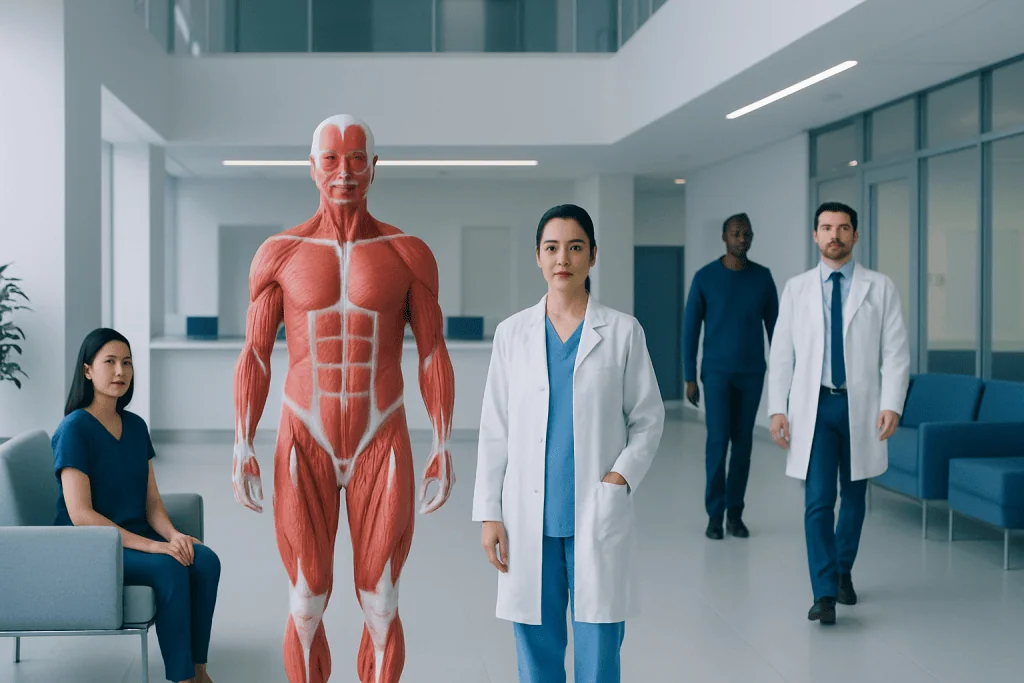
Muscle groups are organized by shared function, location, and movement patterns rather than by fitness trends or myths. Major muscle groups include the chest, back, shoulders, arms, core, hips, and legs, which work together during most daily activities.
Key Takeaways
- Muscle groups are organized by shared function, location, and movement patterns rather than by fitness trends or myths.
- Major muscle groups include the chest, back, shoulders, arms, core, hips, and legs, which work together during most daily activities.
- Pain, weakness, cramping, swelling, or loss of function may suggest muscle strain, tendon problems, nerve issues, or another medical condition.
- Good muscle health depends on balanced activity, recovery, sleep, hydration, and adequate nutrition.
- Persistent pain, sudden weakness, or symptoms after trauma should be assessed by a qualified doctor.
Muscle groups are collections of muscles that work together to create movement, maintain posture, protect joints, and support daily function. Understanding the major muscle groups can help people exercise more safely, recognize signs of overuse or injury, and know when medical evaluation may be helpful.
What are muscle groups?
Muscle groups are sets of muscles that work together to produce movement or stabilize part of the body. In practical terms, they help a person lift, walk, breathe, sit upright, turn the head, and protect joints during daily activity. Although people often talk about muscle groups in exercise settings, the concept comes from anatomy and biomechanics, not from fitness myths.
Muscles are usually described in three useful ways: by location, by action, and by how they work with nearby structures. For example, the muscles at the front of the thigh help extend the knee, while muscles at the back of the thigh help bend it. Many movements depend on several groups acting together, which is why no major muscle group truly works in isolation.
Skeletal muscles are attached to bones by tendons and are under voluntary control. This is different from smooth muscle, found in organs and blood vessels, and cardiac muscle, found in the heart. When people ask about muscle groups, they are almost always referring to skeletal muscles involved in posture, movement, strength, and physical performance.
The major muscle groups and what they do
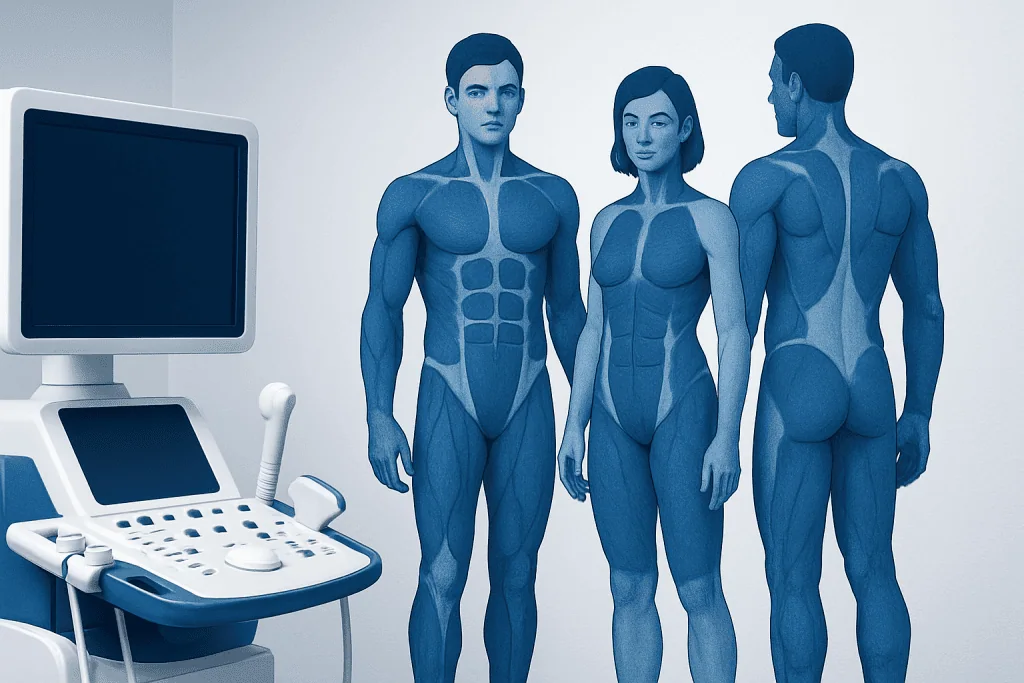
The body is often organized into broad, clinically useful muscle groups. In the upper body, the chest muscles help with pushing and shoulder movement; the back muscles support posture and pulling motions; and the shoulder muscles help raise and rotate the arms. The arms include muscles that bend and straighten the elbow and control grip and hand position.
The core includes the abdominal muscles, deep trunk stabilizers, pelvic muscles, and lower back muscles. These structures help transfer force between the upper and lower body, support breathing mechanics, and protect the spine during bending, lifting, and rotation. Strong core function is less about visible abdominal muscles and more about coordinated stability.
In the lower body, the hip muscles help with balance, walking, and pelvic control. The thigh muscles at the front and back power climbing, squatting, and running, while the gluteal muscles play a major role in hip extension and stability. The calf and shin muscles control ankle movement and help with standing, stepping, and absorbing force during movement.
- Chest: supports pushing and arm movement
- Back: assists posture, pulling, and spinal support
- Shoulders: lift and rotate the arms
- Arms and forearms: bend, straighten, grip, and position the hand
- Core: stabilizes the trunk and supports the spine
- Hips and glutes: control balance, walking, and powerful lower-body movement
- Thighs and legs: support standing, walking, climbing, and shock absorption
How muscle groups work together
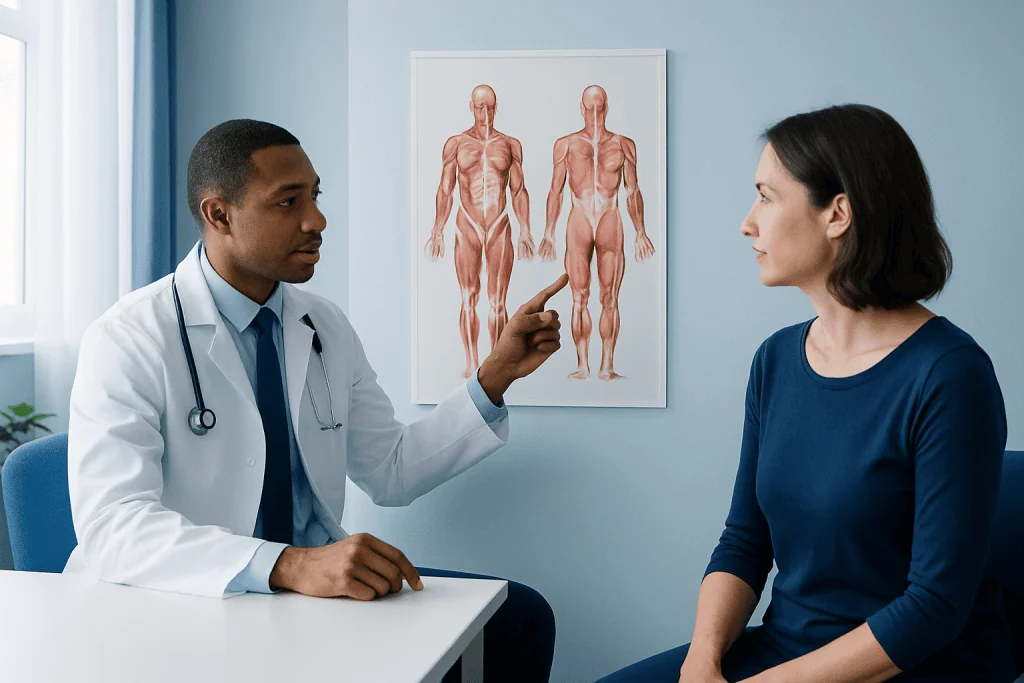
Muscle groups do not act alone. Most movements rely on coordinated patterns between a prime mover, supporting muscles, stabilizers, tendons, joints, and the nervous system. For example, when a person rises from a chair, the hips, thighs, calves, and core all contribute, while the brain and peripheral nerves coordinate timing and force.
Muscles often work in pairs or teams. One group may create a movement while another controls or slows it. This balance helps protect joints and improves efficiency. If one area is weak, tight, painful, or poorly coordinated, another muscle group may compensate. Over time, this can contribute to fatigue, altered movement patterns, and discomfort.
Medical evidence shows that movement quality matters as much as muscle size. A person may have strong muscles but still develop pain if the pattern of movement overloads a tendon, compresses a joint, or stresses the lower back. This is one reason rehabilitation programs often focus on function, flexibility, balance, and neuromuscular control as well as strength.
Common problems that affect muscle groups
Muscle groups can be affected by a wide range of conditions, from simple overuse to more complex medical disorders. The most common issues include muscle strain, delayed soreness after unusual activity, tendon irritation, cramps, and pain related to poor biomechanics or repetitive movement. Symptoms may be mild and short-lived, but persistent problems deserve proper assessment.
People sometimes assume all muscle pain comes from exercise, but this is not always true. Weakness, numbness, burning pain, swelling, or pain that radiates may point to tendon injuries, joint problems, nerve compression, or systemic illness. For example, shoulder pain may involve surrounding muscles but can also be related to rotator cuff problems, and leg pain may reflect a tendon or spine issue rather than the muscle itself.
Sudden severe pain after a twist, lift, fall, or sporting movement may suggest a tear or significant strain. Ongoing lower back tightness can also involve the core and paraspinal muscles, but sometimes occurs alongside disc-related conditions such as lumbar disc herniation. In some cases, specialist evaluation and a tailored physical therapy and rehabilitation program can help restore movement and reduce recurrence.
- Muscle strain or tear
- Tendon irritation or tendinopathy
- Cramping related to fatigue, dehydration, or medication effects
- Overuse pain from repetitive work or sport
- Nerve-related weakness or altered sensation
- Poor posture or movement mechanics causing compensation patterns
Symptoms that may need attention
Many muscle-related symptoms improve with rest, time, and gradual return to activity. Common short-term symptoms include soreness after unfamiliar exercise, mild stiffness, and temporary fatigue. These usually settle within a few days, especially when activity is adjusted and recovery is adequate.
More concerning symptoms include sudden weakness, a popping sensation at the time of injury, marked swelling, bruising, inability to bear weight, loss of normal range of motion, or pain that does not improve. Symptoms such as numbness, tingling, or pain traveling down an arm or leg may indicate nerve involvement rather than a simple muscle problem.
General symptoms also matter. Fever, unexplained weight loss, dark urine after extreme exertion, or persistent widespread muscle pain should not be ignored. These may point to infection, inflammatory disease, medication-related muscle injury, or another underlying medical issue that needs professional evaluation.
How doctors evaluate muscle problems
Assessment usually starts with a detailed history. A doctor may ask when symptoms began, what movement triggered them, whether there was trauma, how severe the pain is, and whether weakness, swelling, numbness, or functional limits are present. Information about exercise habits, occupation, medications, hydration, sleep, and prior injuries can also be helpful.
The physical examination often includes checking tenderness, swelling, strength, flexibility, joint movement, gait, balance, and neurologic function. In many cases, this is enough to identify a mild strain or overuse pattern. If symptoms are severe, prolonged, or unclear, additional testing may be recommended.
Depending on the situation, evaluation may include blood tests, ultrasound, X-rays, or MRI to look for muscle tears, tendon injuries, or nearby joint and spine problems. Some patients with persistent weakness or complex nerve-related symptoms may also need electrodiagnostic testing. If surgery is being considered for a major tear or structural problem, an orthopedic evaluation may be part of care.
Evidence-based treatment and muscle self-care
Treatment depends on the cause. Mild muscle strains often improve with relative rest, gradual movement, ice or heat as advised by a clinician, and a progressive return to activity. Long periods of complete rest are usually not ideal unless a doctor recommends them, because gentle movement often helps maintain flexibility and circulation.
For overuse injuries or recurrent pain, treatment may focus on load management, stretching when appropriate, strengthening weak areas, and correcting movement patterns. Rehabilitation programs are often individualized because the same symptom can have different underlying causes. For example, persistent shoulder or knee complaints may require targeted exercises rather than general rest alone.
Long-term muscle health depends on basic habits that support tissue recovery and function. Helpful strategies include regular physical activity, enough protein and overall nutrition, hydration, sleep, and a gradual progression in exercise intensity. Warm-up routines, good technique, and recovery days can reduce overload on vulnerable muscle groups. People with chronic pain, recurrent sports injuries, or complex movement issues may benefit from a structured sports medicine or rehabilitation plan.
When to seek medical care
Medical care is appropriate if muscle pain follows a major injury, if there is sudden weakness, if a limb cannot be moved normally, or if swelling and bruising are significant. A doctor should also assess pain that keeps returning, interferes with sleep, or limits work, walking, or daily activity for more than a short period.
Urgent evaluation is especially important if muscle symptoms come with chest pain, trouble breathing, high fever, severe calf swelling, dark urine, or new numbness after trauma. These symptoms can signal conditions beyond a simple strain. A qualified clinician can help determine whether the problem is muscular, neurologic, orthopedic, or systemic.
For international patients who need multidisciplinary assessment, Acibadem International’s specialists and JCI-accredited hospitals diagnose and treat muscle, joint, spine, and rehabilitation-related conditions using coordinated medical evaluation and follow-up.
Frequently asked questions
What are the main muscle groups in the body?
The main muscle groups are usually described as the chest, back, shoulders, arms, core, hips, glutes, thighs, and lower legs. These groups help with posture, movement, balance, joint support, and everyday tasks such as walking, lifting, and reaching.
Do muscle groups work one at a time?
No. Most movement depends on several muscle groups working together with joints, tendons, and the nervous system. Even simple actions like climbing stairs or standing up use coordinated activity across the core, hips, thighs, and lower legs.
Is muscle soreness always a sign of a good workout?
Not necessarily. Mild soreness after unfamiliar activity can be normal, but pain is not required for effective exercise. Severe soreness, sharp pain, swelling, or weakness may indicate overuse or injury rather than healthy training.
How can someone keep muscle groups healthy?
Balanced activity, gradual progression in exercise, adequate sleep, hydration, and good nutrition all support muscle health. Recovery is also important, because muscles need time to repair and adapt after physical effort.
When is muscle pain more than just a strain?
Pain may need medical attention if it is severe, does not improve, keeps returning, or is linked with numbness, marked weakness, fever, or significant swelling. Symptoms after trauma or pain that limits normal function should also be evaluated.
Can weak muscles cause joint or back pain?
Yes, in some cases. If one muscle group is weak or not working efficiently, another area may compensate, which can increase stress on joints, tendons, or the lower back. A doctor or rehabilitation specialist can help identify the pattern and recommend appropriate treatment.
This article is for general information only and is not a substitute for professional medical advice. Please consult a qualified doctor about your individual situation.
Joint and spine care in Turkey — expert assessment & treatment
JCI-accredited · board-certified surgeons · reply within 24h
Add us as a Preferred Source to see more of our trusted health content across Google Search, AI Overviews and Discover.

More from the Health Library

Rubbing Alcohol: What Patients Need to Know

Probiotics for Bloating: An Evidence-Based Guide for Patients

Growth Hormone — Explained by Medical Evidence, Not Myths
Continuous Passive Motion Machine: What Patients Need to Know

Sunscreen: An Evidence-Based Guide for Patients
Stable Angina: A Complete Medical Overview
Physical Medicine & Rehabilitation Specialists at Acibadem

Fzt. Busenur Sezer
Physical Medicine & Rehabilitation
Büşra Zeybek
Physical Medicine & Rehabilitation
Fzt. Çağlar Dal
Physical Medicine & Rehabilitation
Assoc. Prof. Dr. Çağrı Örs
Orthopedic Surgery & Traumatology