Chemical Burn: An Evidence-Based Guide for Patients

A chemical burn can keep worsening until the substance is removed or neutralized by the body. The first priority is safety: stop exposure, remove contaminated clothing, and rinse with running water unless a professional advises otherwise.
Key Takeaways
- A chemical burn can keep worsening until the substance is removed or neutralized by the body.
- The first priority is safety: stop exposure, remove contaminated clothing, and rinse with running water unless a professional advises otherwise.
- Burns affecting the eyes, face, hands, genitals, large areas, or causing severe pain should be assessed promptly.
- Treatment depends on the chemical, the depth of injury, and the body area involved.
- Follow-up is important because pain, infection, scarring, or reduced function can develop after the initial injury.
A chemical burn is damage to the skin, eyes, mouth, or deeper tissues caused by contact with a harmful substance. Immediate first aid—especially thorough rinsing with water for most exposures—can reduce injury, but some burns need urgent medical care.
What is a chemical burn?
A chemical burn is tissue damage caused when a corrosive or irritating substance touches the body or is swallowed or inhaled. It can affect the skin, eyes, lips, mouth, throat, or deeper tissues, and the injury may continue to develop as long as the chemical remains in contact with the body. This is why prompt first aid matters.
Chemical burns are different from heat burns. The severity depends not only on how long the substance was in contact with the body, but also on the type of chemical, its strength, the amount involved, and the area exposed. Some injuries look mild at first and become more serious over the next several hours.
Common causes include household cleaning products, drain cleaners, bleach, pool chemicals, industrial agents, battery acid, wet cement, and some laboratory materials. Children may be injured by accidental spills or swallowing household products, while adults may be exposed at home, at work, or during hobbies.
How a chemical burn affects the body
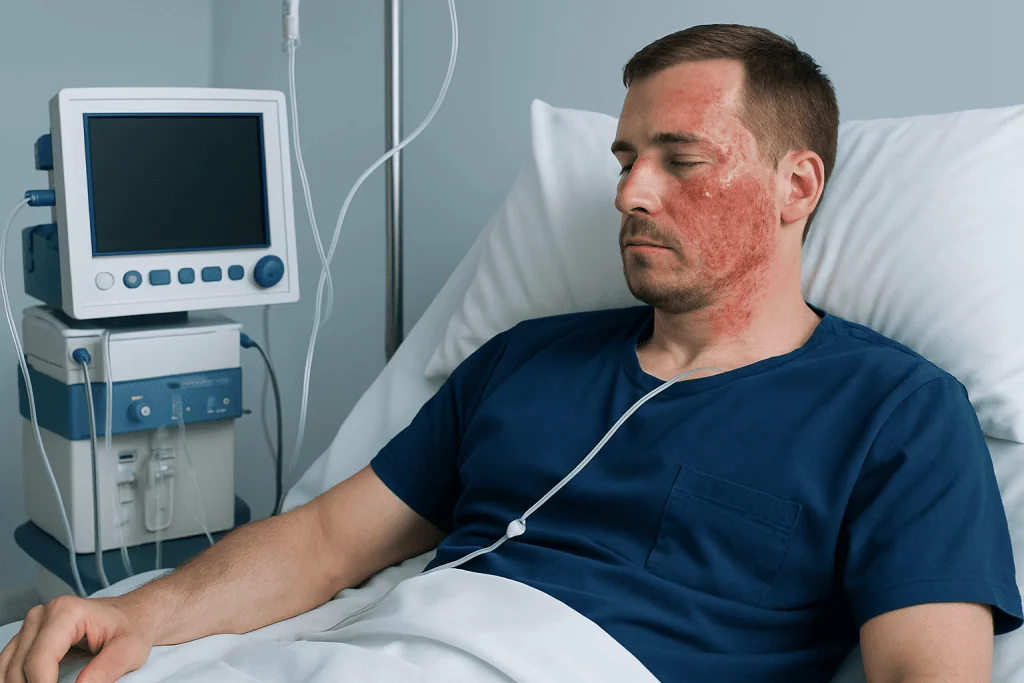
Chemicals damage tissues in different ways. Acids often cause a surface injury that can create a protective crust, while alkalis may penetrate more deeply and continue to injure tissue beneath the surface. Oxidizers, solvents, and certain metals can also cause serious burns, and some agents produce toxic effects beyond the local injury.
The skin is the most common site, but the eyes are especially vulnerable. A chemical eye injury can threaten vision even when symptoms seem moderate at first. Inhaled fumes may irritate the nose, throat, and lungs, while swallowed chemicals can burn the mouth, esophagus, and stomach.
Because symptoms do not always reflect the true depth of injury, healthcare professionals may observe the area over time. In more complex cases, a patient may be assessed by specialists in emergency care, ophthalmology, gastroenterology, pulmonology, or plastic and reconstructive surgery, depending on the site and severity of the burn.
Chemical burn symptoms

Symptoms vary with the chemical and the body area involved. On the skin, a chemical burn may cause stinging, burning pain, redness, swelling, blisters, peeling, numbness, or patches that look white, brown, black, or leathery. Sometimes there is surprisingly little pain despite a deep injury.
Eye exposure may cause severe watering, redness, blurred vision, pain, light sensitivity, trouble opening the eye, or the feeling that something is stuck in it. Fume exposure can lead to coughing, throat irritation, chest tightness, wheezing, or shortness of breath. Swallowing a corrosive substance may cause mouth pain, drooling, trouble swallowing, chest pain, vomiting, or abdominal pain.
Some signs suggest a more serious burn and should not be ignored:
- Increasing pain after the area was cleaned
- Burning on the face, hands, feet, genitals, or over a joint
- Changes in vision or eye pain
- Breathing difficulty, hoarseness, or persistent cough after fume exposure
- Large burned areas or burns with deep discoloration, numbness, or skin breakdown
Common causes and risk factors
Many chemical burns happen during everyday tasks. Household products such as oven cleaners, drain openers, toilet cleaners, bleach, ammonia, and laundry agents can all injure the skin or eyes. Pool chemicals, fertilizers, pesticides, glues, paint removers, and battery fluids are other frequent sources.
Workplace exposure is another important cause, especially in cleaning, manufacturing, construction, laboratories, automotive repair, hairdressing, and agriculture. Wet cement deserves special attention because it may cause a delayed but deep alkali burn, often through prolonged contact with boots, gloves, or clothing.
Risk rises when people are not wearing protective equipment, mix incompatible products, work in poorly ventilated spaces, or store chemicals in unmarked containers. Children are at higher risk when products are left within reach or transferred into drink bottles. People with reduced sensation, limited mobility, or poor eyesight may also be more vulnerable because they may not notice exposure quickly.
First aid and diagnosis
The safest first step in most cases is to stop the exposure. Move away from fumes, brush off any dry chemical if it is safe to do so, remove contaminated clothing and jewelry, and rinse the affected area with plenty of running water. For skin exposure, irrigation often continues for at least 20 minutes; for eye exposure, continuous flushing should begin immediately and continue while medical help is arranged. Contact lenses should be removed if they do not come out easily during rinsing.
People should not try to neutralize a chemical burn with another chemical unless specifically instructed by a poison center or clinician. Mixing substances can release heat or fumes and worsen the injury. Creams, oils, butter, or home remedies should also be avoided before medical assessment.
In a clinic or emergency setting, diagnosis starts with identifying the chemical, the timing of exposure, and the body area involved. Doctors examine the burn depth, size, circulation, sensation, and range of motion if a joint is affected. Eye burns may need slit-lamp examination and pH testing. If fumes were inhaled or a chemical was swallowed, further testing may include blood work, breathing assessment, endoscopy, or imaging. When the injury affects the skin extensively, evaluation may overlap with care used for other serious burns such as burns.
Treatment options
Treatment for a chemical burn focuses on stopping ongoing damage, easing symptoms, preventing infection, and preserving function. After thorough irrigation, clinicians may clean the area, remove damaged tissue when necessary, dress the wound, and provide pain relief. Small superficial burns may heal with local wound care alone, while deeper burns can require repeated dressing changes and close follow-up.
Chemical burns of the eye are treated as urgent injuries. Ongoing irrigation, eye examination, pain control, lubrication, and sometimes medication are used to protect the cornea and reduce complications. If inhalation injury or corrosive ingestion is suspected, hospital monitoring and specialist care may be needed to protect the airway, lungs, and digestive tract.
Some patients need advanced wound management, especially if the burn is deep, slow to heal, or located in an area where scarring could impair movement or appearance. In selected cases, care may include burn treatment, specialized dressings, or reconstructive procedures such as skin graft surgery. If the injury leaves tightening scars across a joint or visible area, plastic and reconstructive surgery may be considered to restore comfort and function.
Recovery time varies. Superficial burns may improve within days to weeks, while deeper injuries can take much longer and may leave discoloration, stiffness, or scars. Follow-up helps clinicians watch for infection, delayed tissue loss, and reduced motion, particularly after burns to the hands or around joints.
Prevention and self-care during recovery
Many chemical burns are preventable. Chemicals should be kept in original labeled containers, stored out of children’s reach, and used only as directed. Gloves, goggles, and protective clothing are important when handling strong cleaners, pool chemicals, cement, or workplace agents. Products should never be mixed unless the label clearly states it is safe.
During recovery, wound care instructions should be followed carefully. Dressings should be changed as advised, and the area should be kept clean and protected from friction, sun exposure, and repeat contact with irritants. Patients should avoid picking at peeling skin or blisters unless a clinician has recommended a specific approach.
Good hydration, balanced nutrition, and gentle movement can support healing, especially for larger burns. If a hand, elbow, knee, or other joint was affected, clinicians may recommend stretching or rehabilitation to prevent stiffness. Patients with persistent redness, swelling, drainage, increasing pain, or fever should seek medical advice because these may suggest infection or delayed healing.
When to seek medical care
Medical care should be sought promptly for any chemical burn involving the eyes, face, hands, feet, genitals, buttocks, or a major joint. Urgent assessment is also important for deep-looking burns, severe pain, numb areas, large affected surfaces, and burns caused by strong acids, alkalis, industrial chemicals, or unknown substances.
Emergency help is needed if there is trouble breathing, chest tightness, ongoing cough after inhaling fumes, fainting, confusion, severe swelling, or if a chemical was swallowed. Children, older adults, and anyone with significant medical conditions should be assessed with a lower threshold because complications may develop quickly.
Even after first aid, follow-up can be valuable if the burn is not improving, if movement is limited, or if there are concerns about scarring. Near the end of the care pathway, some patients benefit from multidisciplinary review. Acibadem International’s multidisciplinary specialists and JCI-accredited hospitals diagnose and treat chemical burns for international patients when advanced evaluation or coordinated burn care is needed.
Frequently asked questions
How long should a chemical burn be rinsed with water?
For most skin and eye exposures, rinsing should begin immediately and continue for at least 20 minutes, and sometimes longer if symptoms persist or a clinician advises it. The exact duration depends on the chemical and the body area involved. If available, a poison center or emergency clinician can guide next steps while rinsing continues.
Should a chemical burn be covered after rinsing?
After thorough rinsing, a small skin burn can often be loosely covered with a clean, non-stick dressing while waiting for medical advice. Tight wraps and home remedies should be avoided because they may trap heat, irritate the tissue, or make the wound harder to assess. Eye injuries should not be patched unless a clinician instructs it.
Can a chemical burn get worse after it looks better?
Yes. Some chemicals continue to damage tissue after the initial contact, especially if they were not fully removed or if they penetrated deeply. That is why delayed pain, color changes, blistering, or increasing swelling should be checked by a healthcare professional.
What does a serious chemical burn look like?
A serious chemical burn may appear pale, dark, leathery, numb, blistered, or deeply raw. It may also involve severe pain, but some deep burns cause surprisingly little pain at first. Any burn affecting sensitive areas such as the eyes, face, hands, or genitals should be treated with extra caution.
Is a chemical eye burn always an emergency?
A chemical eye burn should be treated as urgent because vision can be affected quickly. Immediate flushing with water is essential, and medical assessment should not be delayed even if symptoms start to improve. Early treatment gives the best chance of protecting the eye surface and vision.
Can household cleaning products cause a chemical burn?
Yes. Drain cleaners, oven cleaners, toilet bowl cleaners, bleach, ammonia-based products, and some disinfectants can all cause chemical burns, especially if they splash into the eyes or stay on the skin. Safe storage, proper ventilation, and protective gear reduce the risk.
This article is for general information only and is not a substitute for professional medical advice. Please consult a qualified doctor about your individual situation.
Explore treatments in Turkey — costs, top hospitals & a free quote
JCI-accredited · board-certified surgeons · reply within 24h
Add us as a Preferred Source to see more of our trusted health content across Google Search, AI Overviews and Discover.

More from the Health Library

Glymphatic System: An Evidence-Based Guide for Patients

Idiopathic Epilepsy: What Patients Need to Know

Niacin Flush — Explained by Medical Evidence, Not Myths

Average weight for 5 9 male: Symptoms, Causes, and Treatment — Complete Patient Guide

Normal height female: Charts, Averages, and What’s Normal

Types of cancer: Symptoms, Causes, and Treatment — Complete Patient Guide
Aesthetic Plastic & Reconstructive Surgery Specialists at Acibadem

Prof. Dr. Çiğdem Ünal Gülmeden
Aesthetic Plastic & Reconstructive Surgery
Assoc. Prof. Dr. Erdem Güven (m)
Aesthetic Plastic & Reconstructive Surgery
Prof. Dr. Ersin Ülkür
Aesthetic Plastic & Reconstructive Surgery
Prof. Dr. Hakan Ağır
Aesthetic Plastic & Reconstructive Surgery