Idiopathic Epilepsy: What Patients Need to Know

Idiopathic epilepsy usually means that routine testing has not identified an acquired cause for recurrent seizures. The term is often associated with genetic generalized epilepsy syndromes, although genetics may not explain every individual case.
Key Takeaways
- Idiopathic epilepsy usually means that routine testing has not identified an acquired cause for recurrent seizures.
- The term is often associated with genetic generalized epilepsy syndromes, although genetics may not explain every individual case.
- Seizure symptoms vary and may include staring spells, jerking movements, loss of awareness, or convulsions.
- Diagnosis combines a detailed history, electroencephalogram (EEG), brain imaging when appropriate, and blood tests to rule out other causes.
- Anti-seizure medicines are the main treatment, while sleep, medication adherence, and trigger management can support seizure control.
- A prolonged seizure, repeated seizures without recovery, injury, breathing difficulty, or a first seizure needs urgent medical assessment.
Idiopathic epilepsy describes recurring unprovoked seizures when no acquired brain injury, infection, metabolic disorder, or other clear cause is found. Many forms are now understood to have a genetic contribution, and most people can achieve good seizure control with individualized medical care.
Overview: What Is Idiopathic Epilepsy?
Idiopathic epilepsy is a term used when a person has recurrent unprovoked seizures but evaluation does not show a clear acquired cause, such as a brain tumor, stroke, head injury, infection, or major metabolic disturbance. In many cases, the person has a normal neurological examination and no visible structural brain abnormality on standard imaging. The word “idiopathic” historically meant that the cause was unknown.
Modern epilepsy medicine increasingly recognizes that many conditions once called idiopathic have a genetic basis. For this reason, clinicians may use terms such as genetic epilepsy or genetic generalized epilepsy when the seizure pattern, EEG findings, age at onset, and family history support that diagnosis. A genetic contribution does not necessarily mean that a single inherited gene has been identified or that a child will definitely inherit epilepsy.
Epilepsy is diagnosed after a person has recurrent unprovoked seizures, or after one unprovoked seizure when the likelihood of future seizures is considered high. It is different from a seizure caused by a temporary problem such as very low blood sugar, alcohol withdrawal, high fever in a young child, or certain medicines. Identifying the seizure type and epilepsy syndrome helps guide treatment and day-to-day safety advice.
How Seizures May Appear
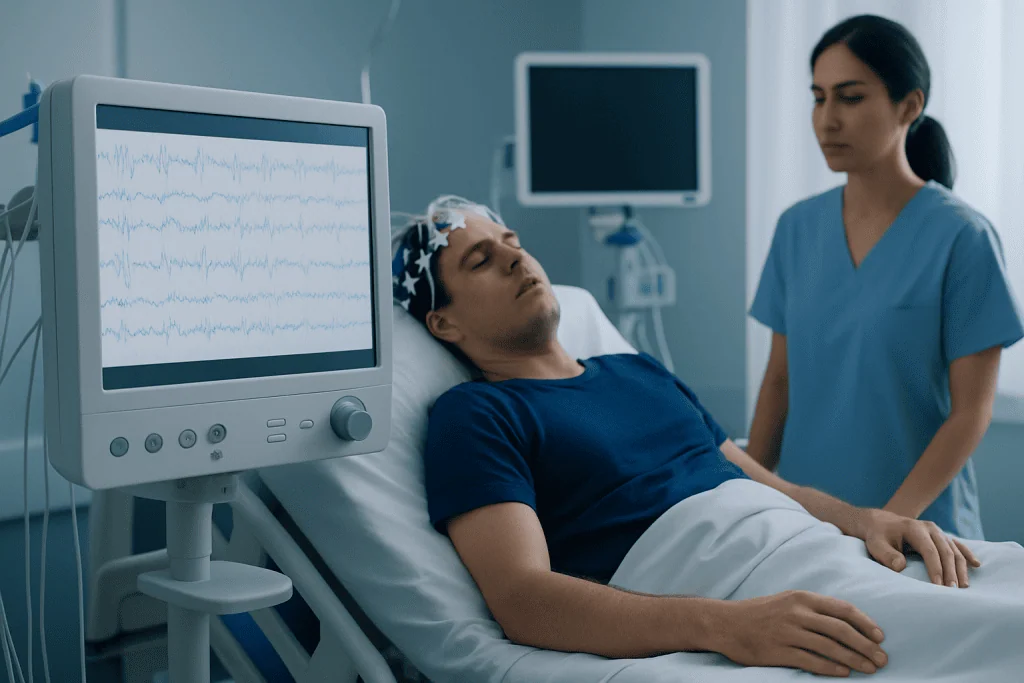
Idiopathic epilepsy can involve generalized seizures, which begin across both sides of the brain at the same time, or focal seizures, which begin in one area. Symptoms are not always dramatic. Some people have brief episodes of staring and reduced awareness, while others experience sudden muscle jerks or a convulsive seizure with loss of consciousness.
- Absence seizures: brief staring episodes, often with eyelid fluttering or small mouth movements, followed by a quick return to normal activity.
- Myoclonic seizures: sudden, brief muscle jerks, commonly affecting the arms or shoulders and sometimes causing objects to be dropped.
- Generalized tonic-clonic seizures: loss of consciousness with body stiffening, rhythmic jerking, and a recovery period that may include fatigue, headache, confusion, or muscle soreness.
- Focal seizures: changes in awareness, sensations, behavior, movement, emotions, or memory that may remain localized or spread to a bilateral convulsive seizure.
Seizures may occur at particular times, such as shortly after waking, during sleep, or after missed sleep. A person may have warning symptoms, called an aura, before some focal seizures; however, many seizures occur without warning. Witness accounts, smartphone videos when safely obtained, and a seizure diary can be very valuable because a person may not remember the event itself.
Why It Happens and Who May Be at Risk

In idiopathic epilepsy, there is usually no single event that can be blamed for the condition. Differences in how brain cells communicate and regulate electrical activity are thought to contribute. Genetic factors can influence this susceptibility, and epilepsy may occur more often among relatives in some families. Still, having a relative with epilepsy does not mean another family member will develop it.
Some epilepsy syndromes start in childhood or adolescence, while others can begin at different stages of life. The age when seizures begin, the exact seizure pattern, development and learning history, family history, and EEG results all help clinicians determine whether a specific syndrome is likely. This information matters because different seizure types can respond differently to particular medicines.
Factors such as sleep deprivation, missed anti-seizure medicine, heavy alcohol use, recreational drugs, acute illness, emotional stress, and flashing lights may make seizures more likely in susceptible people. Photosensitivity affects only some individuals with epilepsy. These factors are often called triggers, but they do not necessarily cause the underlying epilepsy; rather, they can lower the threshold for a seizure in someone already predisposed to one.
How Idiopathic Epilepsy Is Diagnosed
Diagnosis begins with a careful description of what happened before, during, and after an episode. A neurologist will ask about loss of awareness, movements, injuries, tongue biting, incontinence, confusion afterward, sleep, medicine use, alcohol or substance exposure, and family history. Episodes that resemble seizures can also result from fainting, sleep disorders, migraine, panic attacks, movement disorders, or functional neurological symptoms, so an accurate history is essential.
An electroencephalogram, or EEG, records the brain’s electrical activity. Certain patterns can support a diagnosis of generalized or focal epilepsy. A normal EEG does not rule out epilepsy because abnormal activity may not occur during a short recording. Sleep-deprived EEG, longer ambulatory monitoring, or video-EEG monitoring may be considered when the diagnosis remains uncertain.
Brain magnetic resonance imaging (MRI) may be recommended to look for structural causes, especially after focal seizures, unusual neurological findings, or adult-onset seizures. Blood tests can identify temporary metabolic problems that may provoke a seizure. Genetic testing is not required for everyone, but it may be useful when there is a suggestive family history, early onset, developmental concerns, or features of a particular epilepsy syndrome.
Treatment Options and Ongoing Management
Anti-seizure medicine is the main treatment for idiopathic epilepsy. The most suitable choice depends on the seizure type, possible epilepsy syndrome, age, sex, other health conditions, pregnancy plans, potential interactions with other medicines, and personal preferences. A medicine that is effective for one seizure type may not be appropriate for another, which is why specialist assessment is important before treatment is adjusted.
Many people become seizure-free with the first appropriately selected medicine, while others need a different medicine or a combination of treatments. Medicines should be taken exactly as prescribed and should not be stopped suddenly unless a clinician gives specific guidance, as abrupt withdrawal can trigger seizures. Follow-up appointments allow the care team to review seizure control, side effects, mood, sleep, bone health where relevant, and practical concerns such as work, school, driving, and contraception.
If seizures continue despite treatment, referral to an epilepsy specialist or comprehensive epilepsy center can help clarify the diagnosis and consider additional options. These may include prolonged video-EEG monitoring, a review of medicines, dietary therapy in selected situations, neuromodulation, or epilepsy surgery when a focal seizure source is identified. Acibadem International’s multidisciplinary specialists and JCI-accredited hospitals can assess and treat epilepsy for international patients when coordinated neurological care is needed.
Daily Living, Safety, and Self-Care
Consistent routines can support seizure control. Taking medicine at the same time each day, getting adequate sleep, eating regularly, staying hydrated, and limiting alcohol can reduce avoidable risks. A seizure diary may record seizure dates, duration, possible triggers, missed doses, menstrual-cycle patterns where relevant, illness, and side effects. This information can help a clinician decide whether treatment needs adjustment.
Safety planning should be practical and individualized. People who have ongoing seizures may need to avoid swimming alone, bathing unsupervised, climbing heights, using open flames, or operating dangerous machinery until their clinician advises otherwise. Showering rather than bathing, using a shower chair if needed, and informing trusted family members, colleagues, or teachers about seizure first aid can improve safety without unnecessarily limiting independence.
During a convulsive seizure, bystanders should stay calm, protect the person from injury, cushion the head, loosen tight clothing around the neck, and turn the person onto their side when possible after the jerking stops. Nothing should be placed in the person’s mouth, and they should not be restrained. It is helpful to time the seizure and remain with the person until they are fully awake and safe.
When to Seek Medical Care
Anyone who has a first suspected seizure should receive prompt medical evaluation. Emergency care is needed if a seizure lasts five minutes or longer, if another seizure begins before the person recovers, or if there is difficulty breathing, a serious injury, pregnancy, diabetes, or seizure activity in water. Emergency assessment is also important when the person does not return to their usual level of awareness.
People with diagnosed epilepsy should contact their clinician promptly if seizure frequency changes, new symptoms develop, medicine side effects become troublesome, doses are repeatedly missed, or pregnancy is planned or suspected. Treatment may need review before conception because seizure control and medicine safety both require careful planning.
It is also sensible to seek specialist advice when events are uncertain, when seizures continue despite treatment, or when epilepsy affects mood, memory, work, education, relationships, or confidence. With an accurate diagnosis, an individualized plan, and regular follow-up, many people with idiopathic epilepsy are able to lead active and fulfilling lives.
Frequently asked questions
Is idiopathic epilepsy the same as genetic epilepsy?
Not exactly, although the terms often overlap. Idiopathic epilepsy traditionally meant no cause could be identified, while genetic epilepsy indicates that genetic factors are believed to play a role. Many syndromes formerly called idiopathic are now classified as genetic based on clinical and EEG features.
Can idiopathic epilepsy go away?
Some epilepsy syndromes, particularly certain childhood syndromes, may become less active or remit over time. Other forms can continue into adulthood but may still be well controlled with treatment. A neurologist can discuss the likely outlook based on the person’s seizure type, syndrome, EEG, and response to medicine.
Can stress cause idiopathic epilepsy?
Stress does not usually cause epilepsy itself. However, stress may contribute to poor sleep, missed medication, or other changes that lower the seizure threshold in a person with epilepsy. Stress-management strategies can be a useful part of an overall care plan.
What should someone do after a seizure?
After a seizure, the person should rest in a safe position, preferably on their side if they are drowsy or nauseated. A responsible adult should stay nearby until awareness returns and should note the seizure duration and any unusual features. Medical advice is needed after a first seizure or when the recovery is not typical for that person.
Can people with idiopathic epilepsy drive?
Driving rules vary by country and are generally based on seizure control and the period of time a person has been seizure-free. A clinician can explain the relevant legal and medical requirements. People should report seizures honestly and avoid driving whenever they do not meet local safety criteria.
Does a normal MRI rule out epilepsy?
No. Many people with idiopathic or genetic epilepsy have a normal brain MRI because the condition may involve electrical network differences rather than a visible structural abnormality. EEG findings, seizure history, and clinical assessment remain important parts of diagnosis.
References
- International League Against Epilepsy
- World Health Organization
- National Institute of Neurological Disorders and Stroke
- Centers for Disease Control and Prevention
- Epilepsy Foundation
This article is for general information only and is not a substitute for professional medical advice. Please consult a qualified doctor about your individual situation.
Epilepsy in Turkey — costs, top hospitals & a free quote
JCI-accredited · board-certified surgeons · reply within 24h
Add us as a Preferred Source to see more of our trusted health content across Google Search, AI Overviews and Discover.

Neurology
Diagnosis and treatment of disorders of the brain, spinal cord, nerves and muscles.
51 specialists in this unitMore from the Health Library

Metachromatic Leukodystrophy: What Patients Need to Know

Digestive System Amazing Facts: A Complete Medical Overview

Leg Stretches — Explained by Medical Evidence, Not Myths

Jojoba Oil Benefits — Explained by Medical Evidence, Not Myths

First Aid: A Complete Medical Overview