Pictures of Cysts: An Evidence-Based Guide for Patients

Cysts are fluid-filled or semi-solid sacs that can form in the skin or deeper tissues. Pictures of cysts may show common features, but many lumps look similar and need professional assessment.
Key Takeaways
- Cysts are fluid-filled or semi-solid sacs that can form in the skin or deeper tissues.
- Pictures of cysts may show common features, but many lumps look similar and need professional assessment.
- Redness, pain, drainage, rapid growth, or fever may suggest infection or another condition that needs prompt care.
- Many cysts are harmless and can be monitored, while others may need drainage, removal, or treatment of the underlying cause.
- A doctor may use physical examination, ultrasound, or biopsy to confirm whether a lump is a cyst.
Pictures of cysts can be useful for recognizing common patterns, such as a smooth lump under the skin or a red, inflamed bump, but images alone cannot make a diagnosis. This guide explains what cysts may look like, how they differ from other skin lesions, and when medical evaluation is important.
Overview: What Pictures of Cysts Can and Cannot Show
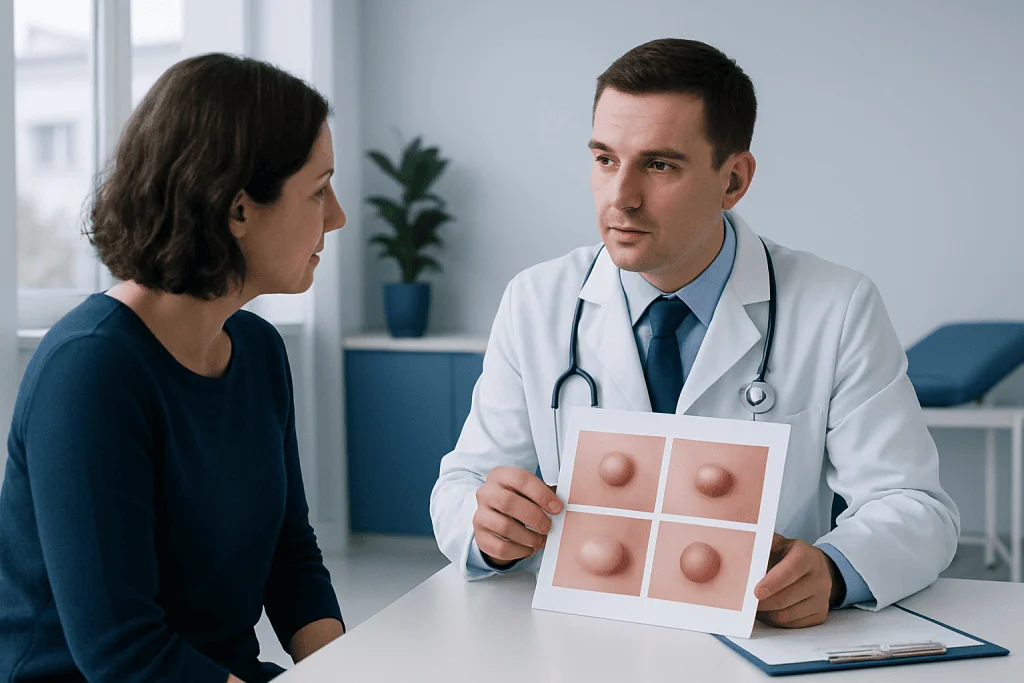
Pictures of cysts often show a round or oval lump, sometimes with a visible pore, smooth surface, or mild swelling. Some cysts are skin-colored, while others may appear white, yellowish, red, or darker than the surrounding skin depending on inflammation, skin tone, and the type of material inside the cyst.
Even so, photographs have limits. A lump that looks like a cyst may instead be an abscess, lipoma, swollen lymph node, ingrown hair, or another skin condition. The feel of the lump, how quickly it changed, whether it is tender, and whether there is drainage are details that images cannot fully capture.
For patients searching online, it helps to think of pictures as a starting point rather than a final answer. They may support recognition of common cyst patterns, but a qualified clinician is the best person to confirm the diagnosis and recommend the right next step.
How Common Cysts Usually Look

Many skin cysts appear as a dome-shaped bump under the skin. An epidermoid cyst, one of the most common types, may look like a small, firm, movable lump with a tiny dark central opening called a punctum. It can stay the same size for a long time or grow slowly over months to years. Readers looking for epidermoid cyst information often notice these features first.
Pilar cysts, which often develop on the scalp, are usually smooth, firm, and round. They may be easier to feel than to see if they are hidden by hair. Milia are much smaller than typical cysts and often appear as tiny white or yellow bumps on the face, especially around the eyes.
An inflamed or infected cyst can look very different from a quiet, noninflamed one. It may become red, tender, warm, swollen, and more noticeable on the skin surface. In some cases, it may drain thick white, yellow, or foul-smelling material, which often prompts people to seek care.
- Typical noninflamed cyst: smooth, round, slow-growing, usually not painful
- Inflamed cyst: red, tender, swollen, may feel warm
- Draining cyst: may leak keratin, pus, or bloody fluid
- Scalp cyst: often firm and hidden under hair
Cysts Compared With Other Lumps and Bumps
One reason online image searches can be confusing is that many common skin lumps resemble cysts. A lipoma, for example, is a soft fatty growth under the skin. It is often softer and more rubbery than a cyst and usually does not have a central pore or signs of surface inflammation.
An abscess may be mistaken for a cyst because both can be swollen and painful. However, an abscess is usually caused by infection and often becomes red, warm, and increasingly tender over a shorter period. It may also come with fever or a general feeling of illness. A boil is a related problem that starts in a hair follicle and may form a pus-filled lump.
Other look-alikes include swollen lymph nodes, warts, acne nodules, ganglion cysts near joints, and some benign or malignant skin tumors. This is why a persistent or changing lump should not be identified by photographs alone, especially if it is growing quickly, bleeding, ulcerating, or fixed to deeper tissues.
Symptoms That Matter More Than Appearance
When evaluating a possible cyst, doctors pay attention to symptoms as much as appearance. A painless, stable lump is often less concerning than one that has changed quickly. Rapid enlargement, increasing tenderness, redness, warmth, drainage, or repeated episodes of inflammation can point to infection or irritation.
The location of the lump also matters. Cysts on the scalp, face, neck, back, chest, groin, and genitals can all look different because of the surrounding skin and hair follicles. A lesion near a joint may suggest a different diagnosis, such as a ganglion cyst, while a tender lump in the armpit or groin could represent an enlarged lymph node rather than a skin cyst.
Doctors also ask how long the lump has been present, whether it has occurred before, and whether there is a history of acne, skin injury, shaving irritation, or family members with similar cysts. In some cases, recurring lumps can be associated with hidradenitis suppurativa or other chronic skin disorders rather than simple isolated cysts.
What Causes Cysts and Who Gets Them
Cysts can form for several reasons, depending on the type. Epidermoid cysts often develop when skin cells move deeper into the skin instead of shedding normally from the surface. These cells continue producing keratin, which collects inside a sac and gradually forms a lump. Trauma, clogged pores, or irritation of a hair follicle may contribute.
Other cysts arise from blocked glands, chronic inflammation, developmental changes, or inherited tendencies. Pilar cysts are more common on the scalp and may run in families. Acne-prone skin can increase the likelihood of some cyst-like lesions, while repeated friction or shaving may contribute to inflamed follicular bumps that resemble cysts.
Most cysts are benign, meaning they are not cancer. Still, not every bump is a harmless cyst. A careful medical evaluation is especially important when a lesion behaves unusually, has irregular borders, changes color, bleeds, or returns repeatedly after treatment.
How Doctors Diagnose a Cyst
Diagnosis usually begins with a medical history and physical examination. A doctor will look at the size, shape, location, color, and surface of the lesion and gently assess whether it is soft, firm, mobile, tender, or attached to deeper tissue. In many straightforward cases, this exam is enough to strongly suspect a cyst.
If the diagnosis is uncertain, imaging may help. Ultrasound is often useful for showing whether a lump is fluid-filled or solid and whether there are signs of infection or deeper extension. This can be especially helpful for larger masses, lesions in sensitive areas, or lumps that do not behave like a typical skin cyst. In some situations, further MRI imaging may be advised to evaluate deeper soft-tissue lesions.
If a lesion is removed, the tissue may be sent to a laboratory for confirmation. This examination under a microscope is the most reliable way to identify the exact type. When drainage is present, a sample may sometimes be tested if infection is suspected.
Treatment Options and Self-Care
Treatment depends on the type of cyst, its location, and whether it is causing symptoms. Small, painless cysts that are not changing may simply be monitored. If a cyst becomes bothersome, inflamed, recurrent, or cosmetically troubling, a doctor may discuss options such as observation, drainage, injection to reduce inflammation, or complete removal.
It is generally best not to squeeze, puncture, or cut a cyst at home. Doing so can increase the risk of infection, worsen inflammation, and make recurrence more likely because the cyst wall may remain under the skin. Warm compresses may provide comfort for an inflamed area, but they do not reliably remove the cyst itself.
Complete removal is the approach most likely to prevent a common skin cyst from coming back, because the cyst sac is taken out along with its contents. Depending on the case, this may involve a minor procedure such as cyst removal or, if infection is present, abscess drainage before definitive treatment. When a deeper or atypical lump is suspected, doctors may arrange biopsy or specialist review.
When to Seek Medical Care
Medical care is advisable if a lump is painful, red, warm, draining, rapidly growing, or keeps returning. Care is also important if the person has fever, the area is spreading, or the lesion is located near the eye, breast, genitals, or another sensitive area. Any persistent lump in a child should also be assessed by a clinician.
Urgent evaluation is especially important when a lump is hard and fixed, causes significant swelling, bleeds, forms an open sore, or is associated with weight loss or enlarged lymph nodes. These findings do not always mean a serious condition, but they should not be ignored.
For people who want a clear diagnosis rather than relying on pictures of cysts alone, specialist assessment can help distinguish a harmless cyst from other skin or soft-tissue conditions. Near the end of the care pathway, Acibadem International’s multidisciplinary specialists in JCI-accredited hospitals evaluate and treat cysts and related skin lesions for international patients when needed.
Frequently asked questions
Can pictures of cysts be used to diagnose a lump at home?
Pictures can help someone compare a lump with common cyst patterns, but they cannot confirm a diagnosis. Many conditions look similar in photographs, so a doctor may still need to examine the area or order imaging.
What does an infected cyst usually look like?
An infected or severely inflamed cyst often becomes red, swollen, warm, and tender. It may drain pus or thick material and can sometimes be associated with fever or worsening pain.
Are all cysts visible on the skin surface?
No. Some cysts are easy to see, while others are mostly felt as a lump under the skin. Deeper cysts may not be obvious from the outside and sometimes need ultrasound or other imaging for evaluation.
Is it safe to pop or squeeze a cyst?
It is usually not recommended to squeeze or puncture a cyst at home. This can increase inflammation, introduce infection, and leave part of the cyst wall behind, making recurrence more likely.
When should a cyst be removed?
Removal may be considered if the cyst is painful, infected, repeatedly inflamed, growing, or causing cosmetic or functional problems. A doctor can explain whether monitoring, drainage, or complete removal is the most suitable option.
Can a cyst be cancer?
Most common skin cysts are benign, but not every lump is a cyst. If a lesion changes quickly, bleeds, ulcerates, feels fixed, or has an unusual appearance, medical assessment is important to rule out other causes.
References
- American Academy of Dermatology
- National Health Service
- Mayo Clinic
- Merck Manual Consumer Version
- American College of Radiology
This article is for general information only and is not a substitute for professional medical advice. Please consult a qualified doctor about your individual situation.
Explore treatments in Turkey — costs, top hospitals & a free quote
JCI-accredited · board-certified surgeons · reply within 24h
Add us as a Preferred Source to see more of our trusted health content across Google Search, AI Overviews and Discover.

More from the Health Library

Ssris: What Patients Need to Know

Prevagen Cost: An Evidence-Based Guide for Patients

Hair Growth: A Complete Medical Overview

Liver Is Good: A Complete Medical Overview

Influenza B: A Complete Medical Overview