Reverse Shoulder Replacement: Candidacy, Procedure Steps, and Recovery Timeline

Reverse shoulder replacement is often used when shoulder arthritis and major rotator cuff damage occur together. The procedure reverses the ball-and-socket arrangement to improve stability and allow the deltoid muscle to power arm movement.
Key Takeaways
- Reverse shoulder replacement is often used when shoulder arthritis and major rotator cuff damage occur together.
- The procedure reverses the ball-and-socket arrangement to improve stability and allow the deltoid muscle to power arm movement.
- Recovery happens in stages, with sling use, guided physiotherapy, and gradual return to daily activities over several months.
- Many people experience meaningful pain relief and better function, but results depend on bone quality, muscle condition, and rehabilitation.
- As with any joint replacement, risks include infection, dislocation, nerve injury, implant loosening, and stiffness.
Reverse shoulder replacement is a type of shoulder arthroplasty that can reduce pain and restore function when the rotator cuff is severely damaged or a conventional shoulder replacement is not the best option. It works by changing the shoulder’s mechanics so the deltoid muscle can help lift the arm more effectively.
Overview: What Reverse Shoulder Replacement Is and How It Works
Reverse shoulder replacement is a specialized form of shoulder arthroplasty used when the shoulder is painful and weak, and the rotator cuff can no longer do its job well. In a healthy shoulder, the rounded top of the upper arm bone acts as the ball and the shoulder blade contains the socket. In a reverse design, these positions are switched: a ball component is attached to the shoulder blade and a socket component is attached to the upper arm.
This change is not simply a different implant shape. It shifts how the shoulder moves so that the deltoid muscle, rather than a damaged rotator cuff, can help raise the arm. For patients with severe cuff damage, complex arthritis, or certain failed prior surgeries, this design may offer better function and pain relief than a standard replacement.
Doctors usually consider reverse shoulder replacement after careful examination, imaging, and review of symptoms, function, and treatment history. It is not the right solution for every painful shoulder, but for selected patients it can make daily activities such as eating, dressing, and reaching overhead easier and less painful.
Who May Be a Candidate
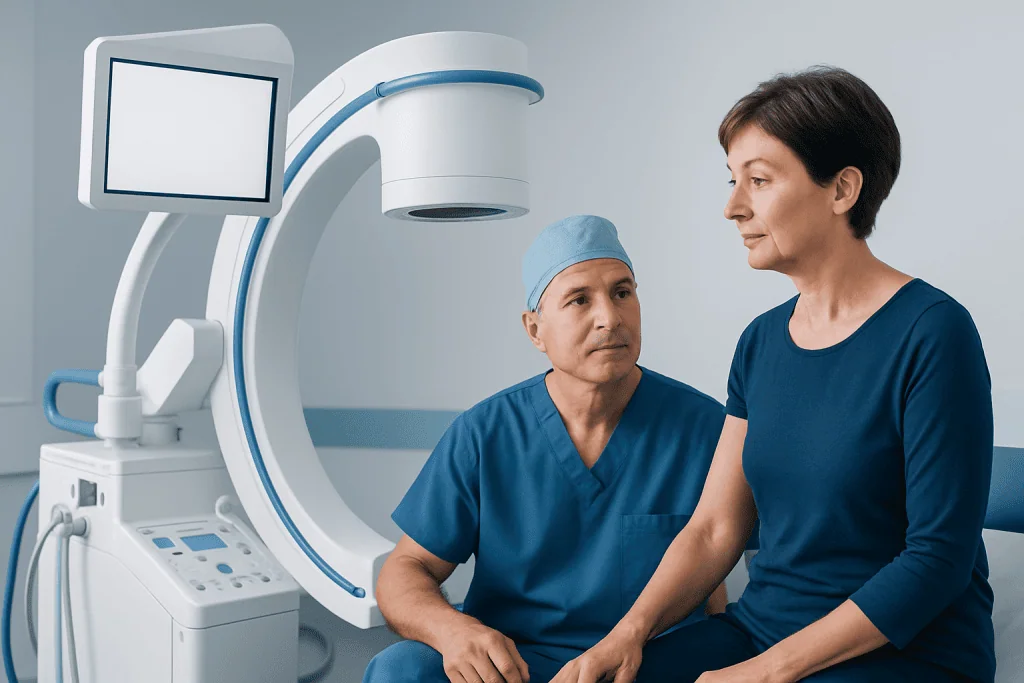
Candidacy for reverse shoulder replacement depends on the cause of shoulder pain and the condition of the muscles, tendons, bones, and joint surfaces. One of the most common reasons is rotator cuff tear arthropathy, a combination of major rotator cuff damage and shoulder arthritis. It may also be considered for some complex shoulder fractures in older adults, revision of failed shoulder replacement, severe instability, or long-standing shoulder dysfunction with weakness.
Patients often have persistent pain, trouble lifting the arm, difficulty sleeping on the affected side, and limitations with routine tasks despite non-surgical treatment. These treatments may include physiotherapy, pain-relieving medication, activity adjustment, or injections. When those measures no longer provide enough relief, surgery may be discussed.
Reverse shoulder replacement is not based on age alone. Surgeons also look at overall health, bone quality, nerve function, infection risk, and realistic rehabilitation goals. It may be less suitable in the presence of active infection, severe deltoid dysfunction, or some forms of major bone loss unless additional reconstructive planning is possible.
Related shoulder disorders may be evaluated alongside surgical planning, including shoulder impingement syndrome or advanced degenerative shoulder disease. In many cases, patients are also assessed within a broader orthopedic pathway that includes orthopedics and traumatology and structured rehabilitation.
Symptoms and Problems That Lead to Surgery

The main reasons people seek evaluation are pain and loss of function. Pain may be felt deep in the shoulder, over the upper arm, or around the front and side of the joint. It often becomes worse with reaching, lifting, combing hair, getting dressed, or trying to sleep. Some people also notice grinding, catching, or a sense that the shoulder is weak and unreliable.
Loss of motion is equally important. Patients may be unable to raise the arm above shoulder height, reach into a cabinet, or place the hand behind the back. Weakness can be especially noticeable when trying to lift the arm away from the body, which is common when the rotator cuff is torn and no longer helping stabilize the joint.
These symptoms can overlap with other shoulder conditions, including rotator cuff tear and advanced arthritis. What makes reverse shoulder replacement distinct is that it is generally considered when cuff damage is large or irreparable, and shoulder mechanics are significantly disrupted.
- Persistent shoulder pain that affects sleep or daily life
- Marked weakness when lifting or reaching
- Loss of motion despite therapy or injections
- Arthritis with severe rotator cuff damage
- Failed previous shoulder surgery or replacement in selected cases
How Doctors Diagnose the Problem and Plan Surgery
Diagnosis starts with a detailed medical history and physical examination. The orthopedic surgeon asks about pain location, previous injuries, falls, prior operations, and whether the patient can actively lift the arm. Muscle strength, range of motion, joint stability, and deltoid function are carefully checked because these factors influence whether a reverse implant is appropriate.
Imaging helps confirm the underlying problem and guide implant planning. Standard X-rays can show arthritis, joint position, bone wear, fracture patterns, and whether the humeral head has migrated due to cuff failure. MRI or ultrasound may be used to assess the rotator cuff, while CT scans can be especially useful for understanding bone shape and planning implant placement on the shoulder blade.
Before surgery, patients usually undergo routine preoperative assessment to review heart and lung health, medications, diabetes control, and infection risks. The surgeon also discusses goals and limitations. Reverse shoulder replacement can improve comfort and function, but it may not restore the shoulder to the feel or strength of a normal, uninjured joint.
Procedure Steps: What Happens During Reverse Shoulder Replacement
Reverse shoulder replacement is performed in an operating room, usually with general anesthesia and often with a regional nerve block to help control pain after surgery. After the shoulder is positioned and cleaned, the surgeon makes an incision, gently reaches the joint, and assesses the damaged surfaces and remaining soft tissues.
The arthritic or damaged humeral head is prepared first. The surgeon then prepares the socket side on the shoulder blade and fixes a baseplate to the bone. A rounded metal ball, called the glenosphere, is attached to this baseplate. On the arm side, the upper humerus is shaped to accept a stem and a socket-shaped liner. Together, these parts create the reversed ball-and-socket arrangement.
Once the components are inserted, the surgeon checks stability, range of motion, and tension in the surrounding tissues. The wound is then closed and the arm is placed in a sling. Depending on the case, patients may stay in hospital for monitoring, pain control, and early guidance on safe movement. This surgery is part of the broader field of shoulder and elbow surgery, and recovery is usually supported by a planned rehabilitation program.
In selected cases, reverse shoulder replacement may be used as a revision strategy after previous operations have failed. If additional mobility work is needed after surgery, doctors may also recommend coordinated physical therapy and rehabilitation to rebuild strength and function safely.
Benefits, Risks, and Possible Complications
The main benefits of reverse shoulder replacement are pain relief, improved ability to lift the arm, and better shoulder stability in patients whose rotator cuff no longer works well. Many people can return to basic self-care and household activities with less discomfort. The operation can be especially valuable when a standard shoulder replacement would be less effective because the cuff cannot support the joint properly.
However, every surgery has risks. Potential complications include infection, bleeding, blood clots, stiffness, dislocation of the prosthesis, fracture around the implant, nerve or blood vessel injury, and implant loosening over time. Some patients continue to have limited range of motion, especially for reaching behind the back or performing heavy overhead activities.
Long-term outcomes depend on several factors, including bone quality, implant positioning, deltoid function, the condition of remaining muscles and tendons, and commitment to rehabilitation. Following movement precautions and attending follow-up visits can help reduce complications and support the best possible result.
Recovery Timeline and Rehabilitation
Recovery after reverse shoulder replacement is gradual rather than immediate. In the first days after surgery, the focus is on pain control, wound care, and learning how to move safely while protecting the joint. A sling is usually worn for a period recommended by the surgeon. Patients are often encouraged to move the hand, wrist, and elbow early, while shoulder motion is introduced in a controlled way.
During the first several weeks, physiotherapy typically emphasizes gentle range-of-motion exercises and safe daily activity techniques. The exact plan varies with the patient’s diagnosis, bone quality, and whether any tendon repair or revision work was also performed. As healing progresses, strengthening exercises are added, especially to train the deltoid and surrounding muscles to support the new joint mechanics.
Many patients notice meaningful pain improvement within weeks, but regaining function takes longer. Daily activities such as eating, washing, and dressing may improve earlier than higher-demand tasks. A fuller recovery often continues over several months, and progress can vary from person to person. Heavy lifting, sudden jerking motions, and high-impact activities are usually limited or avoided based on medical advice.
- Early phase: pain management, sling use, and protected motion
- Middle phase: guided mobility exercises and gradual increase in function
- Later phase: strengthening, endurance, and return to routine activities
- Long-term: ongoing attention to shoulder mechanics and activity limits
When to Seek Medical Care and Ongoing Outlook
Medical care should be sought if shoulder pain is persistent, worsening, or limiting sleep, work, or everyday tasks. Urgent assessment is especially important after a fall, sudden loss of arm function, new deformity, fever, increasing redness, or rapidly worsening swelling. After surgery, patients should contact their care team promptly if they develop drainage from the wound, severe pain that is not improving, numbness, chest symptoms, or signs of infection.
The long-term outlook after reverse shoulder replacement is often favorable when the indication is appropriate and rehabilitation is followed carefully. Most patients are aiming for dependable pain relief and better shoulder use rather than unrestricted athletic performance. Understanding these goals before surgery helps align expectations with likely outcomes.
Continued follow-up is important because joint replacements should be monitored over time. Surgeons may check healing, implant position, strength, and function with repeat visits and imaging when needed. For international patients seeking evaluation and treatment, Acibadem International’s multidisciplinary specialists and JCI-accredited hospitals diagnose and treat shoulder conditions, including complex arthroplasty cases, through coordinated orthopedic care.
Frequently asked questions
What is the difference between reverse shoulder replacement and standard shoulder replacement?
In a standard shoulder replacement, the ball remains on the upper arm and the socket remains on the shoulder blade. In reverse shoulder replacement, those parts are switched so the deltoid muscle can help lift the arm when the rotator cuff is severely damaged. This makes it particularly useful for selected patients with cuff failure and arthritis.
Who is the best candidate for reverse shoulder replacement?
It is often best suited to people with severe shoulder pain and loss of function caused by irreparable rotator cuff damage, cuff tear arthropathy, certain complex fractures, or failed prior shoulder surgery. The final decision depends on imaging, muscle function, bone quality, and overall health. An orthopedic surgeon can determine whether it is the right option.
How long does recovery from reverse shoulder replacement take?
Recovery is gradual and usually unfolds over several months. Pain often improves earlier, while strength and shoulder function take longer to rebuild with guided rehabilitation. The exact timeline varies depending on the underlying problem, the surgical details, and how consistently postoperative instructions are followed.
Will reverse shoulder replacement restore full shoulder movement?
It can significantly improve motion and function, but it does not always restore normal movement in every direction. Many patients gain better ability to lift the arm and perform daily tasks, while some limitations may remain, especially for reaching behind the back or doing heavy overhead activity. The aim is better comfort and practical function.
What are the risks of reverse shoulder replacement?
Possible risks include infection, dislocation, stiffness, nerve injury, fracture, blood clots, and loosening or wear of the implant over time. These risks are carefully reviewed before surgery and reduced as much as possible through planning, sterile technique, and rehabilitation. Regular follow-up is important after the operation.
How painful is recovery after reverse shoulder replacement?
Some discomfort is expected after surgery, especially in the early period, but pain control plans are routinely used to make recovery more manageable. Many patients find that surgical pain gradually improves and is different from the chronic joint pain they had before the operation. The care team will also guide safe movement to help avoid unnecessary strain.
References
- American Academy of Orthopaedic Surgeons
- National Institute of Arthritis and Musculoskeletal and Skin Diseases
- American Shoulder and Elbow Surgeons
- National Health Service
- OrthoInfo
This article is for general information only and is not a substitute for professional medical advice. Please consult a qualified doctor about your individual situation.
Shoulder Replacement in Turkey — costs, top hospitals & a free quote
JCI-accredited · board-certified surgeons · reply within 24h
Add us as a Preferred Source to see more of our trusted health content across Google Search, AI Overviews and Discover.