Condoms Measurement Chart: What Patients Need to Know
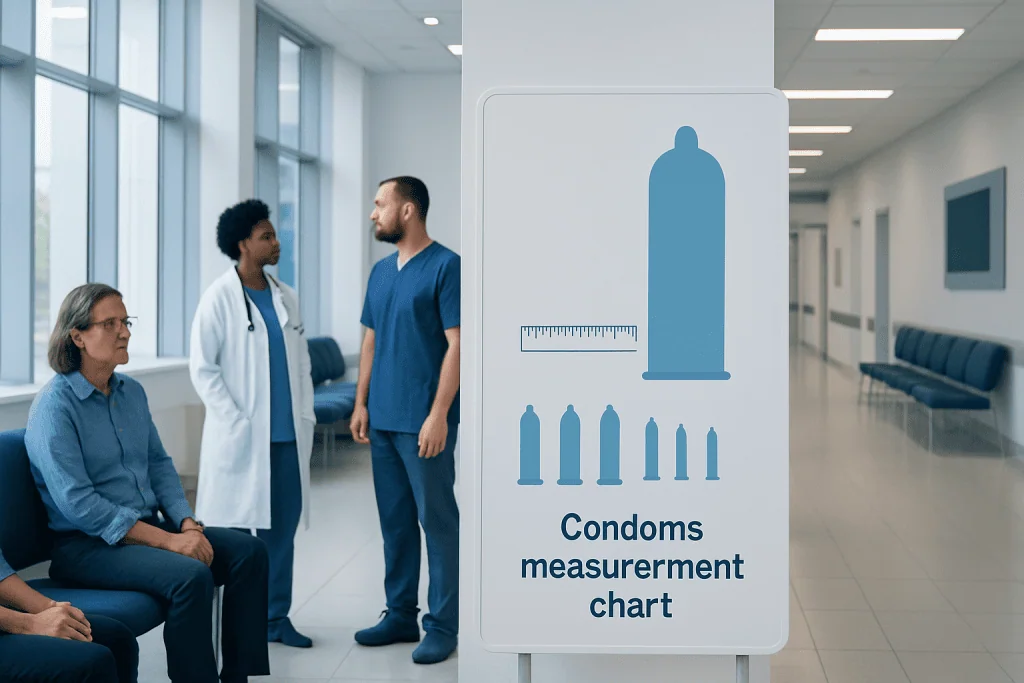
Condom fit is based mostly on girth, with length as a secondary consideration. A condom that is too tight, too loose, too short, or too long may be less comfortable and may work less reliably.
Key Takeaways
- Condom fit is based mostly on girth, with length as a secondary consideration.
- A condom that is too tight, too loose, too short, or too long may be less comfortable and may work less reliably.
- Measurements should be taken on an erect penis using a soft measuring tape or a strip of paper and ruler.
- Terms such as snug, regular, and large vary by brand, so package measurements matter more than the label.
- Persistent pain, erection changes, skin irritation, or problems using condoms should be discussed with a healthcare professional.
A condoms measurement chart is a practical guide that helps people choose a condom based mainly on penis girth and, secondarily, length. The right fit can improve comfort, reduce slipping or breakage, and support more reliable protection against pregnancy and sexually transmitted infections.
Overview: What a Condoms Measurement Chart Actually Tells You
A condoms measurement chart helps match a condom to penis size, especially girth, so that the condom feels secure and comfortable. In practical terms, most people should focus first on nominal width, which is the width of the condom when laid flat; this is the package measurement most closely linked to fit. Length matters too, but many standard condoms are long enough for a wide range of users, while width is often the factor that most affects slipping, tightness, and comfort.
Choosing the right size is not about appearance or comparing bodies. It is about helping a condom stay in place, unroll properly, and remain comfortable during sex. A well-fitted condom can lower the chance of rolling off, bunching, or feeling overly tight, all of which may interfere with correct use.
Because brands use different labels, a “regular” condom in one brand may fit differently from a “regular” condom in another. For that reason, a condoms measurement chart is most useful when it explains how to measure and how to compare those measurements with the size details on the package rather than relying on marketing terms alone.
How to Measure Correctly

Measurements should be taken when the penis is fully erect, because condom fit during sexual activity depends on erect size rather than flaccid size. A soft measuring tape works best. If one is not available, a strip of paper or string can be wrapped around the penis and then measured against a ruler.
To measure girth, the tape is wrapped around the thickest part of the shaft, usually near the middle. This number is the circumference. To estimate which condom width may be suitable, people usually compare this circumference with the package’s nominal width guidance. Exact conversion methods vary slightly by manufacturer, but in general, girth is the key measurement used to select size.
To measure length, place the tape or ruler at the base of the penis and measure to the tip. Pressing gently to the pubic bone can give a more consistent measurement, especially if there is abdominal fat at the base. It may help to measure more than once on different occasions and use the average result.
- Measure when fully erect.
- Record both girth and length.
- Prioritize girth for fit.
- Check the package for nominal width and total length.
- If between sizes, trying two nearby options may help identify the best fit.
How to Read a Condom Size Chart
A typical condoms measurement chart lists categories such as snug, standard, and large, along with measurements like nominal width and total length. The most important figure is usually nominal width. This tells the user how wide the condom is when flat, which influences how tightly or loosely it fits around the shaft when worn.
There is no single universal chart used by every manufacturer. One brand’s standard size may be close to another brand’s snug or large option. This is why reading the package details is more reliable than choosing based on descriptive words alone. If a chart is provided by the manufacturer, it should be followed for that specific product line.
People often assume length should determine size, but many condoms have enough stretch and length for a broad range of penis sizes. Width more commonly explains problems such as the condom slipping, feeling constricting, or failing to unroll smoothly. If length is shorter than the condom, extra rolled material near the base is usually less concerning than a poor width fit.
Signs the Fit Is Too Tight or Too Loose
A condom that is too tight may feel uncomfortable, leave marked pressure lines, be difficult to roll down, or contribute to loss of erection because of discomfort. Some people also notice more friction, reduced sensation in an unpleasant way, or concern about tearing when the fit feels overly stretched. Although condoms are designed to be elastic, comfort and correct use matter for reliable protection.
A condom that is too loose may slip during sex, bunch up, wrinkle excessively, or move out of place when withdrawing. A loose fit can make the condom feel insecure and may increase the risk that semen leaks or the condom comes off. For people who repeatedly experience slippage, using a smaller width may help.
It is also important to consider material and lubrication. A person may think a size is wrong when the main issue is actually sensitivity to latex, dryness, or inadequate lubrication. If itching, burning, rash, or irritation occurs, a clinician may look for contact dermatitis, yeast infection, or other skin conditions rather than a sizing problem alone. Concerns about persistent genital skin symptoms can sometimes overlap with conditions such as genital warts or other infections that need medical assessment.
Using Condoms Safely and Comfortably
The right fit works best when paired with correct use. The condom should be checked before opening to make sure the package is intact and within the expiration date. It should be opened carefully without teeth or sharp objects, then placed on the tip of the erect penis before genital contact and rolled down to the base.
Pinching the tip to leave space for semen can reduce pressure at the end of the condom. Water-based or silicone-based lubricant on the outside can reduce friction and improve comfort. Oil-based products should not be used with latex condoms because they can weaken the material. People with latex sensitivity may prefer non-latex options if suitable.
For those who continue to have difficulty with fit, a clinician in urology care or sexual health can help review measuring technique, condom materials, and other factors such as foreskin comfort, skin irritation, or erection-related concerns. If fit issues occur together with pain, curvature, or trouble maintaining erections, broader assessment may be helpful, including review for erectile dysfunction treatment when appropriate.
Common Questions About Size, Sensation, and Reliability
Many people worry that using a larger condom will be more comfortable regardless of measurement, but a looser condom can increase the risk of slipping. Others choose a smaller condom hoping for a more secure feel, yet a too-tight fit can be uncomfortable and may discourage consistent use. The best size is the one that stays in place comfortably without excessive pressure.
Sensation depends on more than size alone. Thickness, material, lubrication, anxiety, and arousal can all affect how sex feels. Sometimes trying a different texture, a thinner product, or a different lubricant is more helpful than changing size categories.
If there are recurring symptoms such as painful intercourse, sores, discharge, or burning with urination, the issue may not be the condom itself. In these situations, medical evaluation is sensible because symptoms can be related to infection, inflammation, or skin conditions. Some people may need assessment for sexual health concerns or, in selected cases, supportive STD check-up services.
When to Seek Medical Care
Medical care is appropriate if condom use repeatedly causes pain, skin tearing, bleeding, significant rash, swelling, or burning. Professional advice is also important if condoms regularly break or slip despite careful sizing and correct use, since anatomy, skin sensitivity, or another underlying issue may be involved.
A person should also seek care for genital sores, warts, unusual discharge, painful urination, pelvic pain, testicular pain, or concerns after unprotected sex. These symptoms can have many causes, and a clinician can help determine whether testing or treatment is needed. Problems with erection, penile curvature, or discomfort during sex also deserve evaluation rather than self-diagnosis.
Near the end of the care pathway, some people benefit from specialist review if symptoms continue or if they want confidential guidance about sexual health and prevention. Acibadem International’s multidisciplinary specialists and JCI-accredited hospitals diagnose and treat sexual health concerns for international patients when further assessment is needed.
Prevention, Self-Care, and Practical Tips
Keeping a small range of correctly stored condoms available can make correct use easier. Condoms should be kept in a cool, dry place and not stored for long periods in hot environments such as a car. Checking the expiration date and package condition each time is a simple but important habit.
Trying one or two nearby sizes from reputable brands may help identify the most comfortable option. If between sizes, many people find that slight differences in nominal width matter more than broad labels such as regular or large. Reading the package carefully is often more useful than relying on assumptions.
People who have persistent genital irritation should avoid repeatedly switching products without guidance, because the issue may be sensitivity to ingredients, lubrication, or a skin condition rather than fit alone. A doctor or sexual health clinician can provide individualized advice, especially if there is a history of allergy, eczema, recurrent infections, or repeated condom failure.
Frequently asked questions
What is the most important measurement on a condoms measurement chart?
The most important measurement is usually girth, which is the circumference of the erect penis. This is because condom width tends to affect fit more than length for most people.
How does someone measure for the right condom size?
The penis should be measured when fully erect. Girth is measured around the thickest part of the shaft, and length is measured from the base to the tip, then these numbers are compared with the manufacturer's size information.
Are standard condoms long enough for most people?
In many cases, yes. Standard condoms are often designed with enough length and stretch to fit a wide range of users, while width is usually the more important factor for comfort and security.
What are signs that a condom is too small?
A condom may be too small if it feels painfully tight, is hard to unroll, leaves deep pressure marks, or contributes to discomfort during sex. Repeated breakage or reduced comfort may also suggest the fit should be reviewed.
What are signs that a condom is too large?
A condom may be too large if it slips, bunches, wrinkles excessively, or feels insecure during use. A loose fit can interfere with correct use and may make protection less reliable.
Can a condom allergy be mistaken for a sizing problem?
Yes. Itching, burning, redness, or rash after condom use may be related to latex sensitivity, lubricant ingredients, or another skin condition rather than size alone. A healthcare professional can help identify the cause.
This article is for general information only and is not a substitute for professional medical advice. Please consult a qualified doctor about your individual situation.
Explore treatments in Turkey — costs, top hospitals & a free quote
JCI-accredited · board-certified surgeons · reply within 24h
Add us as a Preferred Source to see more of our trusted health content across Google Search, AI Overviews and Discover.

More from the Health Library

Arm Stretches: What Patients Need to Know

Aphasia: An Evidence-Based Guide for Patients

Broken Knuckle — Explained by Medical Evidence, Not Myths

Left Anterior Fascicular Block — Explained by Medical Evidence, Not Myths

Cod Liver Oil: A Complete Medical Overview