Stimulation: What Patients Need to Know

Stimulation can be natural, such as sensory input, or medical, such as electrical or magnetic therapy. Doctors use stimulation in several ways: to test nerves and muscles, relieve symptoms, and support rehabilitation.
Key Takeaways
- Stimulation can be natural, such as sensory input, or medical, such as electrical or magnetic therapy.
- Doctors use stimulation in several ways: to test nerves and muscles, relieve symptoms, and support rehabilitation.
- Not all stimulation treatments are the same; benefits, risks, and goals depend on the condition being treated.
- Medical stimulation should be guided by a qualified clinician, especially for people with implants, seizures, or heart conditions.
- Persistent symptoms such as weakness, pain, tremor, numbness, or changes in movement need professional evaluation.
Stimulation refers to activating the body or brain with signals such as touch, sound, light, or controlled electrical impulses. In medicine, it can describe a normal biological response, a diagnostic test, or a treatment used to improve symptoms and function.
Overview: What stimulation means in health care
Stimulation is the activation of cells, nerves, muscles, or brain networks by a signal. That signal may be natural, such as sound reaching the ear, touch on the skin, or light entering the eye. It may also be medical, using carefully controlled electrical, magnetic, or sensory input to help diagnose a problem or improve symptoms.
In everyday health discussions, the word can sound broad because it applies to many body systems. A clinician may talk about stimulating a nerve to test how well it works, stimulating a muscle during rehabilitation, or stimulating specific brain areas to help manage certain neurological symptoms. In each case, the basic idea is the same: a targeted input is used to trigger a response.
For patients, it helps to think of stimulation as a tool rather than a single treatment. The purpose may be to measure nerve function, reduce pain, improve movement, support recovery after injury, or modulate abnormal signals in the nervous system. Whether stimulation is appropriate depends on the diagnosis, the severity of symptoms, and the person’s overall health.
How stimulation works in the body
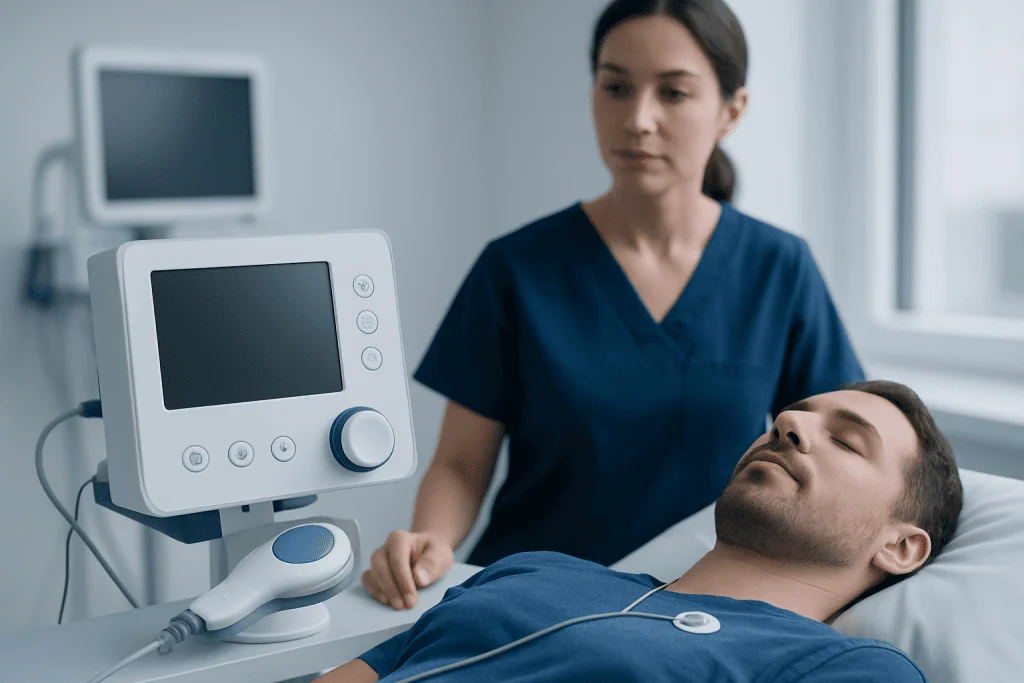
The nervous system relies on electrical and chemical messages. Nerves carry signals between the brain, spinal cord, muscles, and organs, allowing the body to move, feel, and regulate many automatic functions. Medical stimulation works by influencing these signals in a controlled way.
For example, electrical stimulation can make a muscle contract, which may help maintain strength or retrain movement during rehabilitation. Nerve stimulation may alter how pain signals travel, sometimes reducing discomfort. Brain stimulation aims to affect specific circuits involved in movement, mood, or other functions, depending on the condition being treated.
Stimulation is not always electrical. Some techniques use magnetic fields, while others use sensory stimulation through sound, touch, or visual cues. The method chosen depends on the body system involved and the treatment goal.
- Sensory stimulation: uses touch, sound, light, or movement-based input
- Electrical stimulation: sends low-level currents to nerves or muscles
- Magnetic stimulation: uses magnetic fields to influence brain activity
- Functional stimulation: helps support a specific task, such as movement or bladder control
Common medical uses of stimulation

Stimulation is used across many areas of medicine. In rehabilitation, therapists may use electrical stimulation to help muscles activate after injury, surgery, or a neurological event. This can be part of a broader recovery plan that includes physical therapy, balance training, and exercises to improve coordination.
In neurology and pain medicine, nerve stimulation may be considered when symptoms do not respond well enough to standard care. Depending on the diagnosis, stimulation may help reduce chronic pain, tremor, muscle stiffness, or abnormal movement patterns. Some patients with advanced movement symptoms may be evaluated for deep brain stimulation as part of specialist care.
Doctors also use stimulation for diagnosis. Nerve conduction studies and related tests apply small stimuli to assess how quickly and effectively nerves transmit signals. These tests can help evaluate weakness, numbness, tingling, or suspected nerve injury. In selected patients, therapies connected with neuromodulation may be discussed when symptoms arise from altered nerve signaling.
Because stimulation can serve different purposes, patients may hear the term in connection with conditions such as Parkinson’s disease, chronic pain, stroke recovery, or certain bladder and bowel disorders. The exact meaning depends on the clinical context, so it is reasonable to ask what type of stimulation is being recommended and what the goal is.
Conditions that may involve stimulation therapies
Stimulation therapies are not limited to one diagnosis. They may be used in neurological disorders, pain conditions, and rehabilitation settings. In some cases, stimulation aims to improve function; in others, it helps manage symptoms when medications or routine therapy have not provided enough relief.
Examples include movement disorders, nerve-related pain, muscle weakness after injury, and recovery after stroke. Patients with tremor, stiffness, gait problems, or reduced motor control may be assessed by a multidisciplinary team to decide whether targeted stimulation has a role. Related care can overlap with conditions such as epilepsy or other neurological disorders, where careful evaluation is especially important before any brain-based intervention is considered.
Pelvic floor and bladder conditions may also involve stimulation-based approaches. In women’s health and urology, selected patients may benefit from conservative or device-based treatments designed to improve nerve-muscle coordination. This is why a doctor may suggest additional evaluation before recommending therapies such as pelvic floor therapy.
Not every patient with these symptoms needs a stimulation treatment. Many people improve with medication, exercise, rehabilitation, counseling, or watchful follow-up. A clear diagnosis remains the starting point, because similar symptoms can have very different causes.
Diagnosis and evaluation before treatment
Before recommending stimulation, doctors first identify the problem being treated. This usually begins with a medical history and physical examination. The clinician will ask about the onset of symptoms, what makes them better or worse, past illnesses, medications, implanted devices, and any history of seizures, heart rhythm problems, or pregnancy.
Further testing depends on the symptoms. A patient with numbness or weakness may need nerve conduction studies, electromyography, blood tests, or imaging. A person with tremor or movement changes may be assessed by a neurologist, and someone with persistent pain may need evaluation to determine whether the pain is nerve-related, musculoskeletal, or due to another cause.
Safety screening is an important part of the process. Some forms of stimulation are not suitable for people with certain pacemakers, implanted defibrillators, metal implants in specific locations, skin breakdown at the treatment site, uncontrolled seizures, or untreated medical conditions. The health team also considers the patient’s goals, daily activities, and response to prior treatments.
When stimulation is considered for a more complex condition, care may involve neurologists, rehabilitation specialists, pain specialists, neurosurgeons, physiotherapists, and psychologists. Near the end of the care pathway, patients may also learn that Acibadem International’s multidisciplinary specialists and JCI-accredited hospitals diagnose and treat conditions that may involve stimulation-based therapies for international patients.
Treatment options, benefits, and possible risks
The best-known stimulation treatments include transcutaneous electrical nerve stimulation, neuromuscular electrical stimulation, spinal or peripheral nerve stimulation, and certain forms of brain stimulation. Some are noninvasive and used through the skin; others involve implanted devices and are reserved for carefully selected patients. The choice depends on the body area involved, the symptom pattern, and the expected benefit.
Potential benefits vary. Some patients notice better muscle activation, less pain, improved walking, or reduced tremor. Others may have more modest improvement, or no meaningful change. For this reason, realistic expectations matter: stimulation often works best as one part of a wider treatment plan, not as a stand-alone solution.
Possible side effects depend on the method used. Mild skin irritation, temporary discomfort, tingling, headache, or muscle soreness can occur with some noninvasive approaches. Implanted devices carry additional risks such as infection, lead movement, hardware problems, or the need for later adjustments. These treatments should always be supervised by qualified professionals.
Follow-up is important because settings may need to be adjusted over time. A good treatment plan includes monitoring symptoms, tracking functional changes, and reviewing whether the therapy continues to meet the patient’s goals safely.
Self-care, practical questions, and when to seek medical care
Patients who are offered stimulation therapy can prepare by asking practical questions. It is helpful to understand the treatment goal, how many sessions may be needed, whether the effect is expected to be temporary or ongoing, and what signs suggest the treatment is helping. Patients should also tell the care team about all medications, implants, skin issues, and any history of seizures or heart problems.
At home, general self-care still matters. Good sleep, gentle activity as advised, adherence to physical therapy or exercise plans, and managing long-term conditions such as diabetes can support better nerve and muscle health. Patients should not start home electrical devices without medical guidance, especially if they have heart disease, are pregnant, or have neurological symptoms that have not yet been explained.
Medical care should be sought promptly if symptoms are new, worsening, or affecting daily life. This includes sudden weakness, numbness on one side, severe headache, new confusion, loss of balance, new seizure activity, fainting, chest pain, or loss of bladder or bowel control. A doctor should also review persistent tremor, ongoing nerve pain, unexplained muscle spasms, or rehabilitation progress that has stalled.
After a stimulation treatment has started, patients should contact their clinician if they develop severe pain, skin injury, signs of infection, a major change in symptoms, or device-related concerns. Timely review helps make treatment safer and more effective.
Frequently asked questions
What does stimulation mean in medicine?
In medicine, stimulation means using a signal to activate part of the body, such as a nerve, muscle, or brain region. The signal may be natural, electrical, magnetic, or sensory, depending on the purpose.
Is stimulation always a treatment?
No. Stimulation may be used for diagnosis, rehabilitation, or symptom control. For example, doctors can stimulate nerves during testing, while therapists may use stimulation to support muscle activity during recovery.
Is electrical stimulation safe?
Electrical stimulation is often safe when it is selected appropriately and supervised by a qualified clinician. Safety depends on the person’s health history, skin condition, symptoms, and whether they have implanted devices such as a pacemaker.
Who may benefit from stimulation therapy?
People with certain pain conditions, movement disorders, muscle weakness, or rehabilitation needs may benefit from stimulation therapy. Whether it is useful depends on the diagnosis, severity of symptoms, and response to other treatments.
Can stimulation cure a condition?
Usually, stimulation is used to manage symptoms or improve function rather than provide a cure. Some patients experience meaningful relief, but results vary and ongoing follow-up is often needed.
When should someone talk to a doctor about stimulation?
A doctor should be consulted when symptoms such as pain, weakness, tremor, numbness, or movement changes are persistent or worsening. Professional evaluation is important before using any stimulation device, especially if symptoms are unexplained.
This article is for general information only and is not a substitute for professional medical advice. Please consult a qualified doctor about your individual situation.
Explore treatments in Turkey — costs, top hospitals & a free quote
JCI-accredited · board-certified surgeons · reply within 24h
Add us as a Preferred Source to see more of our trusted health content across Google Search, AI Overviews and Discover.

More from the Health Library

Urostomy — Explained by Medical Evidence, Not Myths

Over the Counter Nsaids for Gout: What Patients Need to Know

Seasonal Depression: A Complete Medical Overview

Popeyes Chicken Dippers: Nutrition and Diet Considerations

Watermelon Water — Explained by Medical Evidence, Not Myths