Prone Position: An Evidence-Based Guide for Patients

The prone position means lying face down on the stomach. Healthcare teams use prone positioning for certain exams, procedures, surgeries, and some breathing problems.
Key Takeaways
- The prone position means lying face down on the stomach.
- Healthcare teams use prone positioning for certain exams, procedures, surgeries, and some breathing problems.
- Benefits depend on the situation and may include better access to the back or improved lung mechanics in selected patients.
- Risks can include pressure injury, discomfort, nerve compression, and breathing difficulty in some people.
- Infants should not be placed prone for routine sleep because it increases the risk of sleep-related harm.
- A doctor should guide prone positioning if a person has breathing trouble, pain, recent surgery, or limited mobility.
The prone position meaning is simple: a person lies flat on the stomach, usually with the head turned to one side. In medicine and daily life, this body position may be used for physical exams, some therapies, surgery, and selected breathing support situations, but it is not appropriate for everyone.
Overview: What Does Prone Position Mean?
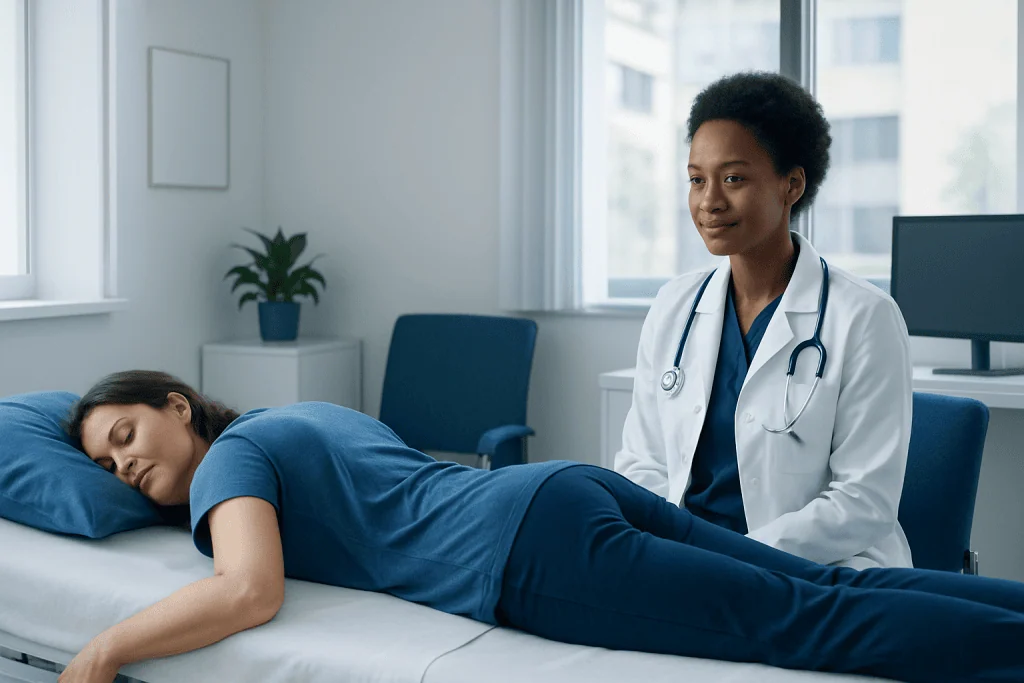
The prone position meaning is lying flat on the stomach with the chest facing downward. The head is usually turned to one side, and the arms may rest beside the body, above the head, or in another supported position depending on comfort or medical need. This is the opposite of the supine position, which means lying on the back.
In everyday life, some people use the prone position during stretching, massage, or rest. In healthcare, it has more specific uses. Doctors, nurses, physical therapists, and surgeons may position a patient prone to examine the back, perform imaging or procedures, support rehabilitation, or improve breathing in carefully selected hospital patients.
Although the term is straightforward, the purpose of prone positioning can differ widely from one person to another. For example, a healthy adult lying on the stomach briefly during an examination is very different from a critically ill patient who is turned prone under close monitoring. Because of this, the safety and benefits of the position depend on the person’s age, symptoms, and overall health.
How the Prone Position Is Used in Daily Life and Medicine
Outside the hospital, the prone position may be used during exercise, certain yoga poses, stretching routines, or manual therapy. Some adults also prefer stomach-lying for short periods because it can feel comfortable for the lower back or help them change position after sitting for a long time. Comfort, however, varies from person to person.
In clinical care, prone positioning is common during back examinations, skin checks, and some procedures involving the spine or posterior body. It is also used during selected operations when surgeons need access to the back, neck, or certain other structures. In these settings, careful padding and monitoring are used to protect the face, chest, nerves, and pressure points, especially during spine surgery.
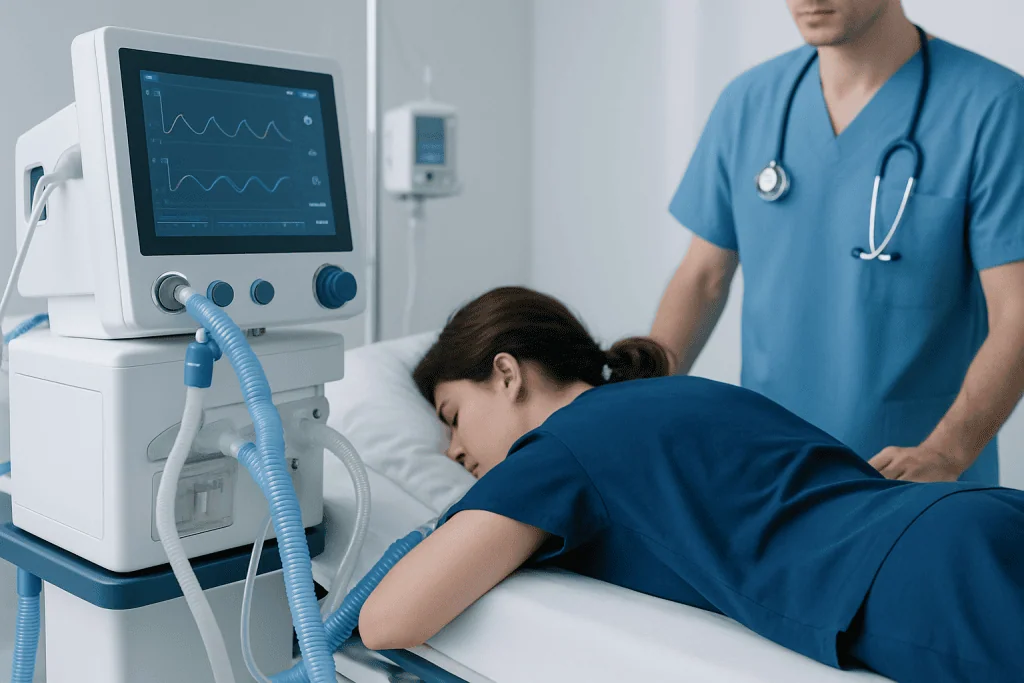
Prone positioning is also discussed in respiratory care. In some hospitalized patients with serious lung disease, turning the body prone may help lung expansion and oxygen exchange. This approach is guided by a medical team and may be considered in conditions such as pneumonia or severe respiratory failure, but it is not a home treatment for unexplained shortness of breath.
Another important point is that prone sleep guidance differs by age. For healthy adults, sleeping position is often a matter of comfort and medical advice. For infants, however, routine stomach sleeping is not recommended because safe sleep guidance advises placing babies on their backs.
Potential Benefits of the Prone Position
The benefits of the prone position depend on why it is being used. One practical advantage is better access to the back of the body. This helps clinicians assess the skin, muscles, spine, or wounds more effectively. It may also allow safer positioning for procedures and operations that involve the back or posterior structures.
For some adults, short periods in a prone or modified prone position may change pressure on the joints and muscles. Physical therapists sometimes use this position during rehabilitation to assess posture, movement, and muscle activation. In selected cases of back discomfort, an individualized program may include prone-based exercises, but these are usually tailored rather than universally recommended.
In hospital respiratory care, prone positioning can improve how air and blood flow are distributed within the lungs in certain severely ill patients. This can support oxygenation when used under professional supervision. It is one part of a broader treatment plan rather than a cure by itself, and people with respiratory symptoms may also require evaluation with pulmonary function testing or other assessments.
- May improve access to the back for examination or treatment
- Can help positioning during some surgeries and procedures
- May support selected rehabilitation exercises
- Can improve oxygenation in carefully chosen hospitalized patients
Risks, Side Effects, and Who May Need Extra Caution
Prone positioning is not risk-free. Even in healthy people, lying face down for a long time may cause neck strain, shoulder discomfort, facial pressure, or numbness in the arms if the joints are not well supported. People who already have joint problems, limited mobility, obesity, chronic pain, or recent injury may find the position uncomfortable or difficult to maintain.
In medical settings, pressure on the skin and soft tissues is an important concern. If a person remains prone for a long time, pressure injuries can develop on the face, chest, hips, knees, or toes unless padding and regular repositioning are used. Nerve compression and eye-related complications are also considered during prolonged surgery or intensive care positioning.
Some individuals should use extra caution or avoid prone lying unless a clinician advises it. This includes people with unstable fractures, recent abdominal or chest surgery, severe breathing distress, pregnancy-related discomfort in later stages, certain eye conditions, and major mobility limitations. If a person has significant back pain, neck pain, or nerve symptoms, evaluation for problems such as herniated disc may be needed before trying position-based exercises.
For infants, the biggest safety concern is different from adult discomfort: routine prone sleep increases the risk of sleep-related harm. Safe sleep guidance recommends placing babies on their backs on a firm, flat sleep surface unless a healthcare professional gives specific medical instructions.
Prone Position in Breathing Care and Recovery
One reason the prone position receives attention is its role in breathing support. In some patients with serious lung illness, especially in the hospital, lying prone can reduce pressure from the heart and abdominal contents on parts of the lungs. This may help more lung areas open and participate in gas exchange.
It is important to keep this in context. Prone positioning for breathing problems is a structured medical intervention, not simply lying on the stomach at home. Hospital teams choose it carefully, monitor oxygen levels and comfort, and watch for complications such as pressure injury or accidental movement of oxygen devices. People with ongoing cough, fever, or chest symptoms may need assessment for conditions such as chronic obstructive pulmonary disease (COPD) or other lung disorders rather than trying self-treatment alone.
During recovery or rehabilitation, a clinician may suggest modified prone positions, such as support with pillows under the chest or pelvis, to reduce strain. This can be useful after long periods of bed rest or in movement therapy, but the exact method should fit the person’s diagnosis, strength, and tolerance. The aim is safe alignment, not forcing the body into an uncomfortable posture.
How to Use the Prone Position More Safely
For adults who have been advised that prone lying is appropriate, a few simple steps can improve comfort and reduce strain. The neck should stay in a neutral, supported position as much as possible, with the head turned only as much as needed. Pillows or rolled towels may be placed under the chest, hips, or shins depending on the purpose and the person’s body shape.
Time in the position should usually be limited at first, especially for anyone with stiffness, pain, or reduced endurance. It may help to change positions regularly rather than staying prone for a long period. If numbness, worsening pain, shortness of breath, dizziness, or skin pressure marks occur, the person should stop and seek advice from a qualified healthcare professional.
When prone positioning is part of a treatment or rehabilitation plan, individualized guidance matters. A clinician may assess breathing, spinal alignment, circulation, and skin protection before recommending it. In some cases, further imaging or evaluation is needed, and specialists at Acibadem International’s multidisciplinary, JCI-accredited hospitals diagnose and treat related conditions for international patients, including care that may involve physical therapy and rehabilitation.
- Use supportive pillows if recommended
- Avoid staying in one position too long
- Stop if symptoms worsen
- Do not use prone sleeping for infants
- Follow clinician guidance after surgery or with chronic illness
When to Seek Medical Care
Medical advice is appropriate if prone positioning causes pain, numbness, tingling, dizziness, facial swelling, or any sense of breathing difficulty. A person should also contact a doctor if they cannot lie prone because of stiffness, weakness, recent injury, or recovery from surgery. Position-related discomfort can sometimes point to an underlying issue that needs assessment.
Urgent medical care is needed for severe shortness of breath, chest pain, blue lips, confusion, sudden weakness, or a major new neurological symptom. These problems should not be managed with position changes alone. They require prompt evaluation by a healthcare professional or emergency services.
Parents and caregivers should seek pediatric advice if they have questions about infant positioning, especially for babies with reflux, prematurity, breathing problems, or special medical needs. Safe sleep recommendations for infants are specific and should not be changed without guidance from a child’s doctor.
Frequently asked questions
What is the prone position in simple terms?
The prone position means lying on the stomach with the front of the body facing downward. The head is usually turned to one side so the person can breathe and stay comfortable.
Is prone position the same as sleeping on the stomach?
It can include stomach-lying during sleep, but the term is broader than sleep alone. In medicine, prone position also refers to body placement during exams, procedures, surgery, and some forms of monitored respiratory care.
Why do hospitals use prone positioning?
Hospitals use prone positioning for several reasons, including better access to the back during examinations or surgery and, in selected cases, to support breathing. The decision depends on the person's condition and is usually made with careful monitoring.
Can the prone position help breathing at home?
Sometimes a position change may feel more comfortable, but breathing problems should not be self-managed with prone positioning alone. If someone has ongoing or worsening shortness of breath, they should be evaluated by a doctor.
Who should avoid lying prone?
People with recent surgery, unstable injuries, severe pain, certain eye or nerve problems, or major mobility limits may need to avoid prone lying unless a clinician recommends it. It may also be uncomfortable during later pregnancy, depending on the situation.
Is the prone position safe for babies?
For routine sleep, babies should generally be placed on their backs, not on their stomachs. Parents should follow safe sleep guidance and ask a pediatrician before making any changes for a baby with special medical needs.
This article is for general information only and is not a substitute for professional medical advice. Please consult a qualified doctor about your individual situation.
Persistent digestive symptoms? Get evaluated in Turkey
JCI-accredited · board-certified surgeons · reply within 24h
Add us as a Preferred Source to see more of our trusted health content across Google Search, AI Overviews and Discover.

More from the Health Library

Medical Residency — Explained by Medical Evidence, Not Myths
Bad Back and Diarrhea: What Patients Need to Know

Protease Inhibitors: A Complete Medical Overview

Healthiest Peanut Butter: An Evidence-Based Guide for Patients

Water Fasting: A Complete Medical Overview