Knee Joint Pain Night: Possible Causes and When to Seek Care

Nighttime knee pain is a symptom, not a diagnosis, and it has several possible causes. Pain may feel worse at night because daytime distractions are gone and inflamed tissues can stiffen after inactivity.
Key Takeaways
- Nighttime knee pain is a symptom, not a diagnosis, and it has several possible causes.
- Pain may feel worse at night because daytime distractions are gone and inflamed tissues can stiffen after inactivity.
- Common causes include osteoarthritis, tendon or bursa inflammation, overuse, meniscus problems, and inflammatory joint disease.
- Simple self-care may help mild cases, but persistent, worsening, or unexplained pain should be evaluated.
- Urgent care is needed for severe swelling, fever, major injury, inability to bear weight, or a hot, red joint.
Knee joint pain night can happen for several reasons, including arthritis, tendon irritation, bursitis, past injury, or pain that becomes more noticeable when the body is resting. While occasional discomfort may improve with rest and self-care, ongoing nighttime knee pain deserves medical attention if it disrupts sleep, limits movement, or comes with swelling, warmth, or instability.
Overview: Why knee pain can seem worse at night
Knee joint pain night is common and does not always mean there is a serious problem. In many people, the discomfort is linked to conditions such as osteoarthritis, overuse, tendon irritation, bursitis, or a previous injury. Pain may seem stronger at bedtime simply because there are fewer distractions, the knee has stiffened after sitting or lying still, or daily activity has already irritated the joint.
The knee is a complex joint made up of bone, cartilage, ligaments, tendons, the joint lining, and fluid-filled bursae that reduce friction. Pain can begin in any of these structures. Sometimes the pain is focused in one area, such as the front of the knee or along the inner joint line, while in other cases it feels deep inside the joint or spreads around the whole knee.
Nighttime symptoms can offer clues. Aching after a busy day may suggest mechanical wear or overuse, whereas prolonged morning stiffness and swelling may point toward inflammation. Pain that wakes a person repeatedly, steadily worsens, or appears without a clear reason should not be ignored, because proper diagnosis helps guide the right treatment.
What nighttime knee pain may feel like
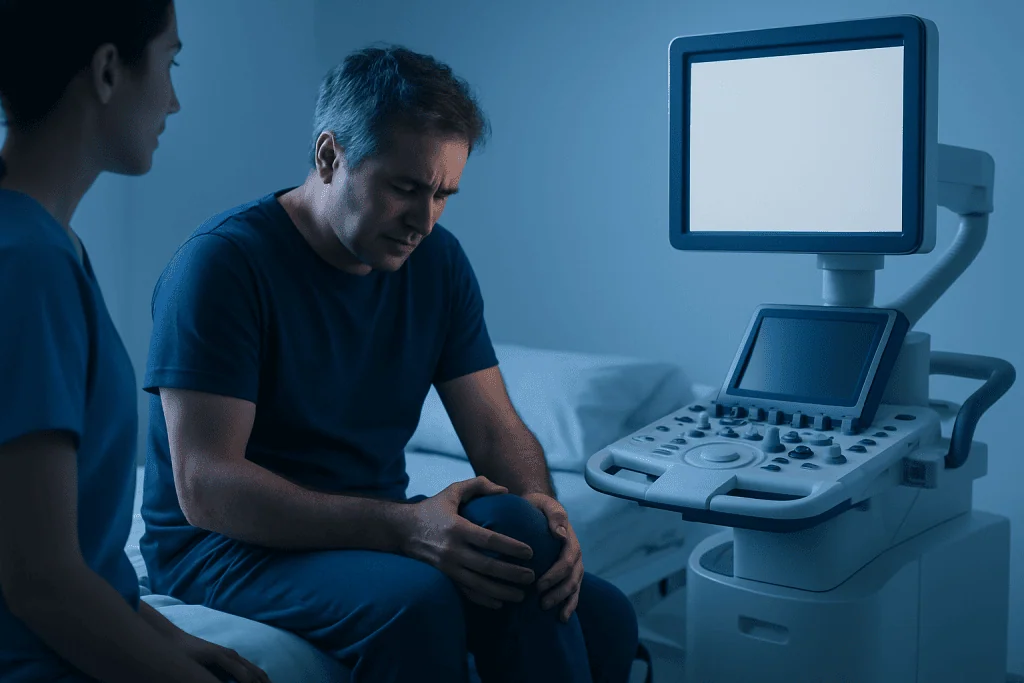
Nighttime knee pain is not the same for everyone. Some people describe a dull ache that builds in the evening, while others notice sharp pain with certain movements in bed, throbbing after exercise, or stiffness when getting up after rest. The timing and pattern matter because they can help distinguish between joint wear, inflammation, and soft-tissue injury.
Associated symptoms are also important. Swelling, clicking, locking, a sense that the knee may give way, warmth, redness, or reduced range of motion can point toward different causes. Pain in one knee may suggest a localized problem, while symptoms in both knees may be more consistent with overuse, alignment issues, or systemic arthritis.
- Dull aching pain: often seen with osteoarthritis or overuse.
- Sharp pain on bending or twisting: may occur with meniscus irritation or tendon problems.
- Stiffness after rest: common with arthritis.
- Warmth and swelling: may suggest inflammation, gout, infection, or active joint irritation.
- Pain with stairs or after sitting: can be linked to kneecap tracking problems or front-of-knee pain.
Noticing when pain starts, what worsens it, and whether it improves with movement, ice, or elevation can be useful information to share with a doctor.
Possible causes of knee joint pain at night

One of the most common explanations for knee joint pain night is osteoarthritis, a condition in which the cartilage that cushions the knee gradually wears down. This can cause aching, stiffness, and discomfort that becomes more noticeable after a full day of activity or when lying quietly in bed. People who have already been diagnosed with knee osteoarthritis may find that symptoms flare after prolonged standing, climbing stairs, or changes in activity level.
Inflammation around the knee is another frequent cause. Tendinitis, bursitis, and irritation of the soft tissues can all lead to pain that worsens after exercise or repeated strain. Patellar tendon problems, iliotibial band irritation, and pes anserine bursitis are examples. Meniscus tears may cause pain at night as well, especially if there has been twisting injury, clicking, locking, or discomfort when turning in bed.
Inflammatory arthritis, gout, and some autoimmune conditions can also cause nighttime symptoms. In these cases, the knee may be swollen, warm, and stiff, and other joints may be affected too. Although less common, infection inside the joint is a medical emergency and usually causes severe pain, swelling, warmth, and sometimes fever. Pain referred from the hip, lower back, or nerves can occasionally be felt in the knee, which is why an accurate evaluation matters if the cause is unclear.
People sometimes worry that pain at night always signals a serious disease. In reality, most cases are related to common joint or soft-tissue conditions. Still, persistent or unexplained symptoms should be checked so that less common causes are not missed and treatment can begin before the problem worsens.
Risk factors that can make nighttime knee pain more likely
Several factors can increase the chance of developing knee pain that becomes noticeable at night. Age-related wear of cartilage is one factor, but it is not the only one. Excess body weight can place additional stress on the knee joint, while repetitive kneeling, squatting, running, or jumping may irritate tendons and the joint surfaces over time.
Previous knee injuries also matter. A past ligament sprain, meniscus tear, fracture, or surgery can change how the joint moves and distributes load. Muscle weakness around the hips and thighs may allow the knee to track less efficiently, increasing strain during daily activities. Flat feet, alignment differences, or poor training technique can contribute as well.
Some medical conditions raise risk too. Osteoarthritis, rheumatoid arthritis, gout, and metabolic conditions that affect inflammation or crystal buildup can all involve the knee. People who have symptoms in other joints, repeated swelling, or a family history of inflammatory joint disease may need a broader evaluation rather than treatment focused only on the knee.
How doctors diagnose the cause
Diagnosis begins with a detailed history and physical examination. A doctor will usually ask when the pain began, whether there was an injury, what activities make it worse, and whether there is swelling, locking, giving way, fever, or pain in other joints. The pattern of symptoms at night and in the morning can provide helpful clues.
During the examination, the doctor may assess swelling, warmth, tenderness, range of motion, joint stability, walking pattern, and how the kneecap moves. Specific maneuvers can help identify meniscus injury, ligament problems, or patellofemoral pain. Examining the hips and lower back may also be important if the pain source is not obvious.
Imaging and tests are sometimes needed. X-rays can show arthritis, alignment, and bone changes. MRI may be useful if there is concern for meniscus damage, ligament injury, cartilage problems, or persistent pain not explained by X-rays. Blood tests or joint fluid analysis may be recommended if inflammatory arthritis, gout, or infection is suspected. In some cases, evaluation by an orthopedic specialist or rheumatologist is appropriate, particularly when symptoms are ongoing or the diagnosis is uncertain.
Treatment options and what may help
Treatment depends on the cause of the pain rather than the time of day it occurs. For mild to moderate mechanical pain, doctors often recommend a period of activity modification, ice after aggravating activity, gentle stretching, and structured exercises to improve strength around the knee and hip. Physical therapy can be especially helpful for restoring movement patterns and reducing strain on the joint. When rehabilitation is needed, a program such as physical therapy and rehabilitation may help improve function and reduce recurrent symptoms.
For arthritis-related symptoms, treatment may include weight management when appropriate, low-impact exercise, supportive footwear, and medicines recommended by a doctor for pain and inflammation. Some people benefit from braces or walking aids depending on stability and alignment. If imaging shows significant joint wear and symptoms remain severe despite conservative care, orthopedic review may be considered. In selected cases, options within knee replacement pathways may be discussed for advanced joint damage.
When soft-tissue inflammation or bursitis is the main issue, temporary rest from provoking activities is important, but complete inactivity is usually not the goal. Guided return to movement tends to be more effective than prolonged immobilization. If there is a structural problem such as a persistent meniscus tear or ligament injury, a doctor may recommend further orthopedic assessment, including orthopedic evaluation and treatment.
Treatment should be individualized. The safest approach is to match care to the diagnosis, the severity of pain, the patient’s activity level, and any underlying conditions.
Self-care at home and ways to reduce pain at bedtime
For occasional nighttime knee discomfort, simple home measures may help. Reducing high-impact activity for a short period, using ice after exertion, and elevating the knee if it feels swollen can calm irritation. Some people feel more comfortable sleeping with a small pillow under or between the knees, depending on sleep position, to reduce joint strain.
Gentle movement during the day often works better than long periods of rest. Low-impact exercise such as walking on even ground, cycling, or swimming may support joint health without excessive loading. Stretching the front and back of the thigh and strengthening the quadriceps and hip muscles can improve knee support, though exercises should be done carefully and stopped if they worsen pain.
General habits also matter. Wearing supportive shoes, avoiding repeated kneeling or deep squatting when symptoms are active, and pacing activity can help prevent evening flare-ups. A doctor or physiotherapist can advise whether heat, cold, bracing, or a specific exercise plan is most appropriate for the likely cause of the pain.
When to seek medical care
Medical attention is advisable if knee joint pain night lasts more than a few weeks, keeps returning, interferes with sleep, or limits walking, stairs, work, or exercise. Evaluation is also important if the knee frequently swells, feels unstable, locks, or no longer bends and straightens normally. Early assessment can identify whether the issue is arthritis, inflammation, a meniscus problem, or another treatable condition such as a meniscus tear.
Urgent care is needed after a major injury, if the person cannot bear weight, or if the knee becomes markedly swollen, hot, or red. Fever, severe pain, and sudden swelling raise concern for infection or gout and should be assessed promptly. Pain that is unexplained, worsening, or present together with weight loss or pain elsewhere in the body also deserves timely medical review.
For international patients who need further assessment, Acibadem International’s multidisciplinary specialists and JCI-accredited hospitals diagnose and treat knee conditions using orthopedic, rheumatologic, imaging, and rehabilitation expertise.
Frequently asked questions
Why does my knee hurt more at night than during the day?
Pain can feel stronger at night because the body is resting and there are fewer distractions. The knee may also stiffen after inactivity, and tissues irritated by daytime activity can become more noticeable at bedtime.
Is knee joint pain at night always arthritis?
No. Arthritis is a common cause, but nighttime knee pain can also come from overuse, tendon irritation, bursitis, meniscus problems, old injuries, inflammatory conditions, or less commonly infection or gout. A doctor can help identify the exact reason.
Can sleeping position affect nighttime knee pain?
Yes. Certain positions may put pressure on the knee or twist it slightly, which can worsen discomfort. Some people feel better with a pillow under the knee when lying on the back or between the knees when lying on the side.
When should nighttime knee pain be checked by a doctor?
It should be assessed if it persists, keeps returning, disrupts sleep, causes swelling or instability, or limits daily activity. Immediate care is important if there is fever, a hot red joint, sudden severe swelling, inability to bear weight, or a significant injury.
What can help relieve knee pain before bed?
Helpful measures may include avoiding aggravating activity, using ice if the knee is inflamed, elevating the leg, and doing gentle exercises recommended by a professional. The best approach depends on the cause, so ongoing pain should not be managed with self-care alone.
Can exercise help if the knee hurts at night?
Often yes, especially if the pain is related to stiffness, weakness, or mild arthritis. Low-impact exercise and targeted strengthening can support the joint, but exercise should be appropriate for the diagnosis and should not significantly increase pain.
References
- American Academy of Orthopaedic Surgeons
- National Institute of Arthritis and Musculoskeletal and Skin Diseases
- Centers for Disease Control and Prevention
- National Health Service
- Arthritis Foundation
This article is for general information only and is not a substitute for professional medical advice. Please consult a qualified doctor about your individual situation.
Joint and spine care in Turkey — expert assessment & treatment
JCI-accredited · board-certified surgeons · reply within 24h
Add us as a Preferred Source to see more of our trusted health content across Google Search, AI Overviews and Discover.