Mirror Twins — Explained by Medical Evidence, Not Myths

Mirror twins are a pattern seen in some identical twins, not a separate medical diagnosis. They may have opposite-sided traits such as hair whorls, handedness, or dental patterns.
Key Takeaways
- Mirror twins are a pattern seen in some identical twins, not a separate medical diagnosis.
- They may have opposite-sided traits such as hair whorls, handedness, or dental patterns.
- The idea is linked to the timing of embryo splitting, but many popular claims about mirror twins are not supported by strong evidence.
- Most mirror twins do not need treatment unless there is an unrelated medical issue.
- Prenatal care and routine pediatric follow-up are the main medical priorities in any twin pregnancy.
Mirror twins are identical twins who may show some features in opposite directions, such as a birthmark on opposite sides or opposite hand preference. In medical terms, this is considered a variation within identical twinning rather than a separate type of twin, and most mirror twins are healthy.
What mirror twins are
Mirror twins are identical twins who show some features in reverse or on opposite sides of the body. For example, one twin may have a birthmark on the left side while the other has a similar mark on the right, or one may become left-handed while the other becomes right-handed. This pattern is why they are called “mirror” twins.
Medically, mirror twins are not classified as a separate kind of twinning. They are generally understood as monozygotic, or identical, twins who developed from one fertilized egg that split into two embryos. The term is descriptive rather than diagnostic, and it does not automatically mean there is a health problem.
Many discussions online connect mirror twins with myths about opposite personalities, emotions, or special bonds. Medical evidence does not support these claims. What clinicians can describe more confidently are physical patterns that may appear reversed in some identical twins, while recognizing that the degree of mirroring varies widely from pair to pair.
How mirror twinning may happen
Identical twins form when one fertilized egg splits into two embryos early in development. A common explanation for mirror twinning is that the split happens slightly later than in some other identical twin pregnancies, after the embryo has started establishing left-right orientation. This may help explain why certain traits appear on opposite sides.
Even so, mirror twinning is not always predictable, and the biology is more complex than a simple “late split” rule. Human development involves many genes, signaling pathways, and chance variations. For that reason, not every identical twin pair with a later split will show mirror features, and not every mirrored feature has the same cause.
It is also important to separate mirror traits from uncommon developmental conditions. Some people confuse mirror twins with conditions involving organ position, such as situs inversus, where internal organs may be reversed. These are different issues. A mirror pattern in twins usually refers to external or functional traits, not to a complete reversal of internal anatomy.
Common traits people notice in mirror twins

Mirror twins may be noticed because of visible or practical differences that seem like opposites. These traits can be subtle or more obvious, and many identical twins do not show them at all. When mirroring is present, it may affect one feature or several.
Examples that families and doctors may observe include:
- Birthmarks, moles, dimples, or skin findings on opposite sides
- Hair whorls that turn in opposite directions
- A tendency toward opposite hand preference
- Dental eruption or bite patterns that appear reversed
- Asymmetry in eye dominance, ear shape, or facial features
Some mirror twins are said to have opposite temperaments or mirrored medical conditions, but these claims are harder to verify and should be interpreted cautiously. Personality develops through genetics, environment, and individual experience. Likewise, if one twin has a medical issue, the other may or may not have the same condition, and mirroring alone does not predict disease.
When a twin pair shows unusual asymmetry, doctors focus on what is medically relevant rather than on the label itself. If there are concerns about growth, development, hearing, vision, the heart, or organ structure, these are assessed on their own merits with standard pediatric or prenatal evaluation.
What mirror twins do not mean
Mirror twins are often surrounded by folklore. A common myth is that they have supernatural connections or guaranteed opposite personalities. Another is that one twin’s illness or injury will somehow be physically “reflected” in the other. These ideas are not supported by medical evidence.
Mirror traits also do not mean the twins are less healthy, more fragile, or more likely to have developmental problems just because they are called mirror twins. The main medical considerations in a twin pregnancy relate to whether the twins are identical or fraternal, whether they share a placenta, and how the pregnancy is progressing overall.
For example, some identical twins share a placenta and may need closer monitoring for complications such as twin-to-twin transfusion syndrome. These concerns are about placental circulation and fetal development, not about the presence of mirrored traits. Keeping this distinction clear helps families focus on evidence-based prenatal and newborn care.
How mirror twins are identified and evaluated
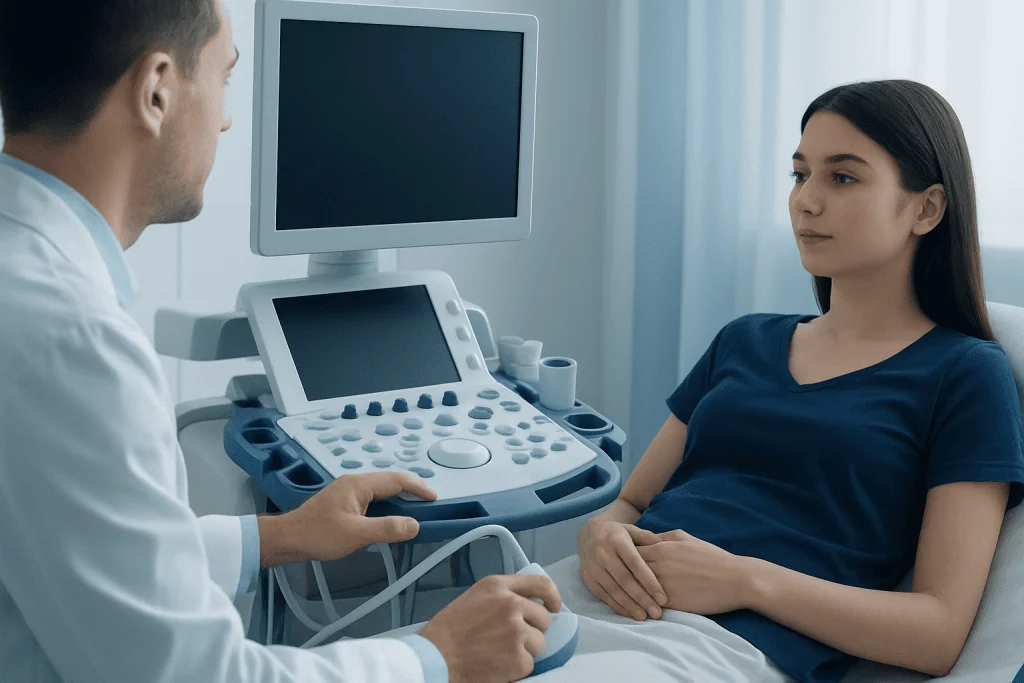
There is no single test that diagnoses mirror twins. The description is usually based on observation after birth, although some features of a twin pregnancy are identified before birth with ultrasound. If parents are expecting twins, prenatal imaging helps determine chorionicity and amnionicity, meaning whether the babies share a placenta or amniotic sac. This information is much more clinically important than whether mirror traits are later noticed.
During pregnancy, standard care for twins often includes more frequent follow-up than a singleton pregnancy. Ultrasound may be used to monitor growth, amniotic fluid, placental structure, and signs of complications. If a clinician suspects an issue with the babies’ anatomy or wellbeing, more detailed imaging or referral to maternal-fetal medicine may be recommended, including ultrasound evaluation when appropriate.
After birth, a pediatrician examines each baby individually. If mirrored physical features are present but the babies are feeding, growing, and developing normally, no special treatment is usually needed. If there are concerns about hearing, vision, hips, the heart, or organ position, doctors may order targeted tests such as imaging, hearing screens, or specialist review. The goal is not to confirm a “mirror twin” label, but to make sure each child is healthy.
Care during twin pregnancy and after birth
Because mirror twins are identical twins, the practical medical focus is the same as for any twin pregnancy: regular prenatal care, monitoring fetal growth, and planning a safe delivery based on the pregnancy’s specific features. Twins may carry higher risks of preterm birth, growth differences, and placental complications, so close obstetric follow-up matters.
Care may include routine scans, nutritional guidance, monitoring maternal blood pressure, and assessment for pregnancy complications. When needed, clinicians may coordinate care with experts in fertility and reproductive medicine if the pregnancy followed assisted conception, or with specialists in pregnancy follow-up and delivery for ongoing maternal and fetal monitoring.
After birth, most mirror twins need only the same newborn and pediatric care recommended for other babies. Parents can support healthy development by attending routine checkups, keeping up with vaccinations, and discussing feeding, sleep, and milestone questions with a pediatrician. If one or both babies were born early, they may need additional follow-up related to prematurity rather than mirroring itself.
In some situations, a family may be referred to genetics or pediatrics if there are unusual physical findings, developmental concerns, or uncertainty about whether a feature is simply a benign mirrored trait. This can be reassuring and helps ensure that uncommon conditions are not missed.
When to seek medical care
Medical care is appropriate whenever a twin pregnancy has reduced fetal movement, vaginal bleeding, contractions before term, severe swelling, high blood pressure symptoms, or concerns raised during prenatal visits. These are reasons to contact an obstetric team promptly, whether or not mirror traits are suspected.
After birth, parents should seek medical assessment if either baby has trouble feeding, poor weight gain, breathing problems, jaundice that seems significant, fever, unusual sleepiness, or delayed milestones. Differences between twins can be normal, but persistent asymmetry or developmental concerns should still be checked.
If a doctor suspects a structural concern, the child may be evaluated further through pediatric examination, imaging, or specialist input. In selected cases, pediatric check-up services and multidisciplinary follow-up can help clarify whether a finding is harmless or needs treatment. Acibadem International’s multidisciplinary specialists and JCI-accredited hospitals also diagnose and treat twin-related maternal and pediatric conditions for international patients.
Frequently asked questions
Are mirror twins a real medical condition?
Mirror twins are a real descriptive term, but not a separate medical diagnosis. It refers to some identical twins who have opposite-sided features, such as mirrored birthmarks or handedness.
Are mirror twins always identical twins?
Yes, the term mirror twins is used for identical, or monozygotic, twins. Fraternal twins come from two separate eggs and are not described as mirror twins in medical practice.
Can mirror twins have reversed internal organs?
Usually, no. Mirror twinning most often refers to external or functional traits, not a full reversal of organ position. If organ placement is a concern, doctors evaluate it as a separate medical issue.
Do mirror twins have opposite personalities?
Not necessarily. Personality is influenced by many factors, including genetics, family environment, and individual experience. Medical evidence does not support the idea that mirror twins are destined to have opposite personalities.
Is being left-handed and right-handed proof of mirror twins?
No. Opposite hand preference can be seen in mirror twins, but it is not proof on its own. Many siblings and even identical twins can differ in handedness without being described as mirror twins.
Do mirror twins need special treatment?
Most do not. If they are healthy and developing normally, mirrored features alone usually do not require treatment. Care is based on any actual medical concern, not the label.
How are mirror twins diagnosed?
There is no special diagnostic test for mirror twins. The term is usually applied after doctors or parents notice opposite-sided traits, while standard prenatal and pediatric assessments are used to check overall health.
References
- American College of Obstetricians and Gynecologists
- Centers for Disease Control and Prevention
- National Institute of Child Health and Human Development
- Mayo Clinic
- World Health Organization
This article is for general information only and is not a substitute for professional medical advice. Please consult a qualified doctor about your individual situation.
Explore treatments in Turkey — costs, top hospitals & a free quote
JCI-accredited · board-certified surgeons · reply within 24h
Add us as a Preferred Source to see more of our trusted health content across Google Search, AI Overviews and Discover.

More from the Health Library

Enamel Erosion: An Evidence-Based Guide for Patients
Gallstones: What Patients Need to Know

Arsenic in Rice: What Patients Need to Know
C D H: What Patients Need to Know

Subcutaneous: A Complete Medical Overview