Saddle Joint — Explained by Medical Evidence, Not Myths

The saddle joint is most commonly discussed at the base of the thumb, where it enables pinch, grip, and opposition. Its shape allows flexibility and precision, but that same mobility can make it prone to wear, instability, and arthritis.
Key Takeaways
- The saddle joint is most commonly discussed at the base of the thumb, where it enables pinch, grip, and opposition.
- Its shape allows flexibility and precision, but that same mobility can make it prone to wear, instability, and arthritis.
- Pain, stiffness, weakness, and difficulty opening jars or turning keys are common signs of thumb saddle joint problems.
- Diagnosis is based on symptoms, physical examination, and sometimes imaging such as X-rays.
- Treatment depends on the cause and may include rest, splints, hand therapy, medicines, injections, or surgery.
- Early evaluation can help protect hand function and reduce long-term joint damage.
A saddle joint is a specialized joint shaped so two bones fit together like a rider on a saddle, allowing movement in two directions with strong control. The best-known example is the thumb base joint, which supports pinching, gripping, and fine hand movements but can also become painful from injury, overuse, or arthritis.
Overview: what a saddle joint is
A saddle joint is a type of synovial joint in which the surfaces of two bones are shaped to fit together in a way that resembles a saddle and rider. Each bone surface is concave in one direction and convex in the other. This design allows controlled movement in two main planes, giving both flexibility and stability.
In everyday medicine, the term usually refers to the joint at the base of the thumb, also called the first carpometacarpal joint or trapeziometacarpal joint. This thumb saddle joint is especially important because it allows the thumb to move across the palm and meet the fingertips. That action, called opposition, is essential for gripping, buttoning clothing, writing, and many other daily tasks.
The joint is lined with cartilage and surrounded by a capsule, ligaments, and muscles that help it move smoothly. When these structures are healthy, the saddle joint supports both strength and precision. When they are irritated, injured, or worn down, symptoms can affect hand comfort and function.
Why the thumb saddle joint matters
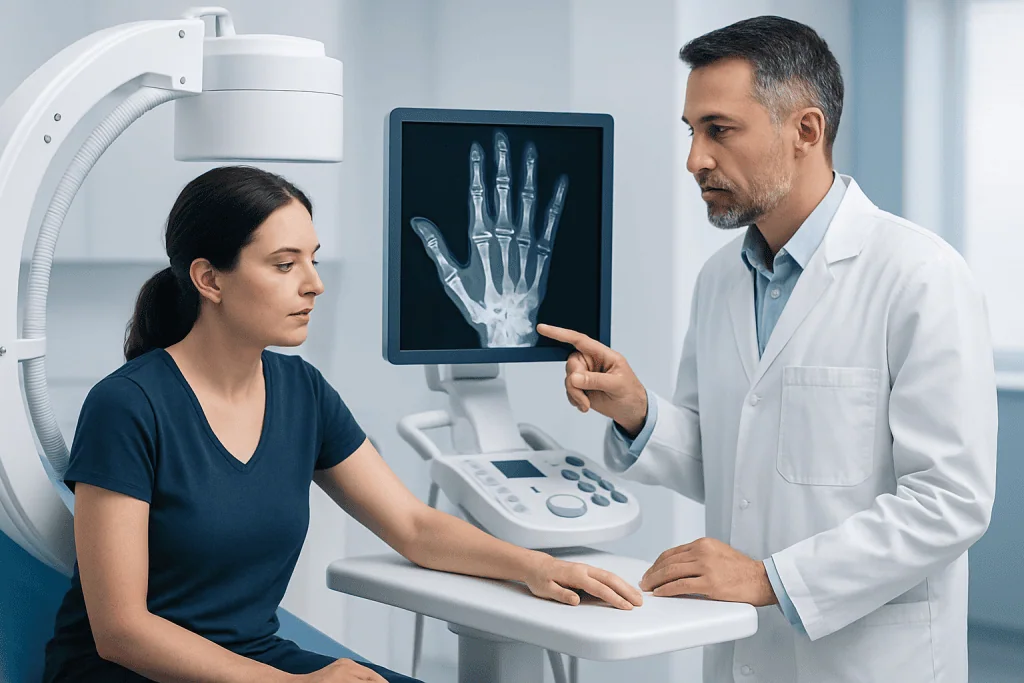
The thumb contributes a large share of hand function, and the saddle joint is central to that role. Unlike many joints that mainly bend and straighten, the thumb base joint helps the thumb move forward, backward, inward, and outward. These combined movements make it possible to pinch a key, hold a pen, grip a cup, or use a phone.
This wide range of motion is one reason the joint is so useful, but it also explains why it can become stressed over time. Repetitive pinching, forceful gripping, frequent texting, manual work, and age-related wear can all place extra demand on the thumb base. Even mild joint changes can be noticeable because the hand is used so constantly.
Although the thumb is the classic example, saddle joints also exist elsewhere in the body, such as the sternoclavicular joint where the collarbone meets the breastbone. Still, most patient questions about a saddle joint involve thumb pain, thumb weakness, or concern about osteoarthritis.
Understanding the thumb saddle joint helps explain why symptoms may interfere with simple activities long before a problem seems severe on imaging. Small changes in alignment, cartilage health, or ligament support can have a meaningful effect on hand performance.
Common symptoms of saddle joint problems

Symptoms vary depending on the cause, but pain at the base of the thumb is the most common complaint. This discomfort may appear during pinching, opening jars, turning doorknobs, carrying bags, or twisting lids. Some people notice a deep ache after activity, while others feel sharp pain with specific movements.
Stiffness is also common, especially in the morning or after periods of rest. As the problem progresses, the thumb may feel weak, less steady, or harder to position for fine tasks. It may become difficult to grip objects securely, and some people start avoiding activities they once did easily.
Other symptoms can include swelling, tenderness, a grinding sensation, or a visible change in thumb alignment. In more advanced cases, the base of the thumb may look enlarged, and the thumb can drift into a less efficient position. Because thumb mechanics affect the entire hand, pain in the saddle joint may lead to compensating movements that strain nearby muscles and joints.
- Pain at the base of the thumb
- Weak pinch or grip strength
- Stiffness or reduced range of motion
- Swelling or tenderness over the joint
- Clicking, grinding, or a sense of instability
- Difficulty with keys, jars, buttons, and writing tools
Causes and risk factors
The most common cause of ongoing saddle joint pain is degenerative change in the thumb base joint, often called thumb carpometacarpal arthritis. Over time, the cartilage that cushions the joint can wear down. As the surfaces become less smooth, movement may cause pain, inflammation, and gradual changes in alignment.
Joint laxity or looseness in the supporting ligaments can also contribute. When ligaments are less able to stabilize the thumb base, the joint may shift more than usual during daily use. This can increase wear and may lead to discomfort even before significant arthritis is visible.
Other causes include acute injury, repetitive strain, inflammatory arthritis, and less commonly previous fractures or congenital differences in joint structure. Some people develop symptoms after a fall onto the hand, while others notice them after months or years of repetitive tasks. Conditions such as rheumatoid arthritis may also affect the thumb base and should be considered when symptoms involve multiple joints, morning stiffness, or swelling.
Risk factors include increasing age, repetitive hand use, prior thumb injury, generalized joint hypermobility, and family history of arthritis. Hormonal and anatomical factors may also play a role in some patients. A clinician considers the whole pattern rather than assuming all thumb pain has the same cause.
How doctors diagnose a saddle joint problem
Diagnosis begins with a medical history and hand examination. A doctor asks where the pain is felt, what movements trigger it, how long it has been present, and whether weakness, swelling, numbness, or injury are involved. Because several conditions can mimic one another, the exact location and pattern of symptoms matter.
During the examination, the clinician may press on the thumb base, assess range of motion, compare grip and pinch strength, and look for signs of instability or joint enlargement. Specific maneuvers may reproduce symptoms and help distinguish a saddle joint problem from tendon inflammation, nerve compression, or pain coming from another part of the wrist or hand.
X-rays are often used if arthritis, fracture, or joint malalignment is suspected. They can show joint-space narrowing, bone spurs, or shifts in position. However, symptoms do not always match the appearance on imaging, so treatment decisions are based on the whole clinical picture rather than X-rays alone.
In selected cases, ultrasound, CT, or MRI may be useful, especially when injury to ligaments or surrounding soft tissues is suspected. If symptoms suggest a broader inflammatory condition, blood tests may be recommended. For patients with persistent or complex symptoms, evaluation by a hand specialist or orthopedics team may help clarify the cause.
Treatment options for saddle joint pain
Treatment depends on the cause, severity, and effect on daily life. Many people improve with conservative care, especially when symptoms are addressed early. Rest from aggravating activities, changes in hand mechanics, and short-term use of supportive devices can reduce stress on the thumb base.
A thumb splint or brace may help stabilize the joint and lessen painful motion during flare-ups. Hand therapy can improve movement patterns, strengthen surrounding muscles, and teach joint-protection strategies for work and home tasks. Some patients benefit from medicines that reduce pain and inflammation, as advised by a clinician.
If symptoms continue despite these measures, an injection may be considered in selected cases to calm inflammation and provide temporary relief. When pain remains significant and function is limited, surgery may be discussed. Surgical approaches vary depending on the underlying problem and may aim to stabilize the joint, remove damaged tissue, or reconstruct the area. In some patients, care may involve hand surgery or a broader physical therapy and rehabilitation plan.
The best treatment is individualized. A patient with mild overuse pain may only need activity adjustment and a short course of support, while someone with advanced thumb base arthritis may need more structured care. At the end of the care pathway, Acibadem International’s multidisciplinary specialists in JCI-accredited hospitals evaluate and treat hand and joint conditions for international patients when expert assessment is needed.
Self-care, prevention, and protecting joint function
Not all saddle joint problems can be prevented, but daily habits can reduce strain on the thumb base. Using larger-handled tools, opening jars with assistive devices, carrying bags on the forearm rather than pinching straps, and taking breaks from repetitive gripping can help. Small changes in technique often make a noticeable difference over time.
When symptoms are mild, relative rest and ice or heat may help depending on what feels best and what a clinician recommends. A supportive splint can be useful during activities that provoke pain. Gentle exercises from a hand therapist may improve control and reduce unnecessary stress, but painful self-directed stretching or strengthening should be avoided if it worsens symptoms.
General joint health also matters. Managing inflammatory conditions, keeping physically active, and addressing early hand pain before habits change too much can support better long-term function. People who use their hands intensively for work or caregiving may benefit from an ergonomic review and targeted prevention strategies.
Self-care is most effective when paired with an accurate diagnosis. Thumb pain can come from joints, tendons, nerves, or referred pain from nearby structures. If symptoms persist, a medical assessment helps ensure the right problem is being treated.
When to seek medical care
Medical evaluation is appropriate when thumb base pain lasts more than a few weeks, returns repeatedly, or interferes with daily activities. A doctor should also assess symptoms if the thumb feels weak, unstable, or increasingly stiff, or if simple tasks such as turning a key or opening containers become difficult.
Prompt care is especially important after an injury, such as a fall, sudden twist, or direct blow to the thumb or wrist. Swelling, bruising, deformity, or severe pain after trauma can suggest a fracture, ligament injury, or dislocation that needs timely treatment.
Urgent assessment is also advisable if pain is accompanied by marked redness, warmth, fever, rapidly increasing swelling, numbness, or loss of function. These features may point to infection, significant inflammation, or nerve involvement rather than routine overuse. If there is uncertainty, a qualified doctor can help decide whether the problem is a thumb saddle joint disorder or another hand condition.
Frequently asked questions
What is a saddle joint in simple terms?
A saddle joint is a joint where two bone surfaces fit together in a shape similar to a saddle. This design allows movement in two directions, giving a combination of flexibility and control. The best-known saddle joint is at the base of the thumb.
Where is the saddle joint located?
When people refer to the saddle joint, they usually mean the thumb base joint between the first metacarpal and the trapezium bone in the wrist. There is also a saddle-type joint at the sternoclavicular joint, where the collarbone meets the breastbone. In everyday care, thumb symptoms are the most common reason the term comes up.
Why does the thumb saddle joint hurt?
Pain may result from arthritis, ligament laxity, repetitive strain, injury, or inflammatory joint disease. Because the joint is used in gripping and pinching throughout the day, even mild damage or irritation can become noticeable. A medical exam helps identify the exact cause.
Can saddle joint pain go away without surgery?
Yes, many people improve with non-surgical treatment such as splinting, activity changes, hand therapy, and medicines recommended by a clinician. The outcome depends on the cause and how advanced the joint problem is. Surgery is usually considered only when symptoms remain significant despite conservative care.
Is saddle joint arthritis the same as thumb arthritis?
Often, yes. In common use, thumb arthritis usually refers to arthritis of the saddle joint at the thumb base, also called carpometacarpal arthritis. However, the thumb has more than one joint, so a doctor may need to confirm which joint is affected.
How is a saddle joint problem diagnosed?
Doctors diagnose it through a history, physical examination, and sometimes imaging such as X-rays. They look at pain location, range of motion, strength, tenderness, and whether certain thumb movements reproduce symptoms. Additional tests may be used if injury or inflammatory disease is suspected.
References
- American Academy of Orthopaedic Surgeons
- National Institute of Arthritis and Musculoskeletal and Skin Diseases
- Merck Manual Professional Edition
- Mayo Clinic
- Arthritis Foundation
This article is for general information only and is not a substitute for professional medical advice. Please consult a qualified doctor about your individual situation.
Joint and spine care in Turkey — expert assessment & treatment
JCI-accredited · board-certified surgeons · reply within 24h
Add us as a Preferred Source to see more of our trusted health content across Google Search, AI Overviews and Discover.

More from the Health Library

Agoraphobia: What Patients Need to Know

Foamy Faeces: An Evidence-Based Guide for Patients

Ice Roller for Face: A Complete Medical Overview

Jicama: An Evidence-Based Guide for Patients

Audiologist: A Complete Medical Overview

Bite in Tongue: A Complete Medical Overview
Physical Medicine & Rehabilitation Specialists at Acibadem

Fzt. Alperen Mustafa Oğuz
Physical Medicine & Rehabilitation
Assoc. Prof. Dr. Altuğ Yücekul
Orthopedic Surgery & Traumatology
Prof. Dr. Arel Gereli
Orthopedic Surgery & Traumatology
Fzt. Asım Sakallı
Physical Medicine & Rehabilitation