Do Identical Twins Have the Same DNA? Causes, Explanations, and Next Steps

Identical twins arise from one fertilized egg that splits into two embryos. They usually share almost all of the same DNA at the start of development.
Key Takeaways
- Identical twins arise from one fertilized egg that splits into two embryos.
- They usually share almost all of the same DNA at the start of development.
- Small DNA changes can occur before birth or later in life, creating subtle differences.
- Epigenetic changes can affect how shared genes are switched on or off.
- Most twin differences are harmless, but unusual medical differences may justify a professional evaluation.
Yes—identical twins usually start with nearly the same DNA because they come from one fertilized egg. However, small genetic changes and epigenetic differences can develop over time, so they are not always perfectly identical at the molecular level.
Overview: the short answer
For most people asking, “do identical twins have the same DNA,” the answer is mostly yes. Identical twins, also called monozygotic twins, develop when one fertilized egg splits into two embryos, so they begin life with nearly the same genetic material.
In everyday life, this usually means identical twins look very similar and share many inherited traits. Most differences between them are minor and harmless, such as small variations in appearance, personality, fingerprints, or health patterns.
Still, identical does not always mean absolutely identical at every level of biology. Small mutations can happen as cells divide, and epigenetic changes can influence how genes are used. These differences may begin before birth and continue throughout life.
If one twin develops symptoms, a condition, or a physical feature that the other twin does not share, this is often not a cause for alarm. But marked differences in growth, development, or health can sometimes deserve medical review so a doctor can look for genetic, hormonal, neurologic, or other underlying factors.
Why identical twins are so similar
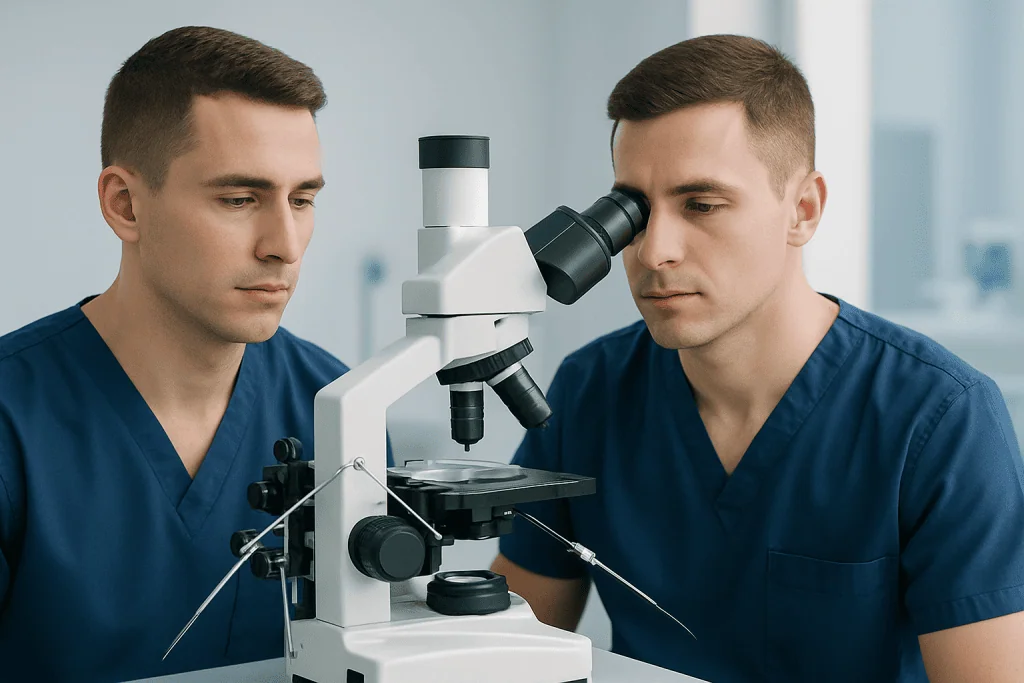
Identical twins form from a single egg fertilized by a single sperm. After fertilization, the early embryo separates into two, creating two individuals with nearly the same inherited DNA sequence. This is different from fraternal twins, who develop from two separate eggs and two separate sperm.
Because their DNA starts out so similar, identical twins often share eye color, hair texture, blood type, and many facial features. They may also have a higher likelihood of sharing certain inherited health risks than non-identical siblings.
Even so, genes are only part of the story. A person’s development is shaped by the environment in the womb, nutrition, illnesses, stress, aging, and many other life experiences. This is one reason identical twins may become more different over time.
Doctors and genetic specialists often explain twin similarity as a combination of shared genes and shared early environment. This helps families understand why twins can be remarkably alike while still being two separate individuals.
Why twins can have different DNA findings over time
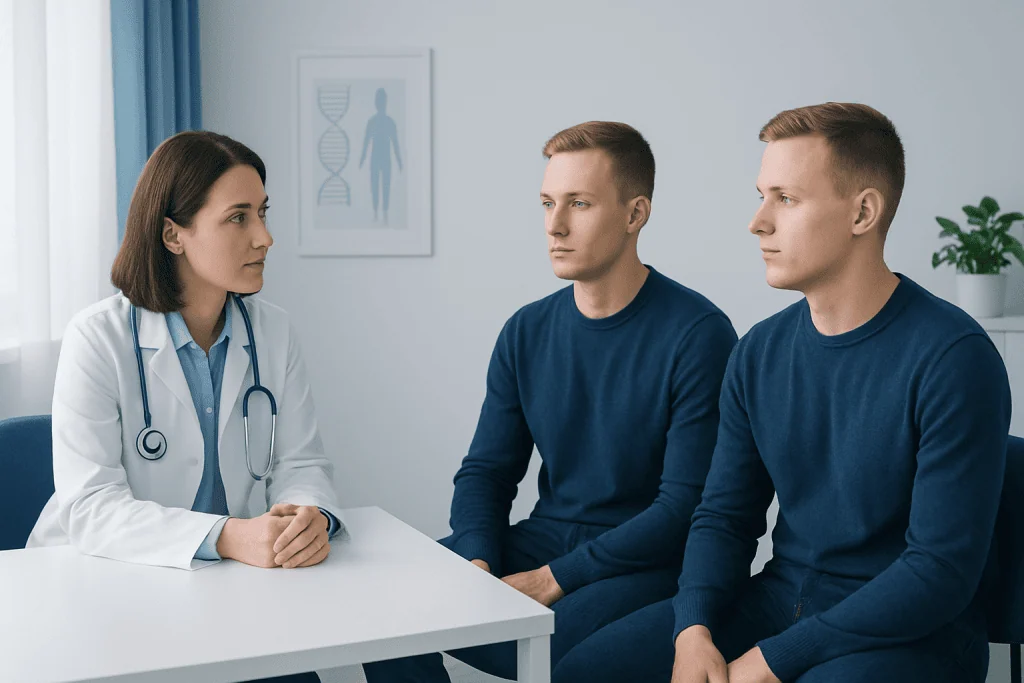
Although identical twins begin with almost the same DNA, tiny changes can appear as cells copy themselves. These are called somatic mutations. If a change happens early in development, one twin may carry a small genetic difference that the other does not.
Another reason is mosaicism, which means not all cells in one person carry exactly the same genetic pattern. In rare situations, one twin may have a genetic change in some tissues but not others. This can make testing results more complex, especially if only one sample type is examined.
Epigenetics also matters. Epigenetic changes do not rewrite the DNA code itself, but they can change how active certain genes are. Over time, differences in lifestyle, exposures, medications, illness, or aging can lead one twin’s genes to behave somewhat differently from the other’s.
These differences help explain why one twin may develop a condition while the other does not, or why symptoms can vary between twins. In some cases, doctors may consider evaluation for a related condition such as genetic diseases if the difference appears medically significant.
Common examples of differences between identical twins
Many differences between identical twins are normal. They may have different fingerprints, small birthmarks in different places, slight differences in height or weight, or one may need glasses before the other. These variations do not usually mean there is a serious medical problem.
Health can also differ. One twin may develop asthma, allergies, autoimmune disease, or a mental health condition while the other does not. This does not automatically mean their original DNA was very different; it may reflect gene regulation, immune responses, life exposures, or chance.
In rare cases, one twin may be born with a congenital difference or later develop a disease not seen in the other. Doctors may look at chromosome changes, mosaicism, or environmental factors if the difference is pronounced. Depending on the concern, assessment may include specialties that evaluate inherited disorders or metabolic diseases.
It is also important to remember that personality, learning style, and behavior are not determined by DNA alone. Family environment, education, relationships, sleep, stress, and life events all shape how each twin grows and functions.
When differences are harmless and when they may need medical review
In most cases, noticing that identical twins are not perfectly alike is harmless. Mild differences in appearance, preferences, growth rate within a normal range, or common illnesses that affect one twin but not the other are usually part of normal human variation.
Medical review may be more important if one twin has a major difference in growth, puberty timing, developmental milestones, muscle strength, seizures, heart symptoms, repeated infections, or a clearly different pattern of birth defects. A doctor may also want to evaluate unexplained differences in hearing, vision, learning, or coordination.
If a family has concerns, reassurance often starts with a careful history and physical examination. In some situations, clinicians may recommend further assessment to better understand whether a difference reflects a genetic change, an endocrine issue, a neurologic condition, or another treatable cause.
When there is concern about inherited risk or unexplained medical differences, specialists may suggest genetic testing or review by a genetics team. The goal is not to label every difference as a disorder, but to identify the uncommon situations where closer evaluation can be useful.
How doctors evaluate important twin differences
If one identical twin has symptoms or health findings not seen in the other, doctors usually begin with the basics: pregnancy and birth history, family history, timing of symptoms, growth patterns, medications, and environmental exposures. A physical exam can offer clues about whether the difference seems structural, neurologic, hormonal, metabolic, or developmental.
Laboratory tests may be used when appropriate. These can include blood tests, hormone testing, metabolic screening, or immune studies, depending on the child’s or adult’s symptoms. If development, seizures, headaches, or structural concerns are present, imaging may sometimes be useful, including MRI.
Genetic testing is not needed for every pair of twins. However, if one twin has an unexplained disorder, congenital anomaly, developmental delay, or a different disease course, a specialist may recommend chromosome analysis, microarray testing, or more detailed sequencing. Sometimes testing both twins helps clarify whether a change is shared or unique to one twin.
In selected cases, doctors may also involve pediatricians, neurologists, endocrinologists, cardiologists, or other specialists. A multidisciplinary approach can help families understand whether differences are expected variation or part of a recognizable condition.
What families can do and what treatment may involve
There is no treatment needed simply because identical twins are not completely identical at the DNA or epigenetic level. When differences are harmless, the main approach is observation, routine healthcare, and avoiding unnecessary worry. Families can focus on each twin’s individual development rather than expecting every trait to match.
If one twin has a diagnosed condition, treatment depends on the cause. Some differences may relate to growth, metabolism, hormones, neurologic development, or organ-specific disease. Management may involve monitoring, rehabilitation, medication, nutritional support, or specialty care tailored to the affected twin.
For families seeking answers, genetic counseling can be especially helpful. It can explain what is known, what testing can and cannot show, and whether the findings affect siblings or future pregnancies. This process often helps reduce uncertainty and supports informed decision-making.
Near the end of the diagnostic journey, some families prefer care in centers where several specialists can coordinate testing and follow-up. Acibadem International’s multidisciplinary specialists in JCI-accredited hospitals diagnose and treat complex genetic and developmental conditions for international patients when this level of evaluation is needed.
When to seek medical care
A doctor should be consulted if one identical twin shows clear differences in growth, feeding, movement, language, learning, puberty, or overall development. Medical advice is also important if one twin has repeated fainting, seizures, breathing problems, unusual weakness, or symptoms affecting the heart or nervous system.
Prompt review is especially helpful when one twin has a congenital anomaly, persistent unexplained pain, sudden neurological changes, or a significantly different health pattern that cannot be easily explained. Parents should also seek advice if a school-age child shows regression in skills, marked fatigue, or major behavioral change.
Adults who are identical twins may also seek medical care if one develops unexplained symptoms that raise concerns about inherited or acquired disease. Although most differences are benign, a careful evaluation can provide reassurance and identify the uncommon cases that need further attention.
Emergency care is appropriate for severe symptoms such as chest pain, sudden trouble breathing, loss of consciousness, stroke-like symptoms, or a seizure lasting longer than expected. For non-emergency concerns, a primary care doctor, pediatrician, or genetics specialist is a good first step.
Frequently asked questions
Do identical twins have exactly the same DNA?
Usually they have nearly the same DNA because they come from one fertilized egg. However, small genetic changes can arise during development or later in life, so they may not be perfectly identical in every cell.
If identical twins have the same DNA, why can they look different?
Small physical differences can result from the environment in the womb, nutrition, health conditions, and normal life experiences. Epigenetic changes can also affect how shared genes are expressed, which may influence appearance and health over time.
Can one identical twin have a disease that the other does not?
Yes. This can happen because of environmental factors, chance, immune differences, epigenetic changes, or a mutation that affects one twin but not the other. It does not always mean there is a serious inherited disorder.
Are identical twins' fingerprints the same?
No. Even though identical twins share very similar DNA, fingerprints are shaped by tiny developmental differences in the womb. That is why fingerprints are unique to each person.
Should both twins be tested if one has a genetic condition?
Not always, but sometimes testing both twins can be helpful. A genetics specialist can decide whether comparing results may clarify if a change is shared, unique to one twin, or relevant to medical care.
When should parents worry about differences between identical twins?
Parents should seek medical advice if one twin has clear differences in growth, development, muscle strength, seizures, vision, hearing, or overall health. Mild differences in personality or appearance are common and are usually not a sign of disease.
References
- National Human Genome Research Institute
- MedlinePlus
- National Library of Medicine
- Centers for Disease Control and Prevention
- American Academy of Pediatrics
This article is for general information only and is not a substitute for professional medical advice. Please consult a qualified doctor about your individual situation.
Explore treatments in Turkey — costs, top hospitals & a free quote
JCI-accredited · board-certified surgeons · reply within 24h
Add us as a Preferred Source to see more of our trusted health content across Google Search, AI Overviews and Discover.