Seborrheic Dermatitis Shampoo: Early Signs, Risk Factors, and How It Is Treated

Seborrheic dermatitis is a common inflammatory skin condition that often affects the scalp. Medicated shampoos can reduce flaking, itching, redness, and irritation, but they usually control rather than cure the condition.
Key Takeaways
- Seborrheic dermatitis is a common inflammatory skin condition that often affects the scalp.
- Medicated shampoos can reduce flaking, itching, redness, and irritation, but they usually control rather than cure the condition.
- Different shampoo ingredients target different parts of the problem, such as yeast overgrowth, inflammation, and excess scale.
- Symptoms that spread beyond the scalp, do not improve, or look infected should be assessed by a doctor.
- Gentle scalp care and regular treatment use can help reduce flare-ups over time.
Seborrheic dermatitis shampoo is often the first-line treatment for scalp flaking, itching, and redness linked to seborrheic dermatitis. It works best when matched to the cause, used correctly, and combined with medical advice if symptoms are persistent or severe.
Overview: What seborrheic dermatitis shampoo treats
Seborrheic dermatitis shampoo is used to manage a common scalp condition that causes dandruff-like flaking, itching, redness, and greasy scale. For many people, it is the most practical starting treatment because it treats both visible flakes and the inflammation underneath them. The goal is usually symptom control rather than a permanent cure, since seborrheic dermatitis often comes and goes over time.
Seborrheic dermatitis is not simply “dry scalp.” It is an inflammatory condition linked to a combination of skin oil production, skin barrier changes, and the presence of a yeast called Malassezia, which naturally lives on the skin. On the scalp, this can lead to persistent flakes that may be white, yellowish, or greasy, along with patches of irritation.
Many people use the term dandruff for mild scalp scaling. In fact, dandruff is often considered a milder form of seborrheic dermatitis. When symptoms become more inflamed, widespread, or hard to control, doctors may diagnose seborrheic dermatitis rather than simple dandruff. A careful medical assessment may also help distinguish it from other skin problems such as psoriasis or eczema.
Early signs and symptoms on the scalp and skin
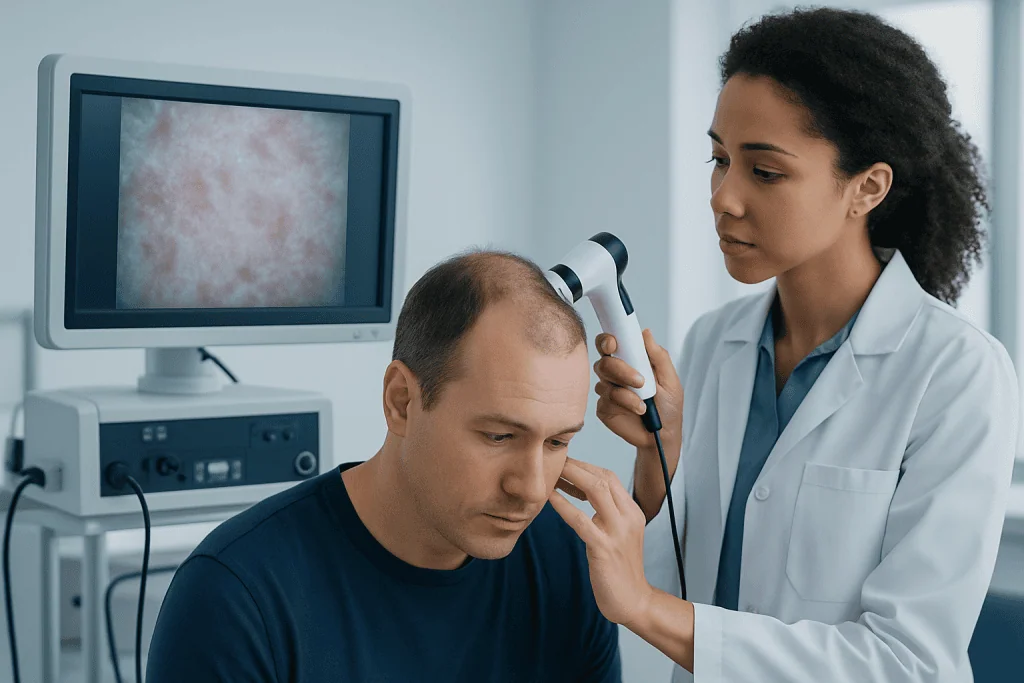
Early signs often begin gradually. A person may notice persistent flaking on the scalp, itchiness that returns soon after washing, or areas of mild redness around the hairline. In some cases, the scalp feels sensitive or develops a greasy, waxy texture even when the hair is washed regularly.
The condition does not only affect the scalp. Seborrheic dermatitis can also appear around the eyebrows, sides of the nose, behind the ears, beard area, and sometimes the chest. In infants, a related form on the scalp is often called cradle cap. In adults, symptoms may flare in cycles, with periods of improvement followed by recurrence.
Common symptoms include:
- White or yellowish flakes on the scalp or clothing
- Itching or burning of the scalp
- Red or pink patches under scaling
- Greasy or crusted areas on the scalp
- Flaking in the eyebrows, ears, or beard area
Because other conditions can look similar, severe itch, thick plaques, hair loss, or cracked skin should not automatically be assumed to be seborrheic dermatitis. A clinician can help confirm whether the symptoms fit this diagnosis or suggest another scalp disorder.
Why it happens: causes and risk factors

Seborrheic dermatitis does not happen because of poor hygiene. Its exact cause is not fully understood, but specialists believe it results from a mix of factors: skin inflammation, an overreaction to naturally occurring skin yeast, and increased activity of oil-producing glands in certain areas of the body. This is why it tends to occur on the scalp, face, and upper chest.
Several factors can make the condition more likely or trigger flare-ups. These include stress, cold or dry weather, infrequent shampooing in some individuals, and oily skin. Hormonal influences and genetic susceptibility may also play a role. Some people notice symptoms worsen when they are tired, under emotional stress, or recovering from illness.
Risk can also be higher in people with certain neurologic or immune-related conditions. In these situations, more persistent or widespread seborrheic dermatitis may occur and may need specialist treatment. A doctor may also consider related inflammatory skin conditions such as atopic dermatitis or contact dermatitis if standard care is not helping.
How seborrheic dermatitis shampoo works
Medicated shampoos work in different ways depending on their active ingredient. Some reduce the amount of yeast on the scalp, while others loosen and remove scale or calm inflammation. This is why one shampoo may work well for one person and not as well for another, and why doctors sometimes recommend rotating products rather than relying on a single option indefinitely.
Common active ingredients include ketoconazole, selenium sulfide, zinc pyrithione, coal tar, and salicylic acid. Ketoconazole and selenium sulfide are often used to reduce yeast and help control inflammation. Salicylic acid helps lift scale, while coal tar can slow excessive skin cell turnover in some cases. The best choice depends on symptom pattern, scalp sensitivity, and whether there are signs of another skin condition.
Correct use matters. Medicated shampoo usually needs to stay on the scalp for several minutes before rinsing so the active ingredients can work properly. During flare-ups, it may be used more frequently, then reduced to a maintenance schedule once symptoms improve. If the scalp is very inflamed, a doctor may add dermatology care such as prescription lotions, foams, or short-term anti-inflammatory treatment.
Even when the symptoms improve, the condition can return. That does not necessarily mean the treatment has failed. Often, it means the condition needs ongoing maintenance, a different ingredient, or review of possible triggers and look-alike diagnoses.
How doctors diagnose seborrheic dermatitis
Diagnosis is usually based on the appearance and location of the rash, the pattern of flaking, and the history of symptoms. A doctor will ask how long the problem has been present, whether it comes and goes, what products have already been tried, and whether there is itching, pain, hair shedding, or rash on other parts of the body.
In many cases, no special tests are needed. However, if the rash is unusual, severe, or not responding to treatment, a dermatologist may examine the scalp more closely and consider other diagnoses. These can include psoriasis, fungal infection, allergic contact dermatitis, rosacea on the face, or autoimmune causes of scalp inflammation.
Sometimes, a clinician may recommend further assessment if there are signs of infection, broken skin, significant hair loss, or symptoms that involve the face and body extensively. This is particularly important when self-treatment with over-the-counter shampoos has not helped after several weeks.
Treatment options beyond shampoo
Shampoo is often the foundation of treatment, but it is not the only option. If symptoms are moderate to severe, spread beyond the scalp, or keep returning quickly, doctors may prescribe topical treatments such as antifungal creams, corticosteroid lotions, or calcineurin inhibitors for selected areas like the face. These can help reduce inflammation and make medicated shampoos more effective.
Treatment plans are usually tailored to where the rash appears and how sensitive the skin is. For example, facial skin often needs gentler treatment than the scalp. Thick scalp scale may need softening before medicated shampoo can work well. In some cases, professional evaluation through a dermatology consultation can help identify triggers, adjust therapy, and avoid unnecessary product use.
If symptoms overlap with other skin diseases, doctors may broaden treatment or investigate further. For example, persistent thick plaques, nail changes, or rash outside oily areas may raise suspicion for scalp psoriasis. Severe or complicated skin problems may also be assessed with support from dermatology and venerology specialists when needed.
Near the end of the care pathway, some patients benefit from a structured long-term plan rather than repeated short-term treatment. Acibadem International’s multidisciplinary specialists in JCI-accredited hospitals diagnose and treat seborrheic dermatitis and related skin conditions for international patients.
Prevention and self-care for fewer flare-ups
Although seborrheic dermatitis cannot always be prevented completely, consistent self-care can reduce flare frequency and severity. The most helpful step for many people is regular use of an appropriate shampoo rather than waiting for symptoms to become severe. Once the scalp is under better control, maintenance use may help prevent rebound flaking.
Gentle scalp habits are also important. Harsh scrubbing, frequent scratching, or using many styling products can worsen irritation. People with sensitive skin may do better with fragrance-free or non-irritating hair products between medicated washes. It can also help to rinse thoroughly so residue does not remain on the scalp.
Useful self-care measures include:
- Using medicated shampoo exactly as directed
- Allowing the shampoo to remain on the scalp for the recommended contact time
- Reducing scratching to prevent broken skin
- Managing stress where possible
- Cleaning combs, brushes, and hats regularly
- Seeking medical advice if over-the-counter treatment stops working
There is no single diet proven to treat seborrheic dermatitis. However, general skin health may benefit from adequate sleep, balanced nutrition, and attention to overall well-being. Any major or restrictive dietary change should be discussed with a healthcare professional.
When to seek medical care
Medical review is a good idea if scalp symptoms do not improve after several weeks of regular use of seborrheic dermatitis shampoo, or if they return quickly after treatment stops. It is also important to seek care if the rash spreads to the face or body, becomes painful, develops crusting or drainage, or causes significant discomfort.
A doctor should also assess symptoms if there is marked redness, open sores, thick scale, or noticeable hair loss. These features may suggest infection, a different skin condition, or a need for prescription treatment. Infants with extensive cradle cap or signs of skin irritation should also be reviewed by a pediatric clinician.
Prompt evaluation can be especially helpful when the diagnosis is uncertain. Conditions such as eczema, fungal infection, and psoriasis can mimic seborrheic dermatitis but need different treatment approaches. Early expert advice may prevent prolonged symptoms and unnecessary product use.
Frequently asked questions
What is the best seborrheic dermatitis shampoo?
There is not one single best shampoo for everyone. The right choice depends on the scalp findings, skin sensitivity, and which active ingredient works best for the individual. Common options include shampoos with ketoconazole, selenium sulfide, zinc pyrithione, salicylic acid, or coal tar.
How often should seborrheic dermatitis shampoo be used?
Frequency varies by product and symptom severity. Many people use it more often during a flare and then reduce to a maintenance schedule once the scalp improves. It is best to follow the product instructions or a doctor’s advice.
Can seborrheic dermatitis shampoo cure the condition permanently?
Usually, no. These shampoos are designed to control symptoms such as scaling, itching, and redness, but seborrheic dermatitis often comes back over time. Ongoing maintenance treatment is often needed.
Is seborrheic dermatitis the same as dandruff?
Dandruff is often considered a milder form of seborrheic dermatitis. Seborrheic dermatitis usually involves more inflammation, redness, or greasy scale and may affect areas beyond the scalp. A doctor can help distinguish between the two when symptoms are persistent.
When should someone see a doctor for scalp flaking?
Medical advice is sensible if over-the-counter treatment does not help after several weeks, or if the scalp becomes very red, painful, crusted, or starts to lose hair. A doctor should also assess a rash that spreads to the face or body. These signs may mean stronger treatment or a different diagnosis is needed.
Can stress make seborrheic dermatitis worse?
Yes, many people notice flare-ups during periods of stress or fatigue. Stress does not directly cause the condition, but it can worsen inflammation and make symptoms more noticeable. Stress management may be a useful part of long-term self-care.
References
- American Academy of Dermatology
- National Eczema Association
- Mayo Clinic
- National Health Service
- DermNet
This article is for general information only and is not a substitute for professional medical advice. Please consult a qualified doctor about your individual situation.
Seborrheic Dermatitis in Turkey — costs, top hospitals & a free quote
JCI-accredited · board-certified surgeons · reply within 24h
Add us as a Preferred Source to see more of our trusted health content across Google Search, AI Overviews and Discover.