Incentive Spirometry: A Complete Medical Overview

Incentive spirometry helps a person take slow, deep breaths to expand the lungs. It is often used after surgery, during recovery from illness, or when activity is limited.
Key Takeaways
- Incentive spirometry helps a person take slow, deep breaths to expand the lungs.
- It is often used after surgery, during recovery from illness, or when activity is limited.
- The device supports lung expansion but does not replace walking, coughing, pain control, or medical treatment.
- Correct technique matters more than trying to reach a high number on the device.
- A doctor should be contacted if breathing problems worsen, chest pain develops, or symptoms do not improve.
Incentive spirometry is a simple breathing technique that uses a handheld device to encourage slow, deep breaths. It is commonly recommended after surgery or during periods of reduced mobility to help keep the lungs open, support recovery, and reduce the chance of some breathing complications.
Overview
Incentive spirometry is a breathing exercise method that uses a small handheld device to guide slow, deep inhalation. The goal is to help the lungs expand more fully, especially when a person is recovering from surgery, illness, or a period of bed rest. It is widely used in hospitals and at home because it is noninvasive, easy to learn, and focused on supporting normal lung function.
When people are in pain, tired, or less active than usual, they often take shallow breaths. This can make it harder for the tiny air sacs in the lungs to stay open. Incentive spirometry encourages a deeper breath than usual, which may help improve ventilation and support the movement of air into areas of the lungs that are not being used well.
Healthcare teams often recommend incentive spirometry as one part of a broader recovery plan. It is commonly paired with getting out of bed, walking, changing position, coughing exercises, and good pain control. In some settings, it may be used alongside care for lung conditions or after thoracic surgery when breathing exercises are especially important during recovery.
How Incentive Spirometry Works
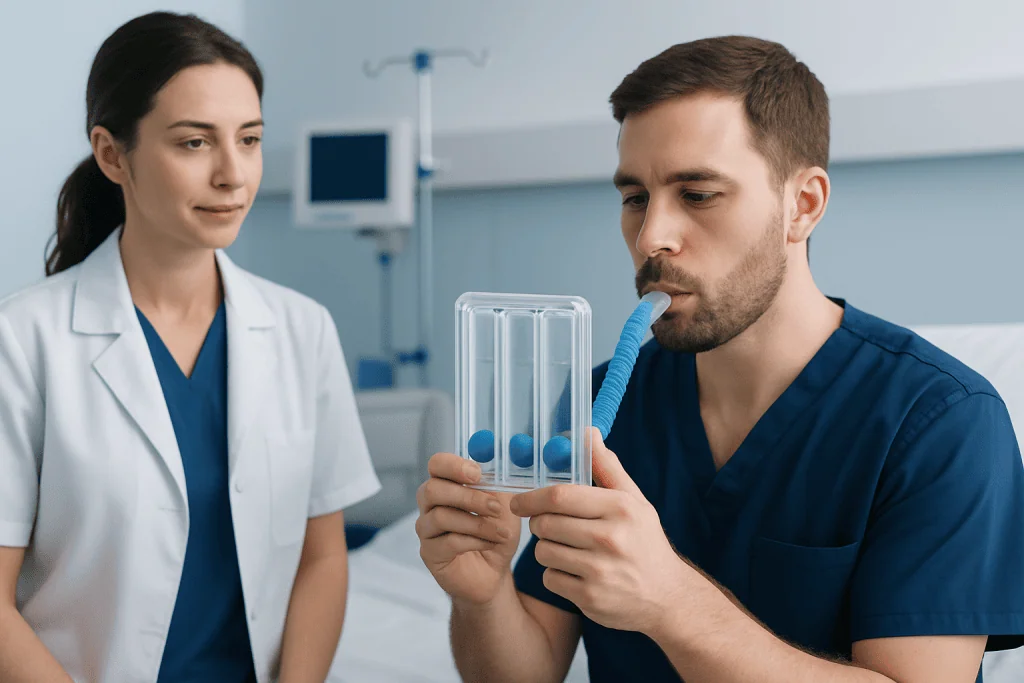
An incentive spirometer gives visual feedback while a person inhales. As the breath is taken in slowly, a marker or piston rises inside the chamber. This helps the person pace the breath and aim for a steady, sustained inhalation rather than a quick gasp.
The device is designed for inhaling, not exhaling. After sealing the lips around the mouthpiece, the user breathes in slowly and deeply, then usually holds the breath for a few seconds before relaxing. This brief breath hold can help air reach deeper parts of the lungs and support alveolar expansion.
The focus is not competition or force. Reaching a certain number is less important than using proper technique and repeating the exercise as directed by a healthcare professional. Over time, consistent practice may support stronger breathing patterns, especially in people who are hesitant to take deep breaths because of discomfort after an operation such as robotic surgery or another major procedure.
Who May Benefit From It

Incentive spirometry is most commonly recommended after surgery, especially operations involving the chest or upper abdomen. After these procedures, pain and limited movement can lead to shallow breathing. Deep-breathing exercises may help maintain better lung expansion during the recovery period.
It may also be useful for people who are spending long periods in bed, recovering from certain respiratory illnesses, or regaining strength after a hospital stay. Some clinicians recommend it for individuals at higher risk of postoperative lung complications, such as older adults, smokers, or people with pre-existing lung disease. For patients already being evaluated for COPD, the device may be one supportive tool within a larger breathing care plan.
Not everyone needs incentive spirometry, and it is not appropriate for every breathing problem. Its role depends on the person’s condition, the reason for reduced lung expansion, and the advice of the clinical team. A doctor or respiratory therapist can explain whether it is likely to help and how often it should be used.
Benefits and Limitations
The main benefit of incentive spirometry is that it promotes deliberate, slow, deep breaths at times when breathing naturally becomes shallow. This can support lung expansion, encourage fuller ventilation, and help a person become more aware of their breathing during recovery. It is simple to use, generally low risk, and can be repeated many times a day when advised.
Many clinicians include incentive spirometry in postoperative care because it fits well with other measures that protect lung health. It may help people clear secretions more effectively when combined with coughing and early movement. It can also provide a structured way to practice breathing when fatigue, discomfort, or anxiety make normal deep breathing less likely.
At the same time, the device has limits. It is not a treatment for asthma attacks, severe shortness of breath, pneumonia that needs antibiotics, or low oxygen levels that require urgent care. It does not replace prescribed medicines, oxygen therapy, pulmonary rehabilitation, or procedures such as bronchoscopy when these are medically needed.
Research on exactly how much incentive spirometry reduces complications in every patient group has been mixed, which is why it is best viewed as one supportive measure rather than a stand-alone solution. Good recovery usually depends on the full care plan, including pain management, mobilization, hydration, and medical follow-up.
How to Use an Incentive Spirometer Correctly
Although instructions can vary by device and clinical setting, the general technique is similar. A person is usually asked to sit upright if possible, hold the spirometer level, and exhale normally before placing the mouthpiece in the mouth. The next step is to inhale slowly and steadily to raise the indicator, then hold the breath briefly before removing the mouthpiece and breathing out normally.
After each breath, a short rest may help avoid lightheadedness. Many care teams advise repeating the exercise several times per session and doing sessions regularly throughout the day. Coughing after a set of breaths may help move mucus, especially after surgery. If a pillow or folded blanket is recommended to support the incision, that can make coughing more comfortable.
Useful technique reminders include:
- Keep the breath slow and smooth rather than fast and forceful.
- Focus on good form, not just the number reached on the device.
- Use it as often as prescribed by the care team.
- Stop and rest if dizziness occurs.
- Clean and store the device as instructed.
A respiratory therapist, nurse, or doctor should review the technique if the person is unsure. Small adjustments in posture, pacing, or mouth seal can make the exercise more effective and more comfortable.
Safety, Side Effects, and Common Mistakes
Incentive spirometry is generally safe when used as directed. The most common temporary effect is mild dizziness if breaths are taken too quickly or too often without resting. This usually improves by pausing, relaxing, and restarting more slowly.
Another common issue is focusing only on the device reading. Trying to lift the marker quickly can lead to shallow or rushed inhalation, which defeats the purpose of the exercise. A better approach is controlled breathing with a relaxed posture and a brief breath hold if advised.
Pain can also interfere with proper use. If a person avoids deep breaths because of postoperative discomfort, it is important to discuss pain control with the medical team rather than stopping the exercises. In some cases, poor technique may signal that additional support is needed, especially during recovery after chest or abdominal procedures.
The device should not be used as a substitute for urgent evaluation when serious symptoms are present. New blue lips, confusion, severe chest pain, marked shortness of breath, or rapidly worsening breathing need prompt medical attention rather than home breathing exercises alone.
When to Seek Medical Care
A doctor should be contacted if breathing becomes more difficult, if a cough brings up increasing mucus or blood, or if there is fever, wheezing, or chest discomfort that is new or worsening. These symptoms may point to a complication or an illness that needs evaluation and treatment.
Medical advice is also important if the person cannot use the device because of pain, feels faint each time they try, or notices no improvement in breathing despite following instructions. The care plan may need to be adjusted, or another cause of symptoms may need to be investigated.
Emergency care is needed for severe shortness of breath, signs of very low oxygen, sudden chest pain, confusion, or fainting. For patients who need specialist assessment, Acibadem International’s multidisciplinary specialists in JCI-accredited hospitals diagnose and treat respiratory and postoperative recovery problems for international patients.
Frequently asked questions
What is incentive spirometry used for?
Incentive spirometry is used to encourage slow, deep breaths that help expand the lungs. It is commonly recommended after surgery, during recovery from illness, or when a person is less active and more likely to breathe shallowly.
Does incentive spirometry prevent pneumonia?
It may help support lung expansion and secretion clearance as part of a broader recovery plan, which can lower some breathing risks in certain patients. However, it does not guarantee prevention of pneumonia and works best alongside walking, coughing, repositioning, and medical care.
How often should a person use an incentive spirometer?
The exact schedule depends on the reason it was prescribed and the healthcare team’s instructions. Many people are asked to use it regularly throughout the day, but the safest approach is to follow the plan provided by a doctor, nurse, or respiratory therapist.
Can incentive spirometry help with shortness of breath?
It can help some people practice fuller, slower breathing, especially after surgery or bed rest. But it is not a treatment for all causes of shortness of breath, so new or severe breathing symptoms should be assessed by a clinician.
Is it normal to feel dizzy when using an incentive spirometer?
Mild dizziness can happen if breaths are taken too quickly or repeatedly without resting. Slowing down, pausing between breaths, and checking technique often helps, but persistent dizziness should be discussed with a healthcare professional.
Can a person use incentive spirometry at home?
Yes, many people continue using an incentive spirometer at home after discharge from hospital. It should be used exactly as instructed, and the person should contact their care team if symptoms worsen or if they are unsure about the correct technique.
This article is for general information only and is not a substitute for professional medical advice. Please consult a qualified doctor about your individual situation.
Explore treatments in Turkey — costs, top hospitals & a free quote
JCI-accredited · board-certified surgeons · reply within 24h
Add us as a Preferred Source to see more of our trusted health content across Google Search, AI Overviews and Discover.

More from the Health Library

Molars: An Evidence-Based Guide for Patients

Spinocerebellar Ataxia: An Evidence-Based Guide for Patients

Jpmr Relaxation: What Patients Need to Know

Stomach Acid: What Patients Need to Know
Zone 2 Cardio: An Evidence-Based Guide for Patients