Mueller Knee Brace: What Patients Need to Know

A mueller knee brace may provide support, compression, warmth, or patellar guidance depending on the design. The right brace depends on the cause of symptoms, such as mild strain, arthritis, swelling, or ligament instability.
Key Takeaways
- A mueller knee brace may provide support, compression, warmth, or patellar guidance depending on the design.
- The right brace depends on the cause of symptoms, such as mild strain, arthritis, swelling, or ligament instability.
- A knee brace should feel supportive but not overly tight, numb, or painful.
- Bracing can help manage symptoms, but it does not replace medical evaluation, exercise therapy, or other treatment when needed.
- Persistent pain, locking, major swelling, or an inability to bear weight should be assessed by a doctor.
A mueller knee brace can help support the knee, improve comfort during activity, and remind the joint to move more carefully. The best choice depends on the reason for knee pain or instability, the brace design, and whether a clinician has identified an underlying injury or condition.
Overview: what a mueller knee brace does
A mueller knee brace is an external support worn around the knee to improve comfort and provide varying levels of stability. Depending on the model, it may offer light compression, help guide the kneecap, reduce the feeling of wobbliness, or support the joint during walking, exercise, or recovery from a minor strain.
For many patients, the main question is whether a brace will actually help. In general, a knee brace can be useful when it matches the problem being treated. A simple sleeve may ease mild swelling or give a sense of support, while a hinged brace may be more appropriate for ligament-related instability. The brace itself does not heal every injury, but it can be one part of a broader treatment plan.
It is also important to understand what a brace cannot do. If the knee pain is caused by a significant ligament tear, a meniscus injury, advanced arthritis, or a structural problem, a brace may reduce symptoms without addressing the underlying cause. In these cases, medical evaluation helps clarify whether exercises, medication, physical therapy, imaging, or other orthopedic treatment is needed.
Types of knee braces and who may benefit
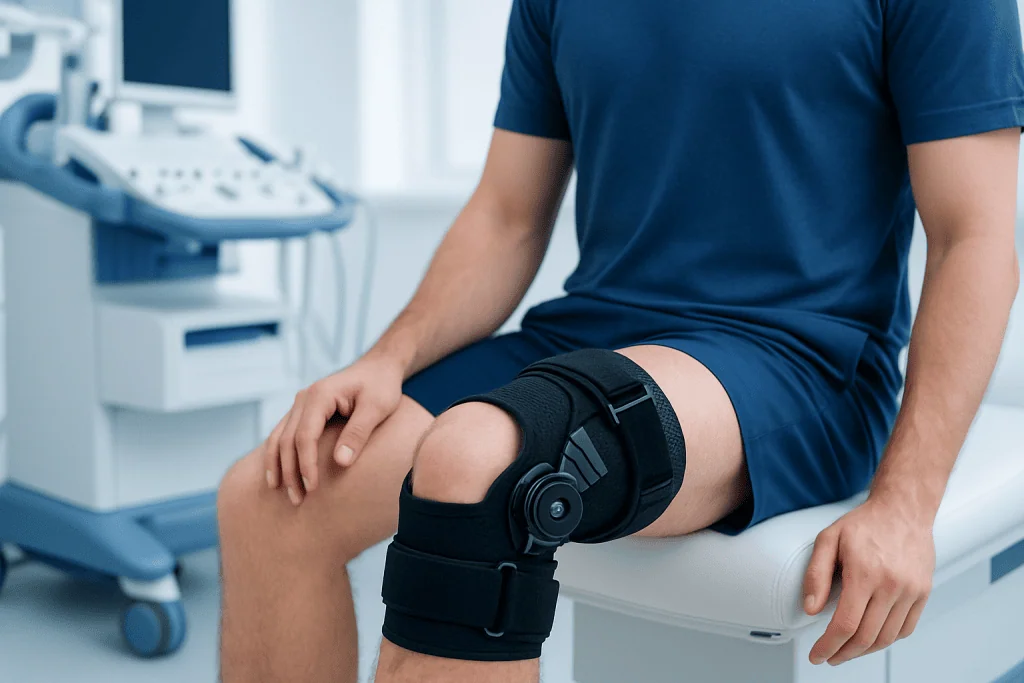
Mueller and similar brands make several broad types of knee braces. A compression sleeve is usually the lightest option. It can provide gentle pressure, warmth, and a feeling of support for mild pain, minor swelling, or return to activity after overuse. Sleeves are commonly used by people with early joint discomfort or exercise-related soreness.
More structured braces may include straps, an open patella design, side stabilizers, or hinges. These options may help patients who have kneecap tracking problems, mild side-to-side instability, or discomfort during sport. A patellar support brace may be considered when symptoms are focused around the front of the knee, especially during stairs, squatting, or prolonged sitting.
Hinged braces generally provide more control and are more likely to be recommended after a sprain, when there is concern about ligament support, or when a clinician advises protection during recovery. Some patients with knee arthritis also find benefit from bracing, especially when movement feels painful or unstable. However, the brace style should be matched to the patient’s diagnosis, activity level, and body shape rather than chosen only by appearance or advertising.
When a brace may help and when it may not

A mueller knee brace may help in several situations: after a mild sprain, during return to exercise, with mild swelling, for front-of-knee pain, or when the knee feels slightly unstable. Some people also use a brace during work or daily routines that involve repeated bending, kneeling, or long periods on their feet. In these settings, the support can make movement feel more secure and reduce symptom flare-ups.
At the same time, not every painful knee should simply be braced. If there is severe swelling, a popping injury, locking, giving way, fever, marked redness, or inability to bear weight, a brace should not replace medical assessment. Those symptoms can point to injuries or conditions that need a proper diagnosis.
Bracing can also be less helpful if it is worn incorrectly or used for too long without strengthening the muscles around the knee. Overreliance on support may sometimes lead patients to avoid the rehabilitation exercises that are often central to recovery. For that reason, clinicians often recommend a brace alongside guided movement, stretching, and muscle strengthening rather than as a stand-alone solution.
How to choose the right mueller knee brace
The most important step in choosing a brace is understanding the purpose. A patient looking for relief from mild activity-related soreness may need only a compression sleeve, while someone with a history of twisting injury or instability may need a more supportive design. If symptoms began after trauma, or if the knee repeatedly buckles, professional advice is especially important before choosing a brace independently.
Fit matters as much as brace type. A brace should feel snug and supportive without causing pinching, numbness, skin marks that do not fade, or coldness in the lower leg. It should stay in place during movement and should not bunch behind the knee. Measuring the knee according to the manufacturer’s instructions is usually more reliable than guessing by clothing size.
Comfort and real-life use are also important. Patients may want to consider whether the brace will be worn under clothing, during sport, or for long workdays. Features such as breathable fabric, adjustable straps, side supports, and easy application can affect whether a brace is used consistently. If the brace causes pain or seems to worsen symptoms, it should be removed and reassessed by a healthcare professional.
Diagnosis matters: identifying the cause of knee symptoms
Knee pain is a symptom, not a diagnosis. Two people may both buy a mueller knee brace, but one may have a mild overuse problem while the other has a meniscus tear, tendon irritation, cartilage wear, or ligament injury. Effective care depends on identifying what structure is involved and whether the issue is temporary, chronic, or progressive.
Doctors usually begin with a medical history and physical examination. They ask when symptoms started, whether there was an injury, where the pain is located, and which movements make it worse. They may also check range of motion, tenderness, swelling, alignment, and joint stability. In some cases, imaging such as X-rays or MRI is needed to clarify the problem.
When symptoms suggest more than a minor strain, evaluation may lead to treatment for conditions such as meniscus tear or ligament damage. In selected cases, specialists may recommend rehabilitation, injections, or surgery. For example, if there is significant structural injury, patients may be assessed for knee arthroscopy or other orthopedic care rather than relying on a brace alone.
Using a knee brace safely and effectively
A brace works best when it is worn correctly. It should be positioned as directed, with hinges or supports aligned properly and straps tightened evenly. Wearing it too loosely may make it slide and fail to support the joint, while wearing it too tightly can irritate the skin and affect circulation.
Skin care is often overlooked. The knee should be clean and dry before use, and the skin should be checked regularly for rubbing, pressure areas, or irritation. This is especially important for older adults and people with diabetes, circulation problems, or sensitive skin. A clinician may advise shorter wear times at first to make sure the brace is tolerated well.
A brace is usually most effective when combined with other measures. These may include rest from aggravating activities, gradual return to exercise, targeted physiotherapy, weight management when appropriate, and pain relief recommended by a doctor. Some patients benefit from structured rehabilitation programs or, for ongoing joint degeneration, knee replacement assessment if conservative treatment no longer controls pain and function.
When to seek medical care
Medical care is recommended if knee pain is severe, starts after a fall or twisting injury, or is accompanied by a popping sensation, rapid swelling, or inability to walk normally. A patient should also seek assessment if the knee locks, repeatedly gives way, looks deformed, or remains painful despite rest and a properly fitted brace.
Prompt evaluation is also important when there is fever, significant warmth, spreading redness, calf swelling, or symptoms that suggest infection or a blood clot. These situations should not be managed with a brace alone. Children, older adults, and athletes returning to high-demand sport may also benefit from earlier professional guidance.
If symptoms persist, an orthopedic specialist can determine whether more targeted treatment is needed, such as physiotherapy, injection-based care, ACL surgery, or other interventions. Acibadem International’s multidisciplinary specialists and JCI-accredited hospitals diagnose and treat knee conditions for international patients when further evaluation is required.
Frequently asked questions
What is a mueller knee brace used for?
A mueller knee brace is used to provide support, compression, and sometimes added stability to the knee. Depending on the design, it may help with mild pain, swelling, activity-related discomfort, or a feeling of instability.
Can a knee brace heal a knee injury?
A knee brace does not usually heal the underlying injury by itself. It can help protect the joint and reduce symptoms while the knee recovers, but many patients also need rest, exercise therapy, or medical treatment.
How tight should a knee brace be?
A knee brace should feel snug enough to stay in place and provide support without causing numbness, tingling, increased pain, or skin discoloration. If it feels excessively tight or leaves deep marks, it may need adjustment or a different size.
Should a knee brace be worn all day?
Not always. Some people wear a brace only during walking, exercise, or activities that trigger symptoms, while others may use it for longer periods if advised by a clinician. Long-term daily use should ideally be guided by a healthcare professional.
Is a compression sleeve the same as a hinged knee brace?
No. A compression sleeve mainly provides gentle pressure and a sense of support, while a hinged brace offers more structural stability and is often used when ligament support is a concern. The best option depends on the reason for knee symptoms.
When should someone stop using a knee brace and see a doctor?
A doctor should assess the knee if pain is worsening, swelling is significant, the joint locks or gives way, or the person cannot bear weight normally. Medical advice is also important if symptoms do not improve or if the brace itself causes discomfort or skin problems.
References
- American Academy of Orthopaedic Surgeons
- National Institute of Arthritis and Musculoskeletal and Skin Diseases
- American College of Sports Medicine
- Mayo Clinic
- National Health Service
This article is for general information only and is not a substitute for professional medical advice. Please consult a qualified doctor about your individual situation.
Joint and spine care in Turkey — expert assessment & treatment
JCI-accredited · board-certified surgeons · reply within 24h
Add us as a Preferred Source to see more of our trusted health content across Google Search, AI Overviews and Discover.

More from the Health Library

Foot Pressure Points — Explained by Medical Evidence, Not Myths

Post Vacation Depression: An Evidence-Based Guide for Patients

Coconut Oil: An Evidence-Based Guide for Patients

Office Chair Butt: A Complete Medical Overview

Sense of Self: A Complete Medical Overview

Ketchup: An Evidence-Based Guide for Patients
Orthopedic Surgery & Traumatology Specialists at Acibadem

Fzt. A.Sercan Soyarslan
Physical Medicine & Rehabilitation
Dr. Abdullah Yener İnce
Orthopedic Surgery & Traumatology
Dr. Adnan Abbasoğlu
Orthopedic Surgery & Traumatology
Prof. Dr. Ahmet Alanay
Orthopedic Surgery & Traumatology