Types of Smiles: A Complete Medical Overview

Types of smiles vary based on emotion, facial muscle activity, teeth, lips, and jaw structure. A genuine smile usually involves both the mouth and the muscles around the eyes.
Key Takeaways
- Types of smiles vary based on emotion, facial muscle activity, teeth, lips, and jaw structure.
- A genuine smile usually involves both the mouth and the muscles around the eyes.
- Uneven or suddenly changed smiles can sometimes point to dental, muscular, or neurologic issues.
- Most smile differences are normal, but persistent pain, weakness, or facial drooping should be medically assessed.
- Dental, orthodontic, and facial evaluations can help explain smile shape and function.
Types of smiles include genuine emotional smiles, social or polite smiles, posed smiles, and smiles affected by facial, dental, or nerve-related differences. A smile can reflect emotion, communication style, and underlying oral or facial health, so understanding smile variations can be helpful when a change seems new or uneven.
Overview: what are the types of smiles?
The phrase types of smiles usually refers to the different ways the face expresses emotion and social intent through the mouth, cheeks, and eyes. Broadly, smiles may be genuine and spontaneous, polite and social, posed for photographs, asymmetric, closed-lip, broad toothy, or shaped by dental and facial anatomy. In everyday life, most people use several smile types depending on mood, setting, and comfort.
From a medical perspective, a smile is more than an expression. It is a coordinated action involving facial muscles, nerves, the lips, teeth, gums, jaw position, and skin around the eyes. Because so many structures are involved, smile appearance can vary naturally from person to person, and it can also change with age, dental alignment, muscle tone, or certain health conditions.
This topic is often covered as a beauty or personality subject, but it also has a clinical side. A smile may offer clues about oral health, facial symmetry, and nerve function. For that reason, understanding smile variation can be useful not only for communication and self-image, but also for recognizing when a new or unusual change deserves professional attention.
Common smile types and how they differ

One of the most recognized smile types is the genuine or spontaneous smile. This usually appears during real enjoyment and often includes lifting of the cheeks and narrowing at the outer corners of the eyes. In contrast, a posed smile is more deliberate, commonly used for photographs or formal social situations, and may rely more on mouth movement than eye involvement.
Another common category is the social or polite smile. This smile often signals friendliness, reassurance, or courtesy rather than strong emotion. It may be brief and subtle, with closed lips or only slight tooth show. A closed-lip smile can also simply reflect comfort level, facial habit, or concern about teeth or gums rather than emotion itself.
Some people have a broad toothy smile, while others show less upper teeth, more gum tissue, or more lower teeth. These patterns are often shaped by lip length, gum exposure, jaw position, tooth size, and facial proportions. A smile can also be asymmetrical, meaning one corner of the mouth lifts more than the other. Mild asymmetry is common and usually normal.
In clinical settings, smile patterns may be described in more technical ways, such as high-smile line, low-smile line, gingival smile, or dynamic asymmetry. These terms are sometimes used in dental treatment and orthodontic evaluation to understand how teeth, gums, and facial movement interact during speech and expression.
What creates a smile: muscles, nerves, teeth, and facial structure
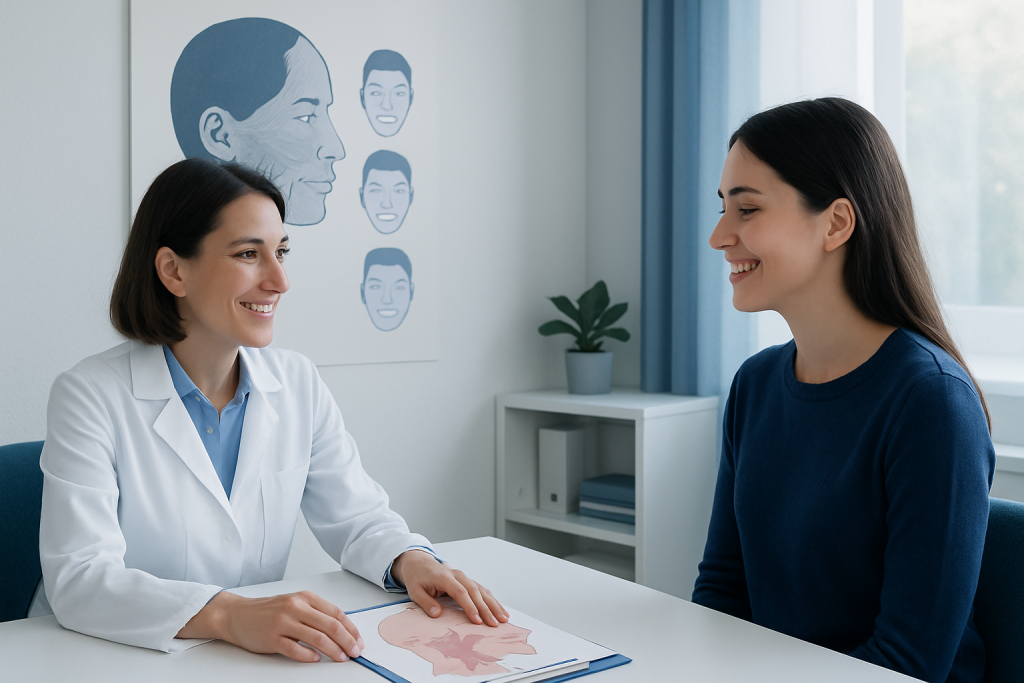
A smile depends on a complex set of facial muscles, especially those that lift the corners of the mouth and raise the upper lip. The facial nerve controls many of these movements. The muscles around the eyes also contribute, especially in spontaneous smiles that appear emotionally authentic. If muscle coordination changes, the smile may look flatter, uneven, or limited in range.
The teeth and bite also strongly influence smile appearance. The way the upper and lower teeth meet, the curvature of the dental arch, and the visibility of incisors all affect how a smile looks. Crooked teeth, crowding, spacing, jaw misalignment, or missing teeth can alter lip support and change the way the smile is framed. In some cases, an evaluation for orthodontics helps explain these differences.
Lip shape, gum exposure, cheek volume, and chin projection also play a role. A shorter upper lip may show more gums, while a longer upper lip may cover more of the teeth. Facial growth, aging, and skin elasticity can gradually change smile dynamics over time. This is one reason why a person’s smile in childhood, adulthood, and later life may not look exactly the same.
For some people, a smile difference relates to a known health condition rather than anatomy alone. Facial weakness after nerve irritation, a jaw joint disorder, or significant dental wear can all influence smiling. When the concern appears related to tooth alignment or bite issues, doctors may also consider whether malocclusion is contributing to the change.
When smile differences are normal and when they may signal a problem
Many smile variations are completely normal. People differ in facial symmetry, muscle strength, lip movement, gum display, and how much emotion they naturally show. A smile may also vary from moment to moment depending on tiredness, stress, confidence, or context. A slight unevenness between the two sides of the mouth is especially common and often not a sign of illness.
However, a sudden change in smile appearance deserves more attention. New facial drooping, trouble closing one eye, slurred speech, numbness, or weakness on one side of the face can signal a medical emergency and should be assessed right away. A smile that becomes newly painful, tight, or difficult to produce may also point to a nerve, muscle, or jaw problem.
Persistent smile changes can sometimes be linked to oral health. Gum swelling, bleeding, tooth pain, loose teeth, or visible tooth wear may alter a person’s smile because of discomfort or structural change. In these cases, dentists may look for conditions such as gum disease or bite-related problems that affect both appearance and function.
Psychological factors matter too. Some people reduce or hide their smile because of embarrassment about teeth, facial scarring, or changes after treatment or injury. This can affect confidence and social comfort. A supportive medical or dental assessment can help identify whether the issue is functional, cosmetic, or both.
How doctors and dentists assess smile types
Assessment usually begins with a history and physical examination. A clinician may ask whether the smile difference has always been present or appeared recently, whether there is pain, weakness, numbness, or difficulty chewing, and whether there has been dental treatment, trauma, or facial surgery in the past. Photographs over time can sometimes help show whether a change is long-standing or new.
The examination may include facial symmetry at rest and during movement, eye closure, lip motion, jaw opening, bite alignment, and inspection of the teeth and gums. In dentistry and orthodontics, providers often evaluate smile line, tooth display, gum exposure, and arch shape. They may also assess how the smile looks during speech as well as during a posed grin and a spontaneous laugh.
If a structural issue is suspected, imaging or dental records may be useful. Panoramic dental X-rays, cephalometric analysis, or other imaging can help evaluate the jaw and tooth alignment. If a nerve or muscle disorder is a concern, additional neurologic testing may be considered. The goal is to understand both function and appearance, rather than judging the smile by one single ideal standard.
This multidisciplinary approach can be especially helpful when several factors overlap, such as tooth position, gum health, and facial balance. Near the end of a patient’s evaluation pathway, care may involve dental, orthodontic, maxillofacial, or neurologic input depending on the likely cause.
Treatment options for smile-related concerns
Treatment depends on the reason for the smile difference. If the smile is simply a normal personal variation, no treatment is needed. When the concern is cosmetic but not related to disease, a dentist or specialist may discuss conservative ways to improve comfort and appearance, such as correcting tooth position, restoring worn teeth, or addressing gum contour if appropriate.
Dental and orthodontic care are common options when the issue involves bite, spacing, crowding, or uneven tooth display. In selected cases, smile design may be discussed as part of a broader plan to improve dental harmony, but this should follow a careful evaluation of oral health, gum condition, and bite function rather than focusing only on appearance.
If the smile change relates to gum inflammation, cavities, tooth loss, or jaw problems, treatment targets the underlying issue first. Management may include periodontal care, restorations, replacement of missing teeth, or treatment for temporomandibular joint dysfunction. If facial nerve weakness is present, care may involve a neurologist, ENT specialist, or rehabilitation team depending on the cause.
For international patients seeking coordinated assessment, Acibadem International’s multidisciplinary specialists in JCI-accredited hospitals diagnose and treat smile-related dental, facial, and neurologic concerns when medical evaluation is needed. The most appropriate treatment plan is individualized and should be guided by qualified professionals.
Prevention and self-care for a healthy smile
Although people cannot and do not need to change every natural smile trait, they can support a healthy smile by protecting oral and facial function. Daily tooth brushing with fluoride toothpaste, cleaning between teeth, regular dental checkups, and early treatment of gum or tooth problems help preserve tooth display, bite support, and comfort during smiling and speaking.
Good habits also include limiting tobacco exposure, moderating sugary foods and acidic drinks, and wearing protection during contact sports if facial injury is a risk. Managing teeth grinding, if present, may help reduce tooth wear and jaw strain. Hydration and general health maintenance can also support oral tissues and facial muscle comfort.
For people concerned about smile asymmetry or a long-standing bite issue, early evaluation can be useful even when symptoms are mild. Children, teenagers, and adults may all benefit from assessment when crowding, crossbite, or jaw imbalance appears to affect function. Timely guidance often helps clarify whether a variation is normal, developmental, or treatable.
Self-care should also include paying attention to changes. A smile that gradually becomes uncomfortable, restricted, or less symmetric should not be ignored. Seeking advice early can make diagnosis simpler and may help prevent more significant dental or functional problems later.
When to seek medical care
Medical or dental review is appropriate if a person notices a smile change that is new, persistent, painful, or associated with other symptoms. Important warning signs include facial drooping, numbness, trouble speaking, sudden weakness, inability to close the eye, severe jaw pain, or difficulty chewing. These symptoms need prompt professional assessment, and sudden one-sided facial weakness should be treated as urgent.
It is also reasonable to seek care for ongoing gum bleeding, tooth pain, loose teeth, mouth sores that do not heal, or a smile that seems increasingly uneven over time. A dentist, orthodontist, oral and maxillofacial specialist, or physician can help determine whether the issue is related to oral health, bite, facial muscles, or nerve function.
Even when the concern is mainly aesthetic, an evaluation can still be helpful if it affects confidence or daily comfort. A clinician can explain whether the smile pattern is within normal variation and discuss safe options if treatment is desired. Reassurance is often an important part of care.
Frequently asked questions
What are the main types of smiles?
Common types of smiles include genuine smiles, polite or social smiles, posed smiles, closed-lip smiles, broad toothy smiles, and asymmetrical smiles. These categories are not strict diagnoses but helpful ways to describe how facial expression varies with emotion, anatomy, and context.
How can someone tell if a smile is genuine?
A genuine smile often involves both the mouth and the muscles around the eyes, with raised cheeks and a more natural appearance. Still, not every authentic smile looks the same, so this is only a general pattern rather than a rule.
Is an uneven smile always a health problem?
No. Mild smile asymmetry is very common and often reflects normal differences in facial muscle strength or structure. It becomes more concerning when it appears suddenly or is accompanied by pain, weakness, numbness, or speech changes.
Can dental problems change the way a smile looks?
Yes. Tooth alignment, missing teeth, gum disease, worn teeth, and bite problems can all affect lip support, tooth show, and overall smile balance. Treating the underlying dental issue may improve both function and appearance.
Do smile types change with age?
Yes. Aging can affect skin elasticity, lip position, tooth wear, and facial muscle tone, which may alter the way a smile looks over time. These changes are often gradual and part of normal aging, though dental or medical issues can also contribute.
When should someone worry about a sudden change in their smile?
A sudden smile change should be taken seriously if it comes with facial drooping, one-sided weakness, numbness, trouble speaking, or difficulty closing the eye. These symptoms can signal an urgent medical problem and should be evaluated immediately.
References
- American Dental Association
- National Institute of Dental and Craniofacial Research
- Cleveland Clinic
- Mayo Clinic
- National Institute of Neurological Disorders and Stroke
This article is for general information only and is not a substitute for professional medical advice. Please consult a qualified doctor about your individual situation.
Explore treatments in Turkey — costs, top hospitals & a free quote
JCI-accredited · board-certified surgeons · reply within 24h
Add us as a Preferred Source to see more of our trusted health content across Google Search, AI Overviews and Discover.

More from the Health Library



Related Specialists

Prof. Dr. Kahraman Öztürk
Orthopedic Surgery & Traumatology
Prof. Dr. Tuluhan Yunus Emre
Orthopedic Surgery & Traumatology
Dr. Hüseyin Akcan
Radiology
Assoc. Prof. Dr. Seden Erten Çelik
Cardiology