Does Lifting Weights Stunt Growth? Here Is What the Evidence Says

Current evidence does not show that properly supervised weight training stunts growth. Growth in children and teens is mainly influenced by genetics, nutrition, hormones, sleep, and overall health.
Key Takeaways
- Current evidence does not show that properly supervised weight training stunts growth.
- Growth in children and teens is mainly influenced by genetics, nutrition, hormones, sleep, and overall health.
- The main risk from lifting weights is injury due to poor technique, inadequate supervision, or excessive loading.
- Youth strength training should focus on form, gradual progression, and rest rather than maximal lifting.
- Persistent pain, swelling, limping, or concerns about short stature should be assessed by a doctor.
No, lifting weights does not stunt growth when strength training is age-appropriate, well supervised, and performed with proper technique. Most concerns come from misunderstandings about growth plates, while the real risks are preventable injuries from poor form, loads that are too heavy, or training without guidance.
What the evidence says
No, lifting weights does not stunt growth in children or teenagers when it is done correctly. Research and guidance from major pediatric and sports medicine organizations support supervised youth strength training as safe and beneficial when programs are age-appropriate and technique is prioritized over heavy loads.
This concern often comes from confusion about growth plates, the areas of developing tissue near the ends of long bones. Growth plates can be injured, but weight training itself is not known to stop normal height growth. In practice, the greater concern is avoidable injury from unsafe equipment use, poor form, lifting too much too soon, or trying advanced lifts without coaching.
For many young people, strength training can improve muscle strength, coordination, bone health, posture, and confidence in sports and daily activities. It may also help reduce some sports-related injuries by improving movement control and supporting joints when training is balanced and supervised.
Why people worry about growth plates
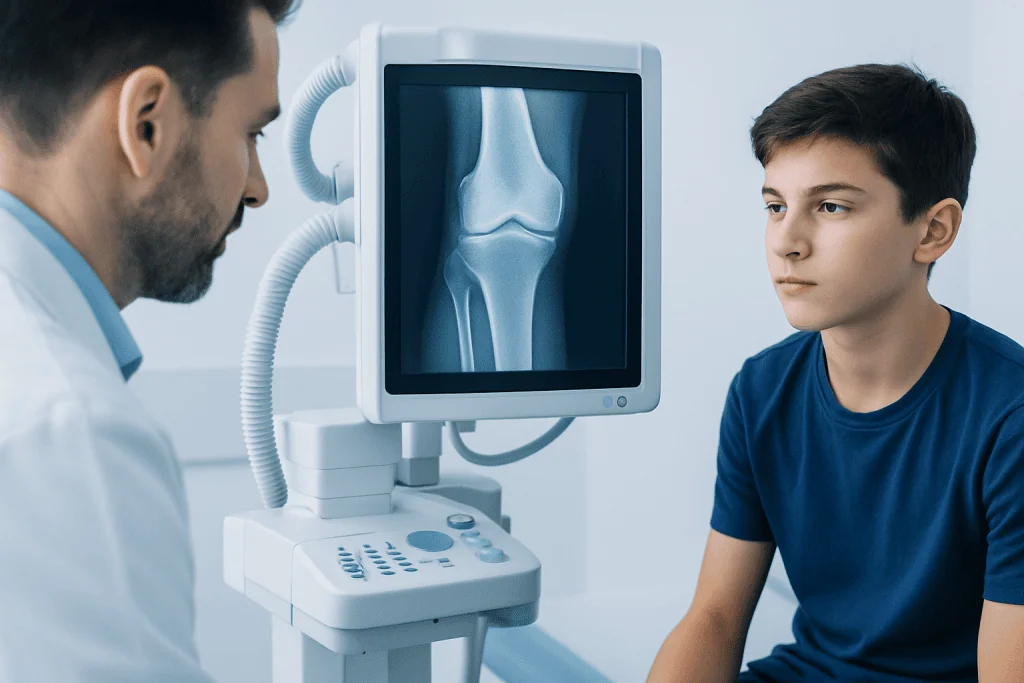
Growth plates are softer and more vulnerable than mature bone, so injuries can happen in children and adolescents. That fact sometimes leads to the assumption that any resistance exercise is harmful. However, this is an overgeneralization. Growth plate injuries are possible in many sports and activities, including running, jumping, gymnastics, football, and falls, not only in the weight room.
The important distinction is between safe, structured strength training and unsafe lifting practices. A well-designed youth program uses manageable resistance, controlled movements, and close supervision. It does not rely on maximal lifts, repeated failed attempts, or adult-style bodybuilding routines that ignore a child’s stage of development.
When a growth plate is injured, symptoms usually come from the injury itself rather than from slowed growth at first. A child may have sudden pain, swelling, reduced movement, tenderness near a joint, or difficulty bearing weight. These situations need medical review because early treatment helps protect normal healing.
Families who are concerned about bone development may also want to understand related conditions such as scoliosis, which affects spine alignment rather than height growth itself. Not every musculoskeletal issue in a growing child is caused by exercise, and symptoms should be assessed individually.
What really influences a child's height
Height is determined mostly by genetics, with important support from nutrition, sleep, overall health, and normal hormone function. Puberty timing also plays a major role. This means that a child who is shorter or taller than peers is not necessarily experiencing an exercise-related problem.
Several medical factors can affect growth more than exercise does. These include chronic illnesses, poor calorie or protein intake, low vitamin D or other nutritional deficiencies, thyroid disorders, delayed puberty, and certain long-term medications. In some cases, a doctor may consider conditions affecting bone or hormone health if growth patterns are unusual.
If parents are worried about growth, doctors usually look at the child’s growth chart over time rather than one measurement alone. A steady pattern often matters more than whether a child seems short compared with classmates. A child who continues to grow along their usual curve is generally less concerning than one whose growth has clearly slowed.
When symptoms suggest an underlying hormonal cause, a specialist may evaluate for issues related to growth hormone deficiency or other endocrine conditions. That evaluation is separate from the question of whether strength training is safe.
Benefits and risks of youth strength training
When introduced properly, strength training can be a healthy part of a child’s or teenager’s routine. Benefits may include improved strength, balance, coordination, bone loading, sports performance, and body awareness. It can also encourage lifelong exercise habits when training remains enjoyable and realistic.
The risks are mostly linked to how the training is done, not to the concept of resistance exercise itself. Injuries are more likely when a young person lifts with poor form, skips warm-ups, uses equipment that does not fit well, trains through pain, or attempts maximal lifts without supervision. Overuse can also develop if the same body areas are stressed repeatedly without enough recovery.
Red flags for unsafe training include joint pain that keeps returning, swelling, pain near the ends of bones, back pain that persists, or pain that changes the way the child walks or participates in sports. These symptoms do not prove growth has been affected, but they do suggest the body needs medical assessment and a review of training habits.
If an injury is suspected, imaging or specialist evaluation may sometimes be needed. In selected cases, doctors may use tests such as MRI to assess soft tissues or possible growth plate problems when the examination suggests more than a simple strain.
How to make lifting safer for children and teens
The safest approach is to match training to the child’s maturity, skill level, and goals. Most young athletes should begin with bodyweight movements, resistance bands, light free weights, or machine-based exercises that can be carefully controlled. Learning technique should come before increasing resistance.
Good programs emphasize quality over quantity. Sessions usually include a warm-up, a small number of major movement patterns, and rest between training days. Children and teens should be encouraged to stop if a movement causes sharp pain, dizziness, or unusual discomfort. One of the clearest signs of a safe program is that progression is gradual and consistent rather than rushed.
- Use qualified supervision, especially for beginners.
- Focus on form, breathing, and controlled movements.
- Increase resistance slowly and only after technique is solid.
- Avoid one-repetition maximum testing in most children and younger teens.
- Allow recovery days and support training with sleep and balanced nutrition.
- Do not train through pain or use lifting as punishment.
Some families also benefit from professional exercise guidance if a child has previous injuries, movement asymmetry, or poor coordination. In those situations, a structured physical therapy and rehabilitation plan may help improve mechanics before returning to regular strength work.
How doctors evaluate growth concerns or lifting-related pain
Most children who lift weights and feel well do not need special testing. If there are concerns about pain, injury, or slowed growth, a doctor begins with a medical history and physical examination. They will ask about the child’s training routine, recent changes in performance, pain location, puberty timing, sleep, nutrition, and family growth patterns.
The examination may include height and weight measurements plotted on a growth chart, assessment of joints and spine, evaluation of walking and balance, and checks for tenderness near growth plates. Doctors also look for signs that point away from a simple training issue, such as fatigue, delayed puberty, chronic digestive symptoms, or recurrent fractures.
When needed, tests may include plain X-rays to look for fractures or growth plate injury, blood tests to assess nutrition or hormone-related issues, or referral to pediatric orthopedics or endocrinology. Imaging and specialist input are chosen based on symptoms rather than used routinely for every child who does strength training.
If a child has significant back pain, persistent limb pain, or suspected structural issues, evaluation in an orthopedic setting may be appropriate. In more complex musculoskeletal cases, doctors may also consider orthopedics and traumatology care to guide diagnosis, treatment, and return to activity.
When to seek medical care
In most cases, weight training does not harm growth, and mild muscle soreness after exercise is normal. Medical review is more important when symptoms suggest injury, when pain does not improve with rest, or when a child’s growth pattern seems to be changing unexpectedly.
Parents should arrange medical care if a child has pain that lasts more than a few days, repeated pain during or after lifting, swelling around a joint, tenderness near the ends of bones, back pain that keeps returning, limping, weakness, numbness, or reduced range of motion. Sudden severe pain after a lift, inability to bear weight, or visible deformity needs prompt attention.
It is also reasonable to speak with a doctor if there are broader concerns about height or development, such as noticeably slowed growth over time, delayed puberty, poor appetite, weight loss, unusual fatigue, or a history of recurrent fractures. These signs may point to an underlying issue unrelated to the gym.
For international patients who need assessment, Acibadem International’s multidisciplinary specialists in JCI-accredited hospitals evaluate bone, joint, and growth-related concerns and recommend treatment based on the child’s age, symptoms, and examination findings.
Frequently asked questions
Can a 12-year-old or 13-year-old lift weights safely?
Yes, many children in this age group can do strength training safely if the program is supervised and age-appropriate. The focus should be on technique, light to moderate resistance, and gradual progression rather than heavy lifting.
Do heavy weights damage growth plates?
Growth plates can be injured, but that does not mean all weight training is harmful. The main risk comes from unsafe lifting practices, poor form, lack of supervision, or loads that exceed the child's ability.
Will lifting weights make a teenager shorter?
No, there is no good evidence that proper strength training makes a teenager shorter. If height growth seems unusually slow, doctors usually look for other explanations such as genetics, nutrition, puberty timing, or medical conditions.
Is muscle soreness after lifting a sign of harm?
Mild muscle soreness after a new or challenging workout is common and usually settles within a few days. Persistent joint pain, swelling, limping, or pain near a bone end is different and should be evaluated.
What type of strength training is best for teens?
Programs that teach movement quality, core stability, and controlled resistance are usually best. Bodyweight exercises, bands, light free weights, and machine exercises can all be useful when chosen and supervised properly.
Should teens avoid deadlifts or squats?
Not necessarily. These movements can be safe when they are taught well, matched to the teen's skill level, and performed with appropriate resistance and supervision.
When should a parent worry that growth is being affected?
Parents should be more concerned about a clear slowdown in growth over time rather than one isolated height measurement. A doctor can review growth charts, puberty, nutrition, and any symptoms to see whether further evaluation is needed.
References
- American Academy of Pediatrics
- American College of Sports Medicine
- National Strength and Conditioning Association
- American Academy of Orthopaedic Surgeons
- Centers for Disease Control and Prevention
This article is for general information only and is not a substitute for professional medical advice. Please consult a qualified doctor about your individual situation.
Explore treatments in Turkey — costs, top hospitals & a free quote
JCI-accredited · board-certified surgeons · reply within 24h
Add us as a Preferred Source to see more of our trusted health content across Google Search, AI Overviews and Discover.
Check your numbers in seconds
BMI, calories, due date, blood pressure and 30+ more clinical calculators — free, instant, doctor-reviewed ranges.

More from the Health Library



Related Specialists

Prof. Dr. Elif Öztürk
Infectious Diseases & Clinical Microbiology
Prof. Dr. Oya Yönal
Gastroenterology
Assoc. Prof. Dr. Tansel Türkoğlu
Cardiovascular Surgery
Dr. Mustafa Kartal
Pediatrics