Brca Testing: A Complete Medical Overview

BRCA testing looks for inherited variants in the BRCA1 and BRCA2 genes. A positive result does not mean a person has cancer, but it may mean higher lifetime risk for certain cancers.
Key Takeaways
- BRCA testing looks for inherited variants in the BRCA1 and BRCA2 genes.
- A positive result does not mean a person has cancer, but it may mean higher lifetime risk for certain cancers.
- Testing is most useful for people with a personal or family history suggestive of hereditary cancer.
- Genetic counseling before and after testing helps people understand benefits, limits, and next steps.
- Results may affect screening plans, preventive options, treatment choices, and family members’ testing decisions.
BRCA testing is a genetic test that looks for inherited changes in the BRCA1 and BRCA2 genes. It can help estimate the risk of certain cancers, support family risk assessment, and guide screening, prevention, and treatment decisions with the help of genetic counseling.
Overview: what BRCA testing is and why it matters
BRCA testing is a laboratory test that looks for inherited changes, also called pathogenic variants or mutations, in the BRCA1 and BRCA2 genes. These genes normally help repair damaged DNA. When one of them carries a harmful inherited change, the body may be less able to repair DNA damage, which can raise the risk of certain cancers over a lifetime.
The test is most often discussed in relation to breast and ovarian cancer, but BRCA-related risk can also involve prostate, pancreatic, and some other cancers. In this way, BRCA testing is not simply a “cancer test.” It is a risk assessment tool that can help doctors and patients make more informed decisions about screening, prevention, and, in some cases, treatment.
Because the results can affect not only the person being tested but also close relatives, BRCA testing is usually offered alongside genetic counseling. Counseling helps explain who may benefit from testing, what the possible results mean, and how those results may or may not change medical care. This makes the process more personal and medically useful than taking a test result at face value.
Who may benefit from BRCA testing
BRCA testing is not routinely recommended for everyone. It is usually considered for people whose personal or family history suggests hereditary breast and ovarian cancer syndrome. This may include a strong family history of breast cancer, ovarian cancer, male breast cancer, pancreatic cancer, or prostate cancer, especially when these cancers occur at younger ages or in multiple close relatives.
A person may also be referred for testing if they have breast cancer diagnosed at a relatively young age, triple-negative breast cancer, ovarian cancer, metastatic prostate cancer, or pancreatic cancer in certain settings. In families with Ashkenazi Jewish ancestry, testing may be discussed more readily because some BRCA variants are more common in this population.
Doctors often prefer to test a family member who has already had cancer, if possible, because this can make the result easier to interpret for the whole family. Still, unaffected relatives may also be tested when family history is strong or when a known BRCA variant has already been identified in the family. When appropriate, assessment may happen as part of care for breast cancer or related hereditary cancer evaluation.
- Personal history of breast, ovarian, pancreatic, or prostate cancer
- Breast cancer at a younger age than usual
- More than one related cancer in the same person or family
- Male breast cancer
- A known BRCA variant in a blood relative
- Family ancestry associated with higher BRCA variant frequency
What the test involves and how to prepare

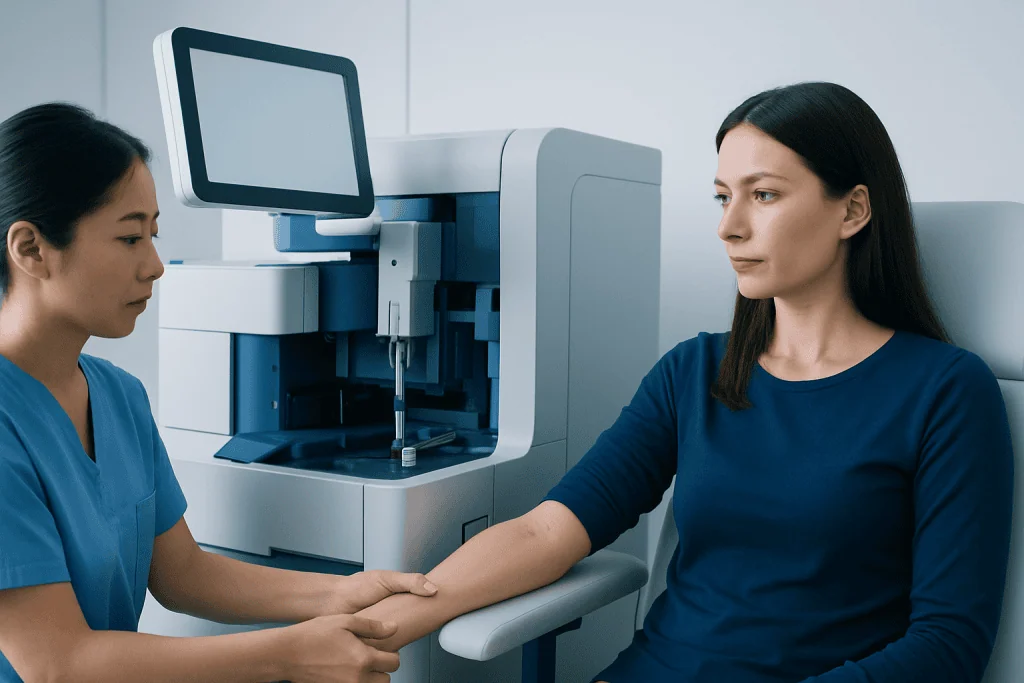
BRCA testing is usually done on a blood sample or saliva sample. The sample is sent to a specialized laboratory, where the BRCA1 and BRCA2 genes are analyzed for inherited changes. In some cases, the test may be part of a larger multigene panel that checks several genes linked to hereditary cancer risk, not only BRCA1 and BRCA2.
Before testing, genetic counseling is important. The counselor or doctor reviews the personal and family medical history, explains the possible benefits and limitations of the test, and discusses how the result could affect medical decisions. This conversation also covers emotional, family, and privacy considerations, because a genetic result can have meaning beyond immediate medical care.
Most people do not need special physical preparation before the test. However, it is helpful to gather family history in advance, including which relatives had cancer, what type, and the ages at diagnosis if known. If previous genetic test results exist in the family, bringing that information can help the healthcare team choose the most appropriate test and interpret the result more accurately.
Understanding BRCA test results
BRCA test results are usually reported as positive, negative, or variant of uncertain significance. A positive result means a harmful inherited change was found in BRCA1 or BRCA2. This does not mean a person currently has cancer, but it does mean cancer risk is higher than average for some cancer types, and risk management may need to change.
A negative result means no harmful BRCA variant was found in the genes tested. However, a negative result does not always mean there is no inherited cancer risk. If a strong family history remains unexplained, there may be another gene involved, or the family history may still justify closer screening. The meaning of a negative result depends heavily on whether a known family BRCA variant has already been identified.
A variant of uncertain significance means a genetic change was found, but science does not yet know whether it raises cancer risk. This type of result should not usually lead to major medical decisions on its own. Instead, care is based on the person’s personal and family history while laboratories and researchers continue to classify the variant over time.
Interpreting the result in context is essential. A result may influence decisions about breast imaging, gynecologic follow-up, preventive medicines, or surgery. It may also help guide testing for close relatives, who may carry the same inherited variant and benefit from tailored surveillance or preventive care.
How BRCA testing can guide medical care
One of the most useful aspects of BRCA testing is that it can turn a general concern about family history into a clearer care plan. For people who carry a harmful BRCA variant, doctors may recommend earlier or more frequent cancer screening. This can include breast MRI and mammography schedules that differ from those used in the general population, as well as discussion of ovarian cancer risk management.
Preventive options may also be considered. Depending on age, overall health, family planning, and personal preferences, some people may discuss medications that reduce breast cancer risk or risk-reducing surgery. Examples can include preventive breast surgery or surgery to remove the ovaries and fallopian tubes after childbearing is complete in selected high-risk patients. These are personal decisions made with specialist input, not automatic steps after every positive result.
For people who already have cancer, BRCA status can sometimes affect treatment choices. In certain situations, it may help oncologists decide whether chemotherapy or other targeted treatment strategies are appropriate, depending on the cancer type and stage. Some patients may also be referred to medical oncology for a fuller hereditary cancer and treatment assessment.
Because BRCA-related cancer risk often spans more than one organ system, care may involve several specialists, such as breast surgeons, gynecologists, oncologists, radiologists, and genetic counselors. In selected situations, coordinated evaluation may also include breast cancer treatment planning or discussion of related conditions such as ovarian cancer.
Limits, risks, and emotional considerations
BRCA testing can be very helpful, but it has limits. It cannot predict with certainty whether a person will develop cancer, when it might happen, or how aggressive it would be. A positive result shows increased risk, not a diagnosis. A negative result also does not erase all cancer risk, because many cancers happen without BRCA variants and not all hereditary causes are currently known.
Another limitation is that results can be complex. Variants of uncertain significance may create confusion, and even clear results can raise difficult questions about family members. Some people feel relief after testing, while others feel anxiety, guilt, or uncertainty about how much information to share with relatives. These reactions are common and can be addressed through counseling and supportive medical guidance.
Privacy and future planning are also part of the conversation. People may want to understand how results become part of the medical record, how they may influence family communication, and what follow-up care could be recommended over time. Taking time to ask questions before and after testing can make the process more manageable and meaningful.
When to seek medical care
A person should speak with a doctor or genetic counselor if they have a personal or family history that suggests inherited cancer risk. This includes breast cancer at a younger age, ovarian cancer at any age, male breast cancer, pancreatic cancer, metastatic prostate cancer, or several close relatives with related cancers. Even if family details are incomplete, a clinician can help decide whether genetic evaluation may still be useful.
Medical advice is also important if someone has already received a BRCA test result and is unsure what it means. Questions about screening schedules, preventive surgery, fertility planning, or family testing are best discussed with qualified professionals who can interpret the result in the context of personal health history.
If a person has symptoms such as a new breast lump, unexplained weight loss, abnormal bleeding, or ongoing pelvic symptoms, they should seek medical evaluation promptly. BRCA testing assesses inherited risk, but it does not replace standard assessment of symptoms. Near the end of the care pathway, institutions such as Acibadem International can provide multidisciplinary evaluation and treatment for international patients through JCI-accredited hospitals when hereditary cancer assessment or cancer care is needed.
Frequently asked questions
What is BRCA testing used for?
BRCA testing is used to look for inherited changes in the BRCA1 and BRCA2 genes that may increase the risk of certain cancers. It helps guide decisions about screening, prevention, treatment, and whether relatives may also benefit from testing.
Does a positive BRCA test mean a person has cancer?
No. A positive result means a harmful inherited gene change was found and that the risk of some cancers is higher than average. It does not confirm that cancer is present, and many people with a BRCA variant never develop cancer.
Who should consider BRCA testing?
People with certain personal or family histories may benefit, especially if there is breast, ovarian, pancreatic, prostate, or male breast cancer in close relatives. A doctor or genetic counselor can review the family pattern and decide whether testing is appropriate.
How is BRCA testing done?
The test is usually done with a blood sample or saliva sample. The sample is analyzed in a specialized laboratory, and results are typically reviewed with a healthcare professional or genetic counselor.
What if the result is negative?
A negative result can be reassuring, but its meaning depends on the family history and whether a known BRCA variant exists in the family. Some people with negative results may still need closer screening based on other risk factors or other possible inherited causes.
What does a variant of uncertain significance mean?
This result means a genetic change was found, but experts do not yet know whether it affects cancer risk. Doctors usually avoid making major treatment or prevention decisions based on this result alone and instead rely on the person’s medical and family history.
References
- National Cancer Institute
- Centers for Disease Control and Prevention
- American College of Obstetricians and Gynecologists
- National Comprehensive Cancer Network
- American Society of Clinical Oncology
This article is for general information only and is not a substitute for professional medical advice. Please consult a qualified doctor about your individual situation.
Explore treatments in Turkey — costs, top hospitals & a free quote
JCI-accredited · board-certified surgeons · reply within 24h
Add us as a Preferred Source to see more of our trusted health content across Google Search, AI Overviews and Discover.