Muscle Tension Dysphonia: What Patients Need to Know

Muscle tension dysphonia happens when the muscles around the voice box work too hard during speaking or singing. Common symptoms include a strained, hoarse, weak, or tired voice and a sense of tightness in the throat.
Key Takeaways
- Muscle tension dysphonia happens when the muscles around the voice box work too hard during speaking or singing.
- Common symptoms include a strained, hoarse, weak, or tired voice and a sense of tightness in the throat.
- Diagnosis usually involves a history, voice assessment, and examination of the larynx to rule out other causes.
- Voice therapy is often the main treatment, sometimes alongside care for reflux, allergies, stress, or other contributing factors.
- Early evaluation is important if hoarseness lasts more than a few weeks or if there are warning signs such as pain, trouble swallowing, or breathing problems.
Muscle tension dysphonia is a voice disorder in which extra muscle activity around the voice box affects how the voice sounds and feels. It often causes hoarseness, strain, throat discomfort, or vocal fatigue, and many people improve with expert voice evaluation and therapy.
What is muscle tension dysphonia?
Muscle tension dysphonia is a voice disorder caused by excessive or unbalanced muscle use in and around the larynx, also called the voice box. In simple terms, the voice may sound abnormal because the muscles used for speaking are working harder than they need to. This can make the voice feel strained, tight, weak, or easily tired, even when the vocal cords themselves may look normal or only mildly irritated.
This condition is not the same as losing the voice from a cold, and it is not always caused by visible damage to the vocal cords. Instead, it often reflects a pattern of voice production that has become inefficient. Some people develop it on its own, while others develop it after another voice problem, such as laryngitis, reflux, heavy voice use, or stress-related tightening in the throat.
Muscle tension dysphonia can affect teachers, singers, public speakers, call-center workers, and anyone who relies heavily on the voice. It can also happen in people without high voice demands. The condition is usually treatable, especially when it is assessed early by clinicians with experience in voice disorders.
How it may feel and sound
The symptoms of muscle tension dysphonia vary from person to person. Some people mainly notice how the voice sounds, while others are more aware of physical discomfort. A common pattern is that speaking takes more effort than usual, and the voice becomes worse after long conversations, presentations, or singing.
Possible symptoms include:
- Hoarseness or roughness
- A strained, tight, or pressed voice
- A weak or breathy voice
- Voice breaks or inconsistent sound quality
- Vocal fatigue, especially later in the day
- Throat tightness, pressure, or soreness
- A feeling of needing to clear the throat often
- Reduced pitch range, especially for singers
These symptoms can overlap with other voice conditions. For example, someone may initially think they simply have persistent hoarseness from overuse, allergies, or reflux. Because the causes can be different, a proper assessment matters. The goal is not only to name the problem, but also to understand what is driving it in each individual.
Why muscle tension dysphonia happens

Muscle tension dysphonia usually develops when the muscles of the neck, throat, jaw, or larynx become overly active during voice production. This may happen for one reason or from a combination of factors. In some people, the extra muscle tension appears after an infection or temporary voice loss, when the body begins to compensate in a way that becomes habitual.
Common contributing factors include frequent voice use, speaking loudly for long periods, poor vocal technique, dehydration, stress, anxiety, reflux, allergies, chronic throat clearing, and recovery from a respiratory illness. Neck and shoulder tension, jaw clenching, and poor posture may also contribute. Sometimes muscle tension dysphonia occurs alongside another voice disorder, such as a vocal fold lesion or irritation of the larynx, making evaluation especially important.
Clinicians sometimes describe primary and secondary forms. In primary muscle tension dysphonia, the muscle tension itself is the main issue. In secondary muscle tension dysphonia, the body is reacting to another problem in the voice box. For this reason, doctors often look carefully for related conditions such as vocal cord nodules or other sources of inflammation before finalizing the treatment plan.
How doctors diagnose it
Diagnosis starts with a detailed history. The clinician may ask when the symptoms began, whether they vary through the day, what kind of work or voice use a person does, and whether there are symptoms such as reflux, allergies, cough, recent infection, or emotional stress. This conversation can offer important clues because muscle tension dysphonia often has more than one trigger.
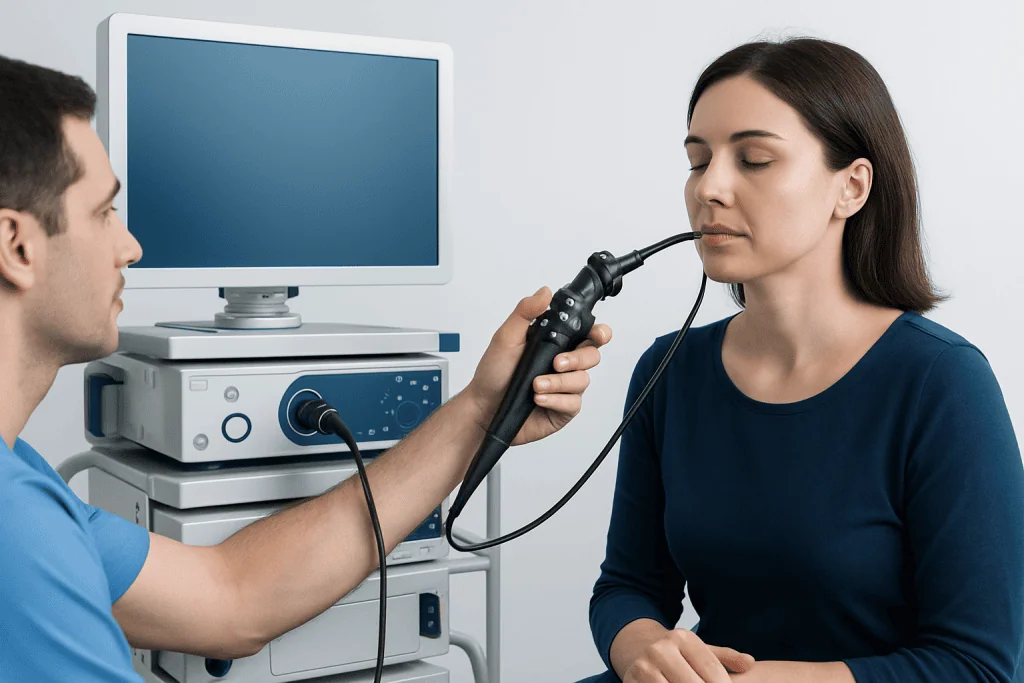
A voice assessment may include listening to the speaking voice, checking pitch and loudness, and noting signs of strain or fatigue. Examination of the larynx is also important, often using a small camera through the nose or mouth to see how the vocal cords move during breathing and speaking. This helps rule out other causes of hoarseness and can show patterns of excessive squeezing or tension around the voice box.
In some cases, additional testing may be advised if symptoms suggest another condition. The purpose is not just to confirm muscle tension dysphonia, but to build a full picture of voice function. If the symptoms are complex, a team approach involving an ENT specialist and a speech-language pathologist with voice expertise can be especially helpful.
When a laryngeal examination is needed, the evaluation may be part of a broader ENT diagnosis and treatment process. This can help distinguish muscle tension dysphonia from structural, inflammatory, or neurologic voice problems and guide the most appropriate care.
Treatment options and recovery
The main treatment for muscle tension dysphonia is usually voice therapy with a speech-language pathologist experienced in voice disorders. Therapy is designed to reduce unnecessary muscle tension and improve how the voice is produced. Sessions may include breathing work, resonance exercises, posture and relaxation strategies, and techniques that help the voice come out more easily with less effort.
Treatment also focuses on any contributing factors. If reflux, allergies, sinus problems, or chronic throat clearing are irritating the larynx, these issues may be treated at the same time. People with significant neck, jaw, or shoulder tension may benefit from physical therapy, stretching guidance, or relaxation techniques. If a person uses the voice heavily at work, therapy may also include practical changes in vocal habits and pacing.
Recovery time varies. Some people notice improvement after a few sessions, while others need a longer course, especially if symptoms have been present for months or if there are several contributing factors. If the voice problem is related to another laryngeal condition, treatment may include targeted care through voice and swallowing disorders treatment.
Surgery is not usually the first treatment for muscle tension dysphonia itself. However, if examination shows a structural problem that is contributing to abnormal voice use, doctors may discuss whether another treatment is needed. The best outcomes often come from addressing both the muscle pattern and any underlying trigger.
Self-care and prevention strategies
While self-care does not replace a professional diagnosis, supportive habits can reduce strain on the voice and may help prevent symptoms from returning. These steps are especially useful for people with high vocal demands, such as teachers, performers, sales professionals, and healthcare workers.
Helpful measures include:
- Staying well hydrated throughout the day
- Avoiding frequent shouting, prolonged loud talking, or speaking over noise
- Taking regular voice breaks during long conversations or presentations
- Managing reflux, allergies, or sinus irritation if present
- Reducing habitual throat clearing when possible
- Using good posture and releasing neck and jaw tension
- Getting enough rest, especially during periods of heavy voice use
- Seeking voice training if singing or professional speaking is part of daily life
Stress management can also be part of prevention. Emotional stress does not mean the condition is imagined, but it can increase muscle tension and worsen symptoms. Gentle breathing exercises, relaxation methods, and awareness of jaw or shoulder tightness may support recovery when used alongside clinical care.
When to seek medical care
A short period of voice change can happen with a cold or after temporary voice overuse, but persistent symptoms should be checked. A person should seek medical care if hoarseness or vocal strain lasts more than two to three weeks, keeps returning, or starts interfering with work, social life, or daily communication.
Medical assessment is especially important if there is throat pain, difficulty swallowing, coughing up blood, unexplained weight loss, a neck lump, or trouble breathing. These symptoms do not necessarily mean a serious condition, but they need timely evaluation. A sudden major change in the voice after surgery, injury, or severe illness should also be assessed.
For patients who need specialist evaluation, multidisciplinary teams can help identify whether the problem is muscle tension dysphonia alone or part of a broader ENT issue. Acibadem International’s multidisciplinary specialists and JCI-accredited hospitals diagnose and treat voice disorders for international patients, including care through otolaryngology ENT treatment when appropriate.
Frequently asked questions
Is muscle tension dysphonia a serious condition?
Muscle tension dysphonia is often treatable and is not usually dangerous on its own. However, persistent voice changes should still be evaluated because other conditions can cause similar symptoms. A proper diagnosis helps make sure the right treatment is started.
Can muscle tension dysphonia go away on its own?
Some mild cases may improve if the trigger is temporary, such as short-term voice overuse or a recent illness. But if the tension pattern becomes habitual, symptoms may continue without treatment. Voice therapy is often the most effective way to improve lasting symptoms.
What kind of doctor treats muscle tension dysphonia?
An ENT specialist, especially one with experience in voice disorders, often leads the medical evaluation. Treatment commonly also involves a speech-language pathologist trained in voice therapy. In some cases, care may include other professionals such as physical therapists.
How is muscle tension dysphonia different from laryngitis?
Laryngitis usually refers to inflammation of the voice box, often from infection, irritation, or overuse. Muscle tension dysphonia is mainly a problem of how the voice is produced, with excessive muscle activity around the larynx. The two can occur together, which is one reason careful evaluation is useful.
Does stress cause muscle tension dysphonia?
Stress can contribute by increasing tension in the neck, throat, and jaw, which may worsen voice strain. However, the condition is not simply 'in the mind' and often has several contributing factors. Treatment usually focuses on voice mechanics as well as any triggers such as stress, reflux, or heavy voice use.
Will I need surgery for muscle tension dysphonia?
Most people with muscle tension dysphonia do not need surgery for the condition itself. Voice therapy and treatment of contributing factors are usually the main approaches. Surgery may only be considered if a separate structural problem is found in the larynx.
References
- American Academy of Otolaryngology–Head and Neck Surgery
- National Institute on Deafness and Other Communication Disorders
- American Speech-Language-Hearing Association
- Cleveland Clinic
- MedlinePlus
This article is for general information only and is not a substitute for professional medical advice. Please consult a qualified doctor about your individual situation.
Explore treatments in Turkey — costs, top hospitals & a free quote
JCI-accredited · board-certified surgeons · reply within 24h
Add us as a Preferred Source to see more of our trusted health content across Google Search, AI Overviews and Discover.