How to Shrink Bunions Naturally? Here Is What the Evidence Says

A bunion cannot usually be reversed or made to disappear with home remedies alone. Natural and non-surgical measures can often reduce pain, swelling, pressure, and friction.
Key Takeaways
- A bunion cannot usually be reversed or made to disappear with home remedies alone.
- Natural and non-surgical measures can often reduce pain, swelling, pressure, and friction.
- Supportive shoes, toe spacers, pads, ice, and foot exercises may improve comfort and function.
- Medical review is important if pain is persistent, the toe becomes very stiff, or there is redness, warmth, or rapid change.
- Doctors diagnose bunions through a foot exam and, when needed, weight-bearing X-rays to guide treatment.
Many bunions are more uncomfortable than dangerous, and in most cases they do not need urgent treatment. The evidence suggests that bunions usually cannot be physically shrunk naturally, but simple measures such as roomy footwear, padding, ice, and targeted foot exercises may help ease pain, reduce irritation, and slow worsening.
Can bunions be shrunk naturally?
For most people, bunions are not an emergency and are often managed without surgery at first. The short answer to how to shrink bunions naturally is that home care usually cannot make the bony bump disappear, because a bunion is a structural change in the joint at the base of the big toe.
What natural or conservative care can do is reduce pain, swelling, rubbing, and pressure. In some cases, these steps may also help slow progression by improving shoe fit, easing stress on the forefoot, and supporting better toe alignment during daily activities.
This distinction matters. Online advice often suggests that massage, stretching, or toe exercises can permanently correct a bunion. Current evidence supports these methods mainly for symptom relief and function, not for reversing the underlying deformity. A person with a mild bunion may feel much better with self-care, but the bunion itself usually remains.
What a bunion is and why it develops
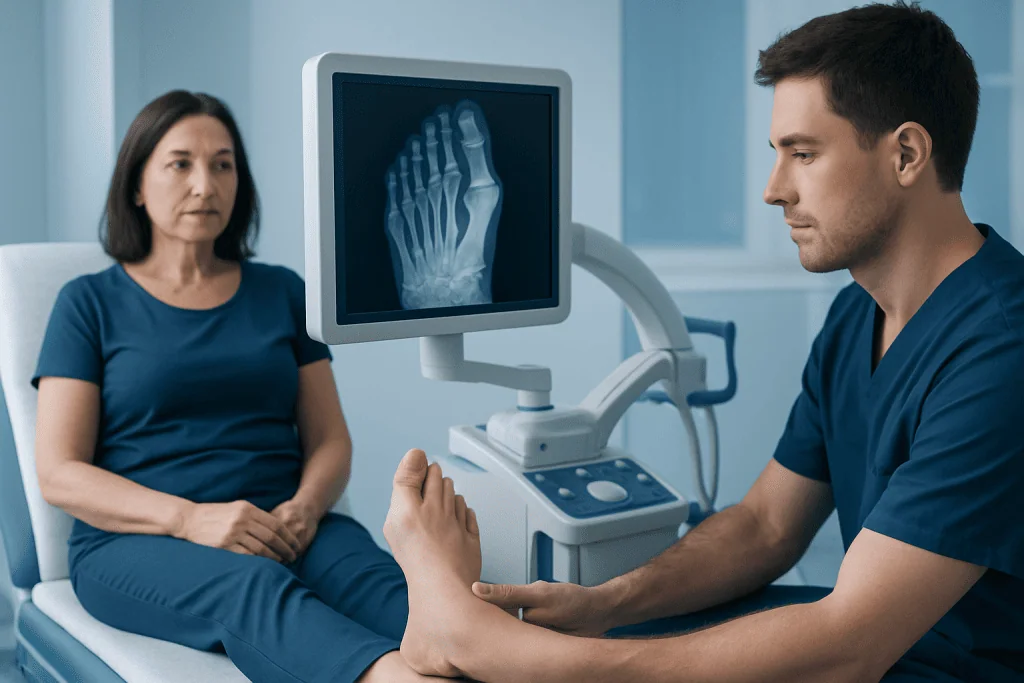
A bunion, also called hallux valgus, is a change in the alignment of the big toe joint. The big toe gradually angles toward the second toe, while the joint at its base becomes more prominent on the inner side of the foot. Over time, this can lead to rubbing in shoes, skin irritation, and difficulty walking comfortably.
Bunions do not develop only because of one bad pair of shoes. They usually arise from a combination of factors, including inherited foot shape, joint mechanics, ligament laxity, flat feet, and the way weight passes through the foot. Tight or narrow shoes can worsen pressure and symptoms, but they are often one contributing factor rather than the only cause.
Some people also have related foot problems, such as hammertoes, calluses, or pain under the ball of the foot. When symptoms involve multiple parts of the forefoot, a doctor may also assess for associated conditions such as metatarsalgia or other alignment issues.
Signs, symptoms, and red flags

The most common symptoms are a visible bump at the base of the big toe, aching after long periods of standing, tenderness with pressure from shoes, redness from friction, and reduced comfort while walking. Some people notice stiffness in the big toe joint or difficulty wearing certain shoes, especially pointed or narrow styles.
Many bunions remain mild for years. However, medical review is sensible if the pain becomes persistent, daily activities are limited, or the bunion seems to be worsening quickly. A doctor should also assess significant swelling, warmth, marked redness, new numbness, or skin breakdown over the joint.
Urgent assessment may be needed if there is severe pain after an injury, inability to bear weight, fever with a hot swollen joint, or an open sore, especially in a person with diabetes or poor circulation. These features may point to problems beyond a simple bunion and should not be treated only with home remedies.
What home care may help most
The strongest non-surgical strategies are usually mechanical rather than herbal or alternative. Wearing shoes with a wide toe box reduces friction and gives the toes room to spread. Low heels, soft uppers, and good arch support often help more than any topical remedy. If needed, a clinician or podiatry professional may suggest insoles or custom orthotics to redistribute pressure more comfortably.
Padding and toe spacers can also help. Bunion pads reduce rubbing over the bony prominence, while some toe spacers may improve comfort by decreasing contact between the first and second toes. These products do not permanently push the bunion back into place, but many people find them useful during walking or while wearing shoes.
For short-term symptom relief, icing the area after activity may calm irritation, especially if the joint feels inflamed. Gentle foot and calf stretches, towel scrunches, and exercises that strengthen the small muscles of the foot may improve mobility and comfort. There is limited evidence that exercise alone changes the bunion angle, but it may support better foot function and reduce discomfort.
A practical home approach may include:
- Choosing roomy, supportive shoes
- Using bunion pads to reduce rubbing
- Trying toe spacers if they feel comfortable
- Applying ice for brief periods after activity
- Doing gentle toe and foot mobility exercises
- Limiting activities that sharply increase forefoot pressure
What does not have strong evidence
People often ask whether massage, taping, splints, or natural oils can shrink a bunion. At present, evidence does not show that these methods can reverse the structural deformity in a lasting way. Night splints and taping may temporarily improve alignment or comfort in some individuals, but the toe usually returns to its usual position once the support is removed.
Topical creams, essential oils, or supplements may soothe the skin or create a warming or cooling sensation, but they do not correct the joint shape. Claims that a bunion can be dissolved, realigned permanently at home, or cured quickly should be viewed cautiously.
That said, a treatment does not need to shrink the bunion to be worthwhile. If a conservative method safely reduces pain and helps a person stay active, it may still be useful as part of an overall symptom-management plan. The key is to set realistic expectations and seek professional advice if symptoms continue.
How doctors diagnose bunions
If home care is not enough, evaluation is usually straightforward. A doctor begins by asking about pain, shoe problems, walking limitations, how long the bunion has been present, and whether symptoms are getting worse. They will examine the foot while standing and walking, checking alignment, areas of tenderness, calluses, range of motion, and whether the big toe joint has become stiff or arthritic.
When more detail is needed, weight-bearing X-rays are often the most useful test. These images show how the bones line up under body weight and help measure the bunion deformity. X-rays can also reveal arthritis, joint damage, or other forefoot problems that may affect treatment choices.
Testing is tailored to the person. Not everyone needs scans beyond an X-ray. If pain seems out of proportion, or if there are signs of another condition such as inflammation, nerve irritation, or injury, the doctor may investigate further. In some cases, bunion symptoms overlap with foot pain from other causes.
Treatment options if symptoms continue
When conservative care does not provide enough relief, treatment depends on pain level, function, joint stiffness, and the severity of the deformity. Many people continue successfully with shoe changes, orthotics, exercises, and activity modification for a long time. For painful inflammation, a clinician may also discuss short-term measures such as medication or other symptom-relief strategies suited to the individual.
If the bunion causes ongoing pain, significant limitation, or progressive deformity despite non-surgical treatment, surgery may be considered. The goal of surgery is typically to realign the bones, improve mechanics, and reduce pain, rather than simply shave off the bump. Surgical decisions are individualized and should follow a full orthopedic or foot-and-ankle assessment. General information about orthopedic surgery can help patients understand how structural foot problems may be treated when needed.
Some patients with severe joint damage may need more advanced procedures, while others benefit from more targeted corrective surgery. Rehabilitation after treatment can also matter for regaining comfort, mobility, and confidence in walking. In selected cases, structured physical therapy and rehabilitation supports recovery and gait mechanics.
At Acibadem International, multidisciplinary specialists in JCI-accredited hospitals evaluate bunions and related foot conditions for international patients, offering diagnosis and treatment plans based on symptoms, imaging, and daily function.
When to seek medical care
A person should consider booking a medical appointment if a bunion is making it hard to walk, limiting work or exercise, or preventing comfortable shoe wear. Review is also sensible when pain persists despite several weeks of well-fitted shoes and home measures, or when the big toe becomes increasingly stiff and difficult to move.
Prompt medical advice is important if the area becomes suddenly red, hot, very swollen, or unusually painful, or if there is skin breakdown over the bump. People with diabetes, nerve problems, or poor circulation should seek care early for any foot deformity or sore area because even minor pressure points may lead to complications.
For patients whose symptoms are part of a broader musculoskeletal problem, an orthopedic evaluation may identify the most appropriate next steps and whether specialist care is needed. In some situations, review through orthopedics and traumatology services can help clarify both diagnosis and treatment planning.
Frequently asked questions
Can bunions go away on their own?
Bunions usually do not go away on their own because they involve a change in joint alignment. Symptoms may come and go, but the structural bump generally remains unless it is corrected surgically.
Do toe spacers really work for bunions?
Toe spacers may help some people by reducing friction and improving comfort in shoes. They can temporarily improve toe position, but they do not usually correct the bunion permanently.
What is the best shoe for a bunion?
Shoes with a wide toe box, soft upper material, low heel, and good support are often the most helpful. The main aim is to reduce pressure on the bunion and allow the front of the foot to move more naturally.
Can exercises fix a bunion?
Exercises can support foot strength, flexibility, and comfort, and they may help with function. However, they are not proven to reverse the bony deformity in most adults.
When is surgery considered for a bunion?
Surgery is usually considered when pain is ongoing, daily activities are limited, or conservative treatment no longer helps enough. The decision is based on symptoms and function rather than appearance alone.
Are bunions dangerous?
Most bunions are not dangerous, but they can become painful and interfere with walking or shoe wear. Medical assessment is important if there is severe redness, warmth, skin breakdown, numbness, or rapid worsening.
References
- American Academy of Orthopaedic Surgeons
- National Health Service
- MedlinePlus
- Mayo Clinic
- American Podiatric Medical Association
This article is for general information only and is not a substitute for professional medical advice. Please consult a qualified doctor about your individual situation.
Joint and spine care in Turkey — expert assessment & treatment
JCI-accredited · board-certified surgeons · reply within 24h
Add us as a Preferred Source to see more of our trusted health content across Google Search, AI Overviews and Discover.