Airborne Medicine: An Evidence-Based Guide for Patients

Airborne medicine most often refers to inhaled medicines taken through inhalers or nebulizers. These medicines are commonly used for asthma, COPD, and some infections because they can target the lungs directly.
Key Takeaways
- Airborne medicine most often refers to inhaled medicines taken through inhalers or nebulizers.
- These medicines are commonly used for asthma, COPD, and some infections because they can target the lungs directly.
- Correct technique matters; improper inhaler or nebulizer use can reduce how much medicine reaches the airways.
- Not every medicine can or should be delivered through the air, and treatment choice depends on the condition and the patient.
- Persistent breathing symptoms, sudden worsening, or signs of infection should be assessed by a qualified doctor.
Airborne medicine usually means medication delivered as a fine mist, spray, or powder that is breathed into the airways. It is commonly used for lung conditions because it can act directly where symptoms occur, but the term may also be used more broadly in discussions about medicines that travel through the air during delivery.
What airborne medicine means
Airborne medicine refers to medication delivered into the body through the airways, usually by breathing in a mist, spray, or dry powder. In everyday healthcare use, it most often means inhaled medicines given with an inhaler, nebulizer, or similar device. These treatments are designed to bring the medicine directly to the lungs, where it can act quickly and often with less effect on the rest of the body than some oral medicines.
The term can sound confusing because “airborne” is also used when people talk about infections that spread through the air. In medical treatment, however, airborne medicine does not usually mean a medicine floating freely in a room. It means a controlled medication delivery system that helps a person inhale a measured dose through a device under safe conditions.
This approach is especially important in respiratory care. For people with wheezing, airway inflammation, excess mucus, or narrowed airways, inhaled treatment may relieve symptoms more directly than a tablet. Examples include bronchodilators that open the airways and inhaled corticosteroids that reduce inflammation.
How airborne medicines work in the body
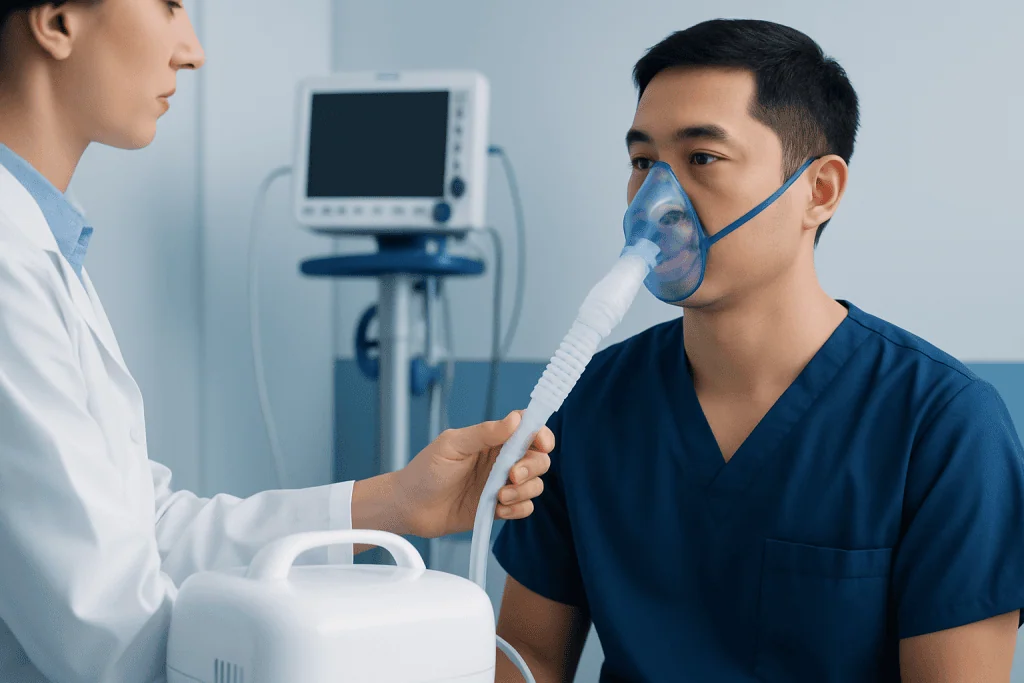
When a person inhales medicine, tiny particles travel through the mouth or nose into the breathing passages. The size of these particles matters. Very small particles may reach deeper parts of the lungs, while larger ones may stay in the upper airways. The device, the medicine itself, and the person’s breathing pattern all affect where the treatment goes.
Many inhaled medicines are intended to act locally in the lungs. This can help reduce coughing, wheezing, chest tightness, or shortness of breath. Some inhaled medicines can also enter the bloodstream through the lungs, which is why doctors still consider possible side effects and interactions even when the medicine is not swallowed.
Common delivery systems include:
- Metered-dose inhalers: devices that release a measured puff of medicine.
- Dry powder inhalers: devices that deliver medicine as a powder during a strong, steady breath in.
- Nebulizers: machines that turn liquid medicine into a mist inhaled over several minutes.
- Soft mist inhalers: devices that produce a slower-moving mist that may be easier for some people to inhale.
Because each device works differently, technique is a major part of treatment success. Even an effective medicine may not work well if the inhalation method is not suited to the patient or if the device is used incorrectly.
When doctors use airborne medicine

Airborne medicine is most often used for conditions affecting the lungs and airways. It is a standard part of care for many people with asthma or chronic obstructive pulmonary disease (COPD), where inhaled medicines can help control symptoms and reduce flare-ups. It may also be used in some cases of bronchitis, certain lung infections, allergic airway disease, or other conditions that benefit from targeted treatment of the respiratory tract.
Doctors may prescribe inhaled bronchodilators to relax airway muscles, inhaled corticosteroids to reduce inflammation, or combination medicines that do both. Nebulized saline or other supportive treatments may also help loosen mucus in selected patients. In some hospital settings, inhaled medicines can be used for carefully monitored treatment of severe breathing problems.
Not every cough or cold requires airborne medicine. Viral upper respiratory infections often improve with time and supportive care, while inhaled treatment is usually chosen when there is a clear reason, such as airway narrowing, persistent inflammation, or a diagnosed lung condition. A doctor decides this based on symptoms, examination findings, and the patient’s medical history.
In some cases, a person being assessed for chronic breathing symptoms may need testing alongside treatment planning, such as pulmonary function testing to understand how well the lungs are working.
Benefits, limits, and possible side effects
The main benefit of airborne medicine is targeted delivery. Medicine that goes directly to the airways may begin working faster and may require a lower total dose than an oral medicine. For many patients, this improves symptom control while limiting unwanted effects elsewhere in the body. This is one reason inhaled treatment is central to long-term management of several respiratory conditions.
Even so, airborne medicine has limits. Some medicines cannot be delivered effectively by inhalation, and some patients have difficulty using the necessary devices because of age, coordination, severe illness, or reduced breathing strength. The best treatment plan depends on the person’s diagnosis, day-to-day symptoms, and ability to use the device reliably.
Side effects vary by medicine and device. They may include throat irritation, hoarseness, cough after inhalation, dry mouth, trembling, a fast heartbeat, or oral fungal infection with some steroid inhalers. Rinsing the mouth after certain inhaled medicines and using a spacer when advised can help reduce some of these effects. Any new or concerning symptoms should be discussed with a doctor or pharmacist.
Patients should also know that “more” is not always better. Overuse of quick-relief inhalers can be a sign that the underlying condition is not well controlled. If a person needs frequent rescue treatment, a medical review is important.
How doctors choose the right inhaled treatment
Choosing airborne medicine is not only about the drug itself. Doctors also consider the delivery device, the patient’s age, hand strength, coordination, ability to take a deep breath, and whether treatment is needed for quick relief or long-term control. A medication that works well for one person may not be the best choice for another if the device does not match their needs.
Assessment may include a symptom review, listening to the chest, oxygen measurement, and tests such as spirometry or imaging when needed. If a person has frequent infections, unexplained breathlessness, or symptoms that are not responding as expected, more detailed evaluation may be needed. For some patients, imaging such as chest X-ray or specialist assessment is part of this process.
Doctors also check for factors that can affect treatment success, including smoking, allergen exposure, reflux, sinus disease, and medication adherence. Sometimes the issue is not that the medicine is wrong, but that the inhaler technique needs adjustment or the diagnosis needs to be clarified.
In more complex cases, specialist respiratory care may be recommended. If symptoms suggest a broader lung problem, a team experienced in pulmonology care can help identify the cause and guide treatment safely.
Using airborne medicine safely and effectively
Proper technique is one of the most important parts of inhaled treatment. Patients should ask a clinician to demonstrate the device and then watch them use it in return. This simple step can greatly improve how much medicine reaches the lungs. Technique should be rechecked at follow-up visits, because errors are common even after long-term use.
General tips include sitting upright if possible, preparing the device exactly as instructed, breathing out before inhaling the dose, and then inhaling with the speed and depth suited to that device. Some inhalers require a slow, coordinated breath; others work better with a stronger inhalation. Holding the breath for a few seconds afterward may also help medicine settle in the airways when appropriate.
Nebulizers also need safe use and cleaning. The mask or mouthpiece and medication cup should be cleaned and dried according to the manufacturer’s instructions to reduce contamination. The medicine used in a nebulizer should be exactly what was prescribed; patients should not place other liquids or home remedies into the device unless specifically told to do so by a doctor.
Daily habits matter too. Keeping follow-up appointments, monitoring symptoms, avoiding tobacco smoke, and understanding when to use a reliever versus a controller medicine can improve results. A written action plan may be helpful for people with recurring breathing symptoms or diagnosed airway disease.
When to seek medical care
Medical care is important if breathing symptoms are new, persistent, or worsening. A person should arrange an assessment if they have repeated wheezing, ongoing cough, shortness of breath with daily activities, chest tightness, or frequent need for quick-relief inhalers. These symptoms may need a diagnosis rather than repeated self-treatment.
Urgent care is needed for severe shortness of breath, bluish lips or face, confusion, inability to speak in full sentences, chest pain, or symptoms that do not improve after prescribed rescue treatment. These signs can suggest a serious breathing problem and should not be ignored.
Patients should also seek advice if inhaled medicine causes troublesome side effects, seems ineffective, or is difficult to use. Sometimes a different device, a spacer, or a different treatment plan makes a significant difference. Near the end of the care pathway, it may help to know that Acibadem International’s multidisciplinary specialists and JCI-accredited hospitals diagnose and treat respiratory conditions for international patients.
Frequently asked questions
What is airborne medicine in simple terms?
Airborne medicine usually means a medication that is breathed in as a mist, spray, or powder. It is commonly delivered by an inhaler or nebulizer so the medicine can reach the airways and lungs directly.
Is airborne medicine the same as an inhaler?
An inhaler is one common way to give airborne medicine, but it is not the only one. Nebulizers, dry powder inhalers, and soft mist inhalers also deliver medicine through the airways.
Why do doctors prefer inhaled medicine for some lung conditions?
Inhaled medicine can act directly where symptoms are happening, especially in the lungs and airways. This often allows faster relief and may reduce whole-body side effects compared with some oral medicines.
Can airborne medicine cause side effects?
Yes, although the type of side effect depends on the medicine and device used. Common examples include throat irritation, hoarseness, dry mouth, tremor, or a fast heartbeat, and some steroid inhalers can increase the chance of oral fungal infection if the mouth is not rinsed afterward.
How can a patient know if an inhaler is being used correctly?
The best way is to have a doctor, nurse, or pharmacist demonstrate the device and then observe the patient using it. Technique should be checked regularly, because even small errors can reduce how much medicine reaches the lungs.
Can someone use a nebulizer or inhaler for any cough?
No. Not every cough benefits from inhaled medication, and using the wrong treatment can delay proper diagnosis. A clinician should decide whether symptoms are due to asthma, COPD, infection, irritation, or another cause.
References
- World Health Organization
- Centers for Disease Control and Prevention
- National Heart, Lung, and Blood Institute
- Global Initiative for Asthma
- Global Initiative for Chronic Obstructive Lung Disease
This article is for general information only and is not a substitute for professional medical advice. Please consult a qualified doctor about your individual situation.
Explore treatments in Turkey — costs, top hospitals & a free quote
JCI-accredited · board-certified surgeons · reply within 24h
Add us as a Preferred Source to see more of our trusted health content across Google Search, AI Overviews and Discover.