Parenteral Feeding: An Evidence-Based Guide for Patients

Parenteral feeding delivers calories, protein, fluids, vitamins, and minerals through a vein. It is used when the digestive tract cannot be used fully or safely for nutrition.
Key Takeaways
- Parenteral feeding delivers calories, protein, fluids, vitamins, and minerals through a vein.
- It is used when the digestive tract cannot be used fully or safely for nutrition.
- Some people need short-term support in hospital, while others may use it longer term at home.
- Careful monitoring helps prevent complications such as infection, blood sugar changes, and liver-related problems.
- Whenever possible, doctors prefer to use the gut for feeding because it is more natural and helps maintain bowel function.
Parenteral feeding is a way of giving nutrients directly into the bloodstream when a person cannot safely or adequately use the stomach or intestines. It can be lifesaving and effective, but it requires careful planning, monitoring, and follow-up to reduce risks and support recovery.
What parenteral feeding means
Parenteral feeding, also called parenteral nutrition, is a method of providing nourishment directly into a vein. It is used when a person cannot get enough nutrition by mouth or through tube feeding into the stomach or intestines. The solution contains a tailored mix of protein, carbohydrates, fats, fluids, vitamins, minerals, and electrolytes.
This treatment may be given through a standard intravenous line for a short period or through a central venous catheter for more complete and longer-term support. When the full nutritional requirement is delivered through the vein, it is often called total parenteral nutrition, or TPN. In some cases, it is used only to supplement some oral or enteral intake.
Parenteral feeding is not simply “IV fluids.” It is a carefully calculated medical nutrition therapy prepared according to a person’s age, weight, medical condition, lab results, and energy needs. The goal is to maintain strength, support healing, and prevent malnutrition while the digestive system recovers or while another treatment plan is underway.
When it is used and why it may be needed
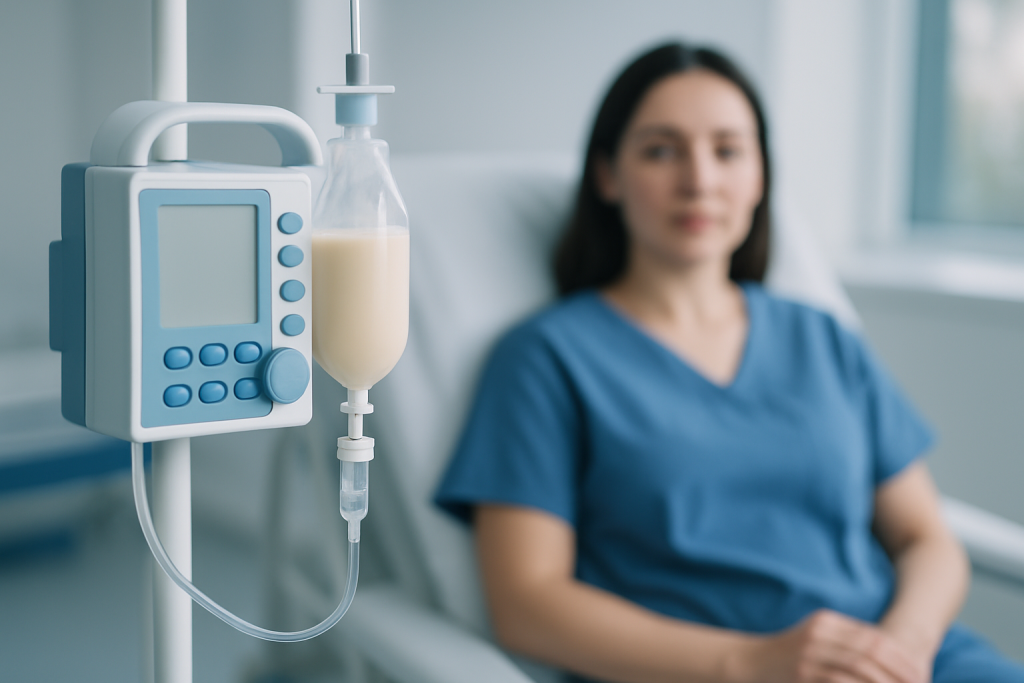
Doctors consider parenteral feeding when the digestive tract cannot be used, is not absorbing nutrients well, or needs rest for medical reasons. This may happen after major surgery, during severe bowel inflammation, with bowel obstruction, after certain injuries, or in people with very short bowel length after part of the intestine has been removed.
It may also be used in selected patients with severe pancreatitis, some cancers, serious infections, or complications that make eating unsafe or inadequate. In many situations, the first choice is still feeding through the gut if possible, because the intestines work best when they are used. Parenteral feeding is generally reserved for situations in which enteral feeding is not possible, not sufficient, or not well tolerated.
Some related digestive conditions may be part of the overall picture, such as Crohn’s disease or short bowel syndrome. In these settings, the need for parenteral feeding depends on how much bowel function remains, whether symptoms are temporary or ongoing, and whether nutrition can be maintained in other ways.
- Short-term use is common during hospital recovery.
- Long-term use may be needed in chronic intestinal failure.
- Some people need full support, while others need only partial supplementation.
What nutrients are included and how it is given

A parenteral feeding solution is individualized. It usually contains dextrose for energy, amino acids for protein, lipids for essential fats and calories, along with water, sodium, potassium, magnesium, calcium, phosphate, vitamins, and trace elements. The exact balance depends on lab values, fluid status, organ function, and whether the person has diabetes, kidney disease, or liver problems.
Short-term parenteral nutrition may sometimes be given through a peripheral vein if the solution is less concentrated. More commonly, especially when full nutrition is needed, it is delivered through a central line such as a peripherally inserted central catheter, tunneled catheter, or implanted port. This allows more concentrated nutrition to be infused safely into a larger vein.
The infusion may run continuously over many hours or on a cycle, often overnight, depending on the treatment plan. Patients in hospital are monitored by a multidisciplinary team that may include physicians, nurses, pharmacists, and dietitians. If parenteral feeding continues after discharge, patients and caregivers are trained carefully in line care, storage, and safe administration.
Benefits, limits, and possible risks
The main benefit of parenteral feeding is that it can provide needed nutrition when other routes are not possible. It may help preserve body weight, support wound healing, improve strength, and make it easier for a person to tolerate surgery, infection treatment, or other complex care. In severe malnutrition or intestinal failure, it can be an essential bridge or a long-term support option.
At the same time, parenteral feeding has important limits and risks. Because it bypasses the digestive system, it does not maintain gut function in the same way that enteral feeding does. It also requires venous access, which carries a risk of line infection, blockage, or blood clots. Metabolic complications can include blood sugar changes, fluid imbalance, electrolyte disturbances, and, over time, liver or gallbladder problems.
There is also a recognized risk called refeeding syndrome in severely malnourished patients when nutrition is started too quickly. For this reason, doctors usually begin carefully and monitor closely. Most complications can be reduced with good line care, appropriate formulation, regular blood tests, and timely adjustment of the feeding plan.
- Possible catheter-related infection
- High or low blood glucose
- Electrolyte abnormalities
- Dehydration or fluid overload
- Liver test changes with prolonged use
Monitoring, follow-up, and living with parenteral feeding
Monitoring is one of the most important parts of safe parenteral feeding. Clinicians check weight, fluid balance, blood glucose, kidney function, liver tests, and electrolyte levels regularly. They also review whether the nutrition formula still matches the patient’s needs, since these needs can change during illness and recovery.
People who use parenteral feeding at home often have structured follow-up with nutrition support teams. They learn how to keep the catheter clean, recognize possible problems, and handle equipment safely. Home use can be demanding, but many patients are able to adapt with training, planning, and practical support.
Whenever the digestive tract begins to function better, the team usually looks for opportunities to reintroduce oral intake or tube feeding, even in small amounts. This transition should be gradual and individualized. In some cases, specialized surgery may be part of broader digestive care, such as gastroenterology care or general surgery, depending on the cause of intestinal failure.
How doctors decide between parenteral and enteral nutrition
A common question is why a patient receives parenteral feeding instead of a feeding tube. The decision depends mainly on whether the gut works and whether using it is safe. If the intestines can absorb nutrients and there is no major obstruction, severe intolerance, or high risk of complications, enteral feeding is usually preferred.
Parenteral feeding becomes more appropriate when the bowel cannot be reached, cannot absorb enough, or needs temporary rest. Examples include severe malabsorption, prolonged ileus, high-output fistula in selected cases, major bowel surgery, or obstruction that prevents food and tube feeding from moving through normally. Sometimes both methods are used for a period while doctors try to increase gut feeding gradually.
The decision is not fixed forever. A person may move from parenteral feeding to tube feeding and then to oral meals as recovery progresses. For people with chronic intestinal failure, longer-term strategies may include care from specialists in digestive disease management and, in selected complex cases, transplant evaluation if recommended by the treating team.
When to seek medical care
Anyone receiving parenteral feeding should seek medical attention promptly if they develop fever, chills, redness or pain around the catheter site, leakage from the line, new swelling of the arm or neck, shortness of breath, confusion, or signs of dehydration. These symptoms can sometimes point to infection, a line problem, or a metabolic complication that needs rapid assessment.
Medical advice is also important if there is persistent nausea, vomiting, sudden weight change, very high or very low blood glucose readings, or difficulty completing feeds as prescribed. Patients should not change the formula or infusion schedule on their own unless instructed by their clinical team. Early review often helps resolve problems before they become more serious.
Near the end of a care journey, some patients and families also need support with practical planning, rehabilitation, or long-term disease management. Acibadem International’s multidisciplinary specialists and JCI-accredited hospitals provide diagnosis and treatment for international patients who need complex nutritional and digestive care.
Frequently asked questions
Is parenteral feeding the same as IV fluids?
No. Standard IV fluids mainly provide water and basic electrolytes, while parenteral feeding is a complete or partial nutrition treatment designed to provide calories, protein, fats, vitamins, and minerals. It is prescribed and monitored much more closely than routine fluids.
How long can someone stay on parenteral feeding?
The duration varies widely. Some people need it for only a few days after surgery or acute illness, while others with chronic intestinal failure may need it for months or longer. The treatment plan is reviewed regularly to see whether feeding by mouth or tube can be increased.
Can a person eat normally while receiving parenteral feeding?
Sometimes yes, and sometimes no. If swallowing is safe and the gut can handle some intake, doctors may allow eating or drinking alongside parenteral feeding. In other cases, oral intake may need to be limited temporarily depending on the underlying condition.
What are the main complications of parenteral feeding?
The main concerns are catheter-related infection, blood sugar changes, electrolyte imbalances, and liver-related issues with prolonged use. There can also be problems with the line itself, such as blockage or clotting. Careful monitoring and good catheter hygiene lower these risks.
Is parenteral feeding used at home?
Yes, some patients receive home parenteral nutrition when longer-term support is needed and they are medically stable. Before discharge, patients and caregivers are trained in line care, equipment use, and warning signs to watch for. Regular follow-up remains essential.
Why do doctors prefer tube feeding over parenteral feeding when possible?
If the digestive tract is working, tube feeding is usually more natural and helps maintain intestinal structure and function. It may also carry fewer catheter-related risks. Parenteral feeding is mainly used when the gut cannot be used safely or effectively.
References
- American Society for Parenteral and Enteral Nutrition
- European Society for Clinical Nutrition and Metabolism
- National Institute of Diabetes and Digestive and Kidney Diseases
- National Health Service
- World Health Organization
This article is for general information only and is not a substitute for professional medical advice. Please consult a qualified doctor about your individual situation.
Persistent digestive symptoms? Get evaluated in Turkey
JCI-accredited · board-certified surgeons · reply within 24h
Add us as a Preferred Source to see more of our trusted health content across Google Search, AI Overviews and Discover.