Air Ionizer — Explained by Medical Evidence, Not Myths

An air ionizer works by charging airborne particles; it does not sterilize all indoor air or replace ventilation. Evidence for meaningful health benefits is limited compared with standard high-efficiency particle filtration.
Key Takeaways
- An air ionizer works by charging airborne particles; it does not sterilize all indoor air or replace ventilation.
- Evidence for meaningful health benefits is limited compared with standard high-efficiency particle filtration.
- Some ionizers produce ozone, which can irritate the airways and trigger symptoms in people with asthma or other lung conditions.
- For allergies and asthma, reducing indoor triggers and using proven air-cleaning strategies are usually more helpful than relying on an ionizer alone.
- People with persistent cough, wheezing, breathlessness, or worsening allergy symptoms should seek medical advice rather than self-treating with devices alone.
An air ionizer is a device that electrically charges particles in the air so they clump together or stick to nearby surfaces. Medical evidence suggests some ionizers may lower airborne particle levels in certain settings, but they are not a treatment for disease, and ozone-producing models may worsen breathing symptoms in sensitive people.
Overview: what an air ionizer does and does not do
An air ionizer is an indoor device designed to change the electrical charge of particles in the air. Once charged, dust, smoke particles, and some other airborne material may clump together and fall out of the air or attach to walls, floors, furniture, or collection plates inside the device. This can reduce the number of particles floating in a room, but it does not mean the air is fully cleaned or made medically safer in every situation.
From a medical point of view, the most important question is not whether an ionizer changes the air, but whether it improves health. Current evidence does not show that air ionizers reliably prevent illness or treat conditions such as asthma, allergies, chronic cough, or infections. Some models may help lower certain particle levels, but results vary with room size, ventilation, pollutant type, and device design.
Another key issue is ozone. Some ionizers and related electronic air cleaners can generate ozone either intentionally or as a byproduct. Ozone is a lung irritant. Even at relatively low indoor levels, it may cause throat irritation, chest discomfort, coughing, or worsening of breathing symptoms, especially in children, older adults, and people with underlying lung disease.
For these reasons, an air ionizer should be viewed as a household appliance, not a medical treatment. People concerned about breathing symptoms, indoor air quality, or suspected environmental triggers should focus first on proven measures such as source control, good ventilation, and if needed, medical evaluation for conditions like asthma or chronic allergies.
How air ionizers compare with other air-cleaning methods
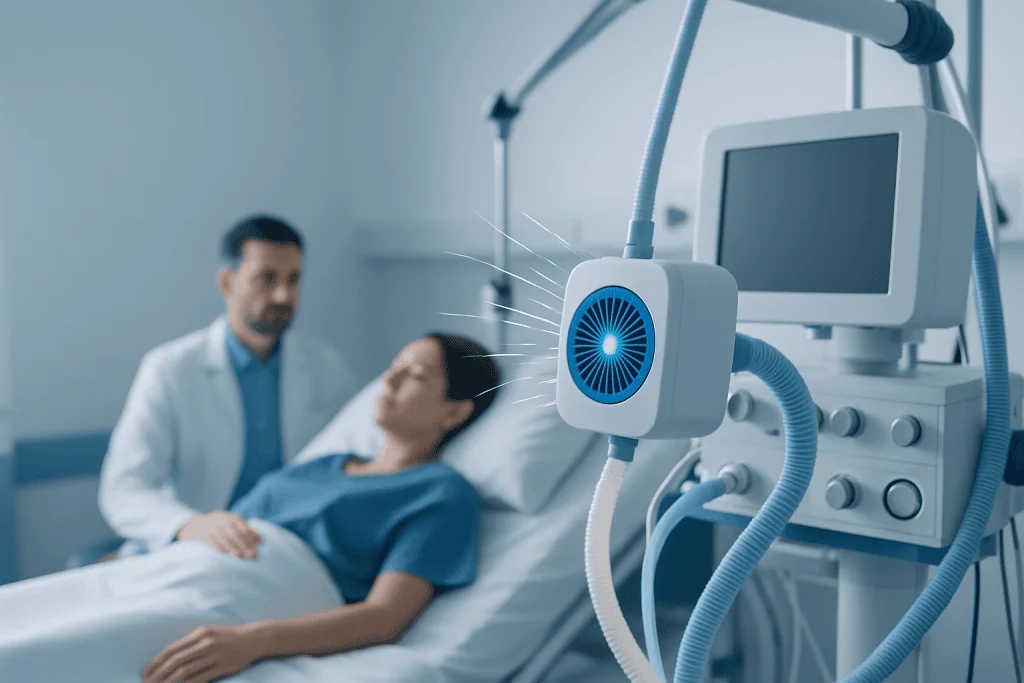
Air-cleaning devices are often grouped together, but they do not work in the same way. A standard mechanical air purifier uses a fan to pull air through a filter that physically traps particles. By contrast, an air ionizer changes particle charge; some versions still use collector plates, while others simply cause particles to settle on indoor surfaces. This means a room may have fewer floating particles, but more residue may collect on nearby objects and still need cleaning.
For many households, a mechanical purifier with a high-efficiency particle filter is more predictable than an ionizer for reducing airborne dust, pollen, and smoke particles. Filtration does not depend on particles sticking to walls or furniture, and it avoids the concern that some electronic devices may create ozone. This is especially relevant for people trying to reduce symptom triggers in respiratory disease.
It is also helpful to distinguish ionizers from technologies marketed as “air sanitizers,” “plasma purifiers,” or “activated oxygen” systems. Product names may sound medical, but the health claims are often broader than the available evidence supports. No consumer room device should be expected to prevent all infections or replace basic measures such as fresh-air ventilation, cleaning visible mold, avoiding indoor smoking, and following a clinician’s care plan.
When symptoms suggest an underlying medical problem, evaluation matters more than equipment choice alone. Depending on the person’s history, doctors may recommend testing such as allergy testing or pulmonary function tests to identify whether indoor air is contributing to symptoms.
What medical evidence says about benefits
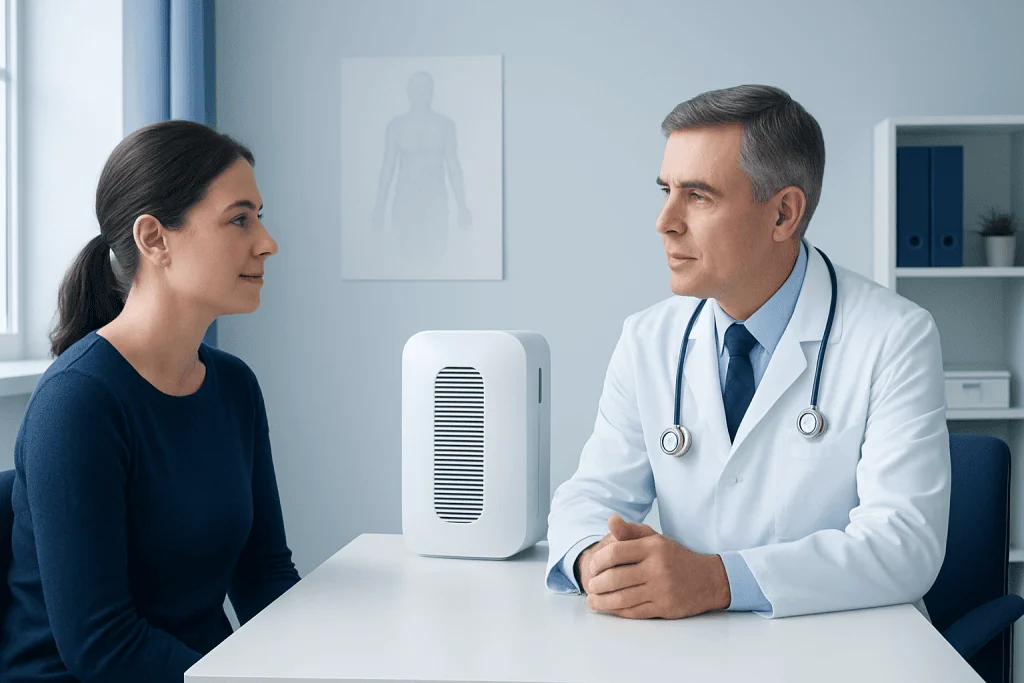
Research on air ionizers has produced mixed findings. Some studies show that ionization can reduce certain airborne particles under controlled conditions, especially fine particles or smoke-related particles. However, reducing a measured pollutant in the room is not the same as proving a meaningful health benefit for the person using the device.
For asthma and allergies, the overall medical evidence has not consistently shown that ionizers improve symptoms, reduce medication needs, or prevent flare-ups. This is one reason major public health and respiratory organizations generally place greater emphasis on trigger reduction, good ventilation, smoke avoidance, and appropriate medical treatment rather than recommending ionizers as a primary strategy.
There is also no strong evidence that home air ionizers can reliably prevent viral illness in everyday living spaces. Airborne infection risk depends on many factors, including ventilation, time spent in the space, crowding, masking when appropriate, and whether the device is suitable for the room size. Claims that an ionizer “kills all germs” or guarantees protection are not supported by mainstream medical evidence.
In practical terms, some users may notice less visible dust or a fresher-smelling room, but this does not necessarily translate into better lung health. A patient-friendly way to understand the evidence is this: an air ionizer may alter the indoor environment somewhat, but it should not be relied on as a stand-alone health intervention.
Risks, side effects, and who should be cautious
The main medical concern with some air ionizers is ozone exposure. Ozone can irritate the lining of the nose, throat, and lungs. Sensitive individuals may develop coughing, throat burning, chest tightness, shortness of breath, headache, or worsening wheeze. People with asthma, chronic obstructive pulmonary disease, frequent respiratory infections, or a history of airway sensitivity are more likely to notice these effects.
Another issue is that ionized particles may deposit on walls, carpets, curtains, and furniture instead of being removed from the home. If these surfaces are not cleaned regularly, settled particles may later be stirred back into the air. For homes with pets, smoke exposure, or heavy dust, an ionizer alone may therefore offer only partial benefit.
Fragrances or chemical additives sometimes marketed alongside air-cleaning devices can also be irritating. A room that smells “cleaner” is not necessarily healthier if the device releases ozone or if perfumes trigger symptoms. People with migraines, reactive airways, or chemical sensitivities may be especially uncomfortable around strongly scented or electronically treated indoor air.
Children, pregnant people, older adults, and those with chronic lung disease should be particularly cautious with ozone-producing devices. If a person notices new or worsening breathing symptoms after using an ionizer, the safest step is to stop using the device and discuss symptoms with a qualified clinician.
Best uses, limitations, and safer choices for indoor air quality
If someone chooses to use an air ionizer, it should be as one part of a broader indoor air strategy rather than the main solution. The strongest first steps are often simple: avoid indoor smoking, reduce candle or incense use, fix water leaks, clean visible dust, vacuum with effective filtration if possible, and improve ventilation when outdoor air quality is acceptable. These measures address the source of pollution rather than trying to modify it after it is already in the air.
For many households, especially those managing allergies or asthma, a non-ozone mechanical air purifier with an appropriate particle filter is the more evidence-based choice. This can be particularly useful in bedrooms or other rooms where a person spends many hours. It is also important to size the device correctly for the room and maintain it according to the manufacturer’s instructions so it continues to work as intended.
Indoor air quality concerns can sometimes point to an undiagnosed health problem rather than a device problem. Persistent sneezing, itchy eyes, nighttime cough, or wheezing may suggest environmental allergy or airway disease rather than simply “bad air.” In those cases, medical assessment and targeted management are usually more effective than switching between consumer devices.
When symptoms are significant, care may include trigger identification, treatment of associated sinus or nasal inflammation, and a plan for lung symptoms if present. In some cases, specialists may evaluate related conditions such as allergic rhinitis or discuss options for asthma treatment if an underlying respiratory diagnosis is confirmed.
How doctors evaluate symptoms linked to indoor air
Doctors do not diagnose a health condition based on an air ionizer itself. Instead, they focus on the person’s symptoms, timing, environment, and medical history. A clinician may ask whether cough, congestion, wheezing, headaches, or eye irritation started after a new device was introduced, whether symptoms improve outside the home, and whether there are other possible indoor triggers such as pets, mold, smoke, cleaning chemicals, or dampness.
The physical examination may focus on the nose, throat, chest, and skin. Depending on the symptom pattern, doctors may recommend allergy evaluation, breathing tests, or imaging if another condition needs to be ruled out. If recurrent sinus pressure, chronic nasal blockage, or postnasal drip is part of the picture, a clinician may also assess for inflammation or structural nasal problems.
This kind of evaluation is important because common symptoms attributed to “poor air” can overlap with allergies, asthma, sinus disease, reflux, viral infection, and anxiety-related breathing discomfort. Getting the right diagnosis helps prevent unnecessary spending on devices while ensuring that a treatable medical issue is not missed.
Near the end of the care pathway, clinicians may also review the home environment and give practical advice on ventilation, filtration, humidity control, and cleaning routines. At Acibadem International, multidisciplinary specialists in JCI-accredited hospitals evaluate respiratory and allergy-related complaints for international patients when further assessment is needed.
When to seek medical care
Medical advice is appropriate if breathing or allergy-like symptoms persist despite improving the home environment. A person should arrange a routine medical review if they develop repeated coughing, wheezing, chest tightness, nasal congestion, recurrent sinus symptoms, or eye irritation that seems linked to indoor spaces or a newly introduced air-cleaning device.
Prompt medical attention is important if symptoms are more severe. This includes shortness of breath at rest, rapidly worsening wheeze, bluish lips, chest pain, confusion, fainting, or symptoms that do not improve after stopping use of the device. People with known asthma or chronic lung disease should seek help sooner if their usual symptoms become harder to control.
If there is concern about mold exposure, smoke exposure, or significant chemical irritation in the home or workplace, it is also reasonable to consult a healthcare professional. A clinician can help determine whether symptoms are likely due to airway irritation, allergy, infection, or another condition and guide the next steps safely.
Frequently asked questions
Does an air ionizer really clean the air?
An air ionizer can reduce some airborne particles by electrically charging them so they settle or stick to surfaces. However, this is not the same as fully removing pollutants from the indoor environment, and performance varies by device and room conditions.
Are air ionizers safe for people with asthma?
Some may be tolerated, but caution is important because certain ionizers produce ozone, which can irritate the lungs and worsen asthma symptoms. People with asthma should generally favor proven, non-ozone approaches and discuss persistent symptoms with their doctor.
Is an air ionizer better than a HEPA air purifier?
For reducing airborne particles in a predictable way, a mechanical purifier with high-efficiency filtration is usually the more evidence-based option. Ionizers may reduce some particles, but they may also leave residue on surfaces and can raise concern if ozone is produced.
Can an air ionizer prevent colds, flu, or COVID-19?
No home air ionizer should be relied on to prevent infections on its own. Infection risk depends on ventilation, exposure time, crowding, hygiene, and other factors, and claims of complete protection are not supported by medical evidence.
Why do some people feel worse after using an ionizer?
The most likely reason is airway irritation from ozone or sensitivity to byproducts, scents, or redistributed particles. If coughing, throat irritation, wheezing, or headaches begin after using the device, it is sensible to stop using it and seek medical advice if symptoms continue.
Who should avoid ozone-producing air cleaners?
People with asthma, COPD, allergies with airway sensitivity, children, older adults, and anyone prone to breathing irritation should be especially careful. In general, choosing devices that do not generate ozone is a safer approach for most households.
References
- World Health Organization
- U.S. Environmental Protection Agency
- American Lung Association
- Centers for Disease Control and Prevention
- National Institute of Environmental Health Sciences
This article is for general information only and is not a substitute for professional medical advice. Please consult a qualified doctor about your individual situation.
Explore treatments in Turkey — costs, top hospitals & a free quote
JCI-accredited · board-certified surgeons · reply within 24h
Add us as a Preferred Source to see more of our trusted health content across Google Search, AI Overviews and Discover.