Dental Abfraction — Explained by Medical Evidence, Not Myths

Dental abfraction describes loss of tooth structure at the neck of the tooth, close to the gumline. It is considered a non-cavity lesion, but it can still lead to sensitivity, pain, and a higher risk of further damage.
Key Takeaways
- Dental abfraction describes loss of tooth structure at the neck of the tooth, close to the gumline.
- It is considered a non-cavity lesion, but it can still lead to sensitivity, pain, and a higher risk of further damage.
- Current evidence supports a multifactorial cause rather than a single explanation.
- Treatment depends on symptoms, progression, appearance, and the presence of tooth grinding, erosion, or gum recession.
- Early dental assessment can help protect the tooth and reduce discomfort.
Dental abfraction is a type of tooth structure loss that appears near the gumline, usually as a wedge-shaped notch. Medical evidence suggests it is not caused by one factor alone, but often involves a combination of bite stress, brushing habits, acid exposure, and long-term wear.
What dental abfraction is
Dental abfraction is a term used for a specific pattern of tooth structure loss that forms near the gumline, usually on the outer surface of the tooth. It often looks like a narrow notch or wedge at the cervical area, which is the part where the crown meets the root. Unlike tooth decay, this kind of damage is not caused by bacteria creating a cavity.
Dental abfraction is best understood as one possible type of non-carious cervical lesion. In simple terms, that means tooth loss at the neck of the tooth that is not due to decay. Researchers believe repeated mechanical stress from biting or clenching may contribute to tiny flexing forces in the tooth, which over time can weaken enamel and dentin in that area.
At the same time, medical and dental evidence does not support the idea that abfraction always happens from bite force alone. In many people, the lesion seems to develop through a combination of stress, friction from brushing, acid-related erosion, age-related wear, and gum recession. This is why a careful dental examination is important before deciding what the lesion means and whether it needs treatment.
How it differs from other gumline tooth damage

Many people use the term dental abfraction for any notch near the gumline, but not every cervical defect is true abfraction. Dentists usually compare three common processes when assessing these areas: abrasion, erosion, and abfraction. These can occur separately or together, which is one reason diagnosis can be challenging.
Abrasion is physical wear, often linked to overly forceful brushing, a hard-bristled toothbrush, or habits that repeatedly rub the tooth surface. Erosion is chemical wear caused by acids, such as those from frequent acidic drinks, acid reflux, or vomiting disorders. Abfraction refers more specifically to structural stress that may create microscopic breakdown where biting forces concentrate.
In real life, the border between these categories is not always sharp. For example, a tooth under stress may become more vulnerable to damage from brushing or acid. A clinician may also look for related conditions such as gum disease or teeth grinding, because both can affect the tooth neck and the surrounding tissues.
For patients, the key point is that appearance alone does not tell the full story. The same notch may have different causes in different people, so treatment should be based on the whole dental picture rather than on a label alone.
Symptoms and signs to watch for
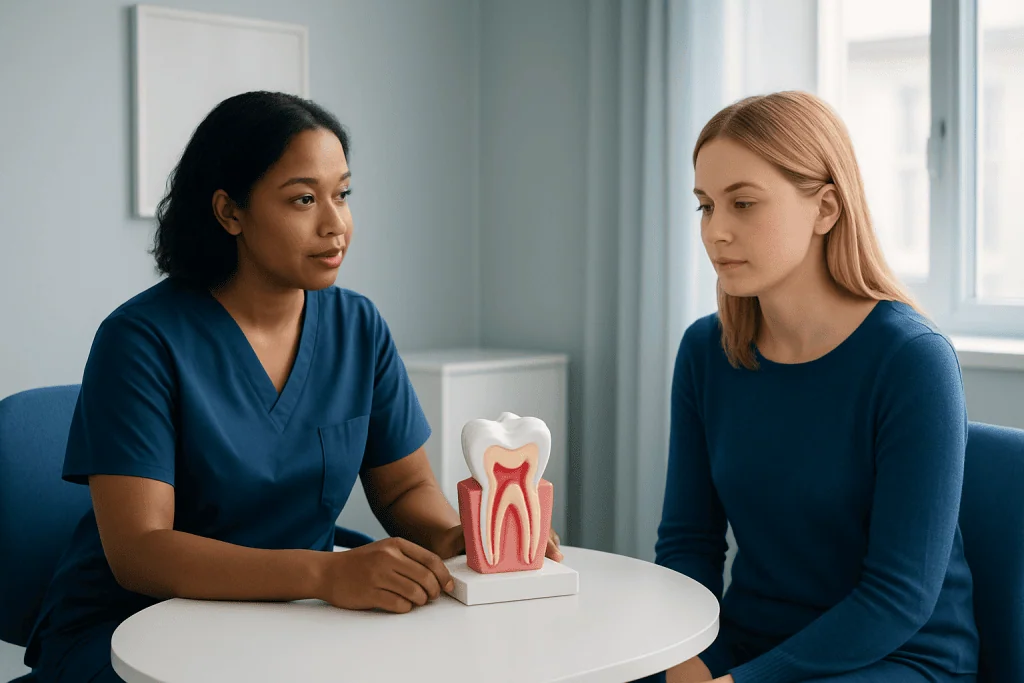
Some people with dental abfraction have no symptoms at all and learn about it during a routine dental exam. Others notice tooth sensitivity, especially with cold air, cold drinks, sweets, or brushing. This happens because the protective outer layer becomes thinner and the underlying dentin may be exposed.
Visible changes can include a small groove, notch, or wedge near the gumline. The area may look yellowish or darker than the rest of the tooth if dentin is exposed. In some cases, the tooth edge can feel rough when the tongue passes over it.
When lesions become deeper, they can weaken the tooth and increase the chance of chipping or cracking. Symptoms sometimes overlap with those of cavities, gum recession, or dentin hypersensitivity, so it is best not to assume the cause without an examination.
- Sensitivity to cold, heat, sweet foods, or touch
- A visible notch near the gumline
- Roughness along the side of a tooth
- Discomfort while brushing
- Changes in tooth shape or color at the cervical area
Causes and risk factors
Dental abfraction is now widely viewed as a multifactorial condition. The main theory is that repeated bite loading, especially off-axis forces from clenching or grinding, creates stress concentration at the neck of the tooth. Over time, this may lead to microfractures and gradual loss of enamel and dentin. However, this process alone may not explain every lesion.
Other factors often play an important role. Aggressive horizontal brushing, abrasive toothpaste, and poor brushing technique can wear already vulnerable areas. Acidic foods and drinks, frequent citrus exposure, carbonated beverages, acid reflux, and eating disorders can soften tooth surfaces and make them easier to wear away. Gum recession may also expose root surfaces, which are less resistant than enamel.
Risk may be higher in adults who grind their teeth, have a misaligned bite, chew hard objects, or have multiple signs of tooth wear. Dry mouth can also contribute by reducing the protective effect of saliva. In some people, several factors act together: for example, nighttime clenching plus acidic drinks plus forceful brushing.
Because of this overlap, dentists usually avoid giving a one-cause explanation without assessing bite habits, oral hygiene methods, dietary patterns, and medical history. Conditions that increase oral acid exposure may need attention along with the tooth lesion itself.
How dental abfraction is diagnosed
Diagnosis begins with a clinical dental examination. The dentist looks at the shape, depth, location, and surface texture of the lesion and checks whether one tooth or many teeth are affected. The pattern can offer clues, but the diagnosis also depends on symptoms, gum position, bite function, and signs of overall tooth wear.
A dental professional may ask about cold sensitivity, tooth grinding, jaw tension, brushing style, acidic drinks, reflux symptoms, and previous dental treatment. Bite assessment can help identify whether excessive force may be contributing. Photographs, charting, or impressions may sometimes be used to monitor whether the lesion changes over time.
X-rays are not always needed to identify abfraction itself, but they may help rule out decay, root problems, or deeper structural issues. If sensitivity is significant, the dentist may test the tooth pulp and surrounding gum tissue. This helps distinguish abfraction from cavities, cracked tooth syndrome, or problems affecting the tooth nerve.
When the lesion is mild and not causing symptoms, monitoring may be the most appropriate first step. A careful diagnosis is important because unnecessary filling of every small gumline defect is not always the best option.
Treatment options and when treatment is needed
Treatment for dental abfraction depends on whether the lesion is active, whether it causes symptoms, and whether it threatens the tooth’s strength or appearance. Not every lesion needs immediate restoration. If the notch is shallow, stable, and not sensitive, a dentist may recommend observation along with prevention strategies.
When sensitivity is the main problem, desensitizing agents, fluoride-based products, or protective varnishes may help reduce discomfort. If the lesion is deeper, progressing, hard to clean, or affecting appearance, a tooth-colored filling may be used to protect the area and restore contour. In some cases, broader restorative dentistry is considered if there are multiple worn teeth or associated structural problems.
If tooth grinding or clenching appears to be a major factor, managing bite stress becomes important. This may include evaluation of the bite, habit awareness, and sometimes a night guard. Patients with significant wear may also benefit from a specialist assessment for prosthodontics or other tailored restorative planning.
When gum recession is present, treatment may also focus on protecting exposed root surfaces and improving gum health. If there are signs of cracks, severe pain, or complex structural damage, the tooth may need more advanced care such as endodontic evaluation in selected cases. Near the end of the care pathway, patients may choose support from centers such as Acibadem International, where multidisciplinary specialists in JCI-accredited hospitals diagnose and treat dental conditions for international patients.
Prevention and self-care
Prevention focuses on reducing the factors that can worsen cervical tooth wear. Gentle brushing with a soft-bristled toothbrush and a non-abrasive toothpaste is often recommended. Small circular motions are generally preferred over hard side-to-side scrubbing, especially near the gumline.
Dietary habits matter as well. Limiting frequent acidic drinks and rinsing with water after acidic exposure may help protect enamel. It is usually better to wait a short time before brushing after consuming acidic foods or drinks, because softened enamel can wear more easily. People with heartburn or reflux symptoms may benefit from medical evaluation, since controlling acid exposure can support oral health.
Stress-related clenching and nighttime grinding should not be ignored. Jaw relaxation strategies, awareness of daytime tooth contact, and professional advice about a protective appliance may help if bruxism is present. Regular dental checkups are useful because small changes can be tracked before they become more difficult to manage.
- Use a soft toothbrush and gentle technique
- Avoid excessive brushing pressure
- Reduce frequent acidic drinks and snacks
- Discuss grinding or clenching with a dentist
- Attend routine dental exams for monitoring
When to seek medical care
It is sensible to seek dental care if a notch near the gumline becomes painful, sensitive, visibly deeper, or difficult to clean. Prompt assessment is also important if the tooth chips, changes color, or causes discomfort when biting. These symptoms can overlap with decay, cracks, or other problems that may need treatment.
Medical care may also be helpful when oral acid exposure is suspected. Frequent reflux, vomiting, or persistent dry mouth can affect teeth and may require evaluation by a physician as well as a dentist. If jaw pain, headaches, or obvious grinding are present, bite-related stress should be assessed too.
Urgent review is advisable if there is severe tooth pain, swelling, fever, or sudden fracture. Even though dental abfraction itself is usually not an emergency, the symptoms around it can sometimes signal another condition that should not be delayed.
Frequently asked questions
Is dental abfraction the same as a cavity?
No. Dental abfraction is a loss of tooth structure near the gumline that is not caused by decay bacteria in the same way a cavity is. However, a dentist still needs to examine the area because cavities and abfraction can sometimes look similar.
Can brushing too hard cause dental abfraction?
Hard brushing is more closely linked with abrasion, but it can contribute to the damage seen around abfraction lesions. Many experts now believe these lesions often result from more than one factor, including brushing, acid exposure, and bite stress.
Does every abfraction lesion need a filling?
No. If the lesion is small, stable, and not causing symptoms, monitoring may be enough. Fillings are usually considered when there is sensitivity, progression, difficulty cleaning the area, cosmetic concern, or a risk of further tooth damage.
Can dental abfraction heal on its own?
Lost tooth structure does not grow back on its own. Still, the condition can often be stabilized by reducing contributing factors and protecting the tooth. Early care may prevent the lesion from becoming deeper or more sensitive.
Is teeth grinding related to dental abfraction?
It may be. Clenching and grinding can place repeated stress on teeth, especially at the neck of the tooth, and this is one proposed contributor to abfraction. Not everyone with abfraction grinds their teeth, but the connection is important enough to evaluate.
How can someone reduce sensitivity from dental abfraction?
A dentist may recommend desensitizing toothpaste, fluoride products, or protective coatings depending on the cause and severity. Using a soft toothbrush, avoiding overly aggressive brushing, and reducing acidic exposure can also help limit irritation.
References
- American Dental Association
- National Institute of Dental and Craniofacial Research
- Mayo Clinic
- FDI World Dental Federation
- Cochrane
This article is for general information only and is not a substitute for professional medical advice. Please consult a qualified doctor about your individual situation.
Explore treatments in Turkey — costs, top hospitals & a free quote
JCI-accredited · board-certified surgeons · reply within 24h
Add us as a Preferred Source to see more of our trusted health content across Google Search, AI Overviews and Discover.

More from the Health Library



Related Specialists

Dr. Senem Almaç Deniz
Otorhinolaryngology
Dr. Mehriban Allahverdiyeva
Inpatient Clinic Physicians Clinical Service
Dr. Vildan Alev Sönmez
Anesthesiology
Dr. Özkan Uysal
Internal Medicine