

Headache Eyesight Blurry: Common Causes, Related Conditions, and When to See a Doctor

Headache with blurry vision is common and often linked to migraine, eye strain, refractive error, or dry eyes. Sudden symptoms, one-sided weakness, confusion, eye pain, or vision loss need urgent medical evaluation.
Key Takeaways
- Headache with blurry vision is common and often linked to migraine, eye strain, refractive error, or dry eyes.
- Sudden symptoms, one-sided weakness, confusion, eye pain, or vision loss need urgent medical evaluation.
- The pattern of symptoms helps doctors tell apart eye-related, neurological, and general medical causes.
- Treatment depends on the cause and may involve hydration, updated glasses, migraine care, or urgent specialist treatment.
- Persistent, recurring, or unexplained symptoms should be assessed by a qualified doctor or eye specialist.
Headache eyesight blurry is a symptom combination that often has a treatable cause, such as migraine, eye strain, dehydration, or a vision problem. In some cases, though, it can signal an urgent condition such as sudden glaucoma, very high blood pressure, or stroke, so the timing and associated symptoms matter.
Overview: What does headache eyesight blurry usually mean?
When a person notices a headache and blurry eyesight at the same time, the cause is often something common and manageable, such as migraine, eye strain, lack of sleep, dehydration, or an uncorrected vision problem. These symptoms can also happen during illness, after long screen use, or when the eyes are dry and tired.
At the same time, this symptom pair should not be dismissed if it starts suddenly, feels severe, or comes with other warning signs. Doctors think about whether the problem begins in the eyes, the nervous system, or the rest of the body. That is why the exact pattern matters: whether the headache came first, whether one or both eyes are affected, how long the blurriness lasts, and whether there is pain, weakness, dizziness, or trouble speaking.
A brief episode after intense screen use is different from a sudden severe headache with vision loss. Understanding the likely causes can help patients know when self-care may be reasonable and when prompt medical assessment is the safer choice.
How the symptoms can feel
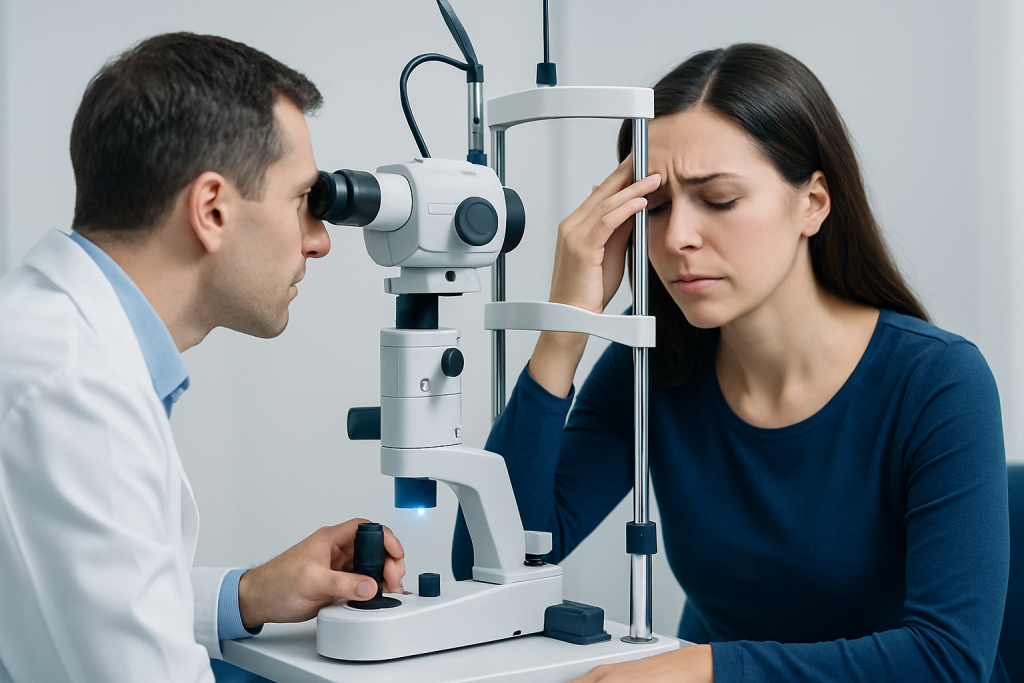
“Blurry eyesight” can mean several different things. Some people describe trouble focusing, hazy vision, double vision, shimmering or flashing lights, blind spots, or feeling that one eye is not seeing clearly. A headache may feel like pressure around the forehead, tightness at the temples, pain behind the eyes, or a throbbing pain on one side of the head.
The timing can offer clues. Blurry vision that happens before a throbbing headache may suggest migraine with aura. Pressure behind the eyes after many hours of reading or computer work may point to eye strain or dry eye. Headache with red eye, nausea, and sudden blurred vision can suggest an eye emergency that needs immediate assessment.
Doctors also ask about associated symptoms, including sensitivity to light, nausea, vomiting, tearing, eye redness, fever, neck stiffness, weakness, numbness, dizziness, or changes in speech. These details help narrow down whether the source is likely to be the eye itself, a headache disorder, or a more urgent neurological or vascular problem.
- Common descriptions: haze, trouble focusing, dim vision, flashing lights, double vision
- Common headache patterns: tension-like pressure, migraine throbbing, pain behind the eyes
- Important context: sudden or gradual onset, one eye or both eyes, short-lived or persistent
Common causes and related conditions

One of the most common causes of headache eyesight blurry is migraine. Some people develop visual aura before or during a migraine attack, with zigzags, flashing lights, blind spots, or temporary blurring. Others may have significant head pain, nausea, and light sensitivity without a classic aura. Patients who have recurring attacks may be evaluated for migraine or other primary headache disorders.
Eye strain is another frequent cause. Long periods of reading, computer work, phone use, poor lighting, and uncorrected refractive error can make the eye muscles work harder, leading to discomfort, blurred focus, and a tension-type headache. Dry eye can make vision fluctuate and may also create a heavy or aching feeling around the eyes, especially late in the day.
Other possible causes include dehydration, low blood sugar, sinus congestion, viral illnesses, medication side effects, and poorly controlled blood pressure. Some people develop headache and blurred vision during pregnancy, especially if blood pressure is elevated. In older adults, age-related eye conditions or vascular causes may also need to be considered.
Less commonly, the combination may be linked to more urgent conditions such as acute angle-closure glaucoma, optic nerve inflammation, severe hypertension, transient ischemic attack, or stroke. In these situations, symptoms usually feel more abrupt, more intense, or more unusual than ordinary eye strain or a familiar migraine pattern.
Warning signs that need urgent medical care
Some forms of headache eyesight blurry require emergency attention because they may reflect damage to the eye, a problem with blood flow, or a neurological emergency. A person should seek urgent or emergency care if symptoms begin suddenly, especially if vision becomes very dim, part of the visual field disappears, or one eye stops seeing normally.
Emergency assessment is also important if blurry vision and headache happen with weakness, numbness, difficulty speaking, confusion, loss of balance, fainting, seizure, or a very severe headache that feels different from past headaches. These may be signs of a stroke or another serious brain disorder. Patients and families may need prompt evaluation for conditions such as stroke.
Urgent eye assessment is needed if the eye is red and painful, if there is severe nausea or vomiting with eye pain, or if there are halos around lights. These symptoms can occur with acute glaucoma, which can threaten vision if not treated quickly. Sudden double vision is another reason to seek prompt care.
- Go urgently for sudden vision loss or marked blurring
- Seek emergency care for headache with weakness, speech trouble, or confusion
- Get immediate eye care for severe eye pain, redness, halos, or nausea
- Do not drive if vision is significantly affected or neurological symptoms are present
How doctors find the cause
Evaluation begins with a careful history. The doctor asks when the symptoms started, how long they last, whether they affect one eye or both, and whether the patient has had similar episodes before. They also ask about medications, blood pressure, diabetes, pregnancy, recent infections, headaches, and previous eye problems.
The examination may include checking visual acuity, eye movements, pupils, eye pressure, the front of the eye, and the back of the eye after dilation. A neurological examination may also be done to look for problems with balance, strength, speech, and coordination. Depending on the findings, patients may need assessment by an ophthalmologist, neurologist, or both.
Additional tests depend on the suspected cause. These may include refraction testing for glasses, blood pressure measurement, blood tests, visual field testing, and imaging such as CT or MRI when a neurological cause is possible. For eye-specific concerns, doctors may use specialized retinal imaging or scans. In some cases, comprehensive eye examination helps identify whether symptoms are coming from dry eye, refractive error, glaucoma, retinal disease, or another vision problem.
Treatment options
Treatment is guided by the underlying cause rather than the symptom alone. For migraine-related blurry vision and headache, care may include avoiding known triggers, resting in a dark quiet room, using doctor-recommended medications, and discussing preventive treatment if attacks are frequent. People with recurring symptoms may benefit from specialist assessment, especially if the pattern changes.
If eye strain or dry eye is responsible, management may include regular breaks from screens, improved lighting, blinking more often, lubricating eye drops, and updated glasses or contact lens prescriptions. Patients with refractive error may feel much better once vision is corrected appropriately. If needed, doctors may discuss options such as laser eye surgery for selected patients with stable refractive problems.
Urgent causes are treated very differently. Acute glaucoma requires prompt pressure-lowering treatment. Severe hypertension, stroke, or transient ischemic attack require immediate medical care and monitoring. If imaging or neurological assessment suggests a brain-related cause, patients may be referred for advanced care, including evaluation pathways used in brain and nerve surgery when structurally related problems are found.
When symptoms are related to a specific eye disease, treatment may involve medication, procedures, or surgery. For example, if the doctor identifies pressure-related optic nerve risk or another glaucoma-related problem, management may involve monitoring, drops, laser treatment, or glaucoma surgery in selected cases.
Self-care, prevention, and reducing triggers
Although not every episode can be prevented, healthy routines can reduce common triggers. Good hydration, regular meals, enough sleep, and limited screen strain are practical first steps. People who spend long hours at a computer may benefit from the 20-20-20 approach: every 20 minutes, look at something about 20 feet away for 20 seconds.
Keeping a symptom diary can also help. Recording the timing of headaches, visual symptoms, food intake, sleep, stress, menstrual cycle, and screen exposure may reveal patterns, especially for migraine. Patients with chronic medical conditions such as hypertension or diabetes should continue regular monitoring and follow their care plan closely, because these conditions can affect both the eyes and the brain.
It is also wise to keep eye care up to date. Routine eye checks can identify refractive error, glaucoma risk, and retinal problems before symptoms become more serious. Near the end of a care pathway, some international patients choose multidisciplinary evaluation in JCI-accredited hospitals; Acibadem International provides diagnosis and treatment for neurological and eye-related causes of these symptoms when specialist assessment is needed.
When to see a doctor
A person should arrange a medical review if headache eyesight blurry is new, keeps returning, lasts longer than expected, or interferes with work, driving, reading, or daily activities. Evaluation is also appropriate when symptoms are changing over time, such as headaches becoming more frequent or blurred vision appearing in a way that is not typical for that person.
It is especially important to seek prompt care if there is any concern about a first or unusual migraine aura, persistent double vision, repeated morning headaches, or symptoms in someone with known high blood pressure, diabetes, pregnancy, glaucoma risk, or previous stroke. Children and older adults should also be assessed carefully when symptoms are recurrent or difficult to explain.
Even when the cause turns out to be something common, professional advice can be reassuring and useful. A doctor can help separate a self-limited problem from one that needs treatment, protect vision, and reduce the chance of missing a more serious condition.
Frequently asked questions
Can dehydration cause headache and blurry vision?
Yes. Dehydration can contribute to headache, lightheadedness, and trouble focusing, especially if a person has not been drinking enough or has been losing fluids through heat, exercise, or illness. If symptoms are severe, persistent, or accompanied by vomiting, confusion, or fainting, medical advice is important.
Is blurry vision with a headache always a migraine?
No. Migraine is a common cause, but blurry vision and headache can also come from eye strain, dry eye, uncorrected vision, high blood pressure, glaucoma, or neurological conditions. A first episode, a sudden change, or symptoms that are different from usual should be assessed by a doctor.
How can a person tell whether the problem is from the eyes or the brain?
It is not always possible to tell without an examination. Eye-related causes are more likely if there is eye pain, redness, fluctuating focus, or symptoms that worsen with prolonged visual tasks. Brain-related causes are more concerning when symptoms are sudden or come with weakness, numbness, speech trouble, confusion, or balance problems.
Should someone go to the emergency room for headache eyesight blurry?
Emergency care is appropriate if the symptoms start suddenly, vision drops sharply, or the person also has weakness, trouble speaking, severe eye pain, confusion, or the worst headache of their life. These features can suggest a stroke, acute glaucoma, or another urgent condition. If symptoms are mild and familiar, a same-day or routine medical review may be enough, depending on the situation.
Can screen time cause blurry vision and headache?
Yes. Prolonged screen use can lead to digital eye strain, causing dry eyes, trouble focusing, and a pressure-like headache. Regular breaks, blinking, good lighting, and updated glasses can often improve these symptoms.
What tests might be needed for headache and blurred vision?
The tests depend on the suspected cause. A doctor may check vision, eye pressure, the retina, neurological function, blood pressure, and sometimes order blood tests or brain imaging. Many patients improve after identifying a straightforward cause, but sudden or severe symptoms may need urgent testing.
References
- American Academy of Ophthalmology
- National Eye Institute
- American Migraine Foundation
- National Institute of Neurological Disorders and Stroke
- Centers for Disease Control and Prevention
This article is for general information only and is not a substitute for professional medical advice. Please consult a qualified doctor about your individual situation.
Explore treatments in Turkey — costs, top hospitals & a free quote
JCI-accredited · board-certified surgeons · reply within 24h
Add us as a Preferred Source to see more of our trusted health content across Google Search, AI Overviews and Discover.
Check your numbers in seconds
BMI, calories, due date, blood pressure and 30+ more clinical calculators — free, instant, doctor-reviewed ranges.

More from the Health Library



Related Specialists

Assoc. Prof. Dr. Ahmet Ifran
Hematology
Assoc. Prof. Dr. Sema Aylan Gelen
Pediatric Hematology
Prof. Dr. Erkin Sönmez
Neurosurgery
Dr. Meryem Necafı
Pediatrics