Can a Love Bite Cause Cancer? Causes, Explanations, and Next Steps

A love bite is usually a simple bruise and does not turn into cancer. Most hickeys fade on their own within days to about two weeks.
Key Takeaways
- A love bite is usually a simple bruise and does not turn into cancer.
- Most hickeys fade on their own within days to about two weeks.
- Medical review is important if bruising happens easily, lasts unusually long, or comes with a lump or other symptoms.
- Doctors assess the skin, ask about timing and injury, and may order blood tests or imaging if needed.
- Red flags include unexplained bruises, swollen lymph nodes, weight loss, fever, or skin changes that do not heal.
No, a love bite does not cause cancer. In most cases, it is a harmless bruise caused by broken tiny blood vessels under the skin, but persistent bruising, unusual lumps, or other concerning changes deserve medical review.
Overview: can a love bite cause cancer?
No, a love bite does not cause cancer. A love bite, also called a hickey, is most often a minor bruise that happens when suction or gentle biting breaks small blood vessels under the skin. The pooled blood creates a red, purple, or brown mark that usually fades naturally over time.
This question often comes up because a love bite can appear suddenly, may look dramatic, and is commonly found on the neck, where people also notice lymph nodes, skin bumps, or other changes. That can understandably create worry. In most situations, the mark itself is harmless and temporary.
The more useful question is not whether the love bite causes cancer, but whether a mark thought to be a love bite could actually be something else. If a bruise appears without a clear cause, lasts longer than expected, keeps returning, or is accompanied by a lump, persistent swelling, bleeding, fever, or unexplained weight loss, a doctor may need to rule out other conditions.
What a love bite actually is

A love bite is a type of superficial bruise. Suction damages tiny blood vessels called capillaries just beneath the skin. A small amount of blood leaks into the surrounding tissue, which is why the area changes color. It may start red or purple and then turn blue, brown, yellow, or green as the body breaks down and reabsorbs the blood.
The neck is a common location because the skin is thinner and blood vessels are close to the surface. The area may feel tender for a short time, but many love bites cause little or no pain. They usually become less noticeable over several days and often disappear fully within one to two weeks.
A love bite does not trigger the cellular changes that define cancer. Cancer develops when cells grow and divide abnormally, usually because of a complex mix of genetic changes, environmental exposures, age, immune factors, or other medical causes. A brief local bruise is not known to cause these changes.
Why people may confuse a love bite with something more serious
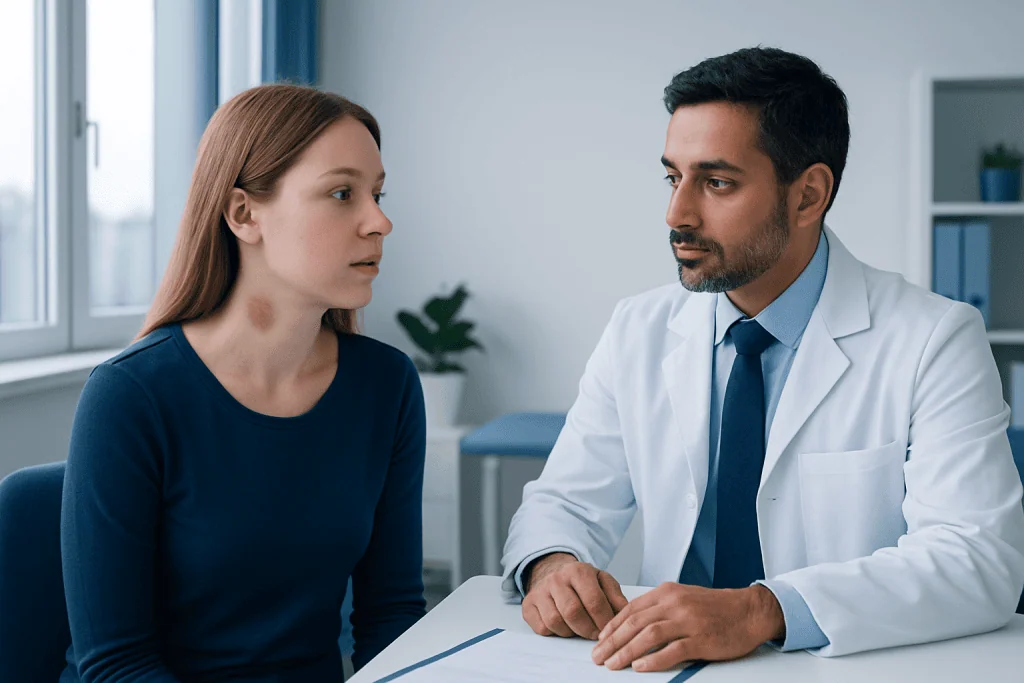
Sometimes a bruise is noticed first, and the exact cause is uncertain. If a person does not clearly remember pressure, suction, or minor injury to the area, it may be difficult to know whether the mark is truly a love bite. In other situations, a real love bite may draw attention to a nearby issue such as an enlarged lymph node, a skin lesion, or ongoing discoloration that was already developing.
Bruises can also occur more easily in some people. Common reasons include fragile skin with age, certain medications such as blood thinners, intense physical activity, nutritional deficiencies, or medical conditions that affect platelets or blood clotting. This does not mean cancer is likely, but it does mean repeated or unusual bruising deserves a broader look.
In rarer cases, persistent skin changes or repeated unexplained bruises may be associated with underlying illnesses, including blood disorders or cancer-related conditions. For example, doctors may consider causes such as leukemia when bruising is widespread, frequent, or accompanied by fatigue, infections, or abnormal bleeding. A persistent neck lump may also need assessment to exclude lymphoma or another cause.
Red flags that should be checked
Most love bites heal without treatment, but some features suggest the mark may not be a simple bruise or that another condition is present. The main red flags are persistence, progression, and symptoms beyond the skin itself. A bruise that does not improve, changes in an unusual way, or appears without a clear reason should not be ignored.
It is sensible to arrange a medical review if there is a firm lump under or near the bruise, if the area becomes increasingly painful, or if the skin breaks down rather than healing. General symptoms also matter. Fever, night sweats, unusual tiredness, unintentional weight loss, or swollen glands in the neck can point to a need for proper evaluation.
- Bruising that lasts longer than about two weeks or keeps returning
- A bruise with no clear injury or suction history
- Frequent bruising in several body areas
- Bleeding gums, nosebleeds, or very heavy menstrual bleeding
- A new neck lump, persistent swollen lymph node, or trouble swallowing
- Skin sores, moles, or patches that change color, shape, or size
These signs do not mean cancer is present. They simply mean the body may need a closer assessment to identify the cause and, if necessary, start treatment early.
How doctors tell the difference
Doctors usually begin with a careful history and physical examination. They ask when the mark appeared, whether there was known suction or trauma, how it has changed, and whether similar bruises have happened before. They also ask about medications, supplements, family history, bleeding problems, recent infections, and symptoms such as weight loss or fatigue.
The examination focuses on the skin and nearby tissues. A simple bruise tends to be flat or only mildly raised, tender at first, and gradually fading. A doctor will also check for enlarged lymph nodes, signs of infection, suspicious skin lesions, or widespread bruising elsewhere on the body.
If the picture is not straightforward, tests may help. These can include blood tests to look at blood counts and clotting, and sometimes imaging such as MRI scanning or ultrasound if there is a deeper lump or unexplained swelling. When a skin lesion or mass looks suspicious, a specialist may recommend further assessment and, in some cases, tissue sampling to reach a clear diagnosis.
Treatment and what to do at home
A typical love bite does not need special medical treatment. Gentle self-care is usually enough while the body clears the trapped blood naturally. Many people find the mark becomes less noticeable with time alone. It is best not to rub, massage aggressively, or apply harsh products, as these can irritate the skin.
Simple home measures may reduce discomfort. A cool compress in the first day can help with tenderness, and afterward some people prefer gentle warmth to support comfort. Keeping the skin protected and avoiding repeated friction may also help the area settle. Makeup or clothing coverage may be used if desired, as long as the skin is intact and not irritated.
If the mark is not behaving like a usual bruise, treatment depends on the cause. A doctor may address clotting problems, medication effects, infection, skin disease, or another diagnosis. If there is concern about a suspicious skin change or lump, referral for specialist assessment may include biopsy or other targeted tests.
When to seek medical care
Prompt medical advice is appropriate if the mark appears without any known cause, if it enlarges rather than fades, or if there is a lump underneath it. Care is also important when bruising is frequent, severe, or associated with bleeding elsewhere, such as nosebleeds or gum bleeding.
Urgent assessment may be needed if the area is very swollen, causes trouble breathing or swallowing, follows significant neck trauma, or comes with signs of infection such as spreading redness, warmth, fever, or drainage. These situations are not typical for a simple love bite and should be evaluated quickly.
For ongoing concerns, a primary care doctor, dermatologist, hematologist, or ENT specialist may be involved depending on the symptoms. Multidisciplinary teams at Acibadem International’s JCI-accredited hospitals also diagnose and treat patients with skin, blood, and lymph node concerns, including access to advanced evaluation such as PET-CT scanning when clinically appropriate.
Prevention, reassurance, and next steps
For most people, the next step is simple reassurance: a love bite is a bruise, not a cause of cancer. If there is a clear history of suction or minor trauma and the area fades as expected, no further action is usually needed. Monitoring the mark for steady improvement is often enough.
To reduce future bruising, it can help to avoid strong suction or pressure on sensitive skin, especially on the neck. People who bruise easily may benefit from reviewing medications with a doctor and discussing whether any underlying issue should be checked. Good skin care, sun protection, and awareness of changing moles or persistent lesions are also sensible general habits.
If uncertainty remains, professional assessment can provide clarity and peace of mind. The most important message is that cancer is not caused by a love bite, but a mark that is unexplained, persistent, or accompanied by other symptoms should be assessed so the true cause can be identified.
Frequently asked questions
Can a love bite turn into cancer later?
No. A love bite is a bruise caused by small broken blood vessels under the skin, and it does not turn into cancer. If a mark lasts unusually long or changes in an unexpected way, it should be checked because it may not be a simple love bite.
How long should a normal love bite last?
Many love bites improve over several days and fade within one to two weeks. The exact timing depends on skin type, bruise size, and a person's general health. If the mark does not improve or keeps returning, medical advice is sensible.
What symptoms suggest it is not just a love bite?
Warning signs include bruising without a clear cause, a firm lump under the area, frequent bruises elsewhere, unexplained bleeding, fever, night sweats, or weight loss. These symptoms do not automatically mean cancer, but they do justify a medical review.
Can leukemia or lymphoma look like a bruise on the neck?
Some blood cancers can be associated with easy bruising or swollen lymph nodes, which may draw attention to the neck area. However, a single bruise after clear suction or minor trauma is much more likely to be harmless. A doctor can assess the full picture if symptoms are persistent or unclear.
Should a painful love bite be a concern?
Mild tenderness can be normal with a bruise, especially in the first few days. Increasing pain, warmth, marked swelling, or signs of infection are less typical and should be assessed by a clinician.
What will a doctor do to check an unusual bruise?
A doctor usually asks about timing, trauma, medicines, and other symptoms, then examines the skin and nearby lymph nodes. If needed, they may order blood tests or imaging, and sometimes refer to a specialist for further assessment.
This article is for general information only and is not a substitute for professional medical advice. Please consult a qualified doctor about your individual situation.
Oncology care in Turkey — second opinion and treatment plan
JCI-accredited · board-certified surgeons · reply within 24h
Add us as a Preferred Source to see more of our trusted health content across Google Search, AI Overviews and Discover.

More from the Health Library

Can Stress Make You Sick? A Doctor-Reviewed Answer

Right Arm Pain: Possible Causes and When to Seek Care
Swollen Labia Explained: Common Triggers and Red Flags

Anal Cancer Symptoms: Possible Causes and When to Seek Care

Lichen Sclerosus Symptoms Explained: Common Triggers and Red Flags

Wake vs Funeral: Key Differences and How Doctors Tell Them Apart
Radiation Oncology Specialists at Acibadem

Prof. Dr. Evrim Kadriye Tezcanlı
Radiation Oncology
Prof. Dr. Faysal Dane
Medical Oncology
Prof. Dr. Fulya Ağaoğlu
Radiation Oncology
Assoc. Prof. Dr. Fuzuli Tuğrul
Radiation Oncology