Cooperative Play: What Patients Need to Know

Cooperative play involves children working or pretending together in a shared activity. It usually becomes more common in the preschool years, but development varies from child to child.
Key Takeaways
- Cooperative play involves children working or pretending together in a shared activity.
- It usually becomes more common in the preschool years, but development varies from child to child.
- This type of play helps build communication, emotional regulation, empathy, and flexible thinking.
- Parents and caregivers can encourage cooperative play with simple routines, open-ended toys, and gentle guidance.
- Persistent difficulty with social interaction, play, or communication may deserve discussion with a pediatrician or child development specialist.
Cooperative play is a stage of child development in which children play together toward a shared idea, goal, or set of rules. It supports social, emotional, language, and problem-solving skills, and it develops gradually as children mature and practice interacting with others.
What cooperative play means
Cooperative play is a form of play in which children actively engage with one another around a shared purpose. They may build something together, create an imaginary story, take turns in a game, or solve a small problem as a group. Unlike playing side by side without much interaction, cooperative play depends on communication, turn-taking, and some understanding of common rules or goals.
For many families, the main question is whether cooperative play is important. In general, yes: it is a healthy and meaningful part of child development because it gives children repeated chances to practice social and emotional skills in real time. It is not a test that a child either passes or fails, but rather one of many ways clinicians and caregivers observe how a child is learning to relate to others.
Cooperative play does not appear suddenly. It usually grows out of earlier forms of play, such as watching others, playing alone, and playing alongside peers. Some children are naturally eager to join group activities, while others need more time, more support, or quieter settings before they feel comfortable participating.
How cooperative play fits into child development
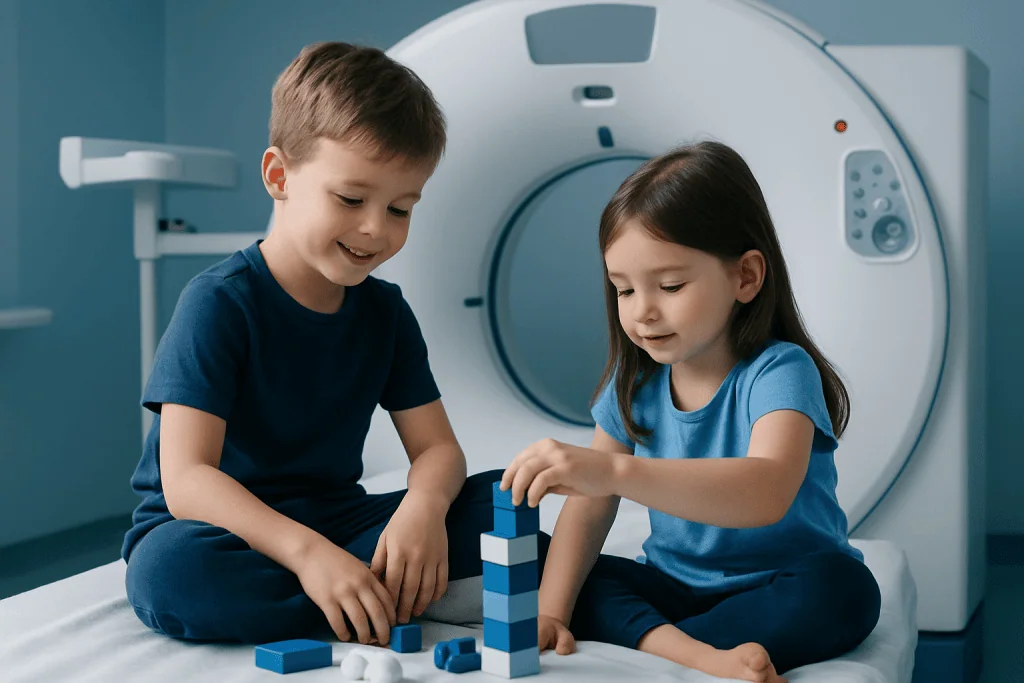
Child development specialists often describe play as unfolding in stages. Younger children may begin with solitary play, then move into parallel play, where they play beside another child but not truly with them. Cooperative play is a later, more socially complex stage because it asks the child to coordinate ideas, language, attention, and behavior with another person.
This is one reason cooperative play is often seen more clearly in the preschool years, though the exact timing can vary. A child may show brief moments of cooperative play before it becomes a regular pattern. Energy level, temperament, language development, family routines, cultural expectations, and prior group experiences can all influence how this skill develops.
It can help to think of cooperative play as a cluster of abilities rather than a single milestone. Children need to notice social cues, tolerate frustration, share space, and recover when a game changes unexpectedly. These abilities continue to mature over time, which is why even school-age children are still refining how they cooperate in games, classroom tasks, and friendships.
If there are broader concerns about development, doctors may also look at related areas such as communication, attention, sensory processing, and emotional regulation. In some children, challenges with play and interaction may overlap with conditions such as autism or ADHD, although play differences alone do not establish a diagnosis.
Why cooperative play matters

Cooperative play supports several areas of growth at once. Socially, it helps children learn how to join a group, negotiate roles, wait, compromise, and repair small conflicts. Emotionally, it gives them practice managing disappointment, excitement, and frustration while staying connected to others.
It also strengthens language. Children explain ideas, ask questions, respond to peers, and use words to organize a shared activity. During pretend play, they may try new vocabulary, act out everyday experiences, and learn how conversation changes depending on context. These repeated exchanges help language become more flexible and purposeful.
Cognitive skills are involved as well. Cooperative play encourages planning, remembering simple rules, shifting between ideas, and thinking from another person’s perspective. These are part of what clinicians sometimes call executive function. In everyday life, this can look like deciding together what to build, changing a plan when something falls apart, or creating a story with different characters and roles.
- Builds turn-taking and sharing
- Supports empathy and perspective-taking
- Strengthens communication and listening
- Encourages flexible thinking and problem-solving
- Helps children practice self-regulation in social settings
What cooperative play can look like at different ages
There is no single “correct” way cooperative play should appear. In toddlers and young preschoolers, it may be simple and brief: rolling a ball back and forth, pretending to cook together, or taking turns with blocks. The activity may need adult support, and disagreements may be frequent because self-regulation is still developing.
In preschool and early school years, cooperative play often becomes more organized. Children may assign roles in pretend play, follow basic game rules, or work together on art, building, or outdoor play. At this age, it is common to see both enthusiasm and conflict. Small disagreements are not necessarily a sign of a problem; they are often part of learning how to cooperate.
Older children continue to use cooperative play in more structured ways. Team games, classroom projects, strategy games, and shared hobbies all require children to read social cues, coordinate behavior, and adapt to group expectations. Some children prefer one-on-one play to larger groups, and that can still be developmentally healthy if social engagement is otherwise appropriate and enjoyable.
Parents may notice that a child can cooperate well in one setting but not another. For example, a child may play smoothly at home with a sibling but struggle in a noisy classroom or playground. Context matters. Fatigue, hunger, stress, sensory overload, and unfamiliar peers can all affect how cooperative a child seems on a given day.
How parents and caregivers can encourage cooperative play
Cooperative play usually grows best through everyday opportunities rather than pressure. Children often benefit from predictable playtimes, a calm environment, and activities that are open-ended enough to invite shared ideas. Blocks, pretend kitchen sets, dolls, costumes, simple board games, drawing materials, and sensory play can all support cooperation when used with gentle structure.
Adults can help by modeling social language. Simple phrases such as “Can I join?” “Your turn, then mine,” or “Let’s make a plan together” give children practical tools for interaction. Narrating what is happening can also help: “You both want the same truck. Let’s think of two ways to solve that.” This approach supports problem-solving without taking over the play.
Smaller groups are often easier than large, busy settings, especially for children who are shy, easily overwhelmed, or still developing language. Short playdates, familiar routines, and activities with clear roles may reduce stress. It is usually more helpful to coach gently and step back than to direct every detail.
When there are ongoing concerns, families may be advised to seek developmental support. Depending on the child’s needs, professionals may suggest observation, parent coaching, or therapies that support communication and social interaction. In selected cases, approaches such as play therapy or speech therapy may be part of a broader care plan.
When play differences may suggest a concern
Children develop at different rates, so occasional difficulty with sharing, turn-taking, or joining a group is common. A child may be tired, shy, strong-willed, or simply more interested in independent play. On its own, this does not usually mean something is wrong. What matters more is the overall pattern over time and whether there are concerns in other areas of development.
It may be worth paying closer attention if a child rarely shows interest in other children, has persistent difficulty with back-and-forth interaction, seems unable to use play imaginatively, or struggles significantly with communication. Concerns may also arise if social difficulties are accompanied by language delay, frequent intense meltdowns, repetitive behaviors, unusual sensory responses, or challenges following simple routines.
Professionals do not diagnose a child based only on one type of play. Instead, they look at the child’s full developmental picture. A pediatrician may ask about language, behavior, sleep, hearing, family history, school functioning, and social interaction across settings. If needed, the child may be referred for a more detailed developmental or psychological evaluation.
In some cases, care may involve developmental pediatrics, child psychology, occupational therapy, or pediatric rehabilitation to support broader developmental goals. If emotional or behavior concerns are prominent, a clinician may also consider whether anxiety, stress, or other mental health factors are affecting play.
How doctors assess concerns about cooperative play
When parents raise questions about cooperative play, the evaluation usually begins with a detailed conversation. The clinician may ask when concerns first appeared, what the child enjoys, how they interact with siblings or classmates, and whether the issue happens in all settings or only some. Information from teachers or caregivers can be very helpful because children often behave differently at home and school.
The assessment may include developmental screening, review of language and motor milestones, hearing and vision checks if appropriate, and observation of how the child communicates and plays. In some cases, standardized questionnaires are used to understand social communication, attention, or behavior patterns. The goal is not to label normal differences, but to identify whether support could help.
If a developmental condition is suspected, the child may be referred to specialists for further evaluation. Early support can be useful, especially when concerns involve communication, social interaction, or regulation. Families may hear about options such as occupational therapy if sensory or self-regulation challenges are affecting participation in play and daily life.
Near the end of the care pathway, families who need comprehensive assessment or treatment may seek support from experienced centers. Acibadem International’s multidisciplinary specialists and JCI-accredited hospitals provide diagnosis and treatment for children with developmental, behavioral, and communication concerns, including those affecting play and social functioning.
When to seek medical care
Medical advice is appropriate when concerns about cooperative play are persistent, interfere with daily life, or occur alongside delays in speech, learning, or social development. Parents do not need to wait for a problem to become severe before speaking with a pediatrician. Early discussion can clarify whether a child is following a typical developmental path or may benefit from support.
A clinician should be consulted if a child consistently avoids interaction with peers, does not seem to understand simple social exchanges, loses previously learned social or language skills, or has frequent intense behavioral reactions that make group play very difficult. Hearing problems, sleep issues, and significant anxiety can also affect play and deserve assessment.
Urgent medical care is not usually needed for play concerns alone, but immediate help may be important if a child is at risk of harming themselves or others, shows a sudden major change in behavior, or has signs of a neurological or medical problem. Families should trust their observations and seek professional advice whenever they feel uncertain.
Frequently asked questions
What is cooperative play in simple terms?
Cooperative play is when children play together with a shared goal, idea, or set of rules. It may include building something together, pretending as a group, or taking turns in a game.
At what age does cooperative play usually begin?
It often becomes more noticeable in the preschool years, but children develop at different rates. Some may show early examples sooner, while others need more time and practice in social settings.
Is it normal if a child prefers to play alone sometimes?
Yes. Many children enjoy solitary play as well as social play, and preferences can vary by mood, temperament, and setting. Playing alone is not automatically a concern if the child also shows age-appropriate social interest and communication overall.
How can parents encourage cooperative play at home?
Parents can offer simple shared activities, model turn-taking language, and keep playtimes calm and predictable. Open-ended toys, pretend play, and short games with clear rules can make cooperation easier to practice.
Does difficulty with cooperative play mean a child has autism or ADHD?
Not necessarily. Many factors can affect play, including shyness, language delay, sensory sensitivity, stress, or limited experience with peers. If concerns are ongoing or happen with other developmental differences, a pediatric evaluation can help clarify the reason.
When should parents talk to a doctor about play concerns?
It is reasonable to speak with a doctor if a child consistently struggles to interact with peers, rarely uses pretend play, or has communication or behavior concerns that affect daily life. Early evaluation can identify whether reassurance, monitoring, or extra support would be helpful.
References
- American Academy of Pediatrics
- Centers for Disease Control and Prevention
- National Institute of Child Health and Human Development
- World Health Organization
- American Speech-Language-Hearing Association
This article is for general information only and is not a substitute for professional medical advice. Please consult a qualified doctor about your individual situation.
Explore treatments in Turkey — costs, top hospitals & a free quote
JCI-accredited · board-certified surgeons · reply within 24h
Add us as a Preferred Source to see more of our trusted health content across Google Search, AI Overviews and Discover.