Itchy Scalp Treatment: Common Causes, Related Conditions, and When to See a Doctor

An itchy scalp is a symptom, not a diagnosis, so treatment depends on the cause. Common reasons include dandruff, seborrheic dermatitis, dry skin, contact irritation, psoriasis, and fungal infection.
Key Takeaways
- An itchy scalp is a symptom, not a diagnosis, so treatment depends on the cause.
- Common reasons include dandruff, seborrheic dermatitis, dry skin, contact irritation, psoriasis, and fungal infection.
- Harsh hair products, frequent scratching, and heavy oil buildup can make scalp itching worse.
- Medical evaluation is important if itching lasts, disrupts sleep, causes sores, or comes with hair loss or redness.
- Most causes can be managed with a combination of scalp care, medicated products, and treatment of any underlying skin condition.
Itchy scalp treatment works best when the underlying cause is identified. Many cases improve with gentle hair care and targeted shampoos, but persistent itching, visible rash, hair loss, or signs of infection should be assessed by a doctor.
Overview: What itchy scalp treatment usually involves
Itchy scalp treatment usually starts with finding the reason for the itching rather than simply trying random products. For many people, relief comes from a combination of gentle washing habits, avoiding irritating hair products, and using a medicated shampoo or other treatment matched to the cause.
An itchy scalp can happen with common problems such as dandruff, dry skin, or product sensitivity. It can also be linked to inflammatory skin conditions such as eczema or psoriasis, and less often to fungal infection, lice, or other medical issues. Because these conditions can look similar, the same symptom may need very different treatment.
Instead of viewing scalp itch as a cosmetic concern alone, it helps to think of it as a skin symptom. Looking at the pattern of itching, whether flakes are greasy or dry, whether there is redness or hair shedding, and what products have recently been used can give useful clues. This cause-based approach often leads to faster and more lasting relief.
Common symptoms and what they may suggest
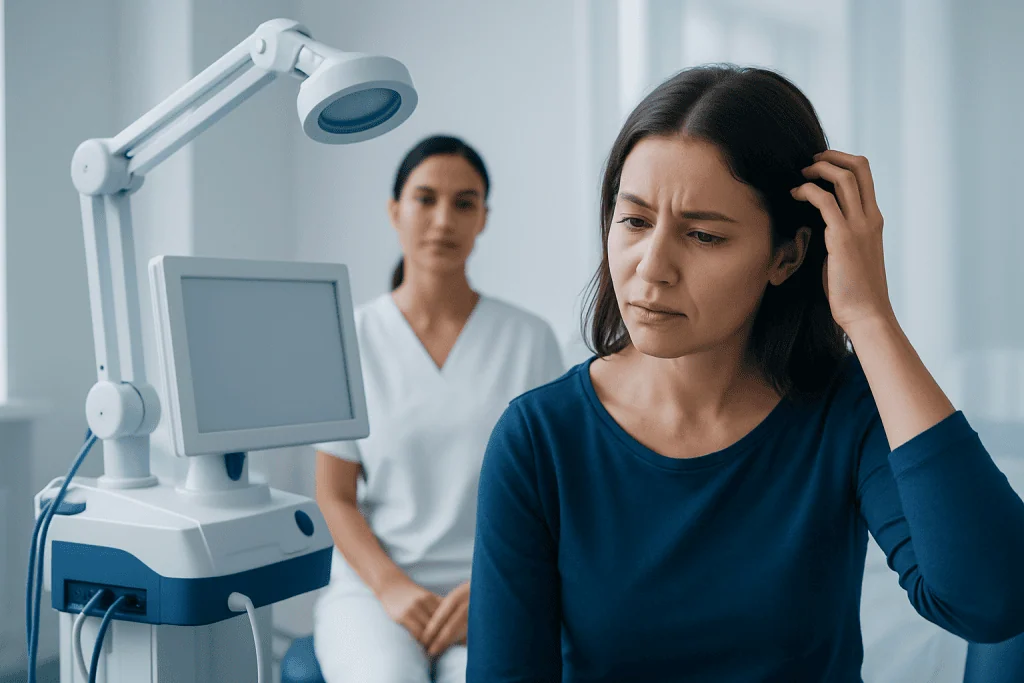
Scalp itching may happen on its own or together with visible changes in the skin and hair. Some people notice fine white flakes on dark clothing, while others develop thick scale, tender patches, or a burning sensation. The timing also matters: symptoms that flare after coloring, straightening, or trying a new shampoo may point toward irritation or allergy.
Different accompanying signs can suggest different causes. Greasy yellowish flakes and redness are common with seborrheic dermatitis. Dry, powdery flaking may be seen with simple dandruff or dry skin. Thick silvery scale can occur with scalp psoriasis, while ring-shaped patches, broken hairs, or patchy hair loss may suggest a fungal infection.
Other symptoms that deserve attention include:
- Red or swollen areas of the scalp
- Crusting, oozing, or sores from scratching
- Hair thinning or patches of hair loss
- Pain, burning, or tenderness
- Itching that spreads to the ears, face, neck, or body
- Nighttime itching or signs of lice
Even when the itching seems mild, repeated scratching can damage the skin barrier. This may increase irritation, raise the risk of infection, and make symptoms harder to control.
Common causes and related conditions

The most common cause of an itchy scalp is dandruff, often related to a mild form of seborrheic dermatitis. This can lead to flaking and itch around the scalp, hairline, eyebrows, and sides of the nose. It may be triggered or worsened by stress, cold weather, oily skin, or sensitivity to yeast that normally lives on the skin.
Dry scalp is another frequent reason. This tends to cause smaller, drier flakes and tight-feeling skin, especially in colder climates, with overwashing, or after use of harsh shampoos. Contact dermatitis is also common and can happen when the scalp reacts to hair dye, fragrance, preservatives, styling products, or chemical treatments.
Several skin conditions can involve the scalp. These include eczema, psoriasis, and in some cases acne-like inflammation of the hair follicles. A dermatologist may also consider fungal infection of the scalp, head lice, hives, or scarring disorders if the pattern is unusual or there is noticeable hair loss. When inflammatory skin disease is suspected, a fuller skin evaluation may help identify related problems such as dermatologic conditions affecting other parts of the body.
Less commonly, scalp itching may be linked to nerve-related itching or systemic illness, especially if there is little visible rash. Because of this, ongoing symptoms that do not improve with routine care should not be ignored.
Risk factors and common triggers
Some people are more likely to develop an itchy scalp because of skin type, climate, personal care habits, or an underlying medical condition. Oily skin, a history of eczema or psoriasis, and previous reactions to cosmetics can all raise the likelihood of symptoms. Hormonal changes, stress, and seasonal changes may also affect scalp oil balance and inflammation.
Hair and scalp practices play an important role. Frequent use of hot tools, bleaching, relaxing, tight hairstyles, heavy oils, dry shampoo buildup, and infrequent washing in people prone to dandruff can all worsen itching. On the other hand, excessive washing with strong cleansers may strip the scalp and increase dryness and irritation.
Helpful questions to consider include whether the itching began after a new product, whether flakes are oily or dry, and whether other household members are also itchy. These details can help distinguish between irritation, inflammatory scalp disease, infection, or infestation.
How doctors diagnose the cause
Diagnosis usually begins with a medical history and close examination of the scalp, hair, and nearby skin. A doctor may ask when the itching started, whether it comes and goes, what products are used, whether there is pain or hair loss, and what treatments have already been tried. The appearance of the scale, distribution of redness, and presence of broken hairs can all be informative.
In many cases, the diagnosis can be made during a clinic visit. If infection is suspected, the doctor may take a sample of scale or hair for testing. If allergic contact dermatitis is possible, patch testing may be considered later to identify ingredients that trigger reactions. In difficult or persistent cases, referral for specialist dermatology evaluation may be helpful.
Diagnosis matters because treatments differ. For example, antifungal shampoo may help seborrheic dermatitis but will not treat a hair dye allergy. Steroid-based scalp solutions may calm inflammation, but they are not the main treatment for lice. Matching therapy to the cause is the safest way to improve symptoms and reduce recurrence.
Treatment options for itchy scalp
Itchy scalp treatment depends on what is causing the symptom. Mild dandruff or seborrheic dermatitis often improves with medicated shampoos containing antifungal, keratolytic, or anti-inflammatory ingredients, used as directed by a clinician or product instructions. Gentle, fragrance-free shampoos and avoiding scratching can support healing.
When the scalp is inflamed, a doctor may recommend prescription scalp lotions, foams, or solutions to reduce redness and itching. If there is significant scale buildup, treatments that soften and loosen scale may be used before anti-inflammatory medicines are applied. In people with recurrent or more extensive disease, structured care through dermatology care can help tailor treatment and maintenance routines.
If contact dermatitis is the cause, the key step is stopping the triggering product. Hair dyes, fragranced products, preservatives, and certain styling agents are common culprits. Fungal infections or lice need specific treatment, and antibiotics may be required only if scratching has led to a secondary bacterial infection.
When scalp itching is part of a chronic inflammatory condition such as psoriasis, treatment may include medicated shampoos, prescription topical therapy, and management of flares over time. If thick plaques, marked inflammation, or widespread skin symptoms are present, doctors may consider more advanced skin-directed treatment approaches, including psoriasis treatment, depending on the diagnosis and severity.
Self-care and prevention
Good scalp care can reduce irritation and help prevent repeated flares. Washing often enough to remove sweat, oil, and product buildup is important, but the right frequency varies by hair type and scalp condition. People prone to dandruff often benefit from regular cleansing, while those with dry or sensitive scalps may need milder products and less aggressive washing.
Simple self-care measures include using fragrance-free or hypoallergenic hair products, rinsing thoroughly after shampoo, limiting high-heat styling, and avoiding tight hairstyles that irritate the scalp. It is also wise to patch test new products when possible and to be cautious with hair coloring or chemical treatments if there is a history of sensitivity.
Helpful prevention steps include:
- Avoid scratching, even when the scalp feels very itchy
- Keep nails short to reduce skin injury
- Wash combs, brushes, and hats regularly
- Do not share personal hair items
- Follow directions on medicated shampoos carefully
- Seek review if over-the-counter products are not helping after a reasonable trial
For people with a known scalp condition, maintenance treatment may be needed even after symptoms improve. A doctor can advise how often to use medicated shampoos or topical treatments to help prevent recurrence.
When to seek medical care
Medical care is a good idea if scalp itching lasts more than a few weeks, keeps returning, or does not improve with gentle care and appropriate over-the-counter shampoo. A professional assessment is especially important if there is a visible rash, thick scale, bleeding, crusting, or hair loss.
Prompt evaluation is also recommended when itching is severe enough to disturb sleep, affects children, or is associated with swollen lymph nodes, fever, or signs of infection. Patchy hair loss, broken hairs, or tender inflamed areas can point to causes that need specific treatment.
Because several disorders can look alike, persistent symptoms should not be self-diagnosed for too long. In more complex cases, multidisciplinary specialists at Acibadem International and its JCI-accredited hospitals evaluate scalp and skin complaints for international patients and guide treatment based on the underlying cause.
Frequently asked questions
What is the best itchy scalp treatment?
The best itchy scalp treatment depends on the cause. Dandruff, dry skin, allergic reactions, psoriasis, fungal infection, and lice can all cause similar itching but need different approaches. If symptoms persist or the scalp looks inflamed, a medical assessment helps guide the right treatment.
Can dandruff cause an itchy scalp?
Yes. Dandruff is one of the most common reasons for scalp itching, and it often overlaps with seborrheic dermatitis. Medicated shampoos and gentle scalp care are often helpful, but ongoing symptoms may need medical review.
Why does my scalp itch but I do not see dandruff?
An itchy scalp without visible flakes can happen with product irritation, allergy, dry skin, nerve-related itch, or early inflammatory skin disease. Sometimes the rash is subtle or hidden by hair. If the symptom continues, a doctor can look for less obvious causes.
When should scalp itching be checked by a doctor?
It is sensible to seek care if itching lasts more than a few weeks, keeps coming back, or does not respond to suitable over-the-counter treatment. A doctor should also assess redness, sores, oozing, pain, or hair loss. Children and anyone with possible infection should be checked sooner.
Can hair products cause an itchy scalp?
Yes. Shampoos, conditioners, dyes, fragrances, preservatives, and styling products can irritate the scalp or trigger allergic contact dermatitis. Symptoms often begin after a new product or chemical treatment and may improve once the trigger is avoided.
Does scratching make an itchy scalp worse?
Yes. Scratching can damage the skin barrier, increase inflammation, and lead to sores or infection. It may also make the itching feel more intense over time, so calming the scalp and treating the cause is important.
References
- American Academy of Dermatology
- National Institute of Arthritis and Musculoskeletal and Skin Diseases
- Mayo Clinic
- National Health Service
- DermNet
This article is for general information only and is not a substitute for professional medical advice. Please consult a qualified doctor about your individual situation.
Hair transplant in Turkey — costs, graft counts & a free assessment
JCI-accredited · board-certified surgeons · reply within 24h
Add us as a Preferred Source to see more of our trusted health content across Google Search, AI Overviews and Discover.