Vampire Breast Lift: What Is Normal, What Is Not, and When to Seek Care

A vampire breast lift is a non-surgical cosmetic procedure that uses platelet-rich plasma, often with hyaluronic acid filler, to improve breast skin quality and upper-pole fullness. Mild bruising, swelling, tenderness, and temporary unevenness are common early effects and usually settle within days to weeks.
Key Takeaways
- A vampire breast lift is a non-surgical cosmetic procedure that uses platelet-rich plasma, often with hyaluronic acid filler, to improve breast skin quality and upper-pole fullness.
- Mild bruising, swelling, tenderness, and temporary unevenness are common early effects and usually settle within days to weeks.
- Infection, allergic reactions, vascular complications, or persistent lumps are uncommon but important reasons to seek medical care.
- This procedure does not replace a surgical breast lift and cannot correct significant sagging or major volume loss.
- Anyone considering or recovering from treatment should follow aftercare instructions and keep routine breast screening up to date.
A vampire breast lift usually causes short-term swelling, bruising, tenderness, and a feeling of fullness that improve over days to weeks. It is not normal to have worsening pain, marked asymmetry, spreading redness, drainage, fever, or any concerning breast lump, and these symptoms should be assessed by a qualified doctor.
Overview: what a vampire breast lift is and what to expect
A vampire breast lift is a cosmetic procedure that uses platelet-rich plasma (PRP), prepared from a person’s own blood, and sometimes a dermal filler to improve the appearance of the breasts. It is designed to create subtle changes such as smoother skin, mild upper-breast fullness, and a more refreshed look. It is not the same as a surgical breast lift, and it does not remove skin or reposition the nipple.
For most people, normal short-term effects include mild swelling, bruising, tenderness, and a feeling of fullness where injections were placed. These effects usually improve gradually over several days, although some minor changes can take a few weeks to settle fully. Many people also notice temporary unevenness at first because swelling does not always develop equally on both sides.
What is not considered normal is a pattern of worsening symptoms rather than improvement. Increasing pain, hot or spreading redness, pus-like drainage, severe one-sided swelling, fever, skin color changes, or a new lump that does not resolve should be checked by a medical professional. Because the breasts can also develop unrelated conditions, persistent changes should never be assumed to be from cosmetic treatment alone.
What is considered normal after a vampire breast lift
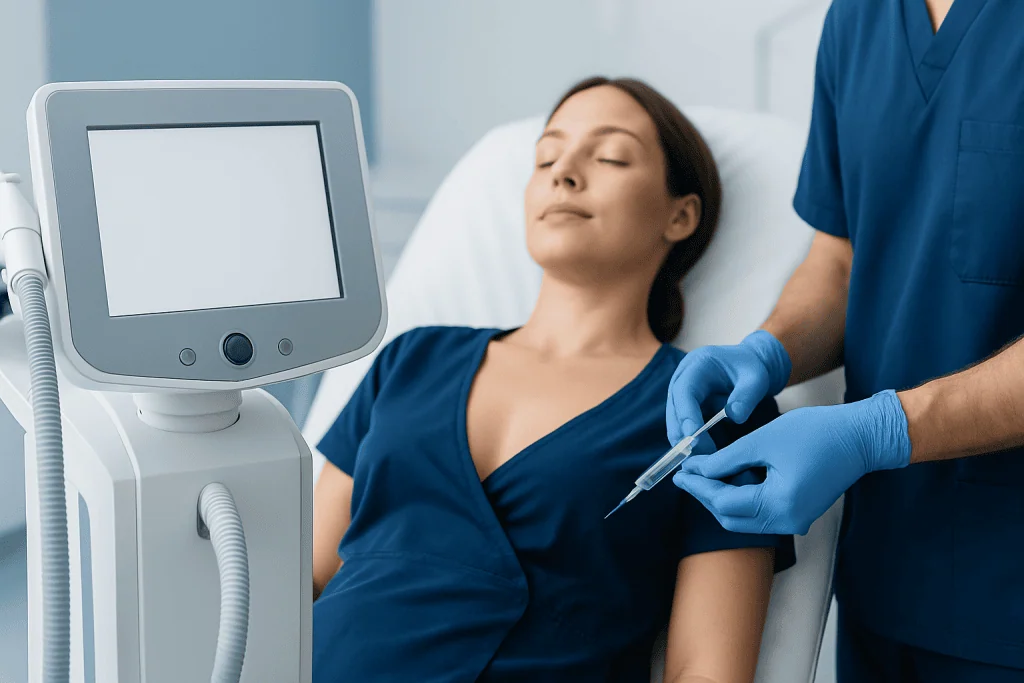
After the procedure, the treated area often looks fuller and slightly swollen. This can make the early result seem more dramatic than the final outcome. Mild bruising at blood draw or injection sites is common, especially in people who bruise easily. Tenderness or a tight, heavy feeling may also occur for a short time.
Skin changes can also be part of normal healing. Small needle marks, temporary redness, and minor itching may appear as the skin recovers. If filler was used, small areas of firmness can sometimes be felt at first. These usually soften as swelling decreases and the product settles.
Normal recovery is generally characterized by steady improvement. Common experiences include:
- Mild to moderate swelling that peaks early and then eases
- Bruising that fades over one to two weeks
- Tenderness with pressure, movement, or sleep position changes
- Temporary asymmetry related to uneven swelling
- A subtle sense of fullness or heaviness
People should still keep in mind that “normal” varies from person to person. Medical history, skin quality, breast size, use of anticoagulants or supplements, and whether filler was added can all affect recovery.
What is not normal: warning signs to take seriously
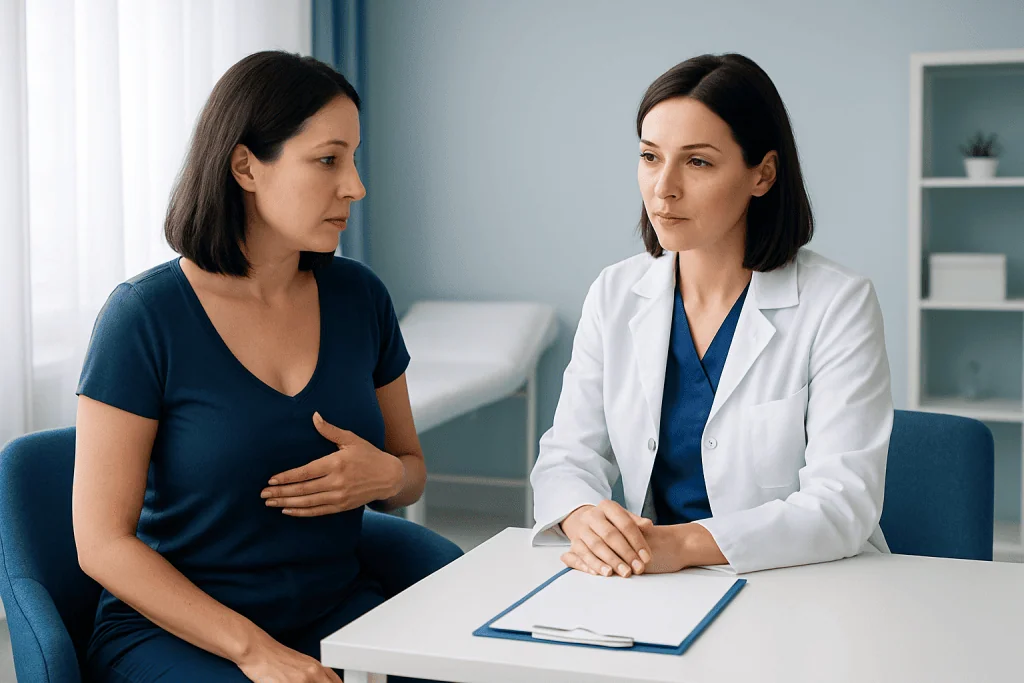
Some symptoms deserve prompt medical attention because they may suggest infection, bleeding, a reaction to filler, or another complication. Pain that becomes stronger after the first day or two, rather than gradually improving, is one of the clearest warning signs. The same is true for redness that spreads, warmth that intensifies, or skin that looks dusky, pale, or mottled.
Although PRP comes from the patient’s own blood, the procedure still involves needles and, in some cases, filler products. This means there remains a risk of infection, inflammatory reactions, or fluid collection. A breast that becomes significantly more swollen than the other, develops a hard enlarging area, or leaks cloudy or bloody fluid should be assessed promptly.
Other concerning symptoms include:
- Fever or feeling generally unwell
- Persistent or severe one-sided breast pain
- A new lump that does not improve as bruising resolves
- Nipple discharge unrelated to healing at an injection site
- Shortness of breath, dizziness, or generalized allergic symptoms
- Skin breakdown, blistering, or blackened skin
Not every problem after a cosmetic breast procedure is caused by the procedure itself. Breast pain, lumps, or skin changes can also reflect common breast conditions that need proper evaluation, including breast cancer or benign changes such as breast cysts. That is why persistent or unexplained symptoms should not be ignored.
Who may be a good candidate, and who needs extra caution
A vampire breast lift is generally considered for adults who want subtle cosmetic improvement without surgery. People often seek it for mild loss of upper-breast fullness, fine wrinkling of the cleavage area, or a less firm appearance after weight change, aging, or pregnancy. Expectations matter: the treatment cannot reliably correct significant sagging, large volume loss, or marked asymmetry.
Extra caution is needed in people with active skin infection, unexplained breast symptoms, bleeding disorders, autoimmune conditions affecting healing, or a history of strong reactions to fillers. Anyone who is pregnant or breastfeeding should discuss timing carefully with a doctor, as cosmetic injections are usually deferred. Medications and supplements that increase bleeding risk may also affect bruising and recovery.
It is especially important to evaluate any breast lump, skin dimpling, new nipple inversion, or unusual discharge before cosmetic treatment. Procedures intended to improve appearance should not delay appropriate breast assessment. In some situations, imaging or specialist review may be recommended first to rule out underlying disease.
How doctors evaluate symptoms after the procedure
If a person develops unexpected symptoms after a vampire breast lift, a clinician will usually begin with a detailed history and physical examination. They may ask when symptoms started, whether they are improving or worsening, what products were injected, and whether there are signs such as fever, drainage, or skin color change. This helps distinguish normal healing from complications that need treatment.
When there is a persistent lump, significant asymmetry, or concern for fluid collection, imaging may be helpful. Breast ultrasound is often used to look for hematoma, seroma, cysts, or other focal findings. In some cases, especially based on age or symptoms, the doctor may also recommend routine or diagnostic mammography or further breast imaging.
If symptoms suggest infection, the doctor may consider blood tests or sampling of any drainage. If filler-related complications are suspected, management depends on the product used and the tissue findings. The main goal is to identify whether the issue is routine post-procedure change, a treatable complication, or an unrelated breast condition that needs formal investigation.
Treatment and aftercare for common concerns
For expected recovery symptoms, aftercare is usually supportive. Clinicians often advise keeping the area clean, avoiding unnecessary pressure, and limiting strenuous upper-body activity for a short period. Cool compresses may help reduce swelling or tenderness, but they should be used gently and according to the treating clinician’s instructions. People should avoid manipulating firm areas unless specifically advised, because repeated pressure can worsen irritation.
If bruising and soreness are mild, symptoms usually improve with time and routine comfort measures. A properly fitted supportive bra may feel more comfortable during early healing. However, any self-care plan should follow the individual post-procedure instructions given by the treating doctor, especially if both PRP and filler were used.
When a complication is suspected, treatment depends on the cause. Infection may require antibiotics, drainage, or close monitoring. Significant collections of blood or fluid may need aspiration or another procedure. If symptoms point to an underlying breast disorder rather than a procedural side effect, referral to a breast specialist and targeted testing may be needed. Depending on findings, evaluation can involve breast ultrasound or consultation in a breast health clinic.
Near the end of the care pathway, some patients benefit from coordinated review by plastic surgery, dermatology, radiology, and breast specialists. Acibadem International’s multidisciplinary specialists and JCI-accredited hospitals diagnose and treat breast-related concerns for international patients when further evaluation is needed.
Prevention, self-care, and setting realistic expectations
The best way to reduce avoidable problems is careful patient selection and treatment by a qualified clinician who works in an appropriate medical setting. Before the procedure, patients should share their full medical history, including breast symptoms, prior surgeries, allergies, and all medicines or supplements. They should also understand exactly what is being injected, what results are realistic, and what side effects to expect.
After treatment, following aftercare instructions matters as much as the procedure itself. This may include avoiding intense exercise for a short time, not applying pressure to the breasts, attending follow-up visits, and monitoring the skin for changes. Taking photographs during recovery can sometimes help patients and clinicians judge whether swelling and bruising are actually improving.
Routine breast awareness remains important. Cosmetic procedures do not replace age-appropriate breast screening or evaluation of new symptoms. A person should continue regular medical care and discuss any persistent lumps, skin dimpling, nipple changes, or unusual discharge even if they recently had an aesthetic treatment.
When to seek medical care
Medical care should be sought promptly if there is rapidly increasing pain, marked one-sided swelling, spreading redness, fever, chills, pus-like drainage, or skin that turns pale, blue, purple, or black. These symptoms can signal infection, bleeding, or impaired blood supply and should not be managed at home alone.
A doctor should also evaluate any lump or area of firmness that does not improve as swelling settles, as well as nipple discharge, persistent asymmetry, or a breast that remains unusually warm and tender. If symptoms are severe, especially if they are accompanied by shortness of breath, dizziness, or generalized hives, urgent medical attention is appropriate.
Even when symptoms seem mild, it is reasonable to contact the treating clinician if recovery does not follow the expected pattern. A brief review can often provide reassurance, and it may identify a problem early when treatment is simpler and more effective.
Frequently asked questions
How long do swelling and bruising last after a vampire breast lift?
Mild swelling and bruising often improve over several days and may take one to two weeks to settle more fully. Small differences between the two breasts can occur during this time because healing is not always perfectly symmetrical.
Can a vampire breast lift cause lumps?
Temporary firmness or small areas of swelling can happen after injections and may soften as healing progresses. A lump that persists, enlarges, becomes painful, or appears unrelated to bruising should be checked by a doctor to rule out a complication or another breast condition.
Is a vampire breast lift the same as a surgical breast lift?
No. A vampire breast lift is a non-surgical cosmetic procedure intended for subtle improvement in skin texture or fullness. It cannot remove excess skin or reliably correct significant sagging the way surgery can.
When should someone worry about redness after the procedure?
Mild, localized redness near injection sites can be part of normal healing. Redness that spreads, becomes hot or increasingly painful, or is accompanied by fever or drainage may suggest infection or inflammation and needs medical review.
Can someone have breast screening after a vampire breast lift?
Yes, but they should tell the imaging team about recent cosmetic breast procedures. If there is active swelling, bruising, or a new lump, the doctor may advise the best timing and type of imaging so findings can be interpreted accurately.
Who should avoid or postpone a vampire breast lift?
People with active infection, unexplained breast symptoms, certain bleeding problems, or significant medical conditions affecting healing may need to avoid or delay treatment. Pregnancy and breastfeeding are also times when elective cosmetic injections are usually postponed after discussion with a clinician.
References
- American Society of Plastic Surgeons
- American College of Radiology
- U.S. Food and Drug Administration
- American Cancer Society
- National Health Service
This article is for general information only and is not a substitute for professional medical advice. Please consult a qualified doctor about your individual situation.
Explore treatments in Turkey — costs, top hospitals & a free quote
JCI-accredited · board-certified surgeons · reply within 24h
Add us as a Preferred Source to see more of our trusted health content across Google Search, AI Overviews and Discover.

Plastic, Reconstructive & Aesthetic Surgery
Reconstructive and aesthetic procedures for the face and body, performed by experienced surgeons.
35 specialists in this unit