Can Red Light Therapy Cause Cancer? A Doctor-Reviewed Answer

There is no strong evidence that red light therapy causes cancer when used as directed. Red light therapy uses non-ionizing light, which is different from radiation known to damage DNA and increase cancer risk.
Key Takeaways
- There is no strong evidence that red light therapy causes cancer when used as directed.
- Red light therapy uses non-ionizing light, which is different from radiation known to damage DNA and increase cancer risk.
- Temporary warmth, redness, or irritation can happen, especially with overuse or sensitive skin.
- People with a history of skin cancer, suspicious moles, or unexplained skin changes should seek medical advice before or during use.
- A doctor may examine the skin, review the device and exposure history, and arrange tests such as dermoscopy or biopsy if needed.
Current evidence suggests red light therapy does not cause cancer when it is used appropriately and with suitable devices. Most reactions are mild and temporary, but new or changing skin lesions should be assessed by a doctor rather than assumed to be harmless.
Overview: what the evidence says
For most people, the short answer is no: current medical evidence does not show that red light therapy causes cancer when it is used as directed. Red light therapy uses visible red or near-infrared light, which is non-ionizing. This means it does not carry the same known DNA-damaging cancer risk as ionizing radiation such as X-rays or ultraviolet light from excessive sun exposure.
That said, a reassuring answer should still leave room for sensible caution. If a person develops a new lump, a changing mole, a sore that does not heal, or a patch of skin that bleeds or crusts, those changes should not be blamed on a device without medical review. In many cases the issue is unrelated or benign, but persistent skin changes deserve proper assessment.
This is also why context matters. Red light therapy is used for a range of cosmetic and symptom-related reasons, but safety depends on the condition being treated, the type of device, the length of exposure, and the health of the skin underneath. A doctor’s approach is usually practical: first explain why cancer risk is generally considered low, then identify any red flags, and then examine the skin or tissue if something seems unusual.
Why red light therapy is generally not considered carcinogenic
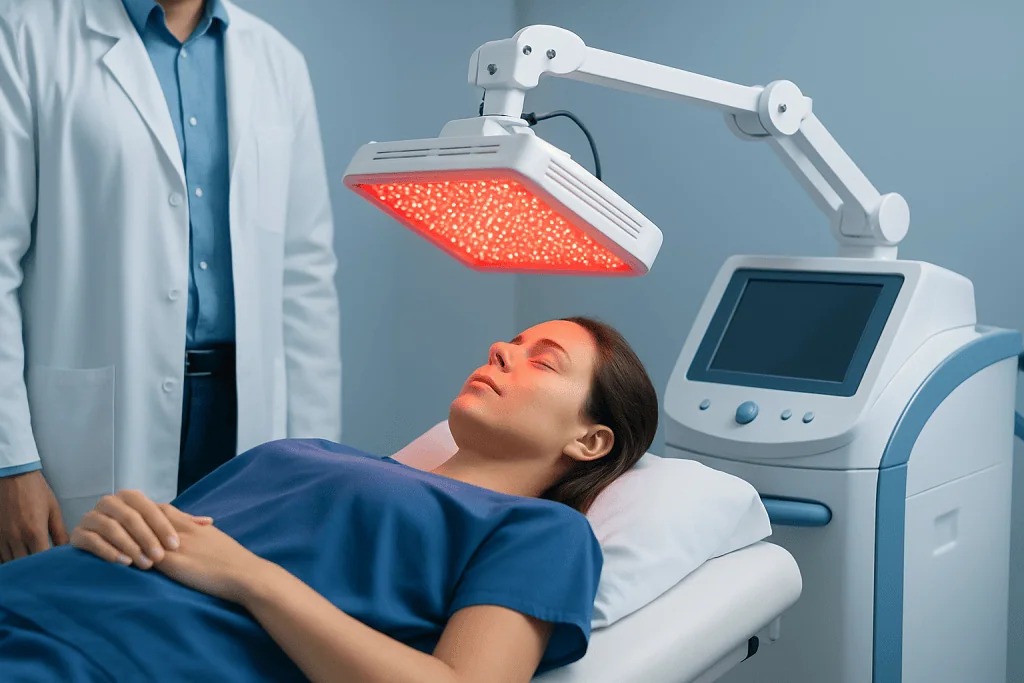
The main reason red light therapy is not generally considered carcinogenic is the type of energy it uses. Cancer risk from light exposure is classically linked to ultraviolet radiation, especially UVB and UVA, because these wavelengths can directly or indirectly damage DNA. Red and near-infrared light do not behave in the same way.
Instead, red light therapy is thought to work mainly by interacting with structures inside cells, especially mitochondria, in ways that may influence energy production and cellular signaling. This is sometimes called photobiomodulation. In clinical and research settings, the concern is usually not that it creates cancer, but whether it might irritate skin, be used incorrectly, or be applied over a lesion that has not yet been diagnosed.
It is important to separate “does not appear to cause cancer” from “appropriate for every situation.” Evidence does not support using red light to diagnose skin lesions at home or to ignore suspicious symptoms. If a person already has a known or suspected skin tumor, a dermatologist or oncologist should guide what is safe and what should be avoided.
Possible side effects and the red flags that need review

Most side effects linked to red light therapy are mild and short-lived. Some people notice temporary warmth, redness, dryness, tightness, or mild irritation of the skin. These effects are more likely if the device is used too close to the skin, for too long, or more often than recommended.
There are, however, certain changes that should prompt medical review rather than self-treatment. These include a new mole, a mole that changes in color or shape, a sore that does not heal, bleeding, crusting, unexplained pain, a growing lump, or a patch of skin that keeps returning after seeming to improve. These warning signs do not mean cancer is likely, but they should not be overlooked.
People with very sensitive skin, photosensitivity disorders, a personal history of skin cancer, or a strong family history of melanoma should be especially cautious. If there is any doubt about whether a mark could represent skin cancer, stopping home treatment and arranging a skin examination is the safer choice.
- Common mild effects: brief redness, warmth, dryness, irritation
- Use caution with: broken skin, active rashes, photosensitive conditions, uncertain diagnoses
- Seek review for: changing moles, non-healing sores, bleeding spots, growing lumps
Who should be more careful before using it
Although red light therapy is often well tolerated, some groups should ask a doctor before starting it. This includes people with a previous skin cancer diagnosis, many atypical moles, unexplained pigmentation changes, chronic wounds, autoimmune skin disease, or medication-related photosensitivity. Even if the therapy itself is not known to cause cancer, these situations can make self-assessment less reliable.
People using devices around the face or scalp should also be careful not to miss unrelated conditions. For example, persistent scaling, itching, or patches of discoloration may reflect inflammatory skin disease, infection, or sun damage rather than a reaction to light treatment. When a skin concern is persistent, a doctor may need to distinguish it from benign disorders and from lesions that require biopsy.
Patients undergoing cancer treatment should only use red light therapy with guidance from their treating team. In some supportive care settings, doctors may discuss symptom-directed options alongside standard care, but the decision depends on the diagnosis, treatment plan, and body area involved. Broader cancer concerns are best addressed in a specialist setting such as cancer care when needed.
How doctors evaluate a suspicious skin change
If a person is worried that red light therapy may have caused a harmful change, the medical assessment usually begins with a clear history. A doctor will ask when the lesion appeared, how it has changed, whether there is itching, pain, bleeding, or crusting, and what kind of device was used. They may also ask about sun exposure, tanning bed use, family history, previous skin biopsies, and any photosensitizing medications.
The next step is a careful physical examination. A dermatologist may inspect the entire area, compare both sides of the body, and use dermoscopy to look at pigment patterns and blood vessels more closely. This helps distinguish harmless irritation from lesions that may need further testing.
If a spot remains suspicious, the definitive test is often a biopsy. This allows the tissue to be examined under a microscope to confirm whether the change is benign, precancerous, or cancerous. Depending on the findings, additional care may involve dermatology evaluation or referral for oncology care if a malignancy is diagnosed.
Safe use and practical self-care
Safe use starts with realistic expectations and careful device selection. A person should follow the manufacturer’s instructions, avoid longer sessions than recommended, and stop if the skin becomes increasingly irritated. Eye protection may be advised depending on the device and treatment area, and devices should never be shared if hygiene cannot be maintained.
It also helps to treat red light therapy as one part of skin care rather than a replacement for medical diagnosis. Any lesion that is new, changing, painful, or bleeding should be checked before further sessions. Keeping simple photo records of a spot can be useful, but self-monitoring should not delay expert assessment.
General skin protection remains important because the better-established cancer risks come from other exposures, especially ultraviolet light. Regular sun protection, avoiding tanning beds, and prompt evaluation of suspicious lesions are more important for cancer prevention than avoiding properly used red light therapy.
Near the end of the care pathway, some people may need coordinated specialist review for diagnosis and treatment of uncertain skin findings. Acibadem International’s multidisciplinary specialists in JCI-accredited hospitals diagnose and treat skin and cancer-related conditions for international patients when further evaluation is needed.
When to seek medical care
Medical care is appropriate if a person notices a new or changing mole, a sore that does not heal within a few weeks, bleeding or crusting skin, a rapidly growing bump, or any lesion that looks very different from other marks on the body. Care is also important if redness, swelling, burning, or pain after red light therapy is severe or keeps recurring.
A prompt appointment is especially wise for anyone with a personal history of skin cancer, a weakened immune system, or many atypical moles. In these situations, a clinician may recommend a full skin examination and, if needed, further evaluation through a medical check-up. Most concerns turn out not to be cancer, but a professional assessment is the safest way to know.
If symptoms are severe, spreading quickly, or accompanied by fever or signs of infection, urgent medical advice is appropriate. Home devices can be helpful for some people, but they should never replace an expert review of suspicious skin changes.
Frequently asked questions
Can red light therapy cause cancer?
Current evidence does not show that red light therapy causes cancer when it is used correctly. It uses non-ionizing light, which is different from ultraviolet radiation and other forms of energy known to increase cancer risk. If a suspicious skin change appears, it should still be checked by a doctor.
Is red light therapy safer than tanning beds?
Yes, they are very different exposures. Tanning beds use ultraviolet radiation, which is a known risk factor for skin cancer, while red light therapy uses non-ionizing red or near-infrared wavelengths. Even so, red light therapy should be used according to instructions and not over suspicious lesions.
Can red light therapy make an existing cancer worse?
This question depends on the type of cancer, the body area, and the treatment context. People with known or suspected cancer should speak with their specialist before using red light therapy on or near the affected area. Medical guidance is important because home devices are not a substitute for cancer treatment or monitoring.
What skin changes after red light therapy should be checked?
A new mole, a mole that changes color or shape, a bleeding or crusting spot, a sore that does not heal, or a lump that keeps growing should all be assessed. These changes do not automatically mean cancer, but they warrant professional evaluation. Persistent irritation or pain should also be reviewed.
Can red light therapy burn the skin?
It can sometimes cause mild irritation, warmth, or redness, especially if used too long or too close to the skin. True burns are uncommon with proper use, but irritation may occur with sensitive skin or misuse. Stopping treatment and seeking advice is sensible if symptoms are significant or persistent.
Should people with a history of skin cancer avoid red light therapy?
They should not make that decision alone. A history of skin cancer means any new skin symptom deserves careful review, and a doctor can advise whether red light therapy is appropriate for a specific area. In many cases, the key issue is not proven cancer risk from red light itself, but avoiding delayed diagnosis of a new lesion.
References
- American Academy of Dermatology
- National Cancer Institute
- U.S. Food and Drug Administration
- World Health Organization
- American Cancer Society
This article is for general information only and is not a substitute for professional medical advice. Please consult a qualified doctor about your individual situation.
Oncology care in Turkey — second opinion and treatment plan
JCI-accredited · board-certified surgeons · reply within 24h
Add us as a Preferred Source to see more of our trusted health content across Google Search, AI Overviews and Discover.