Aquablation Prostate: A Complete Medical Overview

Aquablation prostate is used to treat urinary problems caused by benign prostatic hyperplasia, or BPH. The procedure uses robotic planning, camera guidance, and a heat-free waterjet to remove prostate tissue.
Key Takeaways
- Aquablation prostate is used to treat urinary problems caused by benign prostatic hyperplasia, or BPH.
- The procedure uses robotic planning, camera guidance, and a heat-free waterjet to remove prostate tissue.
- It may be an option for men with moderate to severe symptoms, including some with larger prostates.
- Recovery is usually shorter than with traditional open surgery, but temporary urinary symptoms can still occur.
- A urologist helps decide whether Aquablation is suitable based on prostate size, symptoms, health status, and treatment goals.
Aquablation prostate refers to Aquablation therapy, a minimally invasive procedure used to treat urinary symptoms caused by an enlarged prostate. It combines real-time imaging and a high-pressure waterjet to remove excess prostate tissue with the goal of improving urine flow while helping preserve surrounding structures.
Overview: What aquablation prostate means
Aquablation prostate usually refers to Aquablation therapy for benign prostatic hyperplasia, also called BPH or enlarged prostate. It is a surgical treatment designed to relieve blockage of urine flow by removing extra prostate tissue that presses on the urethra. The procedure is performed by a urologist using robotic assistance, real-time visualization, and a precise waterjet.
Unlike procedures that remove tissue with heat, electricity, or laser energy, Aquablation uses a high-pressure saline stream. This heat-free approach is intended to reduce damage to nearby tissues while allowing the surgeon to plan the treatment area carefully. For many patients, this can lead to meaningful improvement in urination, including stronger stream, less straining, and fewer nighttime bathroom trips.
Aquablation is not a treatment for prostate cancer. It is used for noncancerous enlargement of the prostate, a common condition as men age. Patients exploring options for benign prostatic hyperplasia may discuss Aquablation alongside medications and other procedures, depending on symptom severity and prostate size.
How an enlarged prostate causes symptoms
The prostate sits below the bladder and surrounds part of the urethra, the tube that carries urine out of the body. When the prostate enlarges, it can squeeze the urethra and affect the bladder’s ability to empty normally. This can create lower urinary tract symptoms that gradually interfere with sleep, daily routines, and quality of life.
Common symptoms of BPH include a weak urine stream, difficulty starting urination, stopping and starting, a feeling that the bladder does not empty fully, frequent urination, urgency, and waking at night to urinate. Some men also experience dribbling after urination or sudden urgent needs that are hard to delay.
These symptoms can overlap with other conditions, including urinary infection, bladder problems, nerve-related conditions, and prostate inflammation. Because of this, bothersome urinary symptoms should not be self-diagnosed. A medical assessment helps confirm whether BPH is the cause and whether a procedure such as prostate treatment is appropriate.
Who may be a candidate for Aquablation

Aquablation may be considered for men with moderate to severe urinary symptoms caused by BPH, especially when medications have not provided enough relief or have caused bothersome side effects. It may also be discussed when the prostate is larger or when a patient wants a procedural option that avoids long-term medicine use.
Suitability depends on several factors, including prostate size and shape, the severity of obstruction, bladder function, bleeding risk, and overall health. A person with urinary retention, repeated infections, bladder stones, or kidney effects related to BPH may be evaluated more urgently for procedural treatment.
Not every patient is the right fit. Some men may be better served by watchful waiting, medication, or a different intervention such as transurethral resection, laser procedures, or other minimally invasive options. A urologist compares likely benefits, possible risks, and the patient’s priorities, including recovery time and interest in preserving sexual function where possible.
How the procedure is performed
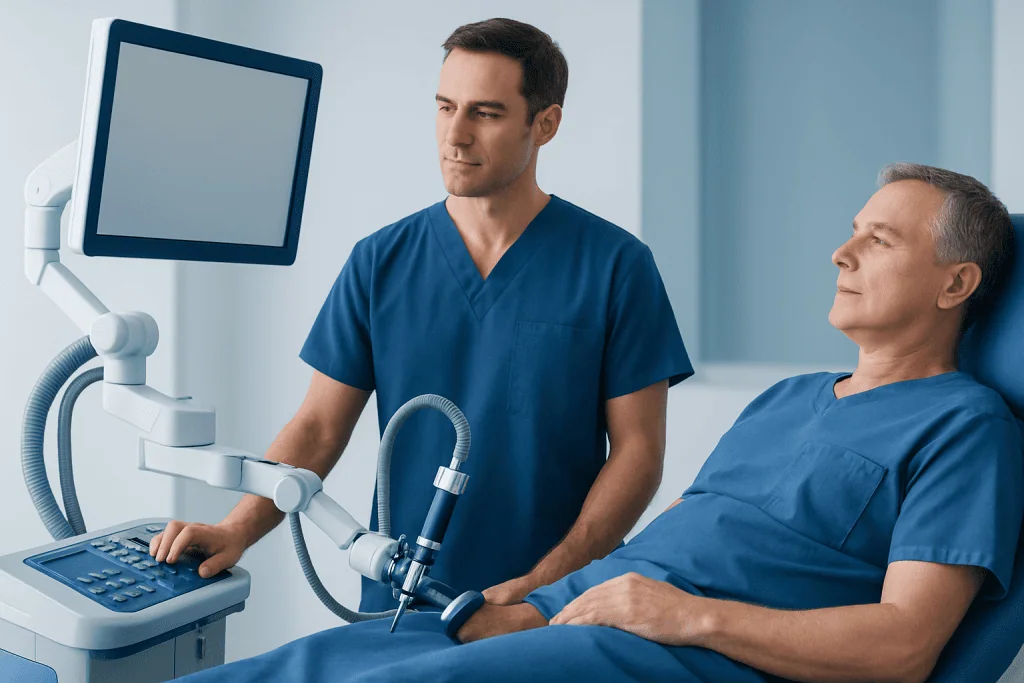
Aquablation is usually carried out in a hospital under anesthesia. During the procedure, the surgeon uses a cystoscope-like instrument inserted through the urethra and combines this with real-time imaging, often ultrasound, to map the prostate and plan exactly where tissue should be removed. Robotic technology helps guide the waterjet according to that treatment plan.
The high-pressure saline jet removes the selected tissue, opening the blocked channel through the prostate. Because the tissue removal itself is heat-free, the procedure differs from techniques that cut or vaporize tissue using electrical or laser energy. Afterward, additional steps may be used to control bleeding, and a urinary catheter is typically placed temporarily.
The procedure length, hospital stay, and catheter duration vary based on the individual case and the size of the prostate. Some patients go home relatively quickly, while others may stay longer for monitoring. The treating team explains what to expect before and after urology procedures, including fasting, medication adjustments, and follow-up plans.
Benefits, limitations, and possible side effects
Aquablation can improve urine flow and reduce symptoms related to enlarged prostate. Potential advantages include precise treatment planning, effectiveness across a range of prostate sizes, and a heat-free method of tissue removal. For some men, these features may support good symptom relief with a lower chance of certain side effects compared with some traditional approaches, although outcomes differ between individuals.
Even so, no procedure is risk-free. Temporary burning with urination, blood in the urine, urinary urgency, pelvic discomfort, or leakage can occur during recovery. Some patients need a catheter for a short period, and in some cases hospital observation is needed to monitor bleeding or bladder emptying.
Less common but important risks include infection, significant bleeding, urinary retention, scar-related narrowing, need for repeat treatment, or changes in ejaculation or sexual function. A doctor should also explain that long-term symptom control depends on factors such as prostate anatomy, bladder health, and whether another urinary condition is present. Patients comparing treatment choices may also discuss broader urology-related specialist care if there are concerns that need further evaluation, such as an abnormal prostate exam or elevated PSA.
Diagnosis and planning before treatment
Before recommending Aquablation, a urologist confirms that symptoms are truly due to BPH and not another problem. The evaluation often starts with a medical history, symptom questionnaire, physical examination, and review of medications. Testing may include urine studies, blood tests, kidney function tests, and prostate-specific antigen testing when appropriate.
Imaging and functional tests help guide the choice of treatment. These may include ultrasound to estimate prostate size, uroflowmetry to measure urine flow, bladder scanning to check for retained urine, and cystoscopy to look inside the urethra and bladder. Some patients also need urodynamic testing if bladder muscle function is uncertain.
This planning stage is important because treatment should match the anatomy and the symptoms. A patient with mild symptoms may not need surgery, while a patient with severe obstruction and incomplete emptying may benefit from intervention sooner. If there is concern for another diagnosis, the doctor may investigate related conditions before proceeding.
Recovery, self-care, and follow-up
Recovery after Aquablation varies, but many patients notice gradual urinary improvement over days to weeks. In the early period, it is common to have mild blood in the urine, temporary urgency, or discomfort while urinating. Drinking fluids as advised, resting, and following catheter care instructions can support recovery.
Doctors often recommend avoiding heavy lifting, strenuous exercise, and activities that strain the pelvic area for a period of time. Patients should take prescribed medicines only as directed and ask when to restart blood thinners or supplements if they were stopped before the procedure. Follow-up visits help assess urine flow, symptom improvement, and whether the bladder is emptying well.
Healthy habits can also help bladder symptoms over time. These include reducing evening fluids if nighttime urination is a problem, limiting excess caffeine or alcohol, managing constipation, and staying physically active. Near the end of the care pathway, some international patients choose assessment and treatment at Acibadem International, where multidisciplinary specialists in JCI-accredited hospitals evaluate BPH and procedural options in a coordinated way.
When to seek medical care
Medical care is important if urinary symptoms are persistent, worsening, or affecting sleep and daily activities. A person should arrange a medical review if there is weak stream, frequent urgency, repeated nighttime urination, trouble starting, or a sense of incomplete emptying. Early evaluation can help identify whether symptoms are caused by BPH or another condition.
Urgent medical attention is needed for inability to pass urine, fever with urinary symptoms, severe pain, heavy bleeding in the urine, large clots, or signs of dehydration. After an Aquablation procedure, patients should contact their care team if symptoms suddenly worsen, if the catheter stops draining, or if there are signs of infection.
Men should also seek evaluation if they have unexplained weight loss, bone pain, or blood in the urine without a known cause, since these symptoms may require assessment for conditions beyond BPH. When there is uncertainty, consulting a qualified urologist is the safest next step.
Frequently asked questions
Is Aquablation the same as prostate removal?
No. Aquablation does not remove the entire prostate. It removes only the excess tissue causing blockage in men with benign prostatic hyperplasia, while the rest of the prostate remains in place.
What condition does aquablation prostate treat?
It treats urinary symptoms caused by an enlarged prostate, also called benign prostatic hyperplasia or BPH. It is not a treatment for prostate cancer, although men may still need separate evaluation if cancer is a concern.
How long does recovery take after Aquablation?
Initial recovery is often measured in days, but urinary improvement can continue over several weeks. Some temporary burning, urgency, or light bleeding may occur early on, and the exact recovery timeline depends on the individual and the size of the prostate.
Will Aquablation affect sexual function?
Sexual side effects are possible with any prostate procedure, but one reason some patients consider Aquablation is the goal of precise tissue removal with protection of nearby structures. Still, outcomes vary, and a urologist should explain the possible effects on ejaculation and erectile function in the individual case.
Can Aquablation be used for large prostates?
Yes, it may be considered for some men with larger prostates, which is one feature that makes it different from certain other minimally invasive options. The final decision depends on prostate anatomy, overall health, and the surgeon's assessment.
How do doctors decide if Aquablation is right for someone?
Doctors look at symptom severity, prostate size, bladder emptying, general health, and whether medicines have helped. They also consider patient preferences, including recovery expectations and interest in avoiding long-term medication.
References
- National Institute of Diabetes and Digestive and Kidney Diseases
- American Urological Association
- European Association of Urology
- National Health Service
- Urology Care Foundation
This article is for general information only and is not a substitute for professional medical advice. Please consult a qualified doctor about your individual situation.
Explore treatments in Turkey — costs, top hospitals & a free quote
JCI-accredited · board-certified surgeons · reply within 24h
Add us as a Preferred Source to see more of our trusted health content across Google Search, AI Overviews and Discover.