Kick in the Testicles: An Evidence-Based Guide for Patients

A kick in the testicles often causes brief severe pain, but symptoms should steadily improve over minutes to hours. Urgent evaluation is important if pain is intense, lasts longer than about an hour, or comes with swelling, vomiting, bruising, or trouble urinating.
Key Takeaways
- A kick in the testicles often causes brief severe pain, but symptoms should steadily improve over minutes to hours.
- Urgent evaluation is important if pain is intense, lasts longer than about an hour, or comes with swelling, vomiting, bruising, or trouble urinating.
- Doctors may use an examination and scrotal ultrasound to look for bleeding, rupture, or reduced blood flow.
- Self-care includes rest, scrotal support, ice wrapped in cloth, and avoiding strenuous activity until symptoms settle.
- Not every painful blow is an emergency, but it is safest to seek medical care if symptoms feel disproportionate or are getting worse.
A kick in the testicles commonly causes sudden intense pain, nausea, and short-term tenderness that improve with rest and support. However, severe or persistent symptoms can signal a more serious testicular injury and should be assessed promptly by a doctor.
Overview
A kick in the testicles usually causes sudden, sharp pain because the testicles are highly sensitive and have a rich nerve supply. Many minor injuries improve with rest, support, and time, but some blows can damage the scrotum or testicle and require urgent care.
The main concern after a direct hit is whether the injury is only a bruise or whether there is a problem such as bleeding inside the scrotum, a tear in the protective covering of the testicle, or interrupted blood flow. Symptoms alone do not always show how serious the injury is, so persistent or worsening pain should not be ignored.
This topic is often discussed casually, but the medical approach is straightforward: notice the symptoms, watch how quickly they improve, and get assessed if there are warning signs. In some cases, trauma can resemble other urgent causes of scrotal pain such as testicular torsion, which is why a timely medical examination matters.
What happens after a direct blow
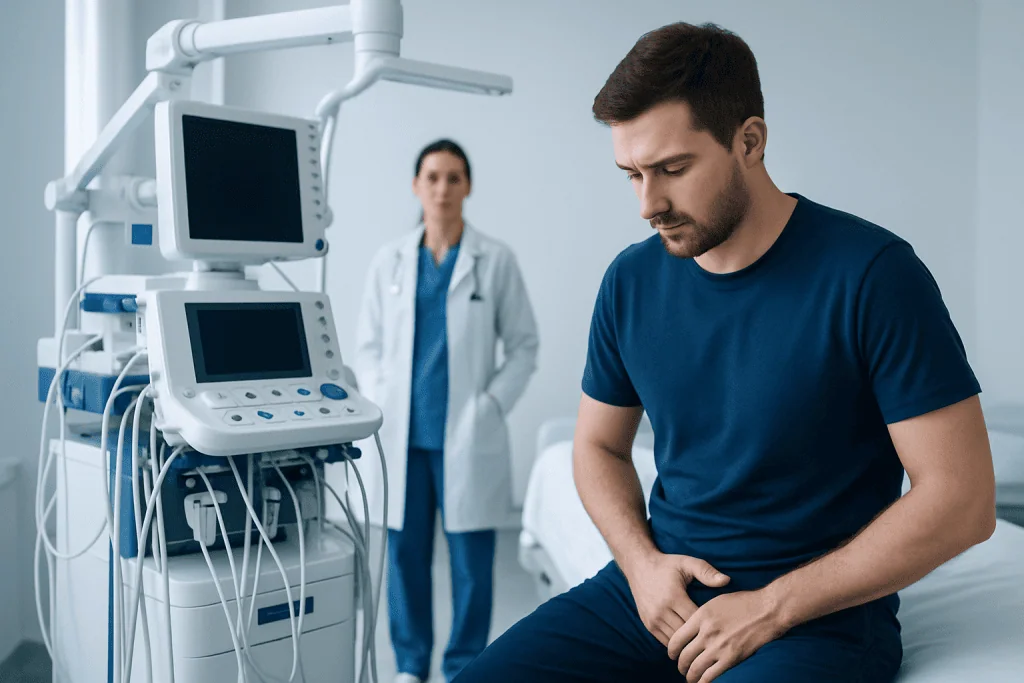
The testicles sit outside the body in the scrotum, which helps regulate temperature but also leaves them more exposed to impact. After a kick or similar blow, pain signals travel rapidly through sensitive nerves, often causing an immediate whole-body reaction such as nausea, sweating, abdominal discomfort, or even feeling faint.
In a mild injury, the pain peaks quickly and then gradually eases. There may still be tenderness, mild swelling, or soreness for several hours or a day or two. Some people also notice pain spreading to the lower abdomen or groin because the nerves serving the testicles connect with those regions.
In a more significant injury, bleeding, swelling, or structural damage can develop inside the scrotum. This may create increasing pressure and pain rather than steady improvement. That pattern matters: recovery that is clearly moving in the right direction is reassuring, while symptoms that remain severe or escalate deserve medical evaluation.
Common symptoms and warning signs

Typical symptoms after a kick in the testicles include sudden severe pain, tenderness to touch, nausea, and temporary discomfort in the lower abdomen. Mild swelling can occur, and the area may remain sore for a short period even after the worst pain passes.
Some symptoms suggest a more serious testicular injury. These include swelling that becomes obvious quickly, marked bruising, severe tenderness, pain that does not improve, vomiting, dizziness, blood in the urine, difficulty walking because of pain, or trouble passing urine.
Visible changes in the scrotum also matter. A testicle that seems out of position, unusually high, misshapen, or much larger than the other side should be checked urgently. While these signs can happen with trauma-related swelling, they can also point to conditions that need fast treatment to protect the testicle.
- Brief intense pain that improves: often seen in minor trauma
- Pain lasting more than about an hour: needs prompt medical review
- Rapid swelling or bruising: may indicate internal bleeding
- Nausea or vomiting with ongoing pain: raises concern for more serious injury
- High-riding or oddly positioned testicle: urgent assessment is needed
Possible injuries and risk factors
Most direct blows cause a contusion, which is essentially a bruise of the scrotal tissues or testicle. This can be painful but often heals without procedures. However, stronger impacts can lead to a hematoma, meaning a collection of blood in the scrotum, or to rupture of the tough covering around the testicle.
Another concern is injury to the blood supply. Trauma can occasionally trigger or mask a twisted testicle, a condition in which blood flow is reduced or blocked. This is a surgical emergency. Although torsion is not caused by every impact, severe sudden pain after trauma should still be assessed carefully if it is not improving.
Risk factors for a significant injury include high-impact sports, cycling accidents, contact injuries, motor vehicle trauma, and not using athletic protection during activities with a risk of groin impact. Previous scrotal surgery, an undescended testicle, or an already vulnerable testicle may also influence how an injury presents.
How doctors diagnose testicular trauma
A doctor usually begins by asking how the injury happened, when the pain began, whether it is improving, and whether there is nausea, vomiting, swelling, urinary symptoms, or bruising. A physical examination checks the position of the testicles, the amount of tenderness and swelling, and whether both sides can be clearly felt.
If the examination suggests more than a minor bruise, the next step is often imaging. A scrotal ultrasound with Doppler is commonly used to look at the structure of the testicle and confirm blood flow. This can help identify bleeding, rupture, large hematoma, or torsion.
Urine testing may be used if there is blood in the urine or concern for injury affecting nearby urinary structures. In straightforward minor injuries, extensive testing may not be necessary. But when symptoms are significant, early diagnosis helps determine whether simple observation is enough or whether more urgent treatment is needed.
Treatment options and recovery
For a mild kick in the testicles without warning signs, treatment is usually supportive. This includes rest, limiting activity, wearing supportive underwear or a scrotal support, and using ice wrapped in a cloth for short periods. Over-the-counter pain relief may help if a doctor or pharmacist says it is appropriate for the individual.
When swelling or pain is more pronounced, a doctor may recommend closer observation, repeat examination, or ultrasound follow-up. If there is a large hematoma, suspected rupture, or poor blood flow, urgent treatment may be needed. Some injuries can require urology care and, in selected cases, surgery to repair damage and preserve function.
Recovery time depends on the extent of the injury. Minor trauma may improve over hours to a few days, while deeper bruising or swelling can take longer. Returning to sports or heavy exercise too soon can worsen pain, so it is sensible to resume activity gradually and only when walking and normal movement are comfortable.
In more complex situations, evaluation may involve ultrasound imaging and specialist management. Near the end of the care pathway, some international patients choose centers such as Acibadem International, where multidisciplinary specialists in JCI-accredited hospitals diagnose and treat testicular and scrotal conditions.
Self-care at home and prevention
If symptoms are mild and clearly improving, home care is often enough. Resting in a comfortable position, supporting the scrotum with snug but not tight underwear, and avoiding strenuous activity for a short time can reduce discomfort. Ice should be wrapped in cloth rather than placed directly on the skin.
It is best to avoid repeated checking, pressing, or comparing the area too often, since that can increase soreness and anxiety. Symptoms should trend toward improvement rather than staying the same or getting worse. If they do not, medical advice is appropriate.
Prevention focuses mainly on protection during sports and high-risk activities. Athletic cups and appropriate protective gear can reduce the chance of serious scrotal trauma. Anyone with recurrent testicular pain, known scrotal conditions, or uncertainty about a previous injury may benefit from a routine review with a urology specialist.
When to seek medical care
Medical care should be sought urgently if pain is severe, lasts longer than about an hour, or is getting worse instead of better. The same is true for significant swelling, bruising, nausea with persistent pain, vomiting, blood in the urine, fever, difficulty urinating, or a testicle that looks higher or differently shaped than usual.
Emergency evaluation is especially important if the pain seems out of proportion to the injury or if there is uncertainty about whether the blow truly caused the symptoms. A direct hit can happen around the same time as another urgent problem, including torsion, and early treatment is important when blood flow is affected.
If symptoms are mild but not fully settling within a day or two, a non-emergency medical appointment is still reasonable. It is safer to have persistent testicle pain checked than to assume it is only a bruise. Prompt assessment can clarify the diagnosis and reduce the chance of delayed complications.
Frequently asked questions
How long does pain last after a kick in the testicles?
The sharpest pain often improves within minutes, although soreness can last for several hours or a couple of days. If pain stays severe, fails to improve, or returns with swelling or vomiting, medical assessment is important.
Can a kick in the testicles cause permanent damage?
A minor blow usually does not cause permanent damage. More serious trauma, however, can injure the testicle or its blood supply, which is why persistent pain, swelling, or visible changes should be checked promptly.
Should ice be used after a testicular injury?
Ice wrapped in a cloth can help reduce pain and swelling in a mild injury. It should be applied for short periods and never directly to the skin, because direct cold exposure can irritate or injure the area.
When is a kick in the testicles an emergency?
It should be treated as urgent if pain is intense and not improving, if there is rapid swelling or bruising, vomiting, blood in the urine, trouble urinating, or a high-riding or misshapen testicle. These features can suggest significant trauma or reduced blood flow.
Do all testicular injuries need an ultrasound?
No. If symptoms are mild and improving clearly, a doctor may not need imaging. Ultrasound is more commonly used when pain is severe, the examination is unclear, swelling is marked, or there is concern about blood flow or rupture.
Can someone play sports again right away after getting hit?
It is better to wait until pain, tenderness, and swelling have settled. Returning too soon can worsen symptoms or make it harder to recognize a more serious injury that needs treatment.
References
- American Urological Association
- Urology Care Foundation
- National Institute of Diabetes and Digestive and Kidney Diseases
- Merck Manual Consumer Version
- European Association of Urology
This article is for general information only and is not a substitute for professional medical advice. Please consult a qualified doctor about your individual situation.
Persistent digestive symptoms? Get evaluated in Turkey
JCI-accredited · board-certified surgeons · reply within 24h
Add us as a Preferred Source to see more of our trusted health content across Google Search, AI Overviews and Discover.

More from the Health Library



Related Specialists

Dr. Arzu Oran
Clinical Laboratory
Dr. Gülay Beydilli Nacak
Gynecology & Obstetrics
Dr. Perissa Seyed
Radiology
Prof. Dr. Ömer Faruk Taşer
Orthopedic Surgery & Traumatology