Understanding Arthritis in Neck: A Complete Patient Guide

Arthritis in neck commonly refers to osteoarthritis or degenerative changes in the joints of the cervical spine. Typical symptoms include neck pain, stiffness, reduced range of motion, and sometimes headaches or pain radiating to the shoulder.
Key Takeaways
- Arthritis in neck commonly refers to osteoarthritis or degenerative changes in the joints of the cervical spine.
- Typical symptoms include neck pain, stiffness, reduced range of motion, and sometimes headaches or pain radiating to the shoulder.
- Doctors diagnose it using a history, physical examination, and when needed, imaging such as X-ray or MRI.
- Treatment often starts with exercise, physical therapy, activity modification, and pain-relieving medicines.
- Urgent assessment is important if neck pain comes with weakness, numbness, balance problems, or bowel or bladder changes.
Arthritis in neck usually means age-related wear, inflammation, or joint changes in the cervical spine. It can cause stiffness, aching, and limited movement, but many people improve with exercise, posture changes, medicines, and targeted medical care.
Overview: what arthritis in neck means
Arthritis in neck is a general term for joint changes that affect the cervical spine, the part of the spine in the neck. In many adults, it most often refers to osteoarthritis, where the cartilage and joints gradually wear over time. Some people may also have related changes in the discs, ligaments, or nearby bones.
These changes can lead to pain, stiffness, and a feeling that the neck does not move as freely as before. Symptoms may stay mild for years, come and go, or flare after long periods of poor posture, repetitive work, or sleeping in an awkward position.
Not everyone with cervical joint changes has symptoms. Imaging may show arthritis even when a person feels well. When symptoms do occur, they often respond to simple measures such as activity adjustment, physical therapy, and pain relief strategies. If arthritis contributes to nerve irritation or spinal canal narrowing, a doctor may also evaluate for problems related to spinal stenosis.
How the cervical spine is affected
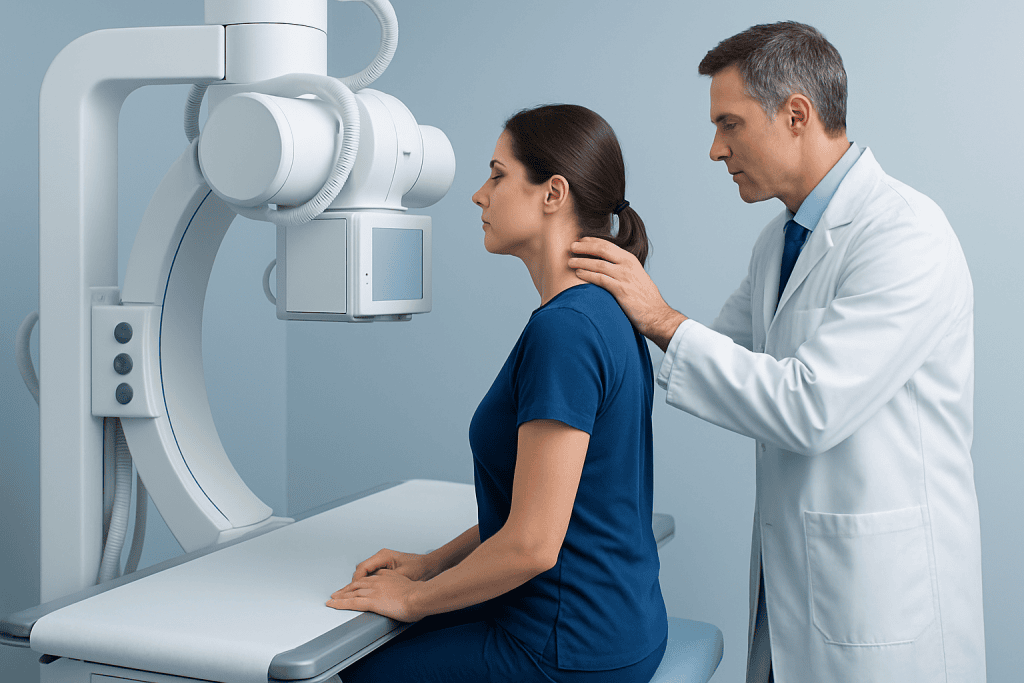
The neck contains seven vertebrae, joints that guide movement, discs that act as cushions, and nerves that travel from the spinal cord to the shoulders and arms. Arthritis usually affects the small facet joints at the back of the spine, but related age-related changes can also involve the discs and surrounding tissues.
As cartilage thins and joint surfaces become rougher, the neck may feel stiff or sore, especially after rest. The body can also form small bony growths called bone spurs. These are common with aging and do not always cause symptoms, but in some cases they can narrow spaces around nerves.
When nearby nerves are compressed or irritated, symptoms may spread beyond the neck. A person may notice tingling, pain into the shoulder or arm, or hand weakness. In these situations, the doctor may consider whether there is associated herniated disc disease or another cervical spine condition rather than arthritis alone.
Symptoms of arthritis in neck

The most common symptoms are neck pain and stiffness. Pain may be dull, aching, or sharp with certain movements, and the neck may feel worse after looking down at a phone, working at a computer, driving for long periods, or waking in the morning.
Some people also develop headaches that begin at the base of the skull, muscle tightness in the shoulders, or a grinding sensation with movement. Range of motion may become limited, making it harder to turn the head while reversing a car or looking over one shoulder.
If the joints or nearby structures irritate a nerve, symptoms can include pain that travels into the shoulder blade, arm, or hand, as well as numbness or tingling. More serious signs, such as clumsiness in the hands, trouble with balance, or weakness, suggest pressure on nerves or the spinal cord and need medical assessment.
- Neck stiffness, especially after rest
- Aching or sharp pain with movement
- Reduced ability to turn or bend the neck
- Headaches starting from the neck
- Shoulder or arm pain, tingling, or numbness
Causes and risk factors
The most common cause of arthritis in neck is gradual wear and tear over time. As people age, the discs lose water, joints can become less smooth, and supporting tissues may stiffen. This process is often called cervical spondylosis and is a frequent finding in middle age and later life.
Past neck injury, repetitive strain, physically demanding work, and long-term poor posture may increase the chance of symptoms. Hours spent in a forward-head position, such as using screens without ergonomic support, can place extra stress on the cervical joints and muscles. Family history may also influence how the spine ages.
Less often, inflammatory conditions such as rheumatoid arthritis can affect the neck. Smoking, low physical activity, and weak neck or upper back muscles may contribute to pain or reduced resilience. In many people, symptoms result from a combination of joint degeneration, muscle tension, and nerve sensitivity rather than one single cause.
How doctors diagnose it
Diagnosis starts with a conversation about symptoms, daily activities, past injuries, and any nerve-related complaints such as numbness or weakness. A doctor will examine neck movement, tenderness, posture, reflexes, muscle strength, and sensation in the arms and hands.
X-rays can show joint narrowing, alignment changes, or bone spurs. However, imaging findings do not always match symptom severity. Many people have age-related changes on scans without pain, so doctors interpret images alongside the physical examination.
If nerve compression, spinal cord involvement, or another cause is suspected, MRI may be recommended because it shows discs, nerves, and soft tissues more clearly. CT scans are sometimes used for bone detail. In selected cases, nerve tests may help clarify whether arm symptoms come from the neck or from another issue. Advanced assessment may be part of broader diagnostic evaluation when the cause of symptoms is not straightforward.
Treatment options and daily management
Treatment depends on symptom severity, how long symptoms have lasted, and whether nerves are involved. Many people improve with conservative care. This usually includes relative rest during flares, avoiding positions that aggravate symptoms, gentle mobility exercises, heat or cold, and over-the-counter or prescribed medicines recommended by a doctor.
Physical therapy is often one of the most helpful treatments. A therapist can teach stretching, posture correction, strengthening of the neck and upper back, and safe ways to move during daily tasks. For some patients, a structured physical therapy and rehabilitation plan can reduce pain and improve function over time.
If pain persists, doctors may consider additional options such as short-term use of a soft collar in selected cases, targeted injections, or referral to a spine specialist. When significant nerve compression or spinal cord pressure is present, surgery may be discussed. Depending on the cause, this can involve a personalized spine surgery approach to relieve pressure and stabilize the area when necessary. In centers such as Acibadem International, multidisciplinary specialists in JCI-accredited hospitals diagnose and treat cervical spine conditions for international patients.
Prevention, posture, and self-care
It is not always possible to prevent age-related cervical arthritis, but certain habits can reduce strain and help control symptoms. Good posture matters: keeping screens at eye level, supporting the lower back while sitting, and avoiding a prolonged forward-head position can ease pressure on the neck.
Regular movement is also important. Gentle range-of-motion exercises, walking, and strengthening the upper back and shoulder muscles can improve support for the cervical spine. During desk work, frequent short breaks may be more helpful than sitting in one position for long periods.
Sleep setup can make a difference as well. A supportive pillow that keeps the neck in a neutral position may reduce morning stiffness. People should avoid sudden self-manipulation or forceful neck cracking, especially if pain is severe or accompanied by arm symptoms. Weight management, not smoking, and staying generally active support joint and spine health over time.
When to seek medical care
Medical advice is appropriate if neck pain lasts more than a few weeks, keeps returning, disrupts sleep, or limits normal activities. A person should also seek assessment if symptoms begin after an injury, if pain spreads into the arm, or if over-the-counter measures do not help.
Prompt medical care is important when neck symptoms are paired with numbness, weakness, loss of hand coordination, trouble walking, fever, unexplained weight loss, or changes in bowel or bladder control. These signs do not always mean a serious problem, but they require timely evaluation to rule out nerve compression, infection, fracture, or inflammatory disease.
People with known inflammatory arthritis, osteoporosis, cancer, or a weakened immune system should be especially careful about persistent or unusual neck pain. Early assessment can help clarify the cause and guide the safest treatment plan, including specialist review in orthopedics, neurology, rehabilitation, or neurosurgery when needed.
Frequently asked questions
Is arthritis in neck the same as cervical spondylosis?
They are closely related terms. Cervical spondylosis usually describes age-related wear in the neck, including discs and joints, while arthritis in neck often refers more specifically to the joint changes within that process.
Can arthritis in neck cause headaches?
Yes, it can. Some people develop headaches that begin in the neck or at the base of the skull because stiff joints and tight muscles can refer pain upward.
Will arthritis in neck show up on an X-ray?
Often it does, especially if there are bone spurs, joint narrowing, or alignment changes. However, X-ray findings do not always explain symptoms fully, so doctors combine imaging with the physical examination and medical history.
What is the best sleeping position for arthritis in neck?
Many people feel better sleeping on the back or side with the neck kept in a neutral position. A supportive pillow that avoids too much bending or twisting may reduce overnight strain and morning stiffness.
Can exercise make neck arthritis worse?
Appropriate exercise usually helps rather than harms. Gentle stretching, posture work, and strengthening can improve support for the neck, but painful or forceful movements should be avoided unless guided by a clinician or physical therapist.
When is surgery needed for arthritis in neck?
Surgery is not needed for most people. It is generally considered when there is significant nerve or spinal cord compression, progressive weakness, severe pain that does not improve with conservative treatment, or clear structural problems on imaging.
References
- National Institute of Arthritis and Musculoskeletal and Skin Diseases
- American Academy of Orthopaedic Surgeons
- National Institute of Neurological Disorders and Stroke
- Mayo Clinic
- Arthritis Foundation
This article is for general information only and is not a substitute for professional medical advice. Please consult a qualified doctor about your individual situation.
Arthritis in Turkey — costs, top hospitals & a free quote
JCI-accredited · board-certified surgeons · reply within 24h
Add us as a Preferred Source to see more of our trusted health content across Google Search, AI Overviews and Discover.

Physical Medicine & Rehabilitation
Restoring movement and function after injury, surgery or neurological conditions.
153 specialists in this unit