Wobble Board Exercises — Explained by Medical Evidence, Not Myths
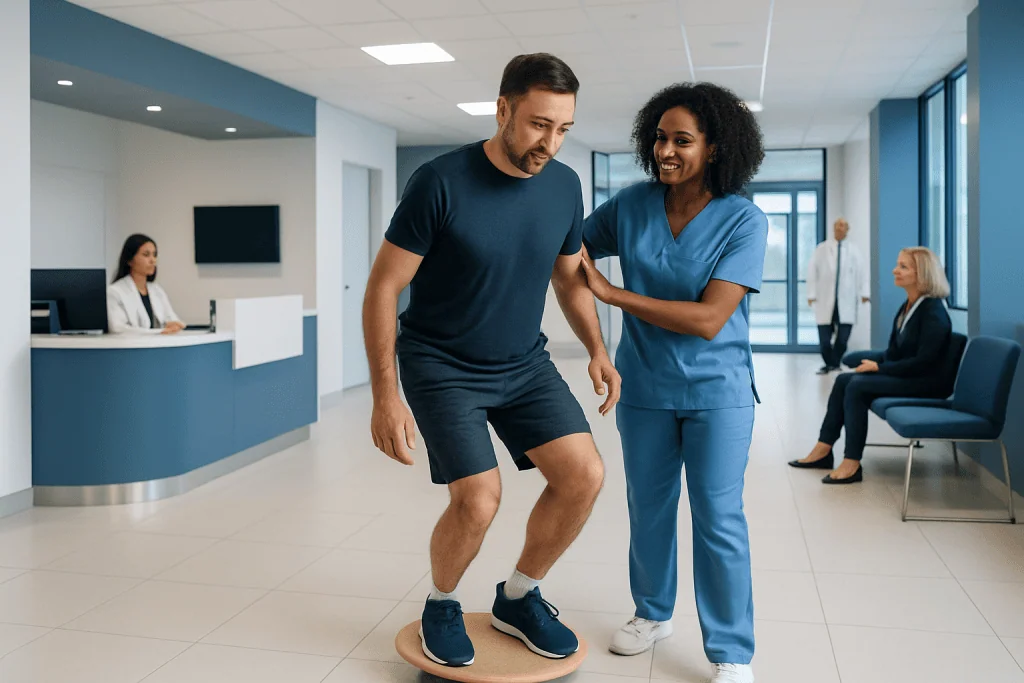
Wobble board exercises challenge balance, coordination and proprioception, the body’s awareness of joint position and movement. They may help reduce repeat ankle sprains when included in an appropriate rehabilitation program.
Key Takeaways
- Wobble board exercises challenge balance, coordination and proprioception, the body’s awareness of joint position and movement.
- They may help reduce repeat ankle sprains when included in an appropriate rehabilitation program.
- Exercises should begin with simple, supported movements and progress only when pain and control allow.
- A wobble board is not a replacement for medical assessment, strength training or rehabilitation after a significant injury.
- People with acute injury, severe balance problems or certain medical conditions should seek professional advice before using one.
Wobble board exercises are balance-training activities performed on an unstable platform. Medical evidence supports their use for improving balance, body awareness and ankle stability, particularly as part of a structured rehabilitation plan after certain ankle injuries.
What are wobble board exercises?
Wobble board exercises use a round or rectangular platform that tilts in several directions while a person stands, shifts weight or performs controlled movements on it. The unstable surface makes the feet, ankles, legs and trunk work together to keep the body steady. In clinical rehabilitation, this type of activity is often called balance training, neuromuscular training or proprioceptive training.
Wobble board exercises can improve balance and ankle control when they are matched to a person’s ability and performed regularly. They are most often used after ankle sprains, for recurrent ankle instability and in broader exercise programs for balance. However, they do not “strengthen every muscle,” correct all posture problems or rapidly heal an injury; their benefits depend on the underlying problem, the exercise plan and safe progression.
Proprioception is an important part of the rationale for this training. Sensory receptors in the joints, muscles and skin provide the brain with information about body position. After an ankle sprain, this system and the muscles that respond to sudden movement may be less effective for a period of time. Carefully supervised balance work can help restore movement confidence and control alongside mobility and strengthening exercises.
What medical evidence suggests—and what it does not
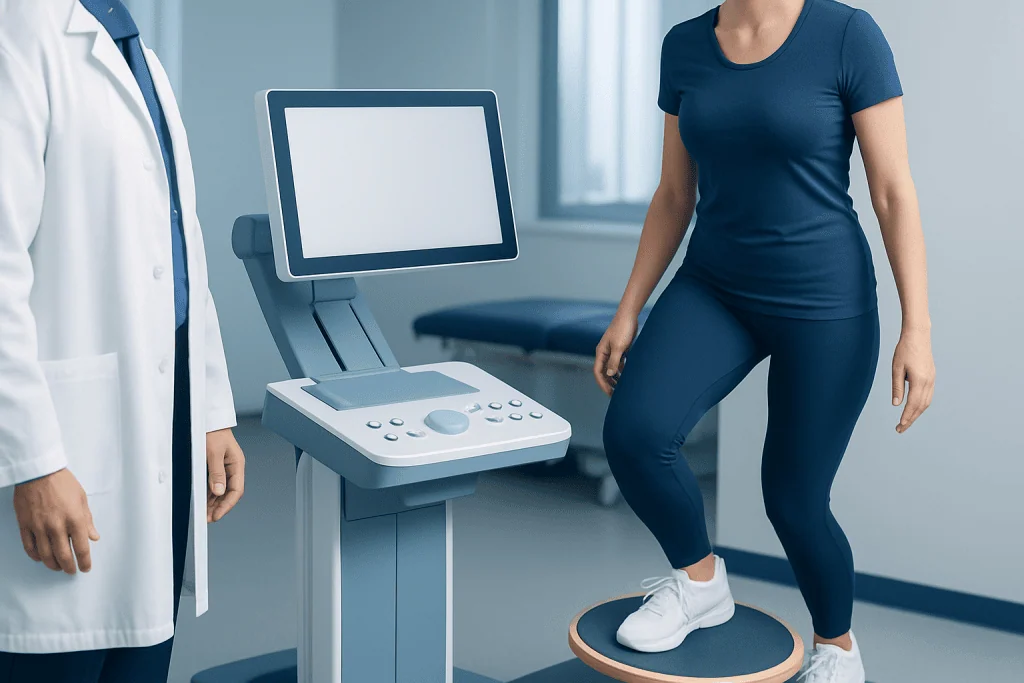
Research supports balance and neuromuscular exercise as part of prevention and rehabilitation strategies for ankle sprains. For people who have had an ankle sprain, structured balance training may lower the likelihood of another sprain, particularly when combined with ankle-strengthening exercises and a gradual return to sport or usual activities. A wobble board is one possible tool for this training, rather than the only effective option.
Evidence also indicates that balance-focused exercise can improve performance on tests of postural control. This may be useful for athletes and for some older adults, although the best program varies according to health, mobility, medications, vision and previous falls. Simple exercises on stable ground, tai chi, walking-based programs and physiotherapist-guided training can also improve balance.
Claims that wobble boards reliably burn large amounts of calories, eliminate back pain, reshape the body or prevent all injuries are not supported by strong medical evidence. They should be viewed as a targeted exercise tool. A clinician or physiotherapist can help determine whether instability training addresses the person’s actual needs and whether another form of exercise would be safer or more useful.
Who may benefit from a wobble board?
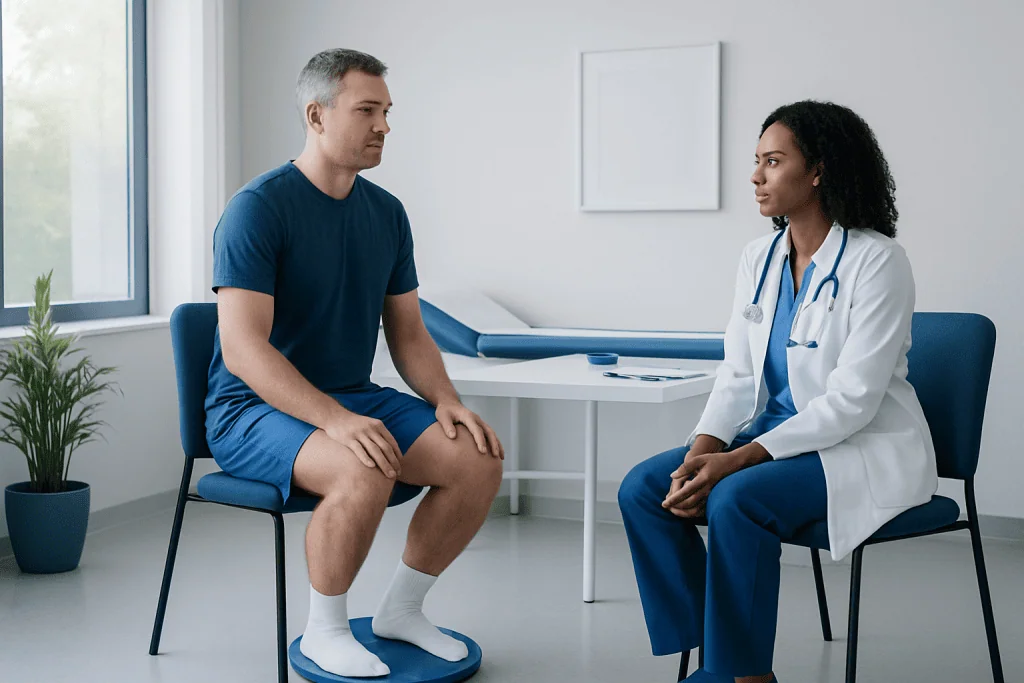
Wobble board exercises may be considered for people recovering from a mild-to-moderate ankle sprain after the early painful phase has settled and weight-bearing is comfortable. They can also be useful for people who experience repeated ankle “giving way,” often described as chronic ankle instability. In these situations, exercises usually form one component of a plan that also addresses ankle movement, calf and foot strength, and activity-specific function.
A trained professional may recommend balance training after other lower-limb injuries or surgery, but the timing and type of exercise should be individualized. For example, a person recovering from a fracture, tendon injury, knee operation or hip operation may have weight-bearing restrictions or movement precautions. Starting a wobble board too early could overload healing tissues.
Some healthy adults use wobble boards to challenge coordination as part of a general fitness routine. This may be reasonable when they have good baseline balance and use safe surroundings. For older adults, or anyone with a history of falls, individual assessment is particularly valuable because the risk from a fall can outweigh the potential benefit of an unsupervised unstable-surface exercise.
How to start wobble board exercises safely
Safety matters more than making the exercise difficult. A person should use the board on a flat, non-slip surface, wear supportive footwear unless advised otherwise, and place it next to a stable counter, wall rail or other firm support. A chair can be nearby for rest, but it should not be used as the main support unless it is secure. The area should be clear of rugs, cords and other trip hazards.
A beginner may start by standing with both feet on the board while lightly holding a stable surface. The aim is to keep the edges from touching the floor or to make gentle, slow tilting movements forward and backward and side to side. Short sessions with good control are preferable to continuing until fatigue causes loss of form. Breathing should remain relaxed, and the knees should stay softly bent rather than locked.
Progression can involve reducing hand support, increasing the duration, shifting weight more deliberately or adding controlled reaching tasks. More demanding exercises, such as single-leg standing or sport-specific movements, are generally best introduced by a physiotherapist or qualified exercise professional. Pain, repeated loss of balance, swelling or a sense that the joint is unstable are reasons to stop and reassess rather than push through.
- Start with two feet and firm hand support.
- Use slow, controlled movements rather than rapid rocking.
- Progress one variable at a time, such as less support or slightly longer practice.
- Stop if there is sharp pain, dizziness or worsening symptoms.
A practical progression for ankle stability
For an ankle that is ready for balance rehabilitation, a typical progression begins on stable ground. This may include comfortable ankle movements, calf raises, supported single-leg standing and walking practice. Stable-surface work helps establish strength and confidence before a wobble board adds an additional challenge. The exact sequence depends on the injury and the person’s ability to bear weight without significant pain or limping.
The next stage can include double-leg wobble board standing with hand support, followed by controlled weight shifts. The person should be able to maintain alignment through the foot, ankle, knee and hip without the knee collapsing inward or the ankle repeatedly rolling outward. Quality of movement is more important than the number of repetitions.
Later stages may include one-leg balance, reaching, catching a light object or movements relevant to work and sport. Athletes may need hopping, cutting and landing drills before returning to sports with jumping or sudden direction changes. A history of repeated sprains may warrant assessment for chronic ankle instability, because persistent symptoms can require a more comprehensive rehabilitation plan.
Who should avoid or postpone wobble board training?
Wobble board exercises should usually be postponed during the acute stage of an injury, when there is substantial pain, swelling, bruising, inability to walk normally or concern for a fracture. They are also not appropriate when a clinician has advised avoiding weight-bearing. Trying to train through an untreated injury may delay recovery or increase the chance of another fall or sprain.
People with severe peripheral neuropathy, marked weakness, uncontrolled dizziness, significant vision impairment, an inner-ear balance disorder or a recent fall should seek individualized advice before using an unstable board. Certain neurological conditions and medications can affect balance and reaction time. A stable exercise setting, supervision or a different type of balance program may be safer.
Pregnancy does not automatically rule out balance exercise, but changes in balance and joint laxity may make an unstable surface less suitable for some individuals. Similarly, people with osteoporosis or other conditions that increase fracture risk should be cautious about any exercise with a meaningful fall risk. A healthcare professional can help choose safe activity options.
When to seek medical care
Medical assessment is advisable after an ankle injury if the person cannot take several steps, has severe swelling or bruising, notices deformity, has numbness, experiences increasing pain, or cannot return to normal walking over a reasonable recovery period. These symptoms may indicate an injury that needs examination and, in some cases, imaging. Early assessment can clarify whether rehabilitation exercises are appropriate.
A doctor or physiotherapist should also review repeated ankle sprains, a recurring feeling that the ankle gives way, persistent stiffness, ongoing swelling or pain that occurs during daily activities. These concerns can result from incomplete rehabilitation, tendon problems, cartilage injury or other conditions that need a tailored plan. Rehabilitation may include guided balance training, strengthening, bracing or other measures depending on the diagnosis.
Acibadem International’s multidisciplinary specialists and JCI-accredited hospitals support international patients with assessment and rehabilitation planning for musculoskeletal concerns. For any new, severe or persistent balance problem, especially when accompanied by weakness, fainting, severe headache, chest symptoms or trouble speaking, urgent medical evaluation is important rather than attempting home balance exercises.
Frequently asked questions
Are wobble board exercises good for weak ankles?
They can be helpful for improving ankle control and balance, especially after an ankle sprain or with recurrent ankle instability. They work best alongside exercises that restore ankle movement and strengthen the calf, foot and leg muscles. A clinician should confirm that the ankle is ready for unstable-surface training.
How often should wobble board exercises be done?
The appropriate frequency depends on the person’s goals, symptoms and stage of recovery. Short, regular practice with good control is generally more useful than long sessions that cause fatigue or pain. A physiotherapist can provide a plan tailored to the injury and activity level.
Can a wobble board help prevent ankle sprains?
Balance and neuromuscular training may reduce the risk of repeat ankle sprains in people who have previously sprained an ankle. A wobble board can be used for this type of training, but it is not essential; other balance exercises may also be effective. Prevention is strongest when training is combined with appropriate strength, technique and return-to-sport planning.
Should wobble board exercises hurt?
They should feel challenging but should not cause sharp pain, worsening swelling or a sensation that the joint is giving way. Mild muscle effort and temporary fatigue can be normal. Pain during or after exercise should prompt the person to stop and seek advice if it persists.
Is it safe to use a wobble board after an ankle sprain?
It may be safe later in recovery, once weight-bearing and basic balance are comfortable and the injury has been assessed as appropriate for rehabilitation. It is usually not suitable immediately after a sprain with significant pain or swelling. Starting with stable-ground exercises and professional guidance can reduce risk.
Are wobble boards useful for older adults?
Some older adults may benefit from balance training, but an unstable board is not the safest starting point for everyone. Fall risk, vision, medication effects, bone health and medical conditions should be considered first. Supervised, stable-surface balance exercises are often a more appropriate introduction.
References
- American Academy of Orthopaedic Surgeons
- American Physical Therapy Association
- National Institute on Aging
- International Ankle Consortium
- National Institute for Health and Care Excellence
This article is for general information only and is not a substitute for professional medical advice. Please consult a qualified doctor about your individual situation.
Explore treatments in Turkey — costs, top hospitals & a free quote
JCI-accredited · board-certified surgeons · reply within 24h
Add us as a Preferred Source to see more of our trusted health content across Google Search, AI Overviews and Discover.