Understanding Fungal Sinusitis: A Complete Patient Guide

Fungal sinusitis includes several different conditions, ranging from allergic inflammation to rare invasive infection. Symptoms can resemble ordinary sinusitis, so examination and imaging may be needed to establish the cause.
Key Takeaways
- Fungal sinusitis includes several different conditions, ranging from allergic inflammation to rare invasive infection.
- Symptoms can resemble ordinary sinusitis, so examination and imaging may be needed to establish the cause.
- A fungal ball and allergic fungal rhinosinusitis are usually noninvasive forms that do not spread into living tissue.
- Invasive fungal sinusitis requires prompt treatment, particularly in people with uncontrolled diabetes or impaired immunity.
- Treatment may include endoscopic sinus surgery, anti-inflammatory medicines, antifungal medicines, and management of underlying health conditions.
Fungal sinusitis is a group of conditions in which fungi are associated with inflammation or infection in the sinuses. Most forms are not dangerous and are treated with specialist care, but invasive fungal sinusitis is uncommon and needs urgent medical assessment, especially in people with weakened immune systems.
Overview: What Is Fungal Sinusitis?
Fungal sinusitis describes sinus inflammation or infection associated with fungi. Fungi are common in the environment and are regularly breathed in without causing illness. In certain circumstances, however, fungal material can collect in a sinus, trigger a strong allergic response, or, much less commonly, invade sinus tissue.
The term does not describe one single disease. Doctors first determine whether the condition is noninvasive, meaning fungal elements are present without entering living tissue, or invasive, meaning fungi have entered tissue. This distinction is important because the likely risks, treatment approach, and urgency are different.
Many people with long-lasting nasal blockage, facial pressure, reduced smell, or recurrent sinus symptoms do not have fungal sinusitis. Viral infections, allergies, nasal polyps, and bacterial sinusitis are more common explanations. An ear, nose, and throat (ENT) specialist can help clarify the cause when symptoms persist or are unusual.
The Main Types of Fungal Sinusitis
Noninvasive fungal sinusitis is more common than invasive disease. A fungal ball, also called a mycetoma, is a dense collection of fungal material within one sinus, often the maxillary sinus behind the cheek. It generally stays confined to that sinus and may cause one-sided pressure, discharge, dental discomfort, or no symptoms at all.
Allergic fungal rhinosinusitis occurs when the immune system has an exaggerated allergic-type reaction to fungi in the nose and sinuses. Thick mucus, nasal polyps, chronic blockage, and recurrent sinus disease can occur. It often affects people with an atopic background, such as allergies or asthma, but its exact causes are complex.
Invasive fungal sinusitis is rare but more serious. Acute invasive disease can progress quickly and is most likely to occur in people with severe immune suppression, poorly controlled diabetes, diabetic ketoacidosis, or certain blood cancers. Chronic invasive forms usually develop more gradually and can affect people who are otherwise relatively well. A tissue sample is needed to confirm invasion.
- Saprophytic fungal growth: superficial fungal material, sometimes seen after sinus surgery or around crusting.
- Fungal ball: localized, noninvasive fungal collection in a sinus.
- Allergic fungal rhinosinusitis: chronic inflammatory condition linked to an immune reaction to fungi.
- Invasive fungal sinusitis: fungal infection entering tissue, requiring urgent specialist treatment.
Symptoms and How They May Differ

Symptoms vary by type and by which sinuses are involved. Common symptoms include blocked nose, thick nasal drainage, postnasal drip, facial fullness or pressure, headache, reduced sense of smell, cough, and fatigue. These symptoms overlap considerably with chronic rhinosinusitis and allergies, so symptoms alone cannot reliably diagnose a fungal cause.
A fungal ball may produce persistent symptoms on one side of the face or nose. Some people notice an unpleasant-smelling discharge, recurrent sinus discomfort, or symptoms that do not settle with usual treatment. Allergic fungal rhinosinusitis may cause long-term congestion, large amounts of thick mucus, nasal polyps, and repeated flare-ups after previous sinus treatment.
Warning symptoms of possible invasive disease include severe or rapidly worsening facial pain, facial swelling or numbness, black or dark tissue inside the nose, fever, visual changes, eye swelling, double vision, confusion, or severe headache. These signs do not always mean invasive fungal sinusitis, but they require urgent medical assessment because infections and other conditions around the eyes and brain must be evaluated promptly.
Causes and Risk Factors
Exposure to fungal spores is normal and does not by itself cause fungal sinusitis. Whether a person develops disease appears to depend on factors such as sinus anatomy, mucus drainage, local inflammation, immune response, prior sinus disease, and general health. Fungal sinusitis is not usually considered contagious and does not spread from person to person.
Allergic fungal rhinosinusitis is associated with chronic nasal inflammation, nasal polyps, asthma, and environmental allergies. It may be more likely when sinus openings are blocked, allowing mucus and inflammatory material to build up. A fungal ball can occur when drainage from a sinus is impaired; in some cases, dental procedures involving upper teeth may be relevant because of their proximity to the maxillary sinus.
Risk factors for invasive fungal sinusitis include uncontrolled diabetes, particularly diabetic ketoacidosis; medicines that substantially suppress immunity; chemotherapy; organ or stem-cell transplantation; prolonged severe neutropenia; and advanced blood disorders. These factors do not mean invasive disease will occur, but they lower the body’s ability to contain certain fungal infections. People with these risks should seek advice early if new sinus or facial symptoms develop.
How Fungal Sinusitis Is Diagnosed
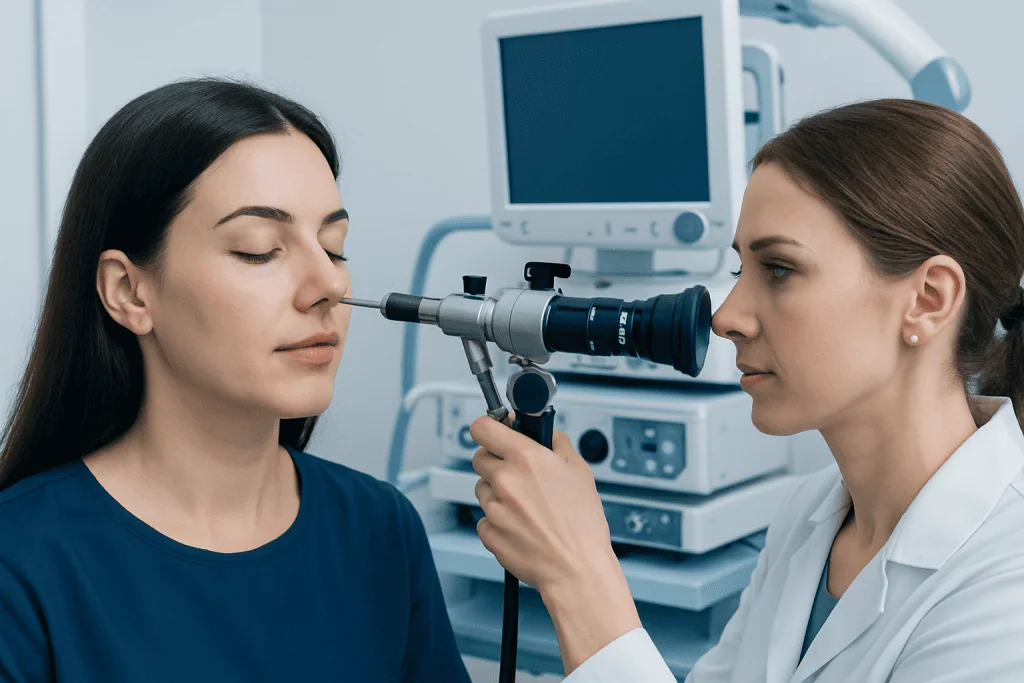
Diagnosis begins with a medical history and ENT examination. The clinician will ask about the duration and pattern of symptoms, allergies, asthma, dental history, previous sinus surgery, medicines, and conditions that affect immunity. Nasal endoscopy, which uses a thin camera to look inside the nose, can identify polyps, thick mucus, crusting, drainage, or abnormal tissue.
Computed tomography (CT) is commonly used to show which sinuses are involved, whether drainage pathways are blocked, and whether there are changes in surrounding bone. Magnetic resonance imaging (MRI) may be used when there is concern about involvement near the eye socket, brain, blood vessels, or other soft tissues. Imaging can suggest fungal disease but cannot always determine its exact type.
For a firm diagnosis, especially if invasive disease is possible, the specialist may collect mucus, fungal material, or a small tissue sample. Laboratory examination can identify fungal elements and, critically, show whether fungi have entered tissue. A culture may help identify the organism, although results must be interpreted alongside symptoms, imaging, and tissue findings. Blood tests may also assess diabetes, inflammation, and immune function where appropriate.
Treatment Options and Ongoing Care
Treatment is tailored to the type of fungal sinusitis and the person’s overall health. A fungal ball is commonly treated with endoscopic sinus surgery to remove fungal material and restore drainage. This minimally invasive approach is performed through the nostrils; antifungal medicine is not routinely necessary after complete removal in many noninvasive cases.
For allergic fungal rhinosinusitis, treatment often combines endoscopic surgery with long-term measures to control inflammation. These may include saline nasal rinses and corticosteroid nasal sprays or other corticosteroid treatment selected by a clinician. Some people with coexisting asthma, nasal polyps, or recurrent disease may need additional allergy-focused or biologic treatment under specialist guidance. Regular follow-up matters because inflammation and mucus can recur.
Invasive fungal sinusitis requires urgent care, usually in hospital. Treatment typically involves prompt surgical removal of affected tissue, antifungal medicines given under close specialist supervision, and correction of contributing factors where possible, such as high blood glucose or medication-related immune suppression. The care team may include ENT surgeons, infectious disease specialists, ophthalmologists, endocrinologists, and other clinicians depending on the areas involved.
At Acibadem International, multidisciplinary specialists in JCI-accredited hospitals assess and treat sinus conditions, including complex fungal sinusitis, for international patients. Individual treatment decisions should always be based on examination findings, imaging, laboratory results, and the person’s underlying health needs.
Prevention, Self-Care and When to Seek Medical Care
There is no reliable way to avoid all exposure to airborne fungi, and routine environmental testing or antifungal treatment is not recommended for most people. Supporting nasal health may help some people with chronic sinus symptoms: avoiding known allergy triggers where practical, not smoking, following prescribed allergy or asthma treatment, and attending follow-up appointments after sinus surgery. Good diabetes management is particularly important for people at risk of serious infections.
Saline nasal irrigation can help clear mucus for some people with chronic sinus problems. Only sterile, distilled, or previously boiled and cooled water should be used, and irrigation devices should be cleaned and dried according to their instructions. Over-the-counter decongestant sprays should not be used for extended periods unless a clinician advises otherwise, as they can worsen congestion through rebound effects.
When to seek medical care: A medical review is appropriate for sinus symptoms lasting more than several weeks, recurring frequently, affecting sleep or daily activities, or occurring mainly on one side. Urgent assessment is needed for eye pain or swelling, vision changes, severe headache, confusion, facial numbness, black nasal tissue, rapidly worsening swelling, or high fever. People with significant immune suppression or uncontrolled diabetes should contact a clinician promptly for new or worsening facial, nasal, or eye symptoms.
Frequently asked questions
Is fungal sinusitis contagious?
Fungal sinusitis is not generally contagious. The fungi involved are commonly present in the environment, and the condition develops because of an individual’s sinus anatomy, immune response, inflammation, or health risks rather than transmission from another person.
Can fungal sinusitis go away without treatment?
This depends on the type. A fungal ball and allergic fungal rhinosinusitis usually need assessment and specialist-directed treatment because they may persist or recur. Suspected invasive fungal sinusitis should never be monitored at home, as early treatment is important.
Will antibiotics treat fungal sinusitis?
Antibiotics treat bacterial infections, not fungal disease. They may be prescribed if a clinician believes a bacterial infection is also present, but they are not a treatment for fungi. Using antibiotics unnecessarily can cause side effects and does not resolve fungal sinusitis.
Does fungal sinusitis always require surgery?
Not always, but surgery is commonly used for a fungal ball and is often part of treatment for allergic or invasive forms. Endoscopic surgery can remove diseased material, obtain tissue for diagnosis, and improve sinus drainage. The need for surgery depends on the type, extent, symptoms, and response to medical treatment.
Who is at highest risk for invasive fungal sinusitis?
The greatest risk is seen in people with major immune suppression, severe neutropenia, certain cancers, transplant-related immune suppression, or poorly controlled diabetes, especially diabetic ketoacidosis. It remains uncommon, but these individuals should seek medical advice quickly if they develop concerning sinus, facial, or eye symptoms.
Can nasal rinses prevent fungal sinusitis?
Saline rinses may help clear mucus and support day-to-day nasal care in some people, but they do not specifically prevent fungal sinusitis. They should be performed only with sterile, distilled, or previously boiled and cooled water. Anyone with severe pain, bleeding, eye symptoms, or a weakened immune system should seek medical advice rather than relying on self-care.
References
- Centers for Disease Control and Prevention
- American Academy of Otolaryngology–Head and Neck Surgery
- European Position Paper on Rhinosinusitis and Nasal Polyps
- Merck Manual Professional Edition
- Infectious Diseases Society of America
This article is for general information only and is not a substitute for professional medical advice. Please consult a qualified doctor about your individual situation.
Sinusitis in Turkey — costs, top hospitals & a free quote
JCI-accredited · board-certified surgeons · reply within 24h
Add us as a Preferred Source to see more of our trusted health content across Google Search, AI Overviews and Discover.

Otorhinolaryngology (ENT)
Care for ear, nose, throat and head-and-neck conditions, including hearing and balance disorders.
126 specialists in this unitMore from the Health Library



Related Specialists

Assoc. Prof. Dr. Burçin Beken
Pediatric Allergy
Dr. Sezgi Güllü Erciyestepe
Gynecology & Obstetrics
Dr. Burcu Sena Günaydın Şahin
Pediatrics
Asst. Prof. Dr. Murat Tuğrul Eren
Urology