Pad Rash: Possible Causes and When to Seek Care

Pad rash usually affects the external genital skin and may result from dampness, rubbing, heat, or contact sensitivity. Fragrance-free, breathable pads and regular pad changes can reduce irritation for many people.
Key Takeaways
- Pad rash usually affects the external genital skin and may result from dampness, rubbing, heat, or contact sensitivity.
- Fragrance-free, breathable pads and regular pad changes can reduce irritation for many people.
- Avoid using scented intimate products, harsh soaps, or home remedies that may further irritate vulvar skin.
- Symptoms such as unusual discharge, sores, severe pain, fever, or a rash that does not improve need medical evaluation.
- A clinician can distinguish simple irritation from infections, eczema, psoriasis, or other vulvar conditions.
Pad rash is a common term for itching, redness, burning, or soreness of the outer genital skin after wearing menstrual pads. It is often related to moisture, friction, heat, or sensitivity to pad materials, but persistent or severe symptoms should be assessed to rule out infection or another skin condition.
What Is Pad Rash?
Pad rash describes irritation of the vulva, the external genital area, that develops during or shortly after using menstrual pads. The skin may become red, itchy, tender, burning, chafed, or slightly swollen. Some people notice small bumps, dry patches, or skin that feels raw where the pad touches the body, particularly around the inner thighs, groin folds, and labia.
In many cases, pad rash is a form of irritant contact dermatitis. This means that dampness, heat, rubbing, or prolonged contact with a material has disrupted the skin’s protective barrier. It can also be allergic contact dermatitis, in which the immune system reacts to an ingredient such as fragrance, adhesive, dye, or preservative in a pad or another personal-care product.
Although the name suggests that pads are always the cause, a rash appearing during a period may have other explanations. Menstrual blood, sweating, tight clothing, shaving, infections, eczema, and chronic skin conditions can all contribute to genital discomfort. Careful attention to the pattern of symptoms can help a clinician identify the cause.
Common Symptoms and What They May Feel Like

Symptoms of pad rash generally occur on the outer skin rather than inside the vagina. They may begin after several hours of wearing a pad, after a particularly heavy-flow day, or after using a new product. Mild irritation may improve quickly when the skin is kept dry and exposure to the suspected product stops.
- Redness or darker-than-usual skin in the contact area
- Itching, stinging, burning, or tenderness
- Chafing or a raw feeling, especially along the thighs or skin folds
- Dry, flaky, thickened, or cracked skin
- Small raised bumps or mild swelling
Not every symptom during menstruation is a pad rash. Vaginal itching accompanied by a thick or unusual discharge may point to an infection. Blisters, ulcers, significant swelling, or painful urination need timely medical attention. It is also important to remember that skin conditions can look different across skin tones; redness may be less visible and the area may instead appear darker, purple, gray, or ashen.
Why Pads Can Irritate the Skin
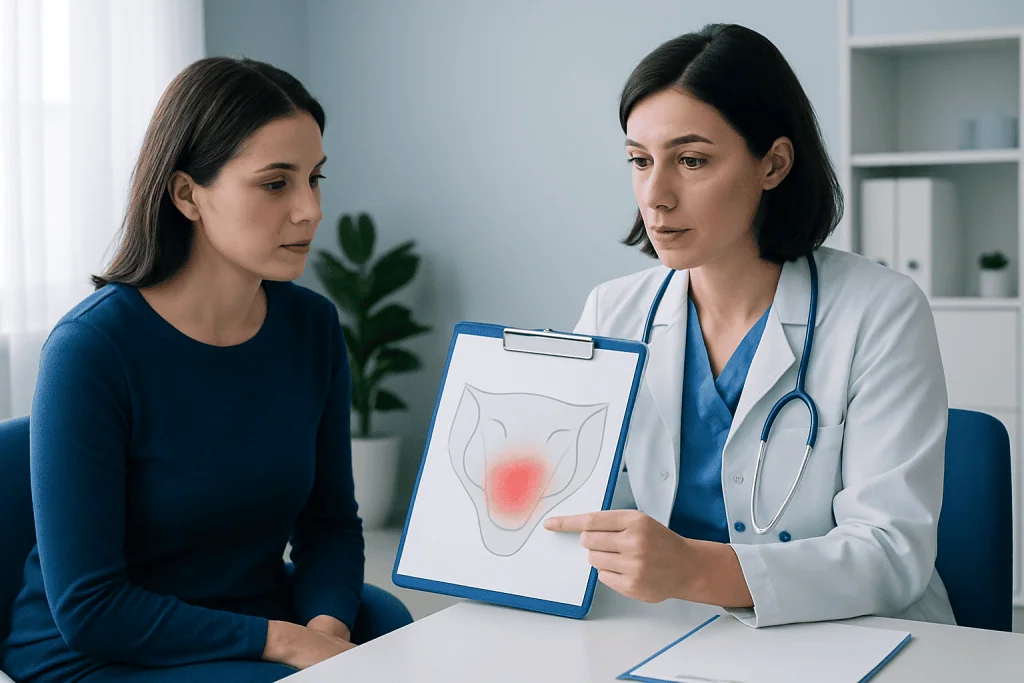
The vulvar area is warm, delicate, and prone to moisture. A pad can hold menstrual fluid and sweat close to the skin, creating an environment where friction and irritation are more likely. This is especially common when a pad is worn for a long time, during hot weather, while exercising, or with close-fitting synthetic underwear or clothing.
Some pads contain materials that may trigger irritation in sensitive skin. Potential triggers include added fragrance, deodorizing agents, dyes, adhesives, gels, preservatives, or the plastic-like backing used to prevent leaks. A reaction may occur immediately after switching brands, but sensitivity can also develop after repeated exposure to a product used previously without difficulty.
Friction is another important factor. Pads may rub against the vulva or inner thighs during walking, exercise, or sleep. Heavy menstrual flow can require more frequent changes, and prolonged dampness may weaken the skin barrier. Scratching due to itch can then create small breaks in the skin, increasing soreness and making secondary infection more likely.
Other products used during a period can add to the problem. Scented wipes, sprays, bubble baths, fragranced soaps, panty liners, laundry products, and certain lubricants may cause or worsen contact dermatitis. For this reason, changing several products at once can make it difficult to identify the main trigger.
Other Conditions That Can Resemble a Pad Rash
A rash that starts around menstruation is not necessarily due to a pad. Yeast infections can cause marked itching and irritation, often with a change in vaginal discharge. Bacterial vaginosis and some sexually transmitted infections can also cause discharge, odor, burning, or pelvic symptoms, although their symptoms vary and require professional assessment rather than self-diagnosis.
Skin disorders such as eczema, psoriasis, lichen sclerosus, and lichen planus can affect the vulva. These conditions may cause recurrent itching, skin color changes, scaling, cracks, or discomfort and may flare with friction or exposure to irritating products. They often need a tailored treatment plan from a gynecologist, dermatologist, or another qualified clinician.
Folliculitis, an inflammation around hair follicles, may produce tender bumps after shaving or friction. Heat rash may develop in skin folds during warm weather. Less commonly, painful grouped blisters or sores may be related to a viral infection and should be evaluated promptly. A medical examination is the safest way to distinguish these possibilities when symptoms are new, severe, recurring, or unclear.
Gentle Steps to Relieve Pad Rash
The first practical step is to stop using the pad or product suspected of causing irritation, if possible. Choosing unscented, dye-free pads with a breathable surface may be helpful. Pads should be changed regularly, especially after they become wet or soiled. During a rash, loose cotton underwear and breathable clothing can reduce heat, rubbing, and trapped moisture.
The area can be rinsed gently with lukewarm water and patted dry with a soft towel. Harsh scrubbing, douching, scented wipes, deodorant sprays, and perfumed washes should be avoided because they can further disrupt sensitive vulvar skin. A simple, fragrance-free emollient or barrier ointment may protect skin from friction for some people, but it is best to ask a pharmacist or clinician for advice if there are open areas, significant pain, or uncertainty about the diagnosis.
A cool compress applied over clothing for short periods may ease burning or itch. It is helpful to avoid scratching, as this can injure the skin and prolong symptoms. If menstrual products are needed, some people may prefer to discuss alternative options, such as different pad materials, period underwear, tampons, or menstrual cups, with a clinician. The safest option depends on personal comfort, menstrual flow, medical history, and ability to use the product correctly.
Over-the-counter anti-itch or anti-inflammatory treatments are not suitable for every vulvar symptom. Products applied to genital skin may sting, mask an infection, or worsen certain conditions if used incorrectly. A healthcare professional can advise whether any medication is appropriate and how it should be used.
Preventing Future Episodes
Prevention focuses on protecting the skin barrier and limiting contact with possible triggers. People who have had pad rash may find it useful to choose fragrance-free, dye-free menstrual products and to avoid products marketed as deodorizing. Trying one new item at a time can make it easier to recognize whether a specific product causes symptoms.
Regular pad changes are important, even on lighter-flow days, because moisture and warmth can build up. Wearing breathable cotton underwear, changing out of damp exercise clothing promptly, and avoiding very tight garments during a period can also reduce chafing. If using reusable menstrual products, they should be washed and dried according to the manufacturer’s instructions, using a detergent that does not irritate the skin.
For daily vulvar care, plain water or a mild fragrance-free cleanser used externally is usually sufficient. The vagina cleans itself, so internal washing and douching are not recommended. Keeping a brief record of symptoms, pad brand, other products used, and timing in the menstrual cycle may be useful if rashes recur and can support a more productive medical consultation.
When to Seek Medical Care
Medical care is recommended if the rash is severe, spreads, repeatedly returns, or does not begin to improve after stopping the suspected product and using gentle skin care. A doctor should also assess symptoms that interfere with sitting, walking, sleeping, or normal daily activities. Prompt evaluation can provide relief and help avoid treating the wrong condition.
It is important to seek care sooner for fever, pelvic pain, severe swelling, pus, open or bleeding skin, blisters, ulcers, or difficulty urinating. New or unusual vaginal discharge, a strong odor, or pain during sex may indicate an infection or another condition that needs testing and treatment. Anyone who may have been exposed to a sexually transmitted infection should arrange appropriate medical assessment.
A clinician will usually ask about symptoms, menstrual products, hygiene products, medications, sexual health, and any history of allergies or skin conditions. They may examine the external genital skin and, when indicated, perform testing for infection. Acibadem International’s multidisciplinary specialists and JCI-accredited hospitals can assess vulvar symptoms and arrange appropriate gynecological or dermatological care for international patients.
Frequently asked questions
How long does pad rash usually last?
Mild irritation may begin to improve within a few days after stopping the triggering product and reducing moisture and friction. Healing can take longer if the skin has been scratched or remains exposed to irritants. A rash that persists, worsens, or returns should be examined by a clinician.
Can pads cause an allergic reaction?
Yes. Some people develop allergic contact dermatitis from ingredients such as fragrance, dyes, adhesives, preservatives, or other materials in pads. Symptoms can include itch, redness, swelling, and a rash in areas that touch the product. Switching to a simple fragrance-free product and seeking medical advice if symptoms continue is sensible.
Is pad rash the same as a yeast infection?
No. Pad rash usually affects the outer skin and is often related to contact irritation, dampness, or friction. A yeast infection may cause external itching too, but it can also involve vaginal symptoms such as changes in discharge. Because symptoms may overlap, a clinician can help determine the cause.
Can someone use a menstrual cup or tampon if pads cause irritation?
Some people find that alternative menstrual products reduce external skin contact and improve comfort. However, each product has its own instructions, risks, and suitability considerations. A doctor can offer individualized advice, particularly for people with pain, recurrent infections, postpartum changes, or a history of gynecological conditions.
Should hydrocortisone cream be used for pad rash?
It is best not to use steroid creams on vulvar skin without advice from a healthcare professional. The skin in this area is sensitive, and steroids may not be appropriate if the symptoms are caused by an infection or another condition. A clinician or pharmacist can recommend a suitable approach after considering the symptoms.
What type of pads are best for sensitive skin?
Fragrance-free, dye-free pads without deodorizing agents are often a reasonable starting point for sensitive skin. Breathable materials and frequent changes may also reduce dampness and rubbing. Individual reactions vary, so it can help to introduce only one new product at a time.
This article is for general information only and is not a substitute for professional medical advice. Please consult a qualified doctor about your individual situation.
Explore treatments in Turkey — costs, top hospitals & a free quote
JCI-accredited · board-certified surgeons · reply within 24h
Add us as a Preferred Source to see more of our trusted health content across Google Search, AI Overviews and Discover.

Dermatology Specialists at Acibadem



More from the Health Library

Chronic Multi-Symptom Illness: What the Term Means and How Evaluation Starts

Is Avocado Oil Good for You? Causes, Explanations, and Next Steps

Can Arthritis Cause Numbness? Causes, Explanations, and Next Steps
Swollen Labia Explained: Common Triggers and Red Flags

Does throwing up help gerd: Common Causes, Warning Signs, and When to See a Doctor