Rice Method for Shin Splints: What Patients Need to Know

RICE may reduce discomfort from shin splints, especially during the first days after symptoms flare. Rest means modifying painful impact activity rather than avoiding all movement for an extended period.
Key Takeaways
- RICE may reduce discomfort from shin splints, especially during the first days after symptoms flare.
- Rest means modifying painful impact activity rather than avoiding all movement for an extended period.
- Ice should be used safely with a cloth barrier and brief sessions to protect the skin.
- Persistent or pinpoint bone pain needs medical assessment to rule out a stress fracture or another condition.
- A gradual return to running, supportive footwear, and strength training can help reduce recurrence.
The rice method for shin splints—rest, ice, compression, and elevation—may provide short-term comfort after exercise-related shin pain. It works best as part of a broader recovery plan that includes temporarily reducing impact activity, addressing training factors, and returning to exercise gradually.
How the RICE Method Fits Into Shin Splints Care
The rice method for shin splints means rest, ice, compression, and elevation. It can help settle pain and mild swelling after running, jumping, or other repetitive impact activity. However, it does not correct the underlying overload that commonly causes shin splints, so it should be combined with changes to training and a gradual return to activity.
Shin splints is the everyday term often used for medial tibial stress syndrome (MTSS). This condition causes exercise-related tenderness or aching along the inner edge of the shinbone. It commonly develops when the lower leg is exposed to more repetitive loading than it can comfortably adapt to, such as after a rapid increase in running distance, intensity, hills, or court sports.
RICE is most useful for symptom relief in the early phase or after activity. Complete rest for long periods is usually unnecessary and may lead to loss of fitness and muscle strength. Instead, a clinician may recommend relative rest: temporarily avoiding activities that trigger pain while maintaining comfortable, low-impact movement when appropriate.
Using Rest, Ice, Compression and Elevation Safely
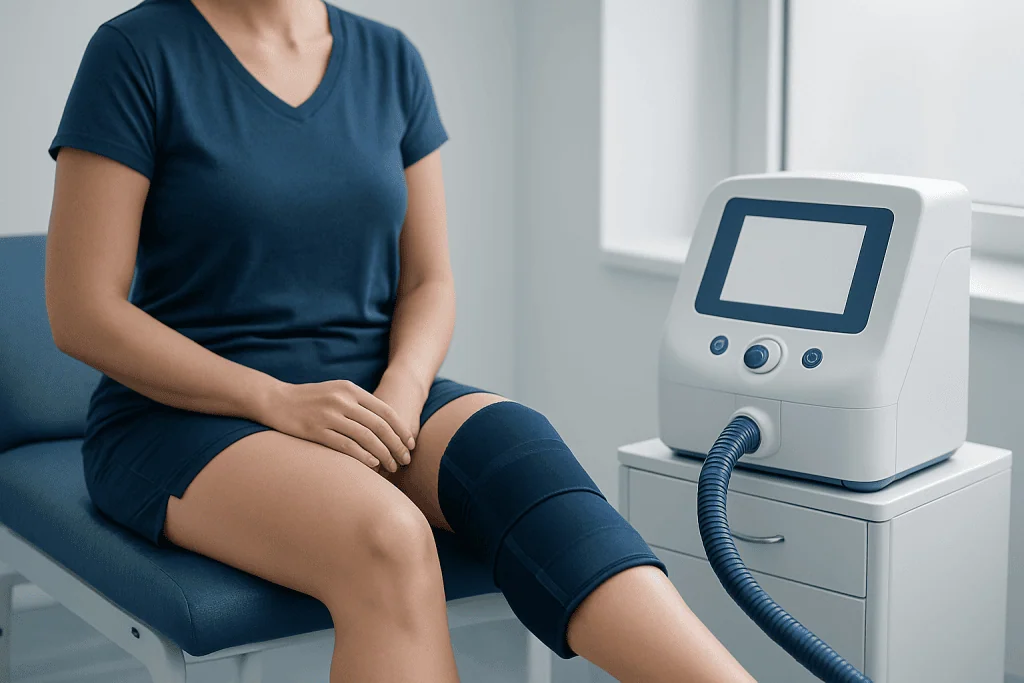
Rest involves reducing or pausing painful impact exercise, particularly running and jumping. This does not necessarily mean bed rest. Depending on symptoms, activities such as swimming, cycling, or pool exercise may help maintain conditioning with less stress on the shin. Pain should guide activity choices: exercise should not cause worsening symptoms during the session or a notable increase in pain afterward.
Ice can provide temporary pain relief. An ice pack or a bag of frozen vegetables wrapped in a thin towel may be placed over the painful area for about 15 to 20 minutes at a time. Ice should not be applied directly to bare skin, and people with reduced sensation, circulation problems, or certain nerve conditions should ask a healthcare professional before using cold therapy.
Compression with an elastic bandage or compression sleeve may feel supportive for some people, although it does not heal the irritated tissues on its own. It should feel snug but never cause numbness, tingling, increased pain, coldness, or color changes in the foot. Elevation means raising the leg above heart level while resting, which may be useful if there is minor swelling after activity.
- Stop or modify the activity that reliably brings on shin pain.
- Use ice for comfort rather than as a reason to continue a painful workout.
- Loosen or remove compression if the toes feel numb, pale, blue, or unusually cold.
- Resume impact exercise only after daily walking and ordinary activities are comfortable.
Recognizing Typical Shin Splint Symptoms

Shin splints usually cause a dull ache, tenderness, or soreness along a broader area of the inner lower shin. At first, discomfort may appear near the start of exercise and improve as a person warms up. As the condition becomes more irritated, pain can continue during exercise, return afterward, or be felt during everyday walking.
The affected area may be mildly tender to touch. Some people notice stiffness in the calf or lower leg, especially after training. Significant bruising, obvious swelling, inability to bear weight, or severe sudden pain are less typical of uncomplicated shin splints and deserve prompt assessment.
Not every case of lower-leg pain in an active person is shin splints. A stress fracture often causes pain in a more specific, pinpoint spot on the bone and may hurt at rest or at night. Tendon problems, nerve irritation, circulation concerns, and chronic exertional compartment syndrome can also cause exercise-related lower-leg symptoms. Correct identification is important because the recommended activity plan can differ.
Why Shin Splints Develop
Shin splints generally result from repeated loading of the tibia and surrounding muscles, tendons, and connective tissue. The body normally adapts to training stress over time. Symptoms can arise when activity progresses more quickly than this adaptation, especially after a sudden change in mileage, speed work, hill training, surface, footwear, or sport.
Running on hard or uneven ground, starting a new exercise routine, and returning too quickly after a break can contribute. Calf tightness, weakness in the foot, ankle, hip, or trunk muscles, and reduced movement control may also affect how forces are managed through the lower leg. Flat feet or very high arches can be relevant for some individuals, but neither automatically causes shin splints.
Training load is often more important than any single physical feature. Keeping a simple record of exercise duration, intensity, terrain, pain, and recovery can help identify a pattern. A sports medicine clinician or physiotherapist can assess gait, footwear, strength, flexibility, and training habits when symptoms are recurring or recovery is slow.
Beyond RICE: Supporting Recovery and Return to Activity
Once pain begins to improve, recovery should focus on rebuilding tolerance to activity. Gentle calf mobility work and strengthening of the calves, feet, hips, and trunk may be recommended, provided these exercises do not aggravate symptoms. A physiotherapist can tailor exercises to the person’s sport, fitness level, and movement pattern.
Return to impact exercise should be gradual. Many people begin with pain-free walking, then progress to short walk-run intervals before resuming continuous running. It is sensible to increase only one training factor at a time, such as duration, frequency, hills, or pace. If pain returns during activity, worsens afterward, or is present the next morning, the load may have progressed too quickly.
Well-fitting shoes appropriate for the activity may improve comfort, particularly when older shoes have lost cushioning or support. Insoles or orthotics may help selected people, especially if a clinician identifies a foot-mechanics issue, but they are not a universal solution. Anti-inflammatory medicines may sometimes be considered for short-term pain relief, but a doctor or pharmacist should advise on their suitability, especially for people with stomach, kidney, heart, bleeding, or medication-related concerns.
Preventing Another Flare-Up
Prevention begins with a realistic training plan. Building volume and intensity progressively gives bones and soft tissues time to adapt. Recovery days are part of training, particularly for people new to impact exercise, those returning after illness or injury, and athletes adding high-intensity sessions or hills.
Varying exercise can reduce repeated stress on the same tissues. Combining running with low-impact cardiovascular exercise, strength training, and mobility work may support overall fitness while limiting excessive lower-leg loading. Adequate sleep, regular meals, and nutrition that meets energy needs also support recovery and bone health.
Warm-up routines do not guarantee prevention, but a gradual start to exercise can help identify early discomfort before it becomes more significant. People should avoid trying to run through worsening shin pain. Addressing symptoms early with relative rest and a measured return to training is generally more effective than repeatedly pushing through pain.
When to Seek Medical Care
Medical evaluation is advisable when shin pain is severe, persistent, repeatedly returns, or does not improve after reducing painful activity. An assessment is particularly important if there is a small, sharply tender point on the bone, pain at rest or at night, a limp, or pain that makes normal walking difficult. These features can suggest a bone stress injury such as a stress fracture.
Urgent care is needed for sudden severe pain, rapidly increasing swelling, weakness, numbness, a cold or discolored foot, fever, or symptoms following a significant injury. These signs are not typical of routine shin splints and require timely evaluation. A clinician may use a physical examination and, when needed, imaging to clarify the cause of pain.
Acibadem International’s multidisciplinary specialists and JCI-accredited hospitals assess exercise-related musculoskeletal pain and help international patients develop appropriate treatment and rehabilitation plans. A qualified clinician can also advise when it is safe to return to a specific sport or training program.
Frequently asked questions
How long should RICE be used for shin splints?
RICE is generally used for short-term symptom relief when pain has flared, rather than as a long-term treatment plan. Rest and activity modification may be needed for longer, depending on symptoms. If pain is not improving after several days to a couple of weeks of reduced impact activity, medical advice is appropriate.
Should a person use heat or ice for shin splints?
Ice is commonly used after activity or during an acute flare because it can temporarily reduce pain. Heat may feel soothing for muscle stiffness before gentle movement, but it may not be suitable if the area is swollen or very irritated. Neither treatment should replace reducing the activity that is provoking symptoms.
Can someone walk with shin splints?
Many people can walk comfortably with mild shin splints, but walking should be reduced if it causes pain, limping, or worsening symptoms afterward. Pain-free daily movement is usually a useful early benchmark before returning to running. A clinician should assess pain that occurs during ordinary walking.
Can shin splints turn into a stress fracture?
Shin splints and stress fractures are different conditions, but both can be related to repetitive overload of the lower leg. Continuing high-impact exercise despite worsening bone pain may increase the risk of a bone stress injury. Pinpoint tenderness, pain at rest, night pain, or pain with hopping should be assessed by a healthcare professional.
Do compression sleeves heal shin splints?
Compression sleeves may provide a feeling of support and may help with mild swelling for some people, but they do not directly heal shin splints. Recovery depends mainly on adjusting training load and gradually restoring strength and activity tolerance. A sleeve should not be used to continue running through pain.
When can a person run again after shin splints?
A return to running is usually safer when walking and normal daily activities are comfortable and the shin is no longer significantly tender. Running should begin gradually, often with short walk-run intervals rather than a return to the previous routine. If pain appears during the run, becomes worse afterward, or persists the next day, training should be scaled back.
References
- American Academy of Orthopaedic Surgeons
- American College of Sports Medicine
- National Institute of Arthritis and Musculoskeletal and Skin Diseases
- Mayo Clinic
- National Health Service
This article is for general information only and is not a substitute for professional medical advice. Please consult a qualified doctor about your individual situation.
Explore treatments in Turkey — costs, top hospitals & a free quote
JCI-accredited · board-certified surgeons · reply within 24h
Add us as a Preferred Source to see more of our trusted health content across Google Search, AI Overviews and Discover.