Shin Splints
Quick answer
Shin splints are exercise-related pain along the shinbone, usually caused by repeated stress on the muscles, tendons, and bone tissue of the lower leg. At Acibadem in Turkey, evaluation focuses on confirming the cause and ruling out problems such as stress fractures, with treatment typically based on rest, activity modification, physical therapy, pain control, and prevention of recurrence.
What is shin splints?
Shin splints is the common name for pain that develops along the shinbone, the large bone at the front of the lower leg. Doctors often call this condition medial tibial stress syndrome, which simply means stress-related pain along the inner edge of the tibia (the medical name for the shinbone). The pain comes from irritation and inflammation of the muscles, tendons (the cords that attach muscle to bone), and the thin layer of tissue that covers the bone itself, known as the periosteum.
When people ask what is shin splints, the simplest answer is that it is an overuse injury. It develops when the lower leg is asked to absorb more repeated impact than it can comfortably handle, usually through running, jumping, marching, or dancing. The tissues along the shin become overloaded faster than the body can repair them, and pain is the result.
Shin splints most often affects people who are physically active. Runners are the group most commonly affected, especially those who are new to running or who have recently increased how far or how often they run. The condition is also frequent in military recruits, dancers, and athletes in sports that involve a lot of sprinting, stopping, and jumping, such as basketball, soccer, and tennis. It can affect people of any age, and it occurs in both recreational exercisers and trained athletes. In many cases it affects both legs at the same time, although one side may hurt more than the other.
Although shin splints can be painful and frustrating, it is generally considered a manageable condition. With appropriate rest and a gradual return to activity, most people recover well. However, ignoring the pain and continuing to train through it can allow the problem to progress, in some cases toward a stress fracture, which is a small crack in the bone that takes considerably longer to heal.
Symptoms of shin splints
Shin splints symptoms usually build up gradually rather than starting suddenly. The main complaint is pain along the inner (medial) edge of the shinbone, most often in the lower half or lower two-thirds of the shin. Common features include:
- Aching or dull pain along the inside border of the shinbone, often described as a soreness that spreads over several centimeters rather than a single sharp point.
- Pain during or after exercise, particularly running, jumping, or fast walking on hard surfaces.
- Tenderness when pressing along the inner edge of the shin.
- Mild swelling in the lower leg in some cases.
- Pain in both legs, which is common, although one side may be worse.
The way symptoms behave often changes as the condition progresses, and doctors sometimes describe this in stages. In the early stage, pain typically appears at the start of a workout, eases or disappears as the muscles warm up, and may return after exercise ends. Many people continue training at this point because the discomfort seems minor. In the middle stage, the pain lasts throughout the activity and lingers for hours afterward. In the more advanced stage, pain is present even at rest, during ordinary walking, or at night. Pain that no longer settles with rest is an important warning sign, because it may indicate that the bone itself is becoming injured.
It also helps to know how shin splints symptoms differ from those of a tibial stress fracture, which is the condition doctors most want to rule out. Shin splint pain is usually spread along a broad section of the bone and improves with rest. Stress fracture pain, by contrast, tends to be focused on one small, very tender spot, often worsens with continued activity, and may hurt even when standing or hopping on the affected leg. Only a medical evaluation can reliably tell the two apart, so persistent or pinpoint shin pain deserves a professional assessment.
Causes and risk factors
Shin splints causes come down to repetitive stress. Every time the foot strikes the ground during running or jumping, force travels up through the lower leg. The muscles and connective tissues along the shin help absorb this force, and healthy bone constantly remodels itself in response to load. When the amount of impact increases faster than the tissues can adapt, tiny areas of irritation and micro-injury accumulate along the bone and its covering, and pain develops.
Several factors make this overload more likely:
- Sudden increases in trainingrunning farther, faster, more often, or uphill more than the body is used to. This is the most common trigger.
- Being new to an activitybeginners’ bones, muscles, and tendons have not yet adapted to repeated impact.
- Hard or uneven running surfacesconcrete, asphalt, and cambered (tilted) roads increase impact forces.
- Worn-out or unsupportive footwearshoes lose their cushioning over time, transferring more shock to the leg.
- Flat feet or overpronationwhen the arch collapses inward with each step, the muscles along the inner shin work harder and become strained. Very high, rigid arches can also contribute by absorbing shock poorly.
- Tight or weak calf muscles and weak muscles around the hip and core, which change how forces travel through the leg.
- High-impact sportsrunning, basketball, soccer, tennis, dance, and military training all involve repeated pounding.
- Higher body weight, which increases the load on the lower legs with each step.
- Low bone densityconditions such as osteoporosis (weakened, thinner bones) or inadequate nutrition, including low vitamin D or low calcium intake, may make bone less tolerant of stress. In female athletes, a combination of low energy intake, menstrual changes, and reduced bone density can raise the risk of bone stress injuries.
Often several of these factors act together. A typical example is a new runner with flat feet who quickly ramps up mileage on pavement in older shoes. Identifying which factors apply to you is a central part of treatment, because correcting them helps prevent the pain from returning.
Diagnosis
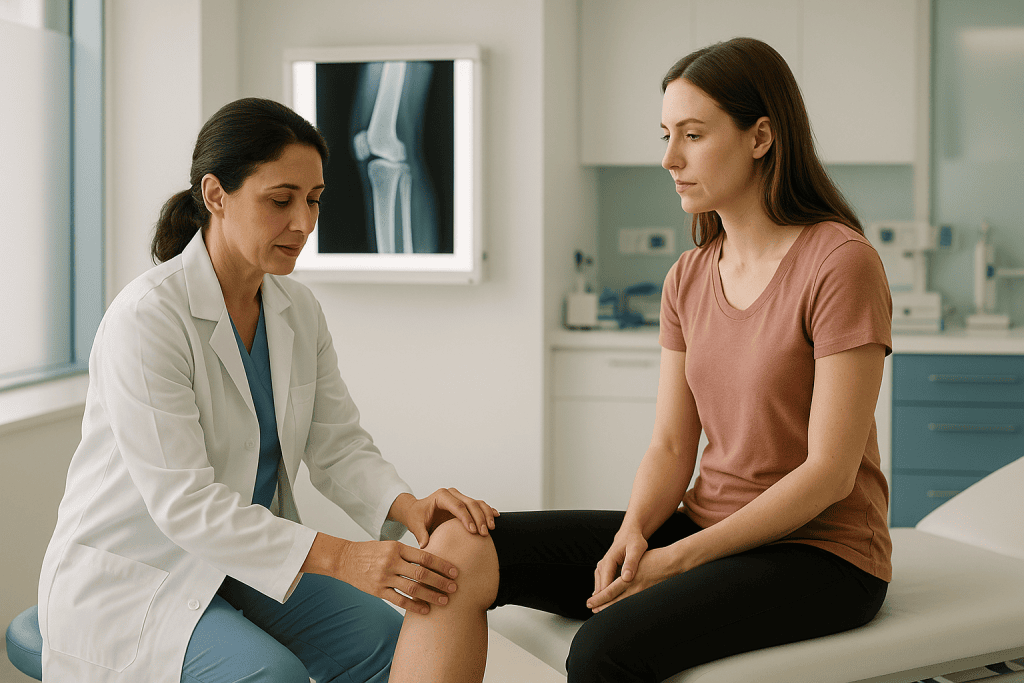
Shin splints diagnosis is primarily clinical, which means doctors usually identify the condition from your history and a physical examination rather than from a laboratory test. Your doctor will ask about your sport or activity, any recent changes in training, the type of surfaces you exercise on, your footwear, and exactly when and where the pain occurs. They will then examine your lower legs, pressing along the shinbone to locate the tender area, checking for swelling, and often looking at your foot arches, ankle flexibility, calf tightness, and the way you stand and walk.
A key finding that supports the diagnosis is tenderness spread along a length of the inner shinbone border, typically five centimeters or more, rather than a single pinpoint spot. Pain concentrated at one small spot raises concern for a stress fracture instead.
Imaging is not always needed, but your doctor may order tests to rule out other problems, especially if the pain is severe, focal, or not improving with rest:
- X-rays are often the first imaging test. They usually look normal in shin splints, but they can show an established stress fracture or other bone problems. Early stress fractures frequently do not appear on X-rays.
- Magnetic resonance imaging (MRI), a scan that uses magnetic fields to picture bone and soft tissue in detail, is the most sensitive test for detecting bone stress. It can show early stress reactions and fractures before they are visible on X-ray, and it helps distinguish shin splints from a stress fracture.
- Bone scans, an older nuclear medicine test, can also detect areas of bone stress and are occasionally used when MRI is not available or suitable.
Your doctor will also consider other conditions that can mimic shin splints. These include tibial stress fracture, chronic exertional compartment syndrome (a condition in which pressure builds up in the muscle compartments of the leg during exercise, often causing tightness, cramping, or numbness), tendon inflammation, nerve irritation, and, rarely, problems with blood flow in the leg. Because treatment differs considerably among these conditions, an accurate diagnosis matters. Lower leg pain of this kind is typically evaluated and managed by orthopedic and sports medicine specialists, such as those in an Orthopedics & Joint Center.
Treatment options
Shin splints treatment is almost always nonsurgical, and the cornerstone is reducing the load on the irritated tissues long enough for them to heal. There is no quick fix; recovery depends mainly on relative rest and then a careful, stepwise return to activity.
Rest and activity modification
Relative rest means stopping or greatly reducing the activity that causes pain, usually for several weeks, while staying active in ways that do not stress the shin. Low-impact exercise such as swimming, cycling, or water running can help you maintain fitness during this period. Complete bed rest is not necessary and is not recommended; the goal is simply to avoid repetitive impact until walking and daily activities are pain-free.
Ice and simple pain relief
Applying ice to the sore area for about 15 to 20 minutes at a time, several times a day, may help ease pain and swelling, especially after activity. Always wrap ice in a cloth rather than placing it directly on the skin. Over-the-counter pain relievers such as acetaminophen or nonsteroidal anti-inflammatory drugs (NSAIDs, a family of medications that reduce pain and inflammation, such as ibuprofen or naproxen) may be used for short periods. These medications relieve symptoms but do not speed healing, and NSAIDs are not suitable for everyone, so check with your doctor or pharmacist if you have other health conditions or take other medicines.
Stretching, strengthening, and physical therapy
Once the sharpest pain has settled, gentle stretching of the calf muscles and strengthening exercises for the muscles of the lower leg, foot, hip, and core are commonly recommended. A physical therapist can assess your movement patterns, correct training errors, and design a graded program that rebuilds tolerance to impact. For runners, gait retraining, adjusting stride length or cadence, is sometimes suggested, although your therapist will tailor advice to your situation.
Footwear and orthotics
Replacing worn-out shoes with well-cushioned, supportive footwear appropriate for your foot type is a simple but important step. For people with flat feet or significant overpronation, shoe inserts (orthotics), either off-the-shelf or custom-made, may help distribute forces more evenly. Some people find compression sleeves or supportive taping comfortable during recovery, although evidence for these measures is limited.
Gradual return to activity
Returning to sport too soon is the most common reason shin splints comes back. Most clinicians advise waiting until you have been pain-free during everyday walking for a period of time, then restarting your sport at a much lower intensity and volume than before, often around half of your previous level, and increasing gradually, typically by no more than about ten percent per week. Warming up, running on softer surfaces where possible, and cross-training with low-impact activities all support a durable recovery.
Procedures and surgery
Other treatments, such as extracorporeal shockwave therapy (sound-wave pulses applied to the painful area), are sometimes offered for persistent cases, though the evidence for them is mixed and your doctor can discuss whether they are appropriate. Surgery is very rarely needed for shin splints. In a small number of people with severe, long-standing pain that has not improved after many months of thorough conservative treatment, a surgical procedure on the tissue lining the bone may be considered, but this is uncommon and results vary. If a stress fracture is diagnosed instead of shin splints, treatment changes: a longer period of rest is required, sometimes with a walking boot or crutches, and certain high-risk fracture locations occasionally need surgical fixation. This is one reason an accurate diagnosis by an orthopedic specialist is important.
Living with shin splints and outlook
The outlook for shin splints is generally good. With relative rest and correction of the contributing factors, most people improve over a period of weeks, although recovery time varies widely. Mild cases may settle within two to four weeks, while more established cases can take several months to resolve fully. Recovery is rarely a straight line; some soreness during the return to activity is common, and flare-ups usually mean the training load increased too quickly rather than that something is seriously wrong.
Living well with shin splints means listening to your body. Pain is the main guide: activity that provokes more than mild discomfort, or pain that lingers into the next day, is a signal to scale back. Long-term prevention focuses on the same factors that caused the problem, increasing training gradually, replacing running shoes before they wear out, maintaining calf and hip strength, choosing softer surfaces when possible, and addressing foot mechanics with appropriate footwear or orthotics if advised.
It is honest to say that shin splints can recur, particularly in people who return to the same training habits that caused it. It is equally honest to say that most people are able to return to their sport at their previous level once healed. No treatment can guarantee a specific timeline, and pushing through worsening pain risks converting a manageable overuse injury into a stress fracture that requires far longer off your feet. Patience during recovery is, in practical terms, the fastest route back.
Frequently asked questions
What is shin splints in simple terms?
Shin splints is pain along the shinbone caused by overuse. Repeated impact from running, jumping, or marching irritates the muscles, tendons, and bone lining along the inner edge of the tibia. It is one of the most common overuse injuries in runners, dancers, and military recruits, and it usually improves with rest and a gradual return to activity.
Can shin splints heal on their own?
In many cases, yes. Mild shin splints often settles with relative rest, ice, supportive footwear, and avoidance of the aggravating activity for a few weeks. However, “healing on its own” still requires reducing the load on the leg; continuing to train through the pain typically prevents recovery and can allow the injury to worsen. If pain persists despite rest, a medical evaluation is advisable.
How long does it take to recover from shin splints?
Recovery time varies from person to person. Mild cases may improve within a few weeks, while more established cases can take two to three months or longer, especially if training is resumed too quickly. Most doctors suggest waiting until everyday walking is pain-free before restarting sport, and then rebuilding gradually. There is no fixed timeline, and rushing the process is the most common cause of setbacks.
How serious are shin splints?
Shin splints itself is not a dangerous condition, but it should not be ignored. Continuing intense training despite worsening pain can allow the bone to become progressively overloaded, in some cases leading to a tibial stress fracture: a small crack in the bone that requires a much longer recovery and, rarely, surgery. Pain that occurs at rest, at night, or at one very tender spot deserves prompt medical attention.
What is the difference between shin splints and a stress fracture?
Both are bone stress problems, but they differ in degree and pattern. Shin splint pain is usually spread along a broad section of the inner shin and eases with rest. Stress fracture pain tends to be sharply localized to one small, very tender point, often persists at rest, and may worsen with continued activity. X-rays and, when needed, MRI scans help doctors tell the two apart, and the distinction matters because a stress fracture requires stricter rest.
Can I keep running with shin splints?
Most clinicians advise against running through shin splint pain, because continued impact tends to prolong the injury and raises the risk of a stress fracture. Low-impact alternatives such as swimming, cycling, or water running usually allow you to stay fit while the shin heals. Once you are pain-free in daily life, a gradual, structured return to running, often starting at a reduced distance and pace, is generally safer than resuming your previous routine immediately.
How can I prevent shin splints from coming back?
Prevention focuses on the risk factors that caused the problem. Increase training volume and intensity slowly, replace running shoes before their cushioning wears out, run on softer surfaces when possible, and keep the calf, foot, and hip muscles strong and flexible. If you have flat feet or your foot rolls inward heavily, supportive shoes or orthotic inserts may help. No measure guarantees prevention, but addressing these factors substantially reduces the likelihood of recurrence in many people.
When to see a doctor
Many mild cases of shin splints improve with self-care, but some situations call for professional evaluation. Make an appointment with a doctor if your shin pain does not improve after two to three weeks of rest and home measures, if it keeps returning whenever you resume activity, or if you are unsure what is causing the pain. Seek medical attention promptly if you notice any of the following warning signs:
- Pain at rest or at night that does not settle when you stop exercising: this may suggest a stress fracture.
- Severe, pinpoint tenderness at one small spot on the shinbone, or pain when hopping on the affected leg.
- Pain after a fall, blow, or twisting injury, which could indicate a fracture rather than an overuse problem.
- Marked swelling, redness, or warmth of the lower leg, or a shin that feels hot to the touch, which can signal infection or a blood clot.
- Numbness, tingling, or weakness in the foot, or a foot that feels cold or looks pale, which may point to nerve or circulation problems.
- Severe tightness or pressure in the leg during exercise that eases only when you stop, which may suggest compartment syndrome.
- Fever or feeling generally unwell alongside leg pain.
Sudden, severe leg swelling and pain, particularly in one calf, can occasionally indicate a deep vein thrombosis (a blood clot in a deep leg vein), which is an emergency and needs immediate care. For persistent or unexplained shin pain, evaluation by an orthopedic or sports medicine specialist can confirm the diagnosis, rule out a stress fracture, and guide a safe plan back to activity. At Acibadem facilities, this condition is assessed within the orthopedics specialty. Early, accurate diagnosis is the most reliable way to keep a simple overuse injury from becoming a longer-term problem.
Medically reviewed by the Acıbadem International Medical Board September 2, 2026
See our medical review board →
Update history
- PublishedJune 14, 2026
- Medical review approvedSeptember 2, 2026
- Last content updateSeptember 2, 2026