Visual Therapy for Lazy Eye: Diagnosis, Outlook, and Modern Treatment Approaches
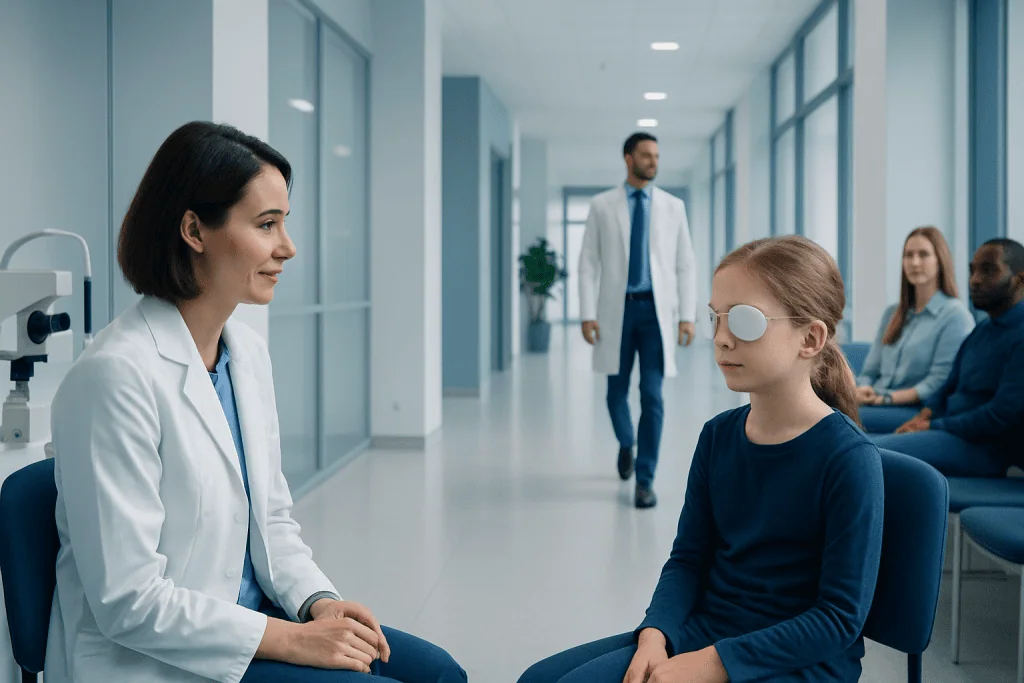
Lazy eye, medically called amblyopia, is reduced vision caused by the brain favoring one eye during visual development. A comprehensive eye examination is needed to identify the cause of amblyopia and guide treatment.
Key Takeaways
- Lazy eye, medically called amblyopia, is reduced vision caused by the brain favoring one eye during visual development.
- A comprehensive eye examination is needed to identify the cause of amblyopia and guide treatment.
- Corrective glasses or contact lenses, patching, and atropine drops are established treatments for many children.
- Some supervised binocular and digital visual therapies may be useful for selected patients, but they do not replace treatment of the underlying cause.
- Treatment is usually most effective when started early, although improvement may still be possible in teenagers and adults.
Visual therapy for lazy eye can help some people improve how the brain uses information from both eyes, particularly when it is part of a treatment plan for amblyopia. The most appropriate approach depends on the person’s age, the cause and severity of reduced vision, and whether there is an untreated eye-health or focusing problem.
What Is Visual Therapy for Lazy Eye?
Visual therapy for lazy eye refers to structured activities designed to improve visual skills and encourage the brain to use visual input from both eyes. Lazy eye is the everyday term for amblyopia, a developmental condition in which vision does not develop normally in one eye, or less commonly both eyes, even when the eye itself may appear healthy.
In amblyopia, the brain receives unequal or unclear information from the eyes during early childhood. Over time, it may rely more heavily on the eye with clearer vision and suppress input from the weaker eye. This is why simply exercising the eye is not always enough: effective care must first identify and address the reason the brain began favoring one eye.
Visual therapy can mean different things in different settings. It may include supervised binocular activities, computer- or game-based tasks, depth-perception exercises, or activities that require both eyes to work together. These approaches may be considered alongside established treatments, but their usefulness varies according to the type of amblyopia, the patient’s age, and the specific program used.
How Lazy Eye Develops and What It May Look Like
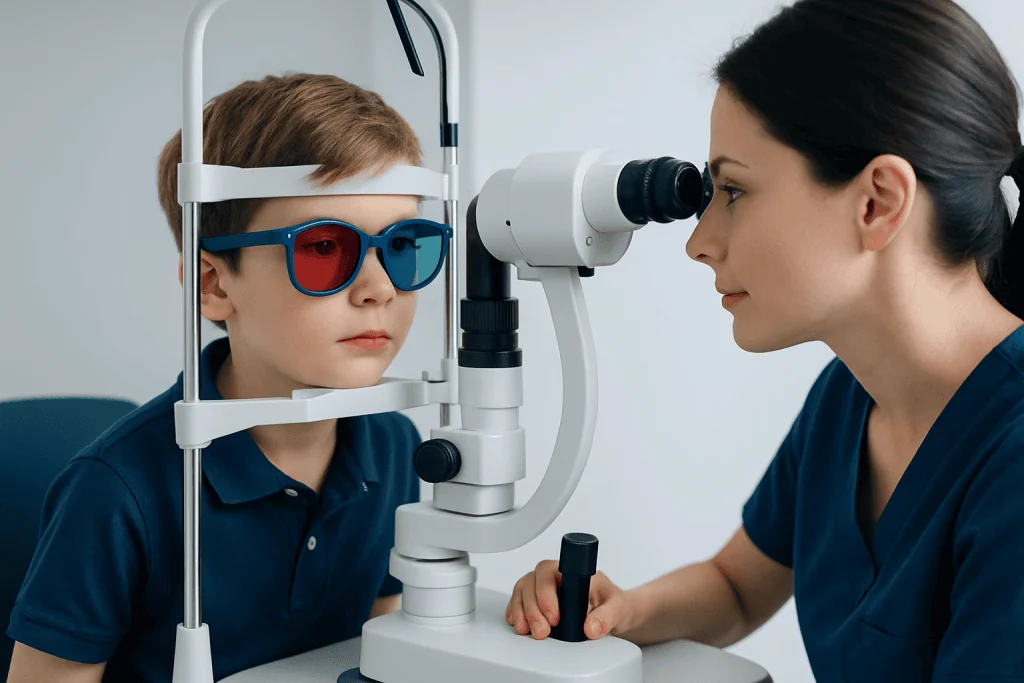
Amblyopia develops when normal visual experience is disrupted during the years when the brain is learning to see. The most common cause is a significant difference in focusing power between the eyes, known as anisometropia. A child may also develop amblyopia because of a high refractive error in both eyes, an eye that turns inward or outward, or a problem that blocks light from entering the eye clearly.
Possible signs are often subtle because children can function well with their stronger eye. A child may squint, close one eye in bright light, tilt the head, sit very close to screens, lose their place while reading, or have difficulty judging distances. Some children have no noticeable symptoms, which is one reason routine childhood vision screening is important.
It is helpful to distinguish amblyopia from strabismus, often called an eye turn or crossed eyes. Strabismus can cause amblyopia, but the two conditions are not the same. A child may have amblyopia without an obvious eye turn, and an eye turn may require its own assessment and treatment.
- Refractive amblyopia: caused by uncorrected long-sightedness, short-sightedness, or astigmatism.
- Strabismic amblyopia: associated with misalignment of the eyes.
- Deprivation amblyopia: caused by an obstruction to vision, such as a childhood cataract or a drooping eyelid that covers the pupil.
How Amblyopia Is Diagnosed
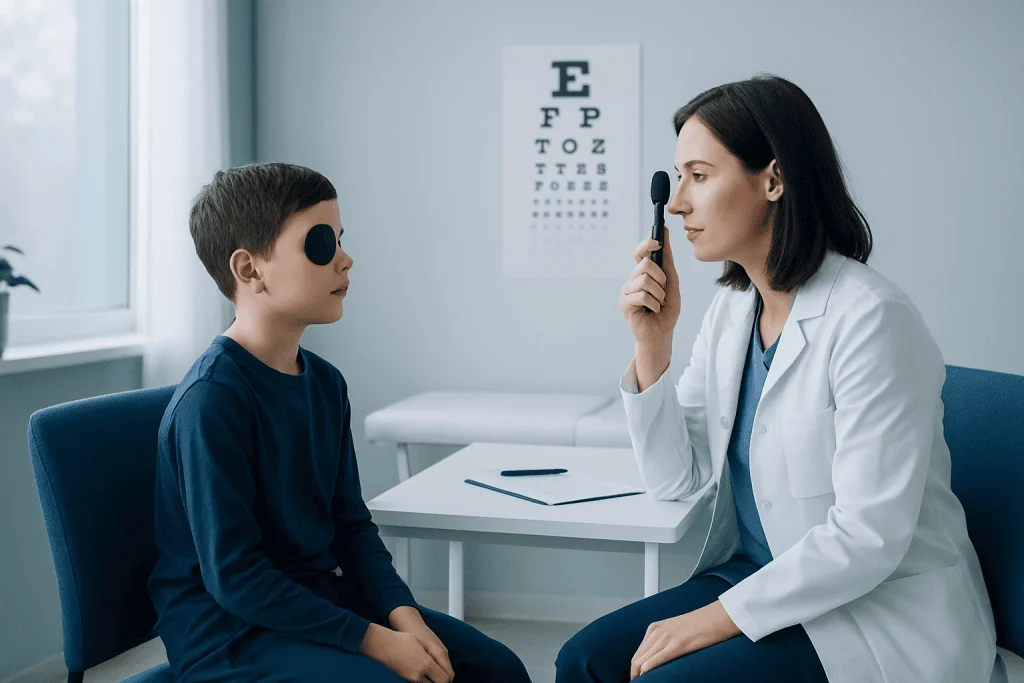
Diagnosis begins with a full assessment by an ophthalmologist or an appropriately trained eye-care professional. The examination measures vision in each eye separately and together, checks how the eyes move and align, and looks for differences in focusing power. In young children, clinicians use age-appropriate pictures, symbols, or matching tests rather than standard letter charts when needed.
Eye drops may be used to temporarily relax focusing during a refraction test. This allows the clinician to measure the prescription more accurately and identify refractive errors that a child may otherwise compensate for. The examination also includes a careful review of the cornea, lens, retina, and optic nerve to rule out other causes of reduced vision.
A diagnosis of amblyopia is made when reduced vision cannot be fully explained by an eye disease or immediately corrected by lenses alone. The clinician will assess whether the weaker eye is suppressing visual information, whether an eye alignment problem is present, and whether there is a time-sensitive cause such as a cataract. These details determine whether visual therapy is appropriate and what should be treated first.
Evidence-Based Treatment and the Role of Visual Therapy
Treatment aims to give the weaker eye a clear image and encourage the brain to use it. For many children, the first step is wearing the correct prescription glasses or contact lenses consistently. In some cases, vision improves substantially with optical correction alone, particularly when refractive error is the main cause.
If reduced vision remains, clinicians may recommend patching the stronger eye for a prescribed period or using atropine drops in the stronger eye to blur near vision temporarily. These treatments encourage use of the weaker eye. The schedule, monitoring, and duration are individualized, because excessive or unsupervised treatment can affect vision in the stronger eye.
Binocular visual therapy seeks to reduce suppression and improve cooperation between the eyes. It may use specially designed games, contrast-adjusted images, virtual or digital tasks, and office-based exercises. Research into binocular approaches is continuing, and some programs show promise for selected patients. However, results are not uniform, and adherence can strongly affect outcomes. Families should ask whether a recommended program has evidence for amblyopia and how progress will be measured.
Visual therapy should not delay treatment for a cataract, significant refractive error, eyelid obstruction, retinal condition, or other medical cause of poor vision. Eye alignment treatment may include glasses, prisms in selected situations, exercises for specific eye movement disorders, botulinum toxin in limited circumstances, or surgery when appropriate. The care plan should be led by an ophthalmologist familiar with pediatric vision development.
What Treatment Can Achieve at Different Ages
The visual system is most adaptable in early childhood, so prompt assessment and treatment generally offer the best opportunity for improvement. This does not mean that treatment should be considered only for young children. School-age children, teenagers, and some adults may still gain visual improvement, although the amount and speed of change can be less predictable.
Outlook depends on the cause of amblyopia, how reduced vision was at diagnosis, how early treatment starts, and how consistently the plan is followed. Amblyopia related to refractive error may respond well to appropriate glasses and additional therapy when needed. Deprivation amblyopia can be more urgent because the obstacle to clear vision may need prompt medical or surgical treatment.
Improved visual acuity is an important goal, but it is not the only one. Some patients also work on binocular vision, depth perception, reading comfort, or eye coordination. Follow-up appointments allow the clinician to monitor each eye, adjust treatment, and reduce the chance that amblyopia returns after an initial improvement.
Supporting Treatment at Home
Families can support treatment by making glasses, patching, drops, or prescribed digital activities part of a predictable daily routine. For children using a patch, choosing comfortable skin-friendly patches and offering calm encouragement may improve acceptance. A clinician can advise on managing skin irritation or difficulties keeping the patch in place.
Parents and caregivers should follow the prescribed schedule rather than extending patching or therapy independently. More treatment is not always better. The stronger eye must remain healthy, and regular reviews are necessary to check vision in both eyes and to decide whether treatment should continue, change, or gradually stop.
General visual wellness also matters. Children benefit from outdoor play, adequate sleep, regular breaks during sustained near work, and routine eye checks. These habits do not cure amblyopia on their own, but they can support comfort and healthy visual development. If glasses are lost, damaged, or poorly tolerated, the eye-care team should be contacted rather than waiting until the next planned visit.
When to Seek Medical Care
Parents should arrange an eye assessment if they notice an eye that turns in or out, persistent squinting, frequent head tilting, an unusual pupil appearance, a drooping eyelid that obstructs vision, or concern that one eye sees less well. A child who avoids close work, struggles with coordination, or complains of headaches may also benefit from an eye examination, although these symptoms can have many causes.
Urgent medical assessment is important if there is a sudden change in vision, new double vision, eye pain, a red painful eye, an injury, a white or cloudy pupil, or a newly developed eye turn. These symptoms are not typical signs to manage with visual therapy alone and need prompt evaluation.
Regular childhood vision screening can identify problems before symptoms become obvious. For patients travelling for care, Acibadem International’s multidisciplinary specialists and JCI-accredited hospitals can assess amblyopia and coordinate treatment plans for international patients. Individual recommendations should always follow a comprehensive eye examination.
Frequently asked questions
Can visual therapy cure lazy eye?
Visual therapy may help selected people with amblyopia improve binocular skills or reduce suppression, especially when used within a clinician-led plan. It is not a universal cure and should not replace glasses, patching, atropine treatment, or treatment of an underlying eye condition when these are needed.
Is lazy eye the same as an eye turn?
No. Lazy eye, or amblyopia, means reduced vision caused by abnormal visual development. An eye turn, called strabismus, is a misalignment of the eyes and can be one cause of amblyopia.
Can adults benefit from visual therapy for lazy eye?
Some adults can experience improvement in visual acuity or binocular function, but results vary and are often less predictable than in children. An ophthalmologist can determine whether there is amblyopia, another cause of reduced vision, or a treatable eye alignment problem.
How long does amblyopia treatment take?
Treatment length varies widely according to the cause, severity, age, and response to therapy. Some people improve with glasses over months, while others need longer-term patching, drops, or supervised binocular treatment with regular monitoring.
Are digital games effective for lazy eye?
Some digital and game-based binocular treatments have been developed to encourage both eyes to work together. They may be helpful for certain patients, but evidence differs between programs, and consistent use is important. They should be prescribed or recommended by a qualified eye-care professional.
Will amblyopia return after treatment?
Amblyopia can recur, particularly after treatment is reduced or stopped. Follow-up appointments help detect changes early, and clinicians may taper treatment or restart it if vision in the weaker eye declines.
References
- American Academy of Ophthalmology
- American Association for Pediatric Ophthalmology and Strabismus
- National Eye Institute
- Royal College of Ophthalmologists
- Cochrane
This article is for general information only and is not a substitute for professional medical advice. Please consult a qualified doctor about your individual situation.
Explore treatments in Turkey — costs, top hospitals & a free quote
JCI-accredited · board-certified surgeons · reply within 24h
Add us as a Preferred Source to see more of our trusted health content across Google Search, AI Overviews and Discover.

More from the Health Library



Related Specialists

Prof. Dr. S.Tolga Aydoğ
Physical Medicine & Rehabilitation
Prof. Dr. Bülent Kısacıkoğlu
Cardiovascular Surgery
Dr. Ali Osman Çiçek
Orthopedic Surgery & Traumatology
Assoc. Prof. Dr. Cevat Rıfat Cündübey
Gynecology & Obstetrics