

Intrauterine Pregnancy Explained: Causes, Management, and When to See a Doctor

An intrauterine pregnancy is located inside the uterus rather than outside it. Ultrasound is the main test used to confirm pregnancy location and assess early development.
Key Takeaways
- An intrauterine pregnancy is located inside the uterus rather than outside it.
- Ultrasound is the main test used to confirm pregnancy location and assess early development.
- Finding an intrauterine pregnancy does not by itself confirm that the pregnancy is progressing normally; follow-up may sometimes be needed.
- Early symptoms vary widely, and mild cramping or light spotting can occur, but heavy bleeding or severe pain needs urgent assessment.
- Routine prenatal care, healthy lifestyle choices, and prompt medical advice for concerning symptoms support pregnancy health.
An intrauterine pregnancy is a pregnancy that has implanted in the lining of the uterus, which is the usual and expected location for a developing pregnancy. Confirmation with ultrasound and, when needed, blood tests helps clinicians assess the pregnancy’s location, development, and next steps.
What is an intrauterine pregnancy?
An intrauterine pregnancy is a pregnancy that implants and develops within the uterus (womb). This is the expected location for pregnancy. After fertilization, the embryo normally travels through the fallopian tube and attaches to the uterine lining, where the placenta and pregnancy structures begin to develop.
The term describes the pregnancy’s location, rather than its health or outcome. An ultrasound may show an early gestational sac in the uterus, and later may show a yolk sac, embryo, and cardiac activity depending on how far the pregnancy has developed. The findings must be interpreted alongside the estimated gestational age and, if necessary, repeat testing.
Confirming an intrauterine pregnancy is an important part of early pregnancy care because a pregnancy outside the uterus, known as an ectopic pregnancy, requires different and sometimes urgent management. However, very early scans may be inconclusive, particularly when dates are uncertain. In this situation, clinicians may describe a pregnancy of unknown location until repeat ultrasound or blood tests clarify what is happening.
How an intrauterine pregnancy develops
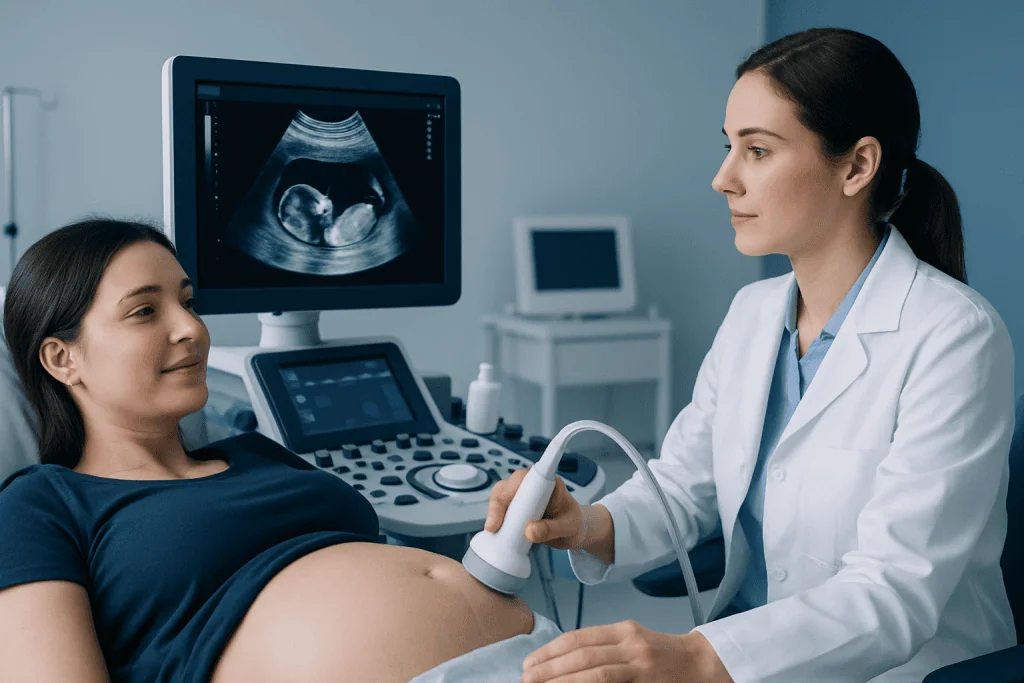
Pregnancy begins when a sperm fertilizes an egg. In a typical conception, the fertilized egg starts dividing as it travels from a fallopian tube toward the uterus. About several days later, it implants in the thickened uterine lining, which has been prepared by pregnancy hormones.
Once implantation occurs, the body produces human chorionic gonadotropin (hCG), the hormone detected by most pregnancy tests. hCG supports early pregnancy development and is also measured in blood when clinicians need more information about a very early pregnancy. A positive pregnancy test confirms the presence of hCG, but it does not identify where the pregnancy is located.
In the first weeks, ultrasound findings change quickly. A gestational sac may be seen before an embryo is visible, especially with a transvaginal ultrasound, which provides a detailed view of the uterus and surrounding structures. A scan that is too early to show all expected features does not necessarily indicate a problem; a repeat scan after an appropriate interval can provide a clearer answer.
Symptoms and early pregnancy changes

Many people with an intrauterine pregnancy notice common early pregnancy symptoms, including a missed period, breast tenderness, tiredness, nausea, increased urination, food aversions, or changes in mood. Symptoms differ considerably between individuals and can also vary from one pregnancy to another.
Mild lower abdominal cramping, a pulling sensation, or light spotting can occur in early pregnancy and may not signal a serious concern. The uterus and its blood supply change rapidly, and the cervix can be more sensitive than usual. Still, symptoms alone cannot confirm whether a pregnancy is intrauterine or whether it is developing as expected.
Some healthy pregnancies have few noticeable symptoms. Conversely, intense symptoms do not necessarily indicate a complication. A clinician can advise whether symptoms warrant an examination, blood testing, or ultrasound, particularly if there is pain, bleeding, uncertainty about pregnancy dates, or a previous history of ectopic pregnancy or miscarriage.
Why pregnancy location and viability are assessed
An intrauterine pregnancy is not usually caused by an illness or a personal action. It is the normal result of implantation in the uterine lining. During early care, the clinical focus is generally on confirming the location of the pregnancy, estimating gestational age, and assessing whether development appears consistent with the dates.
Ultrasound is the principal tool for this assessment. A transvaginal ultrasound may be recommended in early pregnancy because it can identify small structures sooner than an abdominal scan. Clinicians look for features such as a gestational sac within the uterus, a yolk sac, an embryo, and cardiac activity when the pregnancy is far enough along.
Serial quantitative hCG blood tests may be used if the scan is unclear or performed very early. The pattern of hCG change over time can help guide follow-up, although hCG levels alone cannot diagnose a normal intrauterine pregnancy or rule out every concern. In rare circumstances, including after assisted reproductive treatment, an intrauterine pregnancy and an ectopic pregnancy can occur at the same time. Persistent or significant pain should therefore always be assessed.
- Pregnancy dates may be uncertain because ovulation does not always occur on the same day of the cycle.
- A scan may be too early to show an embryo or cardiac activity.
- Repeat imaging and blood tests can prevent conclusions being made before enough information is available.
Diagnosis and follow-up care
After a positive pregnancy test, a clinician will usually ask about the date of the last menstrual period, cycle regularity, symptoms, medical history, medications, and previous pregnancies. This information helps estimate gestational age and identify factors that may affect the timing or type of assessment needed.
Ultrasound confirmation of an intrauterine gestational sac is reassuring in most cases. If the pregnancy appears to be developing normally, the person can move forward with routine prenatal care. This typically includes screening tests, discussion of nutrition and supplements, review of medicines, and monitoring of maternal health conditions such as high blood pressure, diabetes, thyroid disease, or anemia.
If the findings are uncertain, clinicians may recommend another ultrasound and repeat hCG testing. Waiting for follow-up can be emotionally difficult, but it is often medically appropriate because early pregnancy structures develop rapidly. The care team should explain what is known, what remains uncertain, what symptoms require urgent help, and when the next assessment should take place.
Management, prenatal care, and self-care
There is no treatment needed simply because a pregnancy is intrauterine; it is the expected pregnancy location. Management depends on ultrasound findings, pregnancy stage, symptoms, and the person’s overall health. For a normally developing pregnancy, care focuses on regular prenatal visits and support for a healthy pregnancy.
General early pregnancy measures include taking a prenatal vitamin containing folic acid as advised by a clinician, eating a balanced diet, staying hydrated, getting appropriate rest, and avoiding alcohol, smoking, recreational drugs, and exposure to second-hand smoke. Before starting, stopping, or continuing prescription medicines, over-the-counter products, or herbal supplements, it is important to discuss them with a qualified healthcare professional.
People who conceived through fertility treatment, have a history of ectopic pregnancy, have had tubal surgery, or experience bleeding or pain may need earlier or closer follow-up. Emotional support also matters. Uncertainty during early pregnancy can cause understandable anxiety, and discussing concerns with an obstetrician, midwife, or mental health professional can be helpful.
Acibadem International’s multidisciplinary specialists and JCI-accredited hospitals support international patients with early pregnancy assessment, prenatal care, and treatment when pregnancy complications are identified.
When to seek medical care
Anyone with a positive pregnancy test should arrange routine prenatal care, even if they feel well. An early appointment provides an opportunity to confirm dates, review health history and medications, discuss supplements and lifestyle, and plan any needed ultrasound or laboratory tests.
Prompt medical advice is recommended for vaginal bleeding, new pelvic or abdominal pain, pain during urination, fever, persistent vomiting that prevents fluid intake, or symptoms that feel unusual or concerning. Light spotting can have several causes, but it should still be discussed with a healthcare professional so that appropriate guidance can be given.
Emergency assessment is needed for severe or worsening abdominal or pelvic pain, heavy vaginal bleeding, shoulder-tip pain, fainting, severe dizziness, weakness, or shortness of breath. These symptoms can be associated with urgent pregnancy-related conditions, including ectopic pregnancy or significant bleeding, and should not be managed at home.
Frequently asked questions
Is an intrauterine pregnancy normal?
Yes. An intrauterine pregnancy means that implantation has occurred inside the uterus, which is the usual location for a pregnancy to develop. Further assessment may still be needed to confirm gestational age and whether development is consistent with the pregnancy dates.
How is an intrauterine pregnancy confirmed?
It is usually confirmed with an ultrasound, often a transvaginal ultrasound in the earliest weeks. A clinician may also request repeat hCG blood tests if the scan does not yet provide a clear answer.
Can a positive pregnancy test confirm an intrauterine pregnancy?
No. A urine or blood pregnancy test detects hCG, a hormone produced during pregnancy, but it does not show where the pregnancy is located. Ultrasound is needed to confirm an intrauterine pregnancy.
Can an intrauterine pregnancy cause cramping or spotting?
Mild cramping and light spotting can occur in early intrauterine pregnancy and do not always mean there is a problem. However, any bleeding or pain should be discussed with a healthcare professional, particularly if it becomes heavier, more painful, or is accompanied by dizziness.
What does it mean if no intrauterine pregnancy is visible on ultrasound?
It may mean the scan was performed too early, pregnancy dates are different than expected, or the pregnancy needs further evaluation. Clinicians may arrange repeat ultrasound and hCG tests to determine whether there is an early intrauterine pregnancy, a miscarriage, or an ectopic pregnancy.
Does seeing an intrauterine pregnancy rule out ectopic pregnancy?
In most natural pregnancies, confirming a definite intrauterine pregnancy makes ectopic pregnancy very unlikely. Rarely, an intrauterine and ectopic pregnancy can occur together, especially after assisted reproductive treatment, so severe pain, faintness, or heavy bleeding still requires urgent medical care.
References
- American College of Obstetricians and Gynecologists
- National Institute for Health and Care Excellence
- Royal College of Obstetricians and Gynaecologists
- World Health Organization
- Society of Obstetricians and Gynaecologists of Canada
This article is for general information only and is not a substitute for professional medical advice. Please consult a qualified doctor about your individual situation.
Explore treatments in Turkey — costs, top hospitals & a free quote
JCI-accredited · board-certified surgeons · reply within 24h
Add us as a Preferred Source to see more of our trusted health content across Google Search, AI Overviews and Discover.

More from the Health Library



Related Specialists

Prof. Dr. Mustafa Karaçelik
Cardiovascular Surgery
Fzt. Ali Demir
Pediatric Rehabilitation
Dr. R.Şirin Atlığ
Physical Medicine & Rehabilitation
Dr. Havva Gölalan
Oral & Dental Health