Thickened Endometrium: An Evidence-Based Guide for Patients

The meaning of a thickened endometrium depends on menstrual status, symptoms, medication use and ultrasound timing. Endometrial thickness normally changes throughout the menstrual cycle in people who still have periods.
Key Takeaways
- The meaning of a thickened endometrium depends on menstrual status, symptoms, medication use and ultrasound timing.
- Endometrial thickness normally changes throughout the menstrual cycle in people who still have periods.
- Postmenopausal bleeding should always be assessed by a qualified clinician, even if it happens only once.
- Further testing may include repeat ultrasound, endometrial biopsy, hysteroscopy or removal of a polyp when indicated.
- Most causes of a thickened uterine lining are treatable, and evaluation helps guide appropriate care.
A thickened endometrium is an ultrasound finding, not a diagnosis. It can be a normal part of the menstrual cycle before menopause, while after menopause—particularly with bleeding—it may need timely evaluation to identify hormone-related changes, polyps, hyperplasia or, less commonly, cancer.
What Does Thickened Endometrium Mean?
The endometrium is the tissue lining the inside of the uterus. Each month during the reproductive years, hormones cause this lining to grow in preparation for a possible pregnancy. If pregnancy does not occur, the lining is shed during a menstrual period. A thickened endometrium means that imaging, most often a transvaginal ultrasound, has shown the lining to be thicker than expected in a particular clinical setting.
This finding does not by itself confirm a health problem. In people who menstruate, the endometrium naturally becomes thicker after ovulation and before a period. Its measurement therefore needs to be interpreted alongside the timing of the last menstrual period, age, symptoms, pregnancy possibility and use of hormonal medicines.
After menopause, the endometrium is usually thinner because estrogen levels are lower. A thicker measurement in a postmenopausal person may still have a benign explanation, but it deserves more careful assessment when vaginal bleeding is present. The aim of evaluation is to identify the cause while avoiding unnecessary testing when the finding fits the person’s circumstances.
How Endometrial Thickness Is Assessed
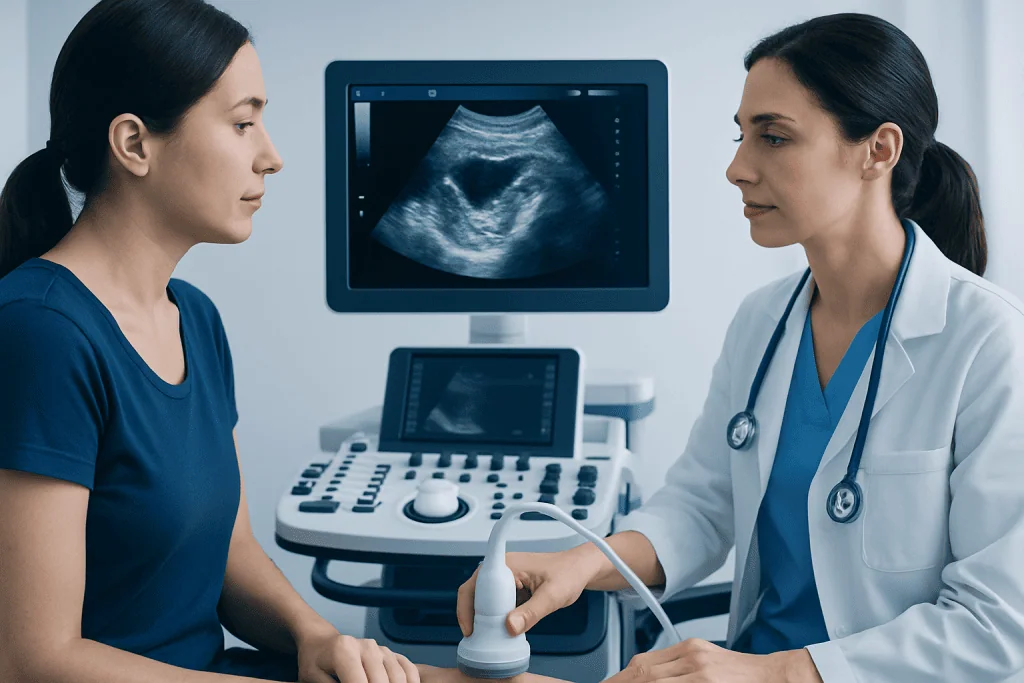
Transvaginal ultrasound is the usual first test. A small ultrasound probe is placed in the vagina to produce detailed images of the uterus and measure the endometrial stripe, which represents the lining. This examination is generally brief and does not use radiation. In some situations, an abdominal ultrasound may also be used, although it may provide less detail.
A single number should not be interpreted in isolation. Before menopause, there is no one measurement that reliably defines an abnormal lining for everyone, because normal thickness varies across the cycle. Ultrasound can also be harder to interpret when there are fibroids, uterine scarring, adenomyosis, or difficulty obtaining a clear view of the entire lining.
For postmenopausal bleeding, clinicians often use the ultrasound measurement as one part of risk assessment. A thin, clearly seen lining can be reassuring in many cases, while a thicker lining, an irregular appearance, fluid within the uterus, or a focal growth may lead to additional testing. People without bleeding may be assessed differently, as an incidental measurement alone does not always require the same investigation.
Symptoms and Related Changes
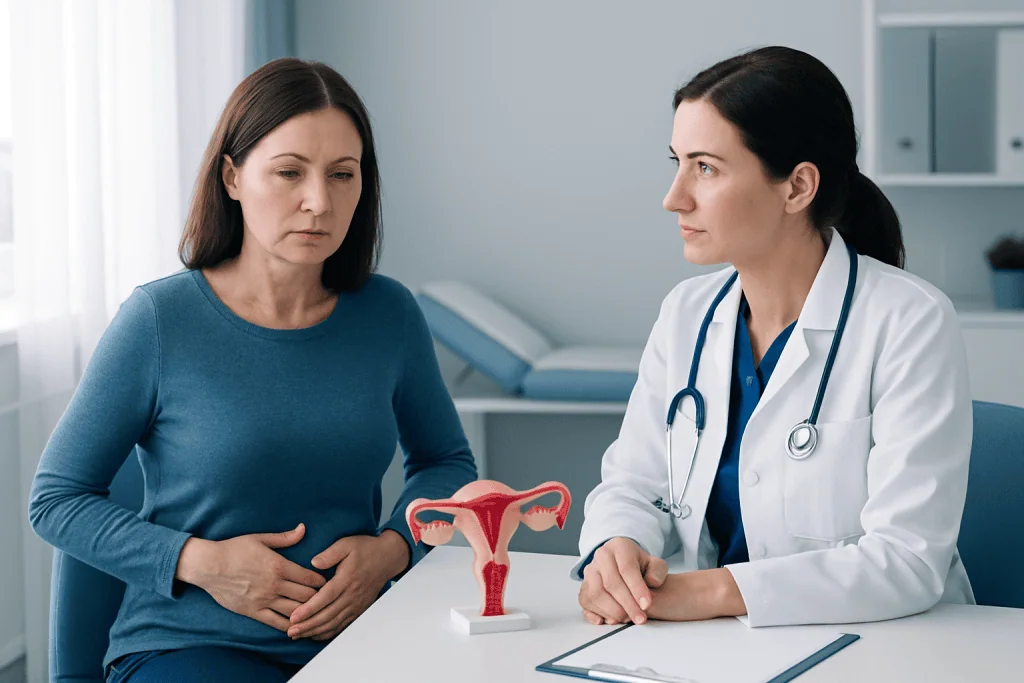
Many people with a thickened endometrium have no symptoms. The finding may be discovered during an ultrasound performed for pelvic pain, ovarian cyst follow-up, fertility assessment or another reason. When symptoms occur, they are usually related to the underlying cause rather than the thickness itself.
Possible symptoms include heavier-than-usual menstrual bleeding, periods that last longer than usual, bleeding between periods, very infrequent periods followed by heavy bleeding, or spotting after sex. After menopause, any vaginal bleeding, staining or pink or brown discharge should be discussed with a clinician. Bleeding after menopause is common enough to have many non-cancerous causes, but it should not be assumed to be a normal consequence of aging.
Symptoms such as pelvic pressure or cramping can occur with conditions including fibroids or polyps, but they are not specific to endometrial changes. A clinician will consider the full pattern of symptoms, medical history and examination findings rather than relying on ultrasound alone.
Common Causes and Risk Factors
Normal hormonal variation is one of the most common reasons for a thicker lining before menopause. Other benign causes include endometrial polyps, which are localized overgrowths of the lining, and fibroids that may alter the appearance of the uterine cavity. Pregnancy-related changes can also affect the lining, so pregnancy testing may be appropriate for people of reproductive age with abnormal bleeding.
When ovulation does not occur regularly, estrogen can stimulate the endometrium without the balancing effects of progesterone. This may happen with polycystic ovary syndrome, during perimenopause, or with other causes of irregular periods. Some hormone treatments and medicines, including tamoxifen, can also influence the endometrium and may change how ultrasound findings are interpreted.
Endometrial hyperplasia refers to an overgrowth of endometrial glands. Some forms are linked with a higher risk of endometrial cancer, especially when atypical cells are present. Risk factors that can increase long-term estrogen exposure include obesity, diabetes, certain ovulatory disorders, starting periods early, reaching menopause later, and some family histories of gynecologic cancers. Having risk factors does not mean a person will develop cancer, but it may affect the recommended evaluation.
- Irregular or absent ovulation
- Use of estrogen without adequate progestogen when a uterus is present
- Use of tamoxifen
- History of endometrial hyperplasia or polyps
- Postmenopausal bleeding
Diagnosis: What Tests May Be Recommended?
Assessment starts with a medical history. A clinician may ask about bleeding patterns, last menstrual period, pregnancies, menopausal status, medications, hormone therapy, family history and conditions such as diabetes or polycystic ovary syndrome. A pelvic examination may be performed to look for other sources of bleeding from the vagina or cervix.
If tissue evaluation is needed, an endometrial biopsy may be performed in the clinic. A thin instrument is passed through the cervix to collect a small sample from the uterine lining. The sample is examined by a pathologist for hyperplasia, atypical cells or cancer. Mild cramping or brief spotting can occur afterward, and the care team can explain how to prepare and what symptoms require follow-up.
Sometimes a biopsy does not obtain enough tissue or may not detect a small focal lesion such as a polyp. In that situation, saline infusion sonography or hysteroscopy may be recommended. Hysteroscopy uses a narrow camera passed through the cervix to view the uterine cavity directly and, if needed, take targeted samples or remove a polyp. The chosen test depends on symptoms, ultrasound findings and individual risk factors.
Treatment and Follow-Up
Treatment is directed at the cause. A normally cyclical thickening in someone with regular periods may require no treatment. If irregular ovulation is contributing to prolonged or unpredictable bleeding, clinicians may discuss hormonal approaches that protect the lining and help regulate bleeding. The most suitable option depends on medical history, fertility plans and personal preferences.
Endometrial polyps may be monitored in selected situations or removed, particularly when they cause bleeding, affect fertility, appear concerning on imaging or occur after menopause. Hyperplasia without atypia may often be managed with progestogen-based treatment and repeat sampling to confirm that the lining has responded. Hyperplasia with atypia generally needs specialist-led care because it carries a greater chance of being associated with, or progressing to, cancer.
If cancer is identified, treatment is planned by a gynecologic oncology team and may include surgery, radiation therapy, systemic treatment or a combination, depending on the stage and tumor features. Acibadem International’s multidisciplinary specialists and JCI-accredited hospitals evaluate and treat gynecologic conditions for international patients. Follow-up appointments are important because they allow symptoms, repeat imaging or tissue results to be reviewed over time.
Self-Care and When to Seek Medical Care
There is no safe home method to reduce endometrial thickness without understanding its cause. Keeping a record of bleeding days, flow, spotting and associated symptoms can help make a consultation more informative. People should take prescribed hormonal treatment exactly as directed and should not stop or start hormone therapy without speaking with the clinician who manages it.
Supporting overall health can also be useful. Regular physical activity, a balanced eating pattern and management of conditions such as diabetes may reduce some long-term hormone-related risks. These measures are not substitutes for diagnostic testing when abnormal bleeding or a concerning ultrasound result is present.
When to seek medical care: arrange a prompt medical appointment for bleeding after menopause, bleeding between periods, persistently very heavy or prolonged periods, or a new abnormal bleeding pattern. Seek urgent care for very heavy bleeding that soaks pads rapidly, fainting, severe weakness, chest pain, shortness of breath, severe pelvic pain, fever, or possible pregnancy with pain or bleeding. A qualified doctor can determine whether observation, repeat imaging or tissue testing is appropriate.
Frequently asked questions
Is a thickened endometrium always cancer?
No. A thickened endometrium is not the same as cancer and is often related to normal menstrual hormone changes, polyps or non-cancerous hyperplasia. However, further evaluation may be needed when there is postmenopausal bleeding, persistent abnormal bleeding or other risk factors.
What endometrial thickness is normal?
Normal endometrial thickness varies substantially before menopause because the lining changes throughout the menstrual cycle. After menopause, measurements are interpreted differently, especially if bleeding is present. A clinician should interpret the result in the context of symptoms, medicines and ultrasound image quality.
Can a thickened endometrium cause bleeding?
The underlying reason for the thickened lining can cause bleeding. For example, hormonal imbalance, a polyp or endometrial hyperplasia may lead to irregular, heavy or postmenopausal bleeding. Testing helps identify the specific cause.
Does a thickened endometrium need a biopsy?
Not always. Whether a biopsy is needed depends on age, menopausal status, bleeding symptoms, ultrasound features and individual risk factors. A biopsy is commonly considered for postmenopausal bleeding with concerning findings and for certain patterns of abnormal bleeding before menopause.
Can hormonal therapy make the endometrium thicker?
Yes. Estrogen can stimulate growth of the endometrial lining, particularly if it is not balanced by appropriate progestogen in people who have a uterus. Tamoxifen and some other hormonal medicines can also affect the lining, so clinicians need to know about all medications and hormone treatments.
What happens if endometrial hyperplasia is found?
The pathology report will identify whether atypical cells are present. Hyperplasia without atypia may often be treated with progestogen therapy and follow-up biopsies, while atypical hyperplasia usually requires specialist discussion because its cancer risk is higher. The care plan is individualized and may take fertility wishes into account.
This article is for general information only and is not a substitute for professional medical advice. Please consult a qualified doctor about your individual situation.
Explore treatments in Turkey — costs, top hospitals & a free quote
JCI-accredited · board-certified surgeons · reply within 24h
Add us as a Preferred Source to see more of our trusted health content across Google Search, AI Overviews and Discover.
Check your numbers in seconds
BMI, calories, due date, blood pressure and 30+ more clinical calculators — free, instant, doctor-reviewed ranges.

More from the Health Library

Anxiolytic: A Complete Medical Overview

Ringworm on Black Skin: What Patients Need to Know

Meat Sticks: A Complete Medical Overview

Belly Button Lint: What Patients Need to Know

Herpes on Black Skin: An Evidence-Based Guide for Patients