Lump Inside the Stomach: An Evidence-Based Guide for Patients

A lump inside the stomach is not a diagnosis; it can represent several different types of growths or, occasionally, material within the stomach. Some stomach masses cause no symptoms and are discovered incidentally during endoscopy or imaging.
Key Takeaways
- A lump inside the stomach is not a diagnosis; it can represent several different types of growths or, occasionally, material within the stomach.
- Some stomach masses cause no symptoms and are discovered incidentally during endoscopy or imaging.
- Upper endoscopy, ultrasound-based endoscopy, biopsies, and scans can help identify the nature and depth of a lump.
- Treatment depends on the type, size, location, symptoms, and whether testing suggests cancer risk.
- Persistent upper-abdominal symptoms, bleeding, unexplained weight loss, or trouble swallowing warrant prompt medical assessment.
A lump inside the stomach can refer to a growth seen during an examination or a sensation of fullness in the upper abdomen. Many stomach lumps are noncancerous, but any suspected mass should be assessed by a qualified clinician to establish the cause and decide whether monitoring or treatment is needed.
What does a lump inside the stomach mean?
A lump inside the stomach may be a growth on the stomach lining, a bulge arising from deeper layers of the stomach wall, or less commonly a collection of indigestible material. It may be found during an upper endoscopy, a CT scan, or another test performed for symptoms such as indigestion, anemia, pain, or nausea. The term itself does not indicate whether the finding is harmless or serious.
Many lesions in the stomach are benign, meaning they are not cancer. Examples include polyps, lipomas made of fatty tissue, and some smooth-muscle or nerve-related growths. However, certain lumps require closer assessment because they may bleed, obstruct food passage, enlarge over time, or have malignant potential.
A person generally cannot reliably tell the cause of a stomach lump from symptoms alone. The most useful next step is evaluation by a gastroenterologist, who can determine where the finding originates and whether tissue sampling, surveillance, or removal is appropriate.
How a stomach lump may feel: symptoms and signs
Small stomach lumps often cause no symptoms. They may be discovered unexpectedly while investigating reflux, persistent dyspepsia, anemia, or another digestive concern. When symptoms occur, they are often nonspecific and can overlap with common conditions such as gastritis, peptic ulcer disease, or acid reflux.
Possible symptoms include ongoing upper-abdominal discomfort or pressure, feeling full unusually quickly after meals, bloating, nausea, reduced appetite, or vomiting. A larger lesion near the stomach outlet can occasionally interfere with the movement of food into the small intestine, leading to recurrent vomiting or early satiety.
Some lesions bleed slowly into the digestive tract. This may lead to iron-deficiency anemia, tiredness, shortness of breath with exertion, black or tar-like stools, or vomiting blood. These symptoms need timely medical attention, especially if they develop suddenly or are accompanied by weakness, dizziness, or fainting.
- Persistent or worsening upper-abdominal pain
- Unexplained weight loss or loss of appetite
- Feeling full after a small amount of food
- Vomiting, particularly repeated vomiting after meals
- Black stools, visible blood, or signs of anemia
Possible causes of a lump inside the stomach

Stomach polyps are among the more commonly identified growths. They form from the lining of the stomach and include several subtypes. Some are associated with chronic inflammation, long-term acid-suppressing medicine use, inherited syndromes, or infection with Helicobacter pylori. The significance of a polyp depends on its type, size, appearance, and microscopic findings.
Subepithelial lesions, also called submucosal lesions, sit beneath the surface lining and may appear as a smooth bump at endoscopy. These can include lipomas, pancreatic rests, leiomyomas, schwannomas, or gastrointestinal stromal tumors (GISTs). GISTs are uncommon but important to identify because their behavior varies, and some can become malignant.
Less commonly, a suspected lump is not a true tissue growth. A bezoar, for example, is a compact mass of undigested food, hair, or other material in the stomach. Enlarged nearby organs or structures pressing against the stomach can also create the appearance of a bulge. Imaging and endoscopic ultrasound are particularly helpful in distinguishing these possibilities.
Risk factors and what increases the chance of concern
There is no single cause for all stomach lumps. Risk factors vary by lesion type. Chronic stomach inflammation, including inflammation related to H. pylori, may contribute to some forms of gastric polyps. A family history of certain inherited polyposis syndromes can also be relevant, particularly when multiple polyps occur or relatives have had gastrointestinal cancers at a young age.
Age, tobacco use, a diet high in salted or heavily processed foods, and a history of stomach surgery may influence the risk of some stomach conditions, including gastric cancer. These factors do not mean that a person has cancer, and many people with a stomach lesion have no clear risk factors at all.
Doctors consider the lesion’s features alongside personal history. A growing mass, a lesion with an ulcerated surface, signs of bleeding, larger size, abnormal-looking tissue, or concerning biopsy findings may lead to more detailed testing or treatment. The presence of symptoms is important, but symptom severity does not always match the size or nature of a lesion.
How doctors investigate a stomach mass
Assessment usually begins with a medical history and physical examination. The clinician will ask about digestive symptoms, appetite, weight changes, medicines, previous stomach conditions, family history, and any signs of bleeding. Blood tests may be used to check for anemia or other effects of chronic blood loss.
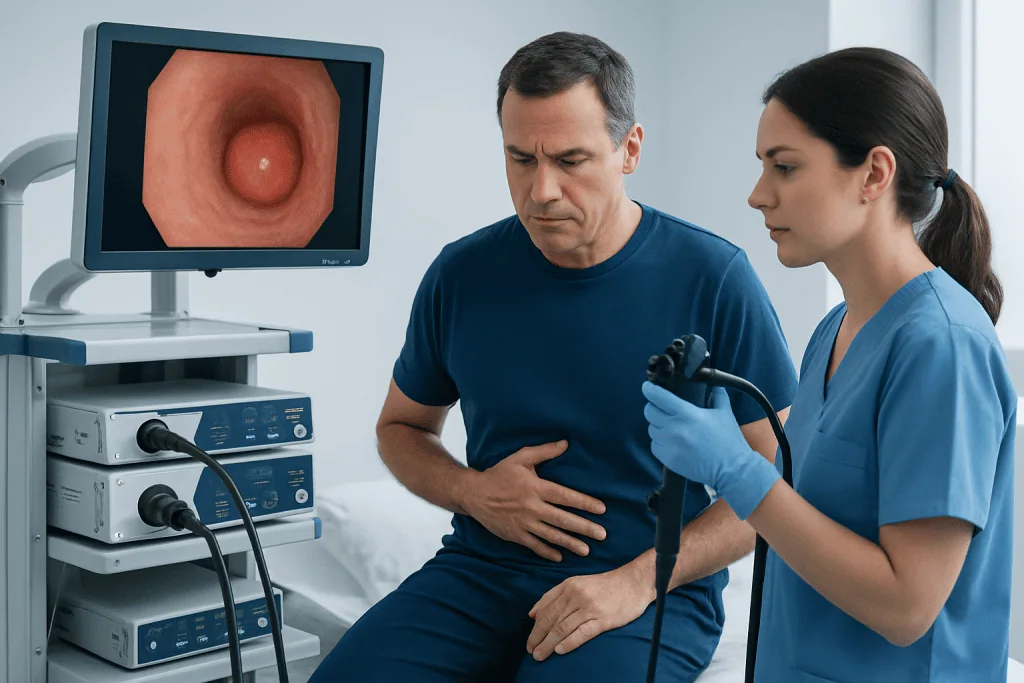
An upper endoscopy is often the central test. During this procedure, a flexible camera passes through the mouth to examine the esophagus, stomach, and first part of the small intestine. It can identify a surface lesion, assess its appearance, and allow biopsies to be taken. A standard biopsy may not reach a lesion arising from deeper stomach-wall layers, so a normal superficial biopsy does not always fully characterize a subepithelial lump.
Endoscopic ultrasound combines endoscopy with ultrasound imaging. It helps show which layer of the stomach wall a lump comes from and can guide a needle biopsy when needed. CT or MRI scans may be used to assess larger masses, evaluate surrounding structures, or look for spread when cancer is a concern. Results are interpreted together rather than relying on any one test alone.
Treatment and follow-up options
Treatment is individualized. A small benign-appearing lesion with reassuring test results may only need observation, with repeat endoscopy or imaging at an interval recommended by the care team. This approach avoids unnecessary procedures while allowing clinicians to monitor for meaningful changes.
Some polyps can be removed during endoscopy, both to provide a definitive diagnosis and to prevent future bleeding or cancer-related risk in selected cases. Endoscopic methods may also be suitable for carefully chosen early cancers or superficial lesions. The exact procedure depends on the lesion’s size, depth, location, and pathology findings.
Larger, symptomatic, or potentially malignant tumors may need surgery. Some tumors, including certain GISTs, may be managed with surgery and, in selected situations, targeted medicines prescribed by an oncology team. Treatment planning should involve specialists in gastroenterology, pathology, radiology, surgery, and oncology when appropriate. Acibadem International’s multidisciplinary specialists and JCI-accredited hospitals evaluate and treat digestive conditions for international patients.
When to seek medical care
A person should arrange a medical appointment for persistent upper-abdominal discomfort, ongoing nausea, early fullness, unexplained appetite changes, or symptoms that do not improve with usual measures. Medical review is also appropriate when an imaging test or endoscopy report mentions a mass, nodule, polyp, submucosal lesion, or thickening of the stomach wall, even when no symptoms are present.
Urgent medical care is needed for vomiting blood, black tar-like stools, fainting, severe weakness, severe or sudden abdominal pain, or repeated vomiting that prevents fluids from staying down. These signs can indicate bleeding, obstruction, or another condition that requires prompt assessment.
Until the cause is known, it is best not to assume that a lump is cancer or attempt to treat it with supplements, restrictive diets, or non-prescribed remedies. Keeping a record of symptoms, medications, previous test results, and family history can help the clinician make an informed plan.
Frequently asked questions
Is a lump inside the stomach always cancer?
No. Many stomach lumps are benign, including certain polyps, fatty growths, and other noncancerous lesions. However, a lesion cannot be classified by symptoms alone, so endoscopy, imaging, or tissue testing may be needed to determine its nature.
Can a stomach lump cause bloating and early fullness?
Yes. Depending on its size and location, a lesion can contribute to pressure, bloating, nausea, or feeling full after small meals. These symptoms are common in many digestive conditions, so they do not confirm that a lump is the cause.
What test is best for a suspected stomach lump?
Upper endoscopy is commonly used because it allows direct examination of the stomach lining and may permit biopsy or removal of a surface lesion. Endoscopic ultrasound is especially useful when the lump appears to arise beneath the lining or from deeper layers of the stomach wall.
Can a stomach lump be removed without surgery?
Some polyps and superficial lesions can be removed during endoscopy using specialized instruments. Deeper, larger, or potentially malignant tumors may require surgery or other treatments, depending on their pathology and location.
What is a submucosal lesion in the stomach?
A submucosal, or subepithelial, lesion is a bump beneath the stomach’s surface lining. It can arise from fat, muscle, nerve tissue, blood vessels, or other structures, and endoscopic ultrasound can help clarify its origin.
How quickly should a stomach mass be evaluated?
A newly identified stomach mass should be reviewed by a clinician without unnecessary delay, even if there are no symptoms. More urgent evaluation is appropriate if there is gastrointestinal bleeding, anemia, unexplained weight loss, persistent vomiting, or severe pain.
References
- National Institute of Diabetes and Digestive and Kidney Diseases
- American College of Gastroenterology
- National Cancer Institute
- American Society for Gastrointestinal Endoscopy
- World Health Organization
This article is for general information only and is not a substitute for professional medical advice. Please consult a qualified doctor about your individual situation.
Persistent digestive symptoms? Get evaluated in Turkey
JCI-accredited · board-certified surgeons · reply within 24h
Add us as a Preferred Source to see more of our trusted health content across Google Search, AI Overviews and Discover.