

Blocked Bowel Operation — Explained by Medical Evidence, Not Myths

Not every bowel obstruction requires surgery; the cause, severity, scan findings, and response to treatment guide the decision. Surgery may remove scar tissue, repair a hernia, remove a tumor or diseased bowel segment, or create a temporary or permanent stoma when needed.
Key Takeaways
- Not every bowel obstruction requires surgery; the cause, severity, scan findings, and response to treatment guide the decision.
- Surgery may remove scar tissue, repair a hernia, remove a tumor or diseased bowel segment, or create a temporary or permanent stoma when needed.
- A complete blockage, signs of bowel ischemia, perforation, or worsening illness can require emergency surgery.
- Recovery depends on the operation, the underlying cause, overall health, and whether complications such as infection or bowel damage were present.
- Severe or persistent abdominal pain, vomiting, abdominal swelling, and inability to pass stool or gas need prompt medical assessment.
A blocked bowel operation is surgery to relieve an intestinal obstruction, remove damaged bowel if necessary, and restore the normal path of digestion. It is usually considered urgently when the bowel may be losing its blood supply, has perforated, or does not improve with careful non-surgical treatment.
What Is a Blocked Bowel Operation?
A blocked bowel operation, also called bowel obstruction surgery, treats a physical blockage that prevents food, fluid, and gas from moving normally through the small or large intestine. The aim is to identify the cause of the obstruction, relieve it safely, and protect the bowel from serious damage. Surgery is not automatic for every obstruction, but it can be lifesaving when the bowel is trapped, twisted, perforated, or losing its blood supply.
An obstruction can be partial, meaning that some material still passes through the intestine, or complete, meaning that nothing can pass. The small bowel is affected more often than the large bowel. Adhesions, which are bands of internal scar tissue after abdominal or pelvic surgery, are a common cause of small-bowel obstruction. Hernias, inflammatory bowel disease, tumors, twisting of the bowel, and narrowing from other conditions can also cause a blockage.
Clinicians make decisions based on the person’s symptoms, physical examination, blood tests, and imaging rather than on a single symptom alone. In some stable people, especially those with a partial obstruction and no evidence of bowel injury, treatment in hospital without an operation may allow the blockage to settle. In others, delaying surgery could increase the risk of bowel tissue death, infection, or leakage into the abdomen.
How Doctors Decide Whether Surgery Is Needed
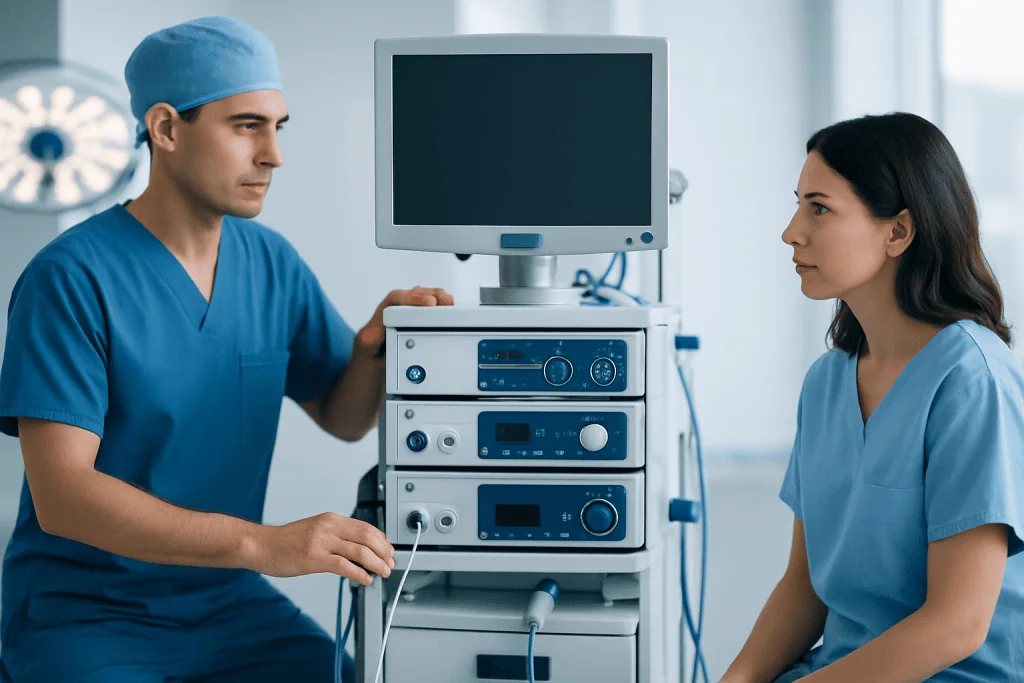
The first priority is to assess whether the obstruction is uncomplicated or whether there are warning signs that require an urgent operation. A person is usually admitted to hospital for monitoring, because dehydration and electrolyte changes can develop quickly when vomiting or poor absorption is present. Intravenous fluids, pain relief, medicines for nausea, and temporary avoidance of food and drink are common initial measures.
A thin tube passed through the nose into the stomach, called a nasogastric tube, may be used to remove built-up fluid and air. This can ease vomiting and pressure in the bowel. It does not remove the underlying cause in every case, but it may help a partial obstruction resolve and can reduce the risk of inhaling vomit into the lungs.
Computed tomography (CT) is often the most useful imaging test because it can show the location and likely cause of an obstruction, the degree of blockage, and features suggesting reduced blood flow or perforation. Surgery is more likely when imaging shows a closed-loop obstruction, strangulated hernia, volvulus, perforation, or signs of ischemia. It may also be recommended when symptoms and the obstruction do not improve with appropriate observation.
A common myth is that bowel surgery is only considered after many days of waiting. In reality, timing is individualized. When there are signs of bowel compromise or severe infection, surgeons act promptly; when the situation appears safe and likely to improve without surgery, they may monitor closely while reassessing frequently.
What Happens During Bowel Obstruction Surgery
The operation is performed under general anesthesia, so the patient is asleep and feels no pain during the procedure. Depending on the likely cause, previous operations, the severity of illness, and the surgeon’s assessment, surgery may be performed through keyhole incisions (laparoscopy) or through a larger abdominal incision (open surgery). Open surgery may be the safer approach in an emergency or when there is extensive scarring, swollen bowel, contamination, or uncertainty about the cause.
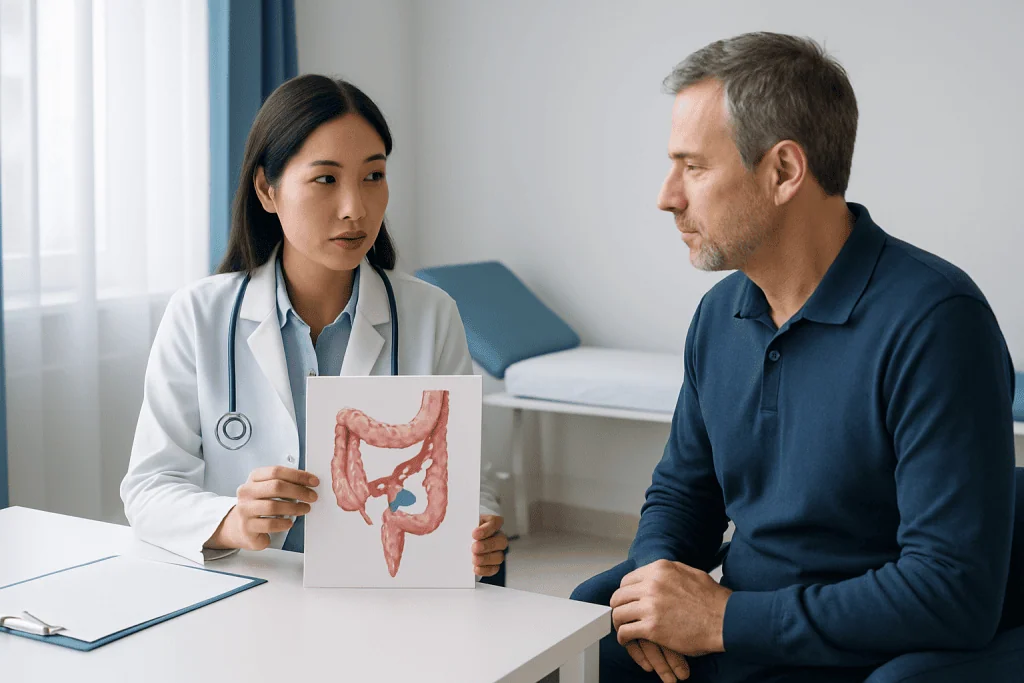
During the operation, the surgeon examines the bowel from the stomach area to the large intestine as needed and locates the obstruction. Adhesions may be divided, a trapped hernia may be repaired, or a twisted section of bowel may be untwisted. If a narrowed or blocked segment is caused by a tumor, inflammation, or a severely damaged area, that segment may need to be removed.
When bowel is removed, the healthy ends can often be joined together, which is called an anastomosis. In some circumstances, joining the bowel immediately is not the safest option. The surgeon may instead create a stoma, an opening of bowel onto the abdominal skin that drains into a pouch. A stoma may be temporary while the bowel heals, although occasionally it is permanent. This decision is based on safety and the specific condition found, not on preference alone.
Samples of removed tissue may be sent to a laboratory, particularly if cancer, inflammatory disease, or another bowel disorder is suspected. The exact procedure cannot always be predicted before an emergency operation, because the final findings are made by directly examining the abdomen and bowel.
Causes, Risks and Possible Complications
Abdominal adhesions are a frequent reason for a blocked bowel operation, particularly in people who have had previous surgery involving the abdomen or pelvis. A hernia can trap a loop of bowel, while colorectal cancer or other growths may progressively narrow the bowel. Crohn’s disease can cause strictures, or narrowed segments, and volvulus occurs when a part of the bowel twists around itself. In children, different causes such as intussusception may be considered.
The risks of surgery vary with age, heart and lung health, nutritional status, the urgency of surgery, and whether the bowel has already been injured. Possible complications include bleeding, wound infection, pneumonia, blood clots, urinary problems, bowel leakage from an anastomosis, a new obstruction from adhesions, and the need for a further operation. These risks are carefully balanced against the risks of leaving a dangerous obstruction untreated.
One particularly important concern is bowel ischemia, where pressure or twisting cuts off blood flow. Bowel tissue can deteriorate if this is not relieved. A perforation allows bowel contents to enter the abdominal cavity and may cause peritonitis or sepsis. These are reasons why surgical teams may recommend immediate treatment even when the person has had symptoms for only a short time.
It is also important to avoid another misconception: surgery does not guarantee that an obstruction will never recur. Adhesions can form after any abdominal operation, although surgeons use techniques intended to minimize tissue injury where possible. Follow-up care focuses on recovery, identifying the original cause, and discussing any longer-term prevention that is relevant.
Recovery After a Blocked Bowel Operation
Recovery begins in hospital. The care team monitors pain, temperature, heart rate, wound healing, fluid balance, and the return of bowel function. It is normal for the bowel to take time to start moving after an abdominal operation. Patients usually begin with small amounts of fluid when it is safe, then advance gradually to food according to their symptoms and the surgical team’s advice.
Early, supported movement is encouraged when appropriate because it helps circulation, breathing, muscle strength, and bowel recovery. Pain management is individualized; adequate relief helps a person breathe deeply and move, while clinicians also consider medicines that may slow bowel activity. Blood-thinning medication or compression devices may be used in hospital to lower the risk of blood clots.
Hospital stay and the time needed to resume usual activities differ widely. A straightforward keyhole procedure may allow a faster recovery than a major emergency open operation involving bowel removal, but there is no fixed timeline that applies to everyone. Before discharge, patients should understand wound care, eating guidance, activity restrictions, follow-up plans, and signs that require urgent review.
If a stoma is created, specialist stoma nurses teach practical pouch care, skin protection, hydration, and dietary adjustments. Most people become increasingly confident with these skills over time. Emotional adjustment is also important, and patients should feel able to discuss body-image concerns, daily activities, travel, work, and intimacy with their care team.
Supporting Recovery and Reducing Future Risk
After discharge, following the surgeon’s dietary and activity guidance is more useful than following a restrictive diet found online. Some people are advised to start with smaller, more frequent meals and gradually reintroduce fiber as bowel function stabilizes. Others may have more specific advice based on the operation, a stoma, Crohn’s disease, cancer treatment, or another underlying condition.
Good hydration, gentle walking as advised, and avoiding heavy lifting until cleared can support healing. Smoking cessation is beneficial before and after surgery because smoking can impair wound healing and increase respiratory complications. People should ask their clinician before restarting supplements, anti-inflammatory medicines, or medicines that can affect bleeding or bowel movement.
Not all causes of obstruction can be prevented. Adhesions cannot be fully avoided, and some people develop bowel obstruction years after earlier surgery. However, ongoing care for conditions such as hernias, inflammatory bowel disease, diverticular disease, or cancer can help identify symptoms and treatment needs early. New constipation, rectal bleeding, unexplained weight loss, or a persistent change in bowel habit should be medically assessed rather than self-treated for long periods.
Acibadem International’s multidisciplinary specialists and JCI-accredited hospitals assess and treat bowel obstruction and related digestive conditions for international patients, with care plans based on the individual diagnosis and surgical needs.
When to Seek Medical Care
Possible bowel obstruction symptoms include cramping or constant abdominal pain, abdominal swelling, nausea, repeated vomiting, inability to pass gas or stool, and loss of appetite. Symptoms can differ depending on whether the blockage is partial or complete and where it is located. A person with these symptoms should contact a healthcare professional promptly, especially if they have had abdominal surgery, have a known hernia, or have bowel disease.
Emergency assessment is needed for severe or worsening abdominal pain, a rigid or very tender abdomen, persistent vomiting, fever, fainting, confusion, a fast heartbeat, blood in stool or vomit, or inability to keep fluids down. These symptoms may indicate dehydration, infection, reduced bowel blood flow, or another urgent abdominal problem. People should not attempt to manage suspected complete obstruction with laxatives, enemas, or large amounts of food or drink unless a clinician specifically advises this.
After an operation, urgent medical advice is appropriate for increasing wound redness or drainage, fever, uncontrolled pain, repeated vomiting, worsening bloating, no stoma output when advised to expect output, sudden high stoma output with dehydration symptoms, chest pain, shortness of breath, or one-sided leg swelling. Early review can help address complications before they become more serious.
Frequently asked questions
Is a blocked bowel operation always an emergency?
Not always. Some partial bowel obstructions can be treated initially in hospital with fluids, bowel rest, close observation, and sometimes a nasogastric tube. However, surgery is urgent when there are signs of reduced blood supply, perforation, a trapped hernia, severe infection, or a complete obstruction that is not safe to observe.
How long does a blocked bowel operation take?
The length of surgery depends on the cause and the findings inside the abdomen. Dividing a simple band of scar tissue may take less time than removing damaged bowel, repairing a complex hernia, or managing infection. The surgical team can give the most meaningful estimate after reviewing scans and the person’s overall condition.
Can a bowel obstruction clear without surgery?
Yes, some obstructions, particularly partial obstructions caused by adhesions, can improve without an operation under hospital supervision. This approach is only appropriate when examinations and imaging do not suggest bowel injury or another urgent cause. Symptoms must be monitored closely because the situation can change.
Will a person need a stoma after bowel obstruction surgery?
Many people do not need a stoma. It may be necessary when bowel needs to be removed and it is not safe to reconnect the ends immediately, or when there is substantial inflammation, contamination, or bowel damage. If a stoma is required, it may be temporary or permanent depending on the underlying condition and operation.
What can a person eat after bowel obstruction surgery?
Food is usually restarted gradually once the bowel is functioning and the surgical team considers it safe. Patients may begin with fluids and move toward soft or regular foods based on tolerance and individual instructions. Dietary recommendations can differ significantly after bowel removal, stoma formation, or surgery for inflammatory bowel disease.
Can bowel obstruction return after surgery?
It can return, depending on the original cause. Adhesions may reform after abdominal surgery, and conditions such as hernias, Crohn’s disease, or tumors may require ongoing management. New symptoms of obstruction should be assessed promptly rather than assumed to be a routine digestive upset.
References
- National Institute of Diabetes and Digestive and Kidney Diseases
- American College of Surgeons
- National Health Service
- World Society of Emergency Surgery
- Merck Manual Consumer Version
This article is for general information only and is not a substitute for professional medical advice. Please consult a qualified doctor about your individual situation.
Persistent digestive symptoms? Get evaluated in Turkey
JCI-accredited · board-certified surgeons · reply within 24h
Add us as a Preferred Source to see more of our trusted health content across Google Search, AI Overviews and Discover.

More from the Health Library


Related Specialists

Dr. Şenay Olguner
Anesthesiology
Prof. Dr. Nergiz Hüseyinoğlu
Neurology
Dr. Hicran Karaca Sönmezer
Anesthesiology
Fzt. Erkan Akpınar
Physical Medicine & Rehabilitation