Perimenopause Headaches: Common Causes, Related Conditions, and When to See a Doctor

Fluctuating estrogen levels can affect brain pathways involved in migraine and other headaches during perimenopause. Migraine may worsen during the menopause transition, particularly in people with menstrual migraine, while some people notice little change or improvement.
Key Takeaways
- Fluctuating estrogen levels can affect brain pathways involved in migraine and other headaches during perimenopause.
- Migraine may worsen during the menopause transition, particularly in people with menstrual migraine, while some people notice little change or improvement.
- Poor sleep, hot flashes, dehydration, skipped meals, stress, and frequent pain-reliever use can increase headache frequency.
- A headache diary can help identify hormonal, lifestyle, and medication-related patterns.
- Sudden severe headaches, neurological symptoms, or a major change in a usual headache pattern require prompt medical care.
Perimenopause headaches are common and may become more frequent or change in pattern as estrogen levels rise and fall unevenly before menopause. Although hormonal shifts are often involved, sleep problems, stress, medication use, and other health conditions can also contribute, so a new or changing headache pattern deserves thoughtful assessment.
How perimenopause can affect headaches
Perimenopause is the transition leading up to menopause, when menstrual cycles may become irregular and the ovaries produce estrogen and progesterone less predictably. This stage can begin several years before the final menstrual period. Headaches may appear for the first time during this transition, but more often, an existing headache disorder changes in frequency, severity, or timing.
Estrogen has effects on blood vessels, pain-processing pathways, and brain chemicals involved in migraine. Rather than simply having a low estrogen level, many people are sensitive to rapid hormonal changes. The estrogen drop that occurs before a period can be a familiar trigger for menstrual migraine, and the less predictable rises and falls of perimenopause may make these headaches harder to anticipate.
Not every headache during midlife is hormonal. Headaches are common for many reasons, and perimenopause often overlaps with changes in sleep, mood, work or caregiving demands, physical activity, and general health. Looking at the full pattern, rather than assuming hormones are the only cause, supports safer and more effective care.
What do perimenopause headaches feel like?
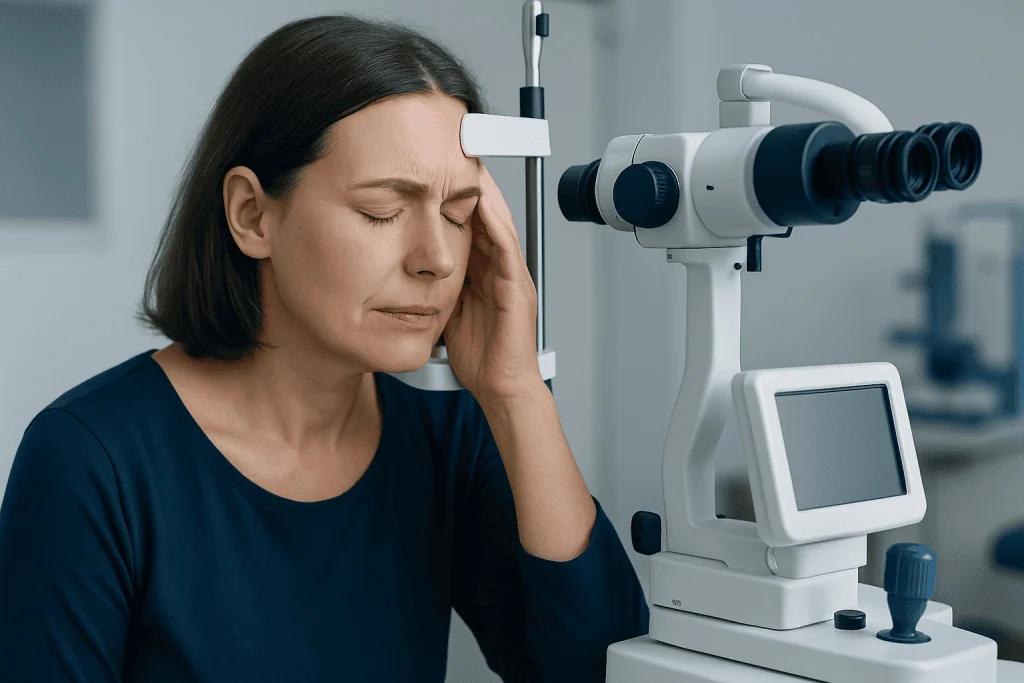
A migraine often causes moderate to severe throbbing or pulsating pain, commonly on one side of the head but sometimes on both sides. It may be accompanied by nausea, vomiting, sensitivity to light, sound, or odors, and worsening with routine activity. Some people have aura: temporary visual, sensory, speech, or other neurological symptoms that usually develop gradually before or during a migraine.
Tension-type headaches are also frequent in midlife. They are usually described as pressure, tightness, or a band-like feeling across both sides of the head. They may be associated with muscle tension in the neck, shoulders, or jaw, stress, prolonged screen use, or inadequate sleep. Unlike migraine, they usually do not cause prominent nausea or marked sensitivity to light and sound.
Headache timing can offer useful clues. Symptoms may cluster before bleeding begins, around irregular periods, after nights disrupted by hot flashes or night sweats, or during particularly stressful weeks. However, symptoms alone cannot reliably establish the cause. Keeping a record of headache days, symptoms, cycle changes, sleep, meals, and medicines can help a clinician distinguish likely patterns.
- Headache location, quality, severity, and duration
- Associated symptoms, including nausea, aura, or neck pain
- Menstrual bleeding, hot flashes, and sleep disruption
- Food, fluid, caffeine, alcohol, stress, and activity patterns
- All prescription and nonprescription medicines used for relief
Common triggers and related conditions

Hormonal fluctuation may lower the threshold for a headache, while everyday triggers help set it off. Sleep loss is especially important because insomnia and night sweats are common in perimenopause and can increase pain sensitivity. Skipping meals, dehydration, changes in caffeine intake, alcohol, prolonged fasting, and emotional stress may also trigger migraine or tension-type headaches in susceptible people.
Migraine is one of the most relevant related conditions. People who had migraine linked to menstrual periods earlier in life may find that attacks become less predictable during perimenopause. Migraine without aura and migraine with aura require individualized assessment, particularly when considering hormonal treatment, because a person’s age, smoking status, blood pressure, vascular history, and other factors matter.
Other conditions can cause or aggravate headaches and should not be overlooked. These include anxiety or depression, temporomandibular joint problems, sinus or upper-respiratory illness, uncorrected vision changes, neck disorders, high blood pressure, and sleep apnea. Frequent use of pain medicines can also lead to medication-overuse headache, in which headaches become more frequent as short-term relief medicines are used repeatedly.
For this reason, a clinician may ask about snoring, daytime sleepiness, jaw clenching, mood symptoms, vision, recent infections, and medication habits. A new headache in midlife may still be benign, but evaluating the wider health context helps identify conditions that need different treatment.
How doctors assess a new or changing headache
Diagnosis usually begins with a detailed history and physical examination. A clinician will ask when headaches started, how quickly they come on, what they feel like, how long they last, and whether they have changed. They will also review menstrual and menopausal symptoms, medical conditions, family history, current medicines, and the presence of migraine features such as aura or nausea.
A neurological examination may assess vision, eye movements, strength, sensation, coordination, reflexes, and speech. Blood pressure may be checked, and the clinician may consider whether sleep difficulties, anemia, thyroid disease, or other concerns could be contributing. Tests for hormone levels are not usually needed to explain typical perimenopause symptoms because levels fluctuate considerably; testing may be appropriate in selected situations.
Brain imaging is not needed for every headache. It may be recommended when there are warning signs, an abnormal neurological examination, a new pattern that is concerning, or features suggesting another cause. Depending on the symptoms, an eye examination, sleep assessment, blood tests, or referral to a neurologist, gynecologist, or other specialist may be helpful.
Treatment options and symptom management
Treatment is based on the headache type, frequency, severity, other symptoms, and individual health history. For occasional attacks, a clinician may recommend an appropriate nonprescription pain reliever or migraine-specific medicine. It is important to use acute headache medicines only as directed, since using some pain-relieving medicines too often can itself perpetuate headaches.
For frequent, disabling, or prolonged migraine, preventive treatment may be considered. Options can include medicines used regularly to reduce attack frequency, as well as treatments aimed at sleep, mood, neck tension, or other relevant triggers. The most suitable choice depends on factors such as cardiovascular health, blood pressure, other medicines, pregnancy potential, and whether aura occurs.
Menopausal hormone therapy may improve hot flashes and sleep for some people, which can indirectly help headaches. Its direct effect on migraine varies: some people improve, while others notice worsening, particularly if hormone levels fluctuate. A clinician can discuss whether hormone therapy is appropriate, the preferred formulation and route when relevant, and alternatives for menopausal symptoms. Hormone therapy should not be started solely to treat headache without an individualized discussion of benefits and risks.
Acibadem International’s multidisciplinary specialists at JCI-accredited hospitals can assess headache patterns and menopausal symptoms together for international patients, coordinating neurological and women’s health care where needed.
Prevention and self-care between headaches
Consistent daily habits can reduce common headache triggers, even when hormones remain unpredictable. A regular sleep schedule, adequate fluids, balanced meals at predictable times, and gradual physical activity can support overall wellbeing and help some people reduce headache frequency. Limiting alcohol and avoiding personal food triggers may be useful, but highly restrictive diets are usually unnecessary unless a clear pattern is present.
Managing night sweats and insomnia is often a practical part of headache prevention. Keeping the bedroom cool, using breathable bedding, limiting caffeine later in the day, and maintaining a wind-down routine may help sleep quality. Relaxation methods, paced breathing, mindfulness, counseling, or gentle stretching can also support stress management, especially when headaches occur alongside anxiety or muscle tension.
A headache diary is one of the most useful self-care tools. Over at least several weeks, a person can note headache days, menstrual bleeding, hot flashes, sleep, stress, meals, caffeine or alcohol, medications, and how well treatment worked. This information can reveal patterns and allows a clinician to judge whether prevention, acute treatment, or menopause symptom management needs adjustment.
When to seek medical care
A routine medical appointment is appropriate for headaches that are new during perimenopause, are becoming more frequent or severe, interfere with work, sleep, or daily activities, or no longer respond to a usual treatment. Medical review is also important for new migraine aura, headaches occurring after age 50, headaches triggered by coughing or exertion, or a substantial change in an established migraine pattern.
Urgent medical care is needed for a sudden, extremely severe headache that reaches peak intensity quickly, sometimes described as a thunderclap headache. Emergency assessment is also important if a headache occurs with fainting, confusion, seizure, fever and stiff neck, new weakness or numbness, trouble speaking, persistent vision loss, difficulty walking, chest pain, or after a significant head injury.
Most perimenopause headaches are not caused by a dangerous condition. Still, prompt assessment of red-flag symptoms helps rule out uncommon but serious causes and ensures that treatable contributors, such as high blood pressure or medication overuse, are addressed early.
Frequently asked questions
Can perimenopause cause headaches every day?
Perimenopause can contribute to more frequent headaches because hormones, sleep, and stress may change at the same time. However, daily or near-daily headaches should be assessed by a clinician, especially if they are new or worsening. Frequent use of pain medicines can also contribute to a medication-overuse headache.
Do headaches stop after menopause?
Some people, particularly those with migraine associated with menstrual periods, improve after menopause when hormone levels become more stable. Others continue to have migraine or other headaches, and a smaller number may worsen. The pattern varies from person to person and may also be affected by hormone therapy, sleep, and other health factors.
What is the difference between a hormonal headache and migraine?
A hormonal headache is a broad term for a headache that seems related to hormonal shifts. In many cases, the specific headache type is migraine, which can include throbbing pain, nausea, and sensitivity to light or sound. A clinician can help identify the headache type by reviewing symptoms and timing.
Can hormone therapy help perimenopause headaches?
Hormone therapy may help some people by easing hot flashes, night sweats, and sleep disruption, but its effect on headache is not predictable. It can improve migraine for some people and worsen it for others. A clinician should review migraine aura, cardiovascular risks, and other personal factors before recommending treatment.
What can be done at home for a perimenopause headache?
Resting in a quiet, dark room, drinking fluids, eating regularly, using a cool or warm compress, and following a clinician's advice about pain relief may help. Regular sleep, stress-management practices, and a headache diary can reduce triggers over time. It is best to avoid taking acute pain medicines more often than advised.
Are headaches with visual changes always an emergency?
Visual changes can occur as migraine aura, which often develops gradually and resolves, but new visual symptoms should be medically evaluated. Sudden vision loss, persistent changes, weakness, speech difficulty, confusion, or a sudden severe headache require emergency care. A person with a new or changed aura pattern should contact a clinician promptly.
This article is for general information only and is not a substitute for professional medical advice. Please consult a qualified doctor about your individual situation.
Explore treatments in Turkey — costs, top hospitals & a free quote
JCI-accredited · board-certified surgeons · reply within 24h
Add us as a Preferred Source to see more of our trusted health content across Google Search, AI Overviews and Discover.
Check your numbers in seconds
BMI, calories, due date, blood pressure and 30+ more clinical calculators — free, instant, doctor-reviewed ranges.

More from the Health Library

Preschooler Coughing at Night: Common Causes, Related Conditions, and When to See a Doctor

Nociceptive Pain: Possible Causes and When to Seek Care

Are Eggs Easy to Digest? A Doctor-Reviewed Answer

Navel Ache: Possible Causes and When to Seek Care

Can You Take Nyquil While Pregnant? Causes, Explanations, and Next Steps