How Do You Remove Acne Scars Naturally? Here Is What the Evidence Says

Natural remedies cannot reliably remove established acne scars, especially deep indented or raised scars. Daily broad-spectrum sunscreen is one of the most evidence-supported steps for preventing post-acne marks from becoming darker.
Key Takeaways
- Natural remedies cannot reliably remove established acne scars, especially deep indented or raised scars.
- Daily broad-spectrum sunscreen is one of the most evidence-supported steps for preventing post-acne marks from becoming darker.
- Gentle cleansing, moisturizing, and avoiding picking can help protect the skin barrier and reduce the risk of new scars.
- Lemon juice, undiluted essential oils, abrasive scrubs, and home microneedling may irritate skin and can worsen discoloration or scarring.
- A dermatologist can identify whether a mark is discoloration, an indented scar, or a raised scar and recommend suitable treatment.
- Medical review is important for painful, rapidly changing, itchy, or growing scars, or for ongoing acne that is leaving new marks.
Most acne scars are harmless and do not require medical treatment. Natural skin care can support healing and reduce the appearance of post-acne dark marks, but established indented or raised scars usually need professional treatment for meaningful improvement.
Can Acne Scars Be Removed Naturally?
How do you remove acne scars naturally? In most cases, natural methods cannot fully remove established acne scars. However, gentle skin care, daily sun protection, and avoiding irritation can help prevent dark marks from becoming more noticeable and may support the skin’s normal recovery after acne. Many post-acne marks fade gradually without invasive treatment.
It helps to distinguish a true scar from a temporary color change. Flat red, pink, brown, gray, or purple areas left after a spot has healed are often post-inflammatory marks rather than permanent changes in skin texture. These marks can improve over months, particularly when the skin is protected from sunlight. Indented scars, such as ice-pick, boxcar, or rolling scars, and raised scars are structural changes in the skin and are less likely to respond to home remedies.
Acne scarring is common and is not a sign that someone has poor hygiene. It can affect confidence and quality of life, but there are effective medical options when scars are bothersome. The safest first step is to control active acne and use a simple routine that does not further inflame the skin.
When to Seek Medical Care
Most post-acne marks and scars are not medically dangerous. Still, a person should arrange medical review if acne is painful, deep, widespread, or continuing to leave new scars. Early treatment of active acne can reduce the chance of additional scarring, and a clinician can help distinguish acne from other skin conditions that may look similar.
Medical advice is also appropriate when a scar becomes rapidly larger, increasingly raised, very itchy, painful, bleeding, or changes color unexpectedly. These features do not necessarily indicate a serious problem, but they should be assessed rather than treated with home remedies alone. People with darker skin tones may especially benefit from early guidance because irritation can lead to longer-lasting pigment changes.
A dermatologist will usually examine the skin closely, ask about acne history, skin care products, medicines, family history of raised scars, and previous treatments. Tests are not usually needed for typical acne scarring. The clinician may classify marks as discoloration, indented scars, or raised scars, assess whether acne is still active, and create a plan based on skin type, scar type, and personal goals.
What Natural Measures Can Actually Help?

The most useful non-procedure approach is consistent sun protection. Ultraviolet exposure can deepen post-inflammatory hyperpigmentation and make red or brown marks last longer. Applying a broad-spectrum sunscreen with an SPF of 30 or higher each day, and reapplying it as directed when outdoors, can help limit this darkening. Hats and shade provide additional protection.
A gentle routine can also reduce irritation. This generally means washing with a mild cleanser, using lukewarm rather than hot water, and applying a non-comedogenic moisturizer if the skin feels dry or tight. A healthy skin barrier is less likely to react to products, and less irritation may mean less visible redness or uneven pigmentation after acne heals.
Some plant-derived ingredients, such as aloe vera, centella asiatica, green tea, and colloidal oatmeal, are included in skin care products because they may be soothing. Evidence that they remove acne scars is limited. If a person wishes to try a product, choosing one formulated for facial skin, patch-testing it first, and introducing only one new product at a time are sensible precautions.
- Do not squeeze, pick, or scrub acne lesions or healing marks.
- Choose fragrance-free products if the skin is sensitive or easily irritated.
- Allow time: flat color changes often fade slowly, rather than within days or weeks.
Natural Remedies That May Cause More Harm Than Help
Popular online remedies are not always safe or effective. Lemon juice, apple cider vinegar, baking soda, toothpaste, and undiluted essential oils can disrupt the skin barrier. They may cause burning, contact dermatitis, or chemical irritation. In some people, this inflammation can make dark marks more noticeable and longer-lasting.
Physical exfoliation also deserves caution. Rough scrubs, brushes, and abrasive powders do not lift out acne scars. Instead, they can create tiny injuries and aggravate redness or pigmentation. Chemical exfoliants can be helpful for some people when used appropriately, but they are active treatments rather than purely natural remedies and should be introduced carefully, especially in sensitive skin.
At-home microneedling devices should not be used to treat acne scars without professional advice. Needling the skin incorrectly may cause infection, scarring, or pigment changes, particularly if active acne is present. Similarly, oils marketed for scars, including vitamin E oil, have not been shown to reliably improve acne scars and can trigger irritation or breakouts in some users.
Why Some Acne Marks Fade and Others Remain
Acne can leave different types of marks because inflammation affects the skin in different ways. When inflammation changes pigment production or small blood vessels near the surface, a flat red or dark mark can remain after the acne lesion resolves. These marks are not necessarily permanent scars and commonly improve as the skin renews itself.
True scars develop when inflammation damages collagen during healing. Too little collagen may leave an indentation, while excess collagen can produce a thick, raised scar. Genetics, the severity and duration of acne, repeated picking, delayed acne treatment, and a personal tendency toward keloids can all influence scar formation.
Because scar type matters, there is no single best remedy for everyone. A product that helps a flat dark mark may do little for an ice-pick scar, while a procedure intended for texture may not be the first choice for a raised scar. This is one reason an individual assessment is valuable before investing time in multiple products.
Evidence-Based Treatments for Acne Scars
When a person wants more improvement than gentle home care can provide, a dermatologist may recommend a tailored treatment plan. The first priority is often preventing new scars by treating ongoing acne. Depending on the type and severity of acne, this may include topical treatments, oral medicines, or other therapies selected by a qualified clinician.
For post-acne dark marks, clinicians may recommend topical ingredients that support skin-cell turnover or reduce uneven pigmentation. These can include retinoids, azelaic acid, or other prescription or nonprescription options. Such treatments need to be matched to the person’s skin sensitivity and used with sun protection, because irritation can worsen discoloration.
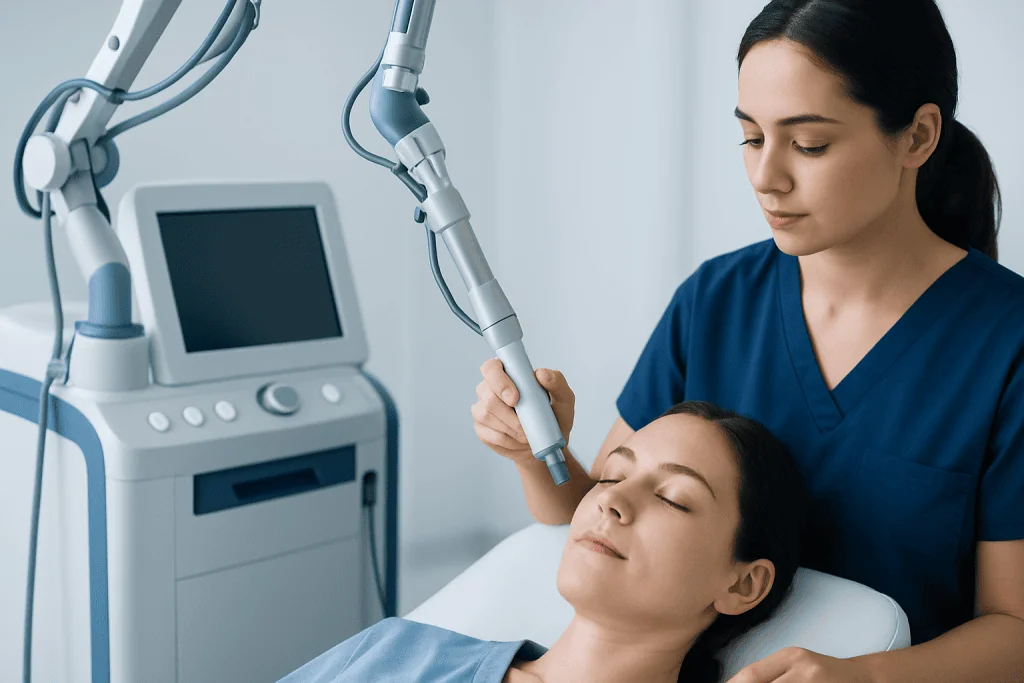
Indented scars may respond to procedures such as microneedling performed in a clinical setting, chemical peels, laser treatment, subcision, fillers, or scar-focused surgical techniques. Raised scars may be treated with options such as corticosteroid injections, silicone-based therapy, laser treatment, or other specialist care. Results vary, and several sessions may be needed; the aim is usually improvement rather than complete removal.
Acibadem International’s multidisciplinary specialists and JCI-accredited hospitals can assess acne scarring and discuss appropriate dermatology-based treatment options for international patients.
A Practical Routine to Prevent New Marks
Preventing new acne lesions is often the most meaningful way to prevent future scars. A simple routine is usually easier to follow and less likely to irritate the skin than using many products at once. People should select products labeled non-comedogenic or oil-free when appropriate, but should remember that individual reactions can still differ.
In the morning, a gentle cleanse if needed, moisturizer, and broad-spectrum sunscreen are a practical foundation. In the evening, gentle cleansing and moisturizing may be enough for sensitive skin. If an acne treatment is added, it should be introduced gradually according to product instructions or medical advice. Using multiple strong active ingredients together can cause dryness and inflammation.
Lifestyle habits cannot cure acne scars, but general health measures may support skin well-being. Adequate sleep, stress management, and avoiding smoking are reasonable goals. A person who notices that a particular cosmetic product, hair product, or skin care product regularly triggers breakouts can consider stopping it and discussing alternatives with a clinician.
Frequently asked questions
Can aloe vera remove acne scars naturally?
Aloe vera may feel soothing and can help moisturize irritated skin, but there is not strong evidence that it removes established acne scars. It may be reasonable to use a well-formulated product if it does not cause irritation. A patch test is helpful, especially for sensitive skin.
How long do acne marks take to fade?
Flat red or dark post-acne marks often fade gradually over several months, although the timeline varies by skin tone, sun exposure, and the depth of inflammation. Daily sunscreen and avoiding picking can help prevent marks from becoming darker or lasting longer. Indented and raised scars generally do not fade in the same way and may need professional treatment for noticeable improvement.
Does vitamin E help acne scars?
Vitamin E is often promoted for scars, but evidence does not show that it reliably improves acne scars. Topical vitamin E can also cause irritation or contact dermatitis in some people. It is best not to apply it to broken, inflamed, or actively acne-prone skin without professional advice.
Can exfoliating remove acne scars?
Exfoliating cannot remove deep or raised acne scars. Gentle, appropriately selected chemical exfoliation may sometimes improve dullness or uneven pigmentation, but over-exfoliation can irritate skin and worsen post-acne marks. Abrasive scrubs are generally not recommended for scarred or acne-prone skin.
Are acne scars permanent?
Some acne scars are long-lasting, particularly indented and raised scars, but their appearance can often be improved. Flat discoloration after acne is commonly temporary and may fade on its own. A dermatologist can explain which type of mark is present and what improvement is realistic.
When should someone see a dermatologist for acne scars?
A dermatologist should be consulted when acne is still active and causing new marks, when scars affect well-being, or when over-the-counter skin care is not helping. Prompt review is also advisable for scars that are painful, itchy, rapidly enlarging, bleeding, or otherwise changing. Early management may help limit further scarring.
References
- American Academy of Dermatology
- National Institute of Arthritis and Musculoskeletal and Skin Diseases
- Mayo Clinic
- National Health Service
- DermNet New Zealand
This article is for general information only and is not a substitute for professional medical advice. Please consult a qualified doctor about your individual situation.
Acne in Turkey — costs, top hospitals & a free quote
JCI-accredited · board-certified surgeons · reply within 24h
Add us as a Preferred Source to see more of our trusted health content across Google Search, AI Overviews and Discover.