Trisomy 23 — Explained by Medical Evidence, Not Myths

“Trisomy 23” usually refers to an extra sex chromosome, not an extra copy of a numbered chromosome called 23. Common sex chromosome variations include 47,XXY, 47,XXX, and 47,XYY.
Key Takeaways
- “Trisomy 23” usually refers to an extra sex chromosome, not an extra copy of a numbered chromosome called 23.
- Common sex chromosome variations include 47,XXY, 47,XXX, and 47,XYY.
- Many people with an extra sex chromosome have mild features or no obvious symptoms and may remain undiagnosed.
- A chromosome test, usually a karyotype or chromosomal microarray, can clarify the exact genetic pattern.
- Genetic counseling and individualized medical follow-up can help people understand health, development, fertility, and family-planning considerations.
Trisomy 23 is an informal and medically imprecise term rather than a specific genetic diagnosis. It commonly describes an extra sex chromosome—such as XXY, XXX, or XYY—which may have different effects depending on the chromosome pattern and the individual.
What does trisomy 23 mean?
Trisomy 23 is not a standard medical diagnosis. In humans, chromosomes are usually described as 22 pairs of non-sex chromosomes plus a pair of sex chromosomes. The sex chromosomes are sometimes informally called the “23rd pair.” Therefore, when someone says “trisomy 23,” they often mean that a person has an extra sex chromosome.
Most cells typically contain 46 chromosomes: 22 pairs plus two sex chromosomes. A person with an extra sex chromosome usually has 47 chromosomes. Examples include 47,XXY, 47,XXX, and 47,XYY. These are called sex chromosome trisomies because there are three sex chromosomes rather than the usual two.
The phrase can be confusing because human chromosomes are formally numbered 1 through 22, while X and Y are named separately. A genetic test report should state the precise chromosome pattern, known as a karyotype, rather than using the broad term “trisomy 23.” Knowing the exact result is important because health considerations, support needs, and reproductive implications can differ between patterns.
The chromosome patterns people may mean
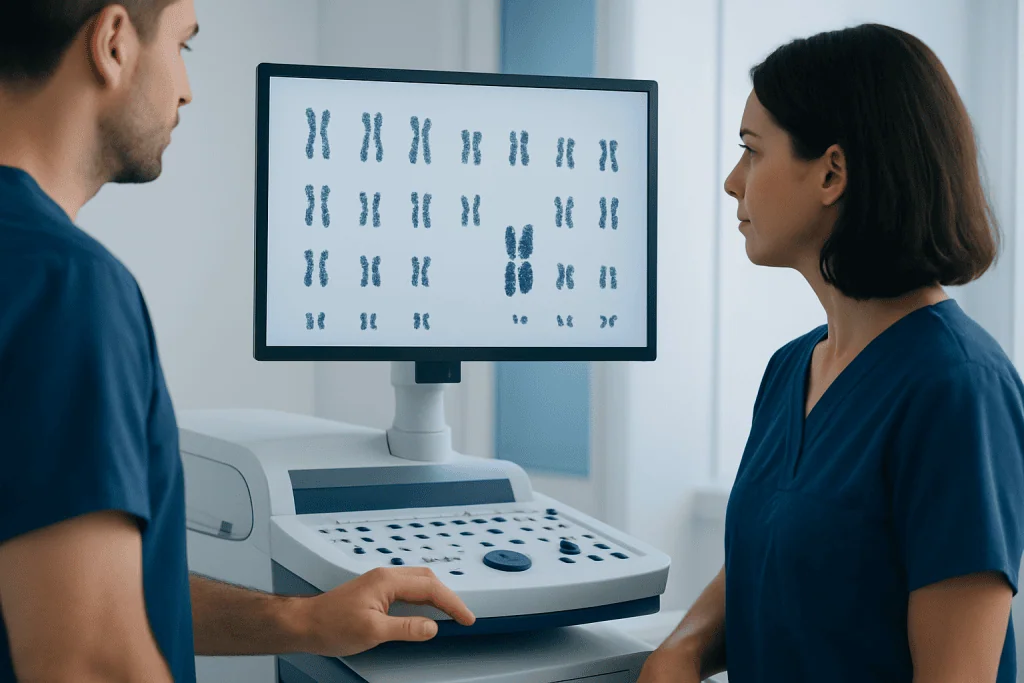
The most common patterns associated with the term trisomy 23 are 47,XXY, 47,XXX, and 47,XYY. In 47,XXY, a person has two X chromosomes and one Y chromosome. This pattern is commonly known as Klinefelter syndrome and is usually associated with male physical development. Some people are diagnosed during puberty or adulthood because of differences in testosterone production or fertility, while others have few noticeable signs.
In 47,XXX, a person has three X chromosomes and is usually associated with female physical development. Many people with this pattern are healthy and do not know they have it. Some may be taller than expected for their family or experience mild learning, speech, motor coordination, or emotional challenges that can benefit from early support.
In 47,XYY, a person has one X chromosome and two Y chromosomes and is usually associated with male physical development. It may be linked with tall stature and, in some children, speech, learning, attention, or behavioral differences. It does not determine personality, intelligence, or a person’s future. Each person’s experience is individual, and many lead healthy, independent lives.
- 47,XXY: two X chromosomes and one Y chromosome
- 47,XXX: three X chromosomes
- 47,XYY: one X chromosome and two Y chromosomes
How an extra sex chromosome happens

Sex chromosome trisomies usually occur because of a random error in cell division. During the formation of an egg or sperm, or very early after fertilization, chromosomes may not separate in the usual way. This is called nondisjunction. It can result in a cell with an extra chromosome.
These changes are generally not caused by anything a parent did or did not do before or during pregnancy. They are not contagious and are not the result of diet, exercise, stress, or everyday activities. Although some chromosome differences become more common with increasing maternal age, sex chromosome trisomies can occur in pregnancies at any age.
In some people, the extra chromosome is present in only some cells. This is called mosaicism. Mosaic patterns can lead to a wide range of features, and the chromosome result alone cannot reliably predict a person’s health, learning profile, or reproductive outcomes. A genetics professional can explain what a particular result may mean in context.
Possible signs and health effects
Some people with an extra sex chromosome have no clear symptoms. Others may have differences that become more apparent during childhood, puberty, or adulthood. These may include speech or language delay, learning differences, challenges with attention or executive functioning, motor coordination difficulties, or social-emotional concerns. These features are not present in everyone and are often manageable with appropriate support.
Physical features also vary. Depending on the chromosome pattern, some people may be taller than average, have differences in pubertal development, or have lower muscle tone in childhood. People with 47,XXY may have reduced testosterone production, smaller testes, breast tissue development, reduced facial or body hair, lower bone density, or fertility difficulties. However, the range is broad, and effective care is available for many health concerns.
It is helpful to avoid assumptions based on a chromosome result. Sex chromosome variations do not define a person’s gender identity, abilities, relationships, or potential. Regular health care, developmental assessment when needed, and attention to individual symptoms are more useful than expecting a particular outcome from a label alone.
How trisomy 23 is diagnosed
An extra sex chromosome can be identified before birth or after birth. During pregnancy, screening tests such as cell-free DNA screening may indicate an increased chance of a sex chromosome variation. Screening does not confirm a diagnosis. Diagnostic testing, such as chorionic villus sampling or amniocentesis, is needed to confirm the chromosome pattern during pregnancy.
After birth, a clinician may recommend testing because of developmental concerns, delayed puberty, differences in sexual development, infertility, recurrent learning difficulties, or an unexpected result from another test. A karyotype examines the number and overall appearance of chromosomes. Chromosomal microarray testing may also detect some chromosome changes, although a karyotype is particularly useful for identifying the full sex chromosome pattern.
Receiving a genetic result can raise practical and emotional questions. Genetic counseling can provide clear, non-directive information about the result, potential health monitoring, inheritance, reproductive options, and family questions. The result should always be interpreted alongside a person’s medical history, examination, and individual needs.
Support, treatment, and everyday care
There is no treatment that removes an extra chromosome, and many people do not need intensive medical treatment. Care focuses on specific symptoms, development, and overall health. Early speech and language support, occupational therapy, educational planning, and psychological support can be valuable when these needs are present.
For people with 47,XXY and clinically low testosterone, an endocrinologist may assess hormone levels and discuss whether testosterone treatment is appropriate. This may support pubertal development, bone health, energy, muscle mass, and sexual health for some individuals. Fertility specialists can discuss evaluation and available options for people who want to explore biological parenthood.
Routine care may include monitoring growth, puberty, learning, mental wellbeing, bone health, and cardiometabolic health according to the person’s chromosome pattern and symptoms. A balanced diet, regular physical activity, sufficient sleep, avoiding tobacco, and attending preventive appointments support health for everyone. Acibadem International’s multidisciplinary specialists and JCI-accredited hospitals can assess and treat individual developmental, endocrine, and reproductive health needs for international patients.
When to seek medical care
A person should speak with a doctor or pediatrician if they have concerns about a child’s speech, learning, development, coordination, growth, or puberty. Medical advice is also appropriate for delayed or incomplete puberty, unexpected breast development in a person assigned male at birth, concerns about testosterone, or difficulty conceiving after regular unprotected intercourse.
Anyone who receives an abnormal prenatal screening result should be offered timely discussion with an obstetric clinician and, where available, a genetics professional. They can explain the difference between screening and diagnostic testing, the possible benefits and limits of each option, and the next steps without pressure.
Urgent care is not usually needed simply because of a sex chromosome test result. However, new or severe physical symptoms, significant emotional distress, or concerns about a child’s safety or wellbeing should be assessed promptly. Ongoing support from primary care clinicians and relevant specialists can help ensure that care remains practical, respectful, and tailored to the individual.
Frequently asked questions
Is trisomy 23 a real medical term?
Trisomy 23 is not a formal term used in standard chromosome reporting. It usually refers informally to having three sex chromosomes, because sex chromosomes are sometimes called the 23rd chromosome pair. A test result should identify the exact pattern, such as 47,XXY, 47,XXX, or 47,XYY.
Can a person live a normal life with an extra sex chromosome?
Many people with an extra sex chromosome are healthy and live full, independent lives. Some may need support for learning, speech, puberty, hormone health, or fertility, but needs vary widely. Early recognition and individualized care can help address concerns effectively.
Is trisomy 23 inherited from a parent?
Most sex chromosome trisomies happen randomly during egg or sperm formation or early cell division after conception. They are usually not inherited and are not caused by a parent’s actions. A genetic counselor can discuss the specific result and any relevant recurrence questions.
Can prenatal screening diagnose trisomy 23?
Prenatal cell-free DNA screening can estimate the chance of certain sex chromosome differences, but it cannot make a diagnosis. A positive or high-risk screening result should be discussed with an obstetric clinician or genetic counselor. Diagnostic tests, including amniocentesis or chorionic villus sampling, can confirm the chromosome pattern.
What is the difference between trisomy 23 and Down syndrome?
Down syndrome is usually caused by an extra copy of chromosome 21 and is formally called trisomy 21. The phrase trisomy 23 usually refers to an extra sex chromosome, such as XXY, XXX, or XYY. These are different genetic variations with different possible health and developmental effects.
Does an extra sex chromosome affect fertility?
Fertility effects depend on the chromosome pattern and the individual. Some people have typical fertility, while people with 47,XXY more commonly have reduced sperm production and may need specialist assessment. Reproductive endocrinology and fertility teams can provide individualized information and discuss appropriate options.
References
- MedlinePlus Genetics
- National Human Genome Research Institute
- American College of Medical Genetics and Genomics
- Centers for Disease Control and Prevention
- National Health Service
This article is for general information only and is not a substitute for professional medical advice. Please consult a qualified doctor about your individual situation.
Explore treatments in Turkey — costs, top hospitals & a free quote
JCI-accredited · board-certified surgeons · reply within 24h
Add us as a Preferred Source to see more of our trusted health content across Google Search, AI Overviews and Discover.