

Cervix Before Period vs Pregnant: Key Differences and How Doctors Tell Them Apart

Cervical position and texture change naturally during the menstrual cycle and early pregnancy. A low, firm cervix may occur before a period, but it is not a dependable sign that bleeding will start.
Key Takeaways
- Cervical position and texture change naturally during the menstrual cycle and early pregnancy.
- A low, firm cervix may occur before a period, but it is not a dependable sign that bleeding will start.
- A high, soft, closed cervix can occur in pregnancy, but self-checking cannot confirm pregnancy.
- Home urine pregnancy tests are generally most reliable from the first day of a missed period.
- Pelvic pain, heavy bleeding, fainting, or shoulder pain need prompt medical assessment, especially if pregnancy is possible.
The cervix may feel lower, firmer, and slightly more open before a period, while it may become higher, softer, and closed in early pregnancy. However, these changes vary widely and cannot reliably distinguish pregnancy from an approaching period; a pregnancy test is the most dependable first step.
Cervix Before Period vs Pregnant: A Side-by-Side Comparison
When comparing the cervix before a period with the cervix in early pregnancy, the most important point is that there is substantial overlap. Hormones can change cervical position, firmness, openness, and mucus throughout the cycle. These findings may be interesting to notice, particularly for people who track fertility, but they cannot diagnose pregnancy or predict a period with certainty.
| Feature | Often before a period | May occur in early pregnancy | What it means |
|---|---|---|---|
| Position | May feel lower and easier to reach | May feel higher and harder to reach | Position changes with hormones, body position, and time of day. |
| Texture | Often firmer, sometimes compared with the tip of the nose | May become softer, sometimes compared with the lips | Texture is subjective and differs between individuals. |
| Opening | May be slightly open, especially after previous vaginal birth | Usually remains closed | Whether the opening can be felt is not a reliable pregnancy indicator. |
| Discharge | May become thicker, sticky, or decrease before bleeding | May increase and look milky or clear | Normal discharge varies; color, odor, itching, or pain can suggest infection. |
| Other symptoms | Cramps, bloating, breast tenderness, mood changes | Missed period, nausea, fatigue, breast tenderness, frequent urination | Many early pregnancy and premenstrual symptoms are similar. |
The comparison describes common patterns rather than rules. A cervix can be high before a period or low in early pregnancy. It may also be difficult to reach because of anatomy, constipation, a full bladder, pelvic-floor tension, or differences in finger length. For this reason, symptoms and cervical checks should never replace pregnancy testing or medical care when needed.
Why Cervical Changes Overlap
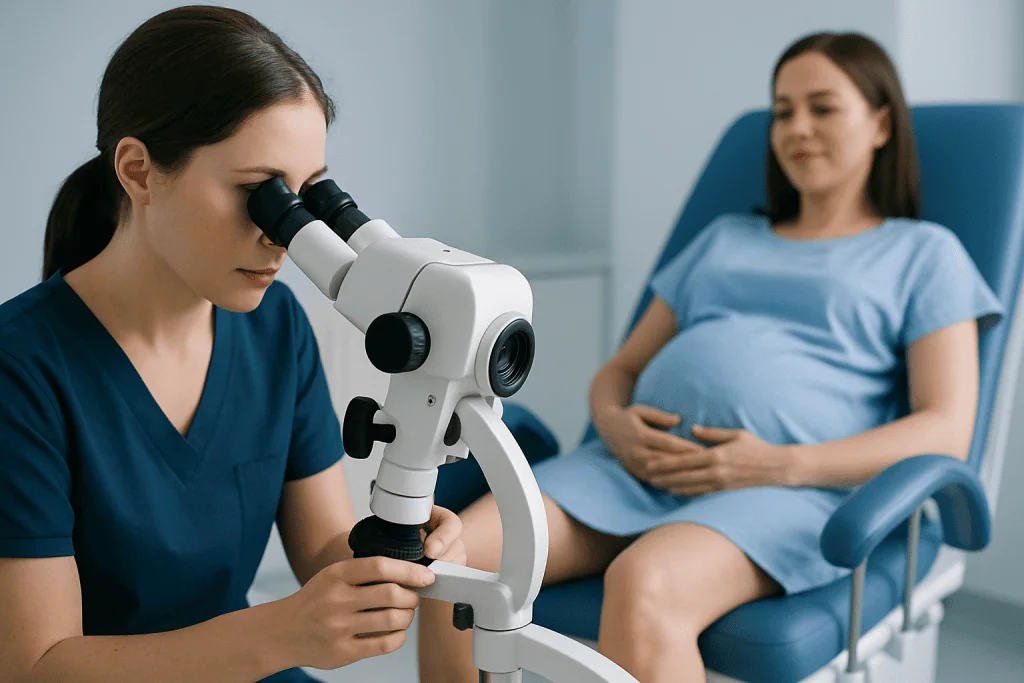
The cervix is the lower, narrow part of the uterus that opens into the vagina. It responds to changing levels of estrogen and progesterone during the menstrual cycle. Around ovulation, it often becomes higher, softer, and more open to support the passage of sperm. After ovulation, progesterone commonly makes it firmer and lower again, although the timing is not identical for everyone.
If conception occurs, progesterone remains elevated and the cervix gradually undergoes changes that help support pregnancy. Increased blood flow may also cause the cervix and vaginal tissues to appear bluish during a clinical examination. These early changes are variable, and some are not noticeable through self-examination. A clinician may identify certain findings during a pelvic examination, but even an examination alone does not confirm a pregnancy.
Hormonal contraception, breastfeeding, perimenopause, polycystic ovary syndrome, recent pregnancy, irregular periods, and stress can all affect cycle timing and cervical patterns. Therefore, a person who does not have regular cycles may find cervical observations especially difficult to interpret.
How a Clinician Tells the Difference

Clinicians do not diagnose pregnancy by cervical position alone. They begin with a history that includes the first day of the last menstrual period, cycle regularity, contraception use, sexual activity, pregnancy symptoms, bleeding, pain, medications, and relevant medical conditions. A pelvic examination may be appropriate in some situations, such as pain, bleeding, suspected infection, or concerns involving the cervix, but it is not required for every missed period.
The usual first diagnostic test is a urine or blood test for human chorionic gonadotropin (hCG), a hormone produced after implantation. Home urine tests are generally most accurate from the first day of a missed period when used exactly as directed. If the result is negative but the period does not begin, repeating the test after a few days or discussing testing with a healthcare professional is sensible.
When pregnancy is confirmed or symptoms raise concern, clinicians may use quantitative blood hCG testing and pelvic ultrasound. Ultrasound can help determine whether a pregnancy is developing in the uterus and estimate gestational age when appropriate. These assessments are especially important when there is pain, bleeding, uncertain dates, or a risk of ectopic pregnancy.
What to Do if a Period Is Expected
If a period is due soon and there has been a possibility of pregnancy, the practical next step is to take a home pregnancy test on or after the expected period date. Testing with first-morning urine may improve detection early on because the urine is often more concentrated. A negative result before the missed period may simply mean that hCG levels are not yet high enough to detect.
Premenstrual symptoms can include lower abdominal cramping, bloating, acne, fatigue, breast tenderness, food cravings, headache, and mood changes. These symptoms can be managed with rest, regular meals, fluids, gentle activity, and heat for cramps when appropriate. A healthcare professional or pharmacist can advise on suitable pain relief, particularly if pregnancy is possible or there are other health conditions.
It is helpful to record the date of bleeding, symptoms, and test results rather than repeatedly checking the cervix. Tracking can reveal whether a late period is an isolated event or part of an ongoing pattern. Periods that are consistently very painful, unusually heavy, absent, or unpredictable deserve medical review.
What to Do if Pregnancy Is Possible or Confirmed
A positive home pregnancy test should be followed by an appointment with a qualified healthcare professional for pregnancy confirmation and early prenatal guidance. Care may include reviewing medical history, medications, supplements, vaccinations, nutrition, and any conditions that need closer monitoring. Starting prenatal care early supports informed choices and helps identify individual needs.
Until pregnancy status is clear, it is reasonable to avoid alcohol, smoking, recreational drugs, and medications not approved by a clinician. Anyone trying to conceive or who could be pregnant can ask a clinician about folic acid and other preconception or prenatal recommendations. Prescribed medication should not be stopped suddenly without medical advice, as this can sometimes be harmful.
Light spotting can occur in early pregnancy and does not always indicate a problem, but it should be discussed with a healthcare professional. Bleeding and cramping can have several causes, including changes in the cervix, miscarriage, or ectopic pregnancy. Prompt assessment helps clarify the cause and guide safe care.
Safe Cervical Self-Checks and Their Limits
Some people choose to observe cervical changes as part of fertility awareness. If doing so, hands should be washed carefully and checks should be gentle. It is best to assess at a similar time of day, because cervical height can vary. A person should stop if the examination causes pain, bleeding, discomfort, or anxiety.
Self-checking is not recommended as a way to confirm pregnancy, assess cervical dilation, or decide whether bleeding or pelvic pain is serious. Frequent checking can irritate delicate tissue and may introduce bacteria if hand hygiene is poor. During pregnancy, a clinician may advise against inserting fingers into the vagina in particular circumstances, such as vaginal bleeding, ruptured membranes, placenta previa, or risk of preterm birth.
Changes in discharge also need context. Clear, white, or milky discharge without a strong odor or irritation can be normal. A new foul smell, green or yellow discharge, itching, burning, pain during sex, or pain when urinating may point to an infection and should be assessed rather than attributed to the menstrual cycle or pregnancy alone.
When to Seek Medical Care
Medical advice is appropriate for a missed period with a positive test, repeated negative tests despite no period, or uncertainty about pregnancy status. A clinician should also assess persistent pelvic pain, bleeding between periods, bleeding after sex, new unusual discharge, or a change in menstrual pattern that continues over several cycles.
Urgent medical evaluation is needed for heavy vaginal bleeding, severe or one-sided pelvic or abdominal pain, dizziness, fainting, shoulder-tip pain, fever, or worsening pain when pregnancy is possible or confirmed. These symptoms can have different causes, but they may indicate conditions requiring prompt treatment, including ectopic pregnancy. Emergency services should be contacted if symptoms are severe or a person feels faint or unsafe.
For people seeking assessment, Acibadem International’s multidisciplinary specialists and JCI-accredited hospitals can evaluate menstrual concerns, early pregnancy symptoms, and gynecological conditions for international patients. The appropriate clinician can recommend testing and care based on the person’s symptoms, history, and reproductive goals.
Frequently asked questions
Can the cervix tell whether someone is pregnant or about to get a period?
No. The cervix may be lower and firmer before a period and higher and softer in early pregnancy, but these patterns overlap greatly. A pregnancy test is more reliable than checking cervical position.
What does a cervix feel like before a period?
Before a period, the cervix may feel lower, firmer, and sometimes slightly open. However, this varies according to the person, the cycle, and whether they have previously given birth vaginally. It may not follow the same pattern every month.
Can a cervix be low in early pregnancy?
Yes. Although a high cervix is often described in early pregnancy, some people may notice a low or reachable cervix. Cervical position changes are not accurate enough to rule pregnancy in or out.
When should a home pregnancy test be taken?
A home urine pregnancy test is generally most reliable from the first day of a missed period. If the result is negative and bleeding does not start, repeating the test after a few days can be helpful. A healthcare professional can arrange a blood test or further assessment when results remain unclear.
Do early pregnancy symptoms feel like premenstrual symptoms?
They can feel very similar. Breast tenderness, fatigue, bloating, cramps, mood changes, and changes in appetite can occur with both premenstrual hormone changes and early pregnancy. A missed period and pregnancy test result provide more useful information than symptoms alone.
Should someone check their cervix during pregnancy?
Routine self-checking is not needed during pregnancy and cannot assess whether the pregnancy is progressing normally. It may cause irritation or introduce bacteria if done frequently. Anyone with bleeding, pain, fluid leakage, or pregnancy concerns should contact a healthcare professional instead.
This article is for general information only and is not a substitute for professional medical advice. Please consult a qualified doctor about your individual situation.
Explore treatments in Turkey — costs, top hospitals & a free quote
JCI-accredited · board-certified surgeons · reply within 24h
Add us as a Preferred Source to see more of our trusted health content across Google Search, AI Overviews and Discover.
Check your numbers in seconds
BMI, calories, due date, blood pressure and 30+ more clinical calculators — free, instant, doctor-reviewed ranges.

More from the Health Library

How to Sterilize a Needle? A Doctor-Reviewed Answer

Is Food Poisoning Contagious? Here Is What the Evidence Says

Nasacort vs Flonase: Key Differences and How Doctors Tell Them Apart

Is Pork Meat Fattening? Here Is What the Evidence Says

How Long Does Valium Take to Kick in? Here Is What the Evidence Says

What Is Bpa? Causes, Explanations, and Next Steps
Gynecology & Obstetrics Specialists at Acibadem

Prof. Dr. Engin Oral (m)
Gynecology & Obstetrics
Dr. A. Ezgi Sancaklı
Gynecology & Obstetrics
Prof. Dr. A. Taner Usta
Gynecology & Obstetrics
Prof. Dr. Ahmet Cem Batukan
Gynecology & Obstetrics