Blown Vein: An Evidence-Based Guide for Patients

A blown vein usually refers to a vein injured during a blood draw, injection, or IV cannula placement. Bruising and mild soreness are common and generally settle over days to a few weeks.
Key Takeaways
- A blown vein usually refers to a vein injured during a blood draw, injection, or IV cannula placement.
- Bruising and mild soreness are common and generally settle over days to a few weeks.
- Pain, swelling, coolness, leaking fluid, or burning during an IV infusion may indicate infiltration or extravasation and should be reported immediately.
- Older age, fragile veins, dehydration, repeated needle attempts, and some medicines can make vein injury more likely.
- Applying pressure after needle removal and following aftercare advice can reduce bruising and support healing.
A blown vein is a non-medical term commonly used when a needle punctures through a vein or blood leaks into nearby tissue during a blood draw or intravenous (IV) treatment. It often causes bruising, tenderness, or swelling and usually improves on its own, although symptoms during an IV infusion should be assessed promptly.
What Is a Blown Vein?
A blown vein is an informal term, not a formal medical diagnosis. People may use it when a needle used for a blood test, injection, or IV line goes through the vein wall, irritates the vein, or allows blood to escape into the surrounding soft tissue. The result may be a small collection of blood under the skin, called a hematoma, which appears as a bruise.
In many cases, this is a minor and temporary injury. Veins are flexible blood vessels, and the body gradually reabsorbs the leaked blood while the vein and surrounding tissues heal. A blown vein does not usually mean that all veins are permanently damaged or that future blood tests and IV access will be impossible.
The term is also sometimes used for an IV complication called infiltration. This occurs when non-irritating IV fluid enters tissue outside the vein rather than flowing into the bloodstream. If a medicine that can damage tissue leaks outside the vein, it is called extravasation; this requires urgent assessment and specific treatment based on the medicine involved.
What It May Look and Feel Like
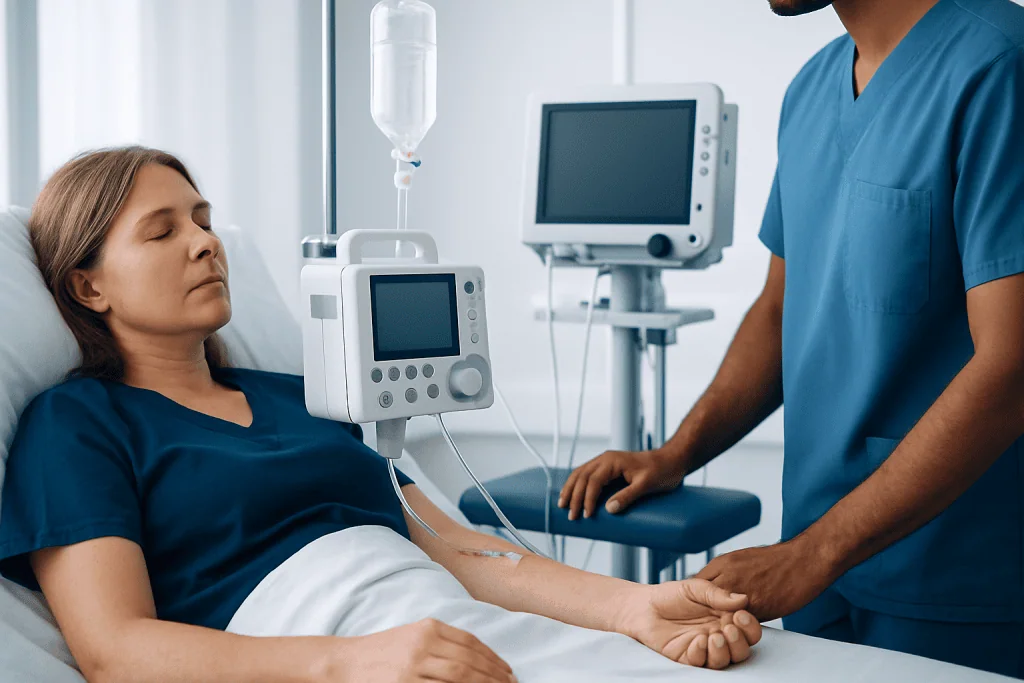
A vein injury after a needle procedure may cause a bruise that develops immediately or becomes more visible over the next day. The area can feel sore, tender, or slightly firm. Some people notice a small lump beneath the skin where blood has collected. Bruises often change from red or purple to green, yellow, and brown as they heal.
During an IV infusion, warning signs are somewhat different. There may be swelling around the cannula, skin that feels tight or cool, discomfort, burning, stinging, or fluid leaking from the insertion site. The infusion may also run more slowly than expected. These changes should be reported to the healthcare professional straight away rather than waiting for the infusion to finish.
A simple bruise is usually limited to the area around the needle site and gradually improves. Increasing redness, warmth, spreading swelling, severe pain, numbness, skin blistering, or changes in hand or foot color are not typical of a simple bruise and need medical advice.
- Common: localized bruising, mild swelling, tenderness, and a small firm area.
- Possible with IV infiltration: puffiness, cool skin, discomfort, and a slowed infusion.
- More concerning: severe or worsening pain, blistering, marked swelling, or impaired movement or sensation.
Why Vein Injuries Happen

Needle procedures require the needle or cannula to enter a vein accurately and remain in place. A vein can be punctured on both sides if the needle passes through its far wall. It may also move slightly as the needle is inserted, particularly when it is small, mobile, or close to the skin surface. Even with careful technique, bruising can occasionally occur.
Some factors can make access more difficult or increase the likelihood of bruising. These include dehydration, naturally small or less visible veins, cold skin, repeated attempts to place a needle, and veins that have been used frequently for blood tests or treatment. Older adults may have more fragile skin and veins, while children may have smaller veins that are harder to access.
Medicines and health conditions can also affect bruising. Anticoagulants and antiplatelet medicines, sometimes called blood thinners, can make a bruise larger or longer-lasting because they reduce clotting. Bleeding disorders, liver disease, and low platelet counts may have a similar effect. A person should not stop prescribed medication because of a bruise without discussing it with the clinician who prescribed it.
How a Blown Vein Is Assessed
Most minor needle-related bruises can be recognized through a clinical examination. A healthcare professional will ask when the symptoms started, whether there was a blood draw or IV treatment, and whether pain or swelling is improving. They may check the size and color of the bruise, the condition of the skin, circulation beyond the area, and movement and sensation in the affected limb.
If symptoms occur while an IV is in place, the infusion should be assessed immediately. The clinician may stop the infusion and inspect the site to determine whether the issue is infiltration, extravasation, irritation of the vein, or another problem. The appropriate next steps depend on what fluid or medicine was being given and how much may have entered surrounding tissue.
Imaging is not routinely needed for a straightforward bruise. However, an ultrasound may be considered if there is persistent swelling, a larger painful lump, concern about a blood vessel problem, or symptoms that do not fit a simple needle injury. Blood tests may be appropriate for people with frequent unexplained bruising or known risks for abnormal bleeding.
Care and Treatment After a Needle or IV Injury
For a minor bruise after a blood draw or injection, gentle pressure at the site immediately after needle removal is important. The healthcare professional may apply a dressing, and the person should keep it in place for the advised time. Avoiding heavy lifting or strenuous use of that arm for several hours can help limit further bleeding into the tissue.
A cool pack wrapped in a cloth may reduce discomfort and early swelling during the first day. It should not be placed directly on the skin or used for prolonged periods. After the first day or two, some people find gentle warmth comfortable as the bruise resolves. The area should not be forcefully massaged, squeezed, or repeatedly checked, as this can irritate the tissues.
If an IV infiltration or extravasation is suspected, the correct response is different from home care: the infusion should be stopped and a trained healthcare professional should manage the site according to the medication and local protocol. Do not attempt to flush, press firmly on, or remove an IV device independently. Pain relief should be discussed with a pharmacist or clinician, particularly for people who take anticoagulants or have kidney, liver, or bleeding conditions.
Preventing Bruising and Supporting Future Vein Access
Not every vein injury can be prevented, but a few practical steps may help. Drinking fluids beforehand, when this is medically appropriate and not restricted for another reason, can make veins easier to access. Keeping warm before the procedure may also help veins become more visible. Patients can tell the healthcare team which arm or site has worked well in the past and mention previous difficult blood draws.
After a blood test, firm but gentle pressure is usually more effective than bending the elbow. People taking anticoagulants may be advised to hold pressure for longer. The site should be kept clean, and it is best to follow the specific instructions given by the clinic, especially after procedures involving larger needles or arterial blood sampling.
People who need frequent IV treatment may benefit from discussing vein-access planning with their care team. Options depend on the type and duration of treatment, vein health, and individual medical needs. Repeated attempts should not simply be endured; the clinical team can consider techniques such as vein visualization or ultrasound guidance when appropriate.
When to Seek Medical Care
Medical advice is recommended if a bruise becomes increasingly painful, swollen, red, or warm; if it continues to enlarge; or if it is not starting to improve over time. A person should also contact a clinician for numbness, weakness, reduced movement, pale or blue skin beyond the injury, fever, pus, red streaks, or a hard painful cord along a vein. These symptoms may indicate a problem other than an uncomplicated bruise.
Anyone receiving an IV infusion should alert the nurse or clinician immediately if they feel burning, stinging, unusual pain, tightness, swelling, wetness, or coolness near the cannula. This is especially important when receiving medicines known to irritate tissue. Prompt assessment can reduce tissue injury and ensure the treatment is safely continued through another route if needed.
Emergency care is appropriate for uncontrolled bleeding, rapidly expanding swelling, severe pain, signs of a serious allergic reaction, or sudden symptoms affecting circulation or nerve function in the limb. Acibadem International’s multidisciplinary specialists and JCI-accredited hospitals can assess vein-access complications and related health concerns for international patients.
Frequently asked questions
How long does a blown vein take to heal?
A small bruise or mild vein injury often begins to improve within a few days and may clear within one to two weeks. Larger bruises can take longer, especially in older adults or people taking anticoagulant medicines. Symptoms should gradually improve rather than worsen.
Can a blown vein be used again?
The affected area is usually avoided until tenderness and bruising have settled. The vein may heal, but a clinician will generally choose another suitable site for a new blood draw or IV line. A previous blown vein does not mean a person has permanently unusable veins.
Is a blown vein dangerous?
Most blown veins are minor and do not cause lasting harm. However, an IV site that becomes painful, swollen, cool, or burning may represent infiltration or extravasation and needs immediate assessment. Severe swelling, color changes, numbness, or uncontrolled bleeding require urgent medical attention.
Should a bruised vein be treated with ice or heat?
A cloth-wrapped cool pack may help reduce discomfort and swelling soon after the injury. Gentle warmth may be soothing later as the bruise resolves, but direct heat and vigorous massage should be avoided. People should follow the advice provided by the healthcare team, particularly after an IV medication problem.
Why do veins seem to blow more easily in some people?
Veins may be harder to access because of dehydration, cold temperature, small or mobile veins, fragile skin, or frequent prior needle procedures. Anticoagulant medicines and some medical conditions can also make bruising more noticeable. Skilled technique and appropriate equipment can reduce, but not completely eliminate, the risk.
Can a blown vein cause a blood clot?
A simple bruise from a needle stick does not usually cause a blood clot. Persistent pain, redness, warmth, swelling, or a tender cord-like vein should be evaluated because these symptoms can have other causes, including vein inflammation. A clinician can determine whether examination or ultrasound is needed.
This article is for general information only and is not a substitute for professional medical advice. Please consult a qualified doctor about your individual situation.
Explore treatments in Turkey — costs, top hospitals & a free quote
JCI-accredited · board-certified surgeons · reply within 24h
Add us as a Preferred Source to see more of our trusted health content across Google Search, AI Overviews and Discover.

More from the Health Library

Purulent: A Complete Medical Overview

Egg Cells — Explained by Medical Evidence, Not Myths

Gel Nail Extensions — Explained by Medical Evidence, Not Myths

Endometrium — Explained by Medical Evidence, Not Myths

Psychotic Episode: What Patients Need to Know