Jaw Implants: Candidacy, Procedure Steps, and Recovery Timeline

Jaw implants add volume and contour to the jaw; they do not move the jaw bones or correct a significant bite problem. Suitable candidates are generally healthy adults with realistic expectations and stable facial growth.
Key Takeaways
- Jaw implants add volume and contour to the jaw; they do not move the jaw bones or correct a significant bite problem.
- Suitable candidates are generally healthy adults with realistic expectations and stable facial growth.
- Most procedures are performed through incisions inside the mouth or in discreet skin creases, often under general anesthesia.
- Swelling, tightness, and temporary numbness are common early in recovery, while final contour may take several months to settle.
- Potential risks include infection, implant movement, asymmetry, nerve-related sensation changes, and the possible need for revision surgery.
Jaw implants are custom-shaped or preformed devices placed along the lower jaw to improve facial balance, restore contour after injury or bone loss, or create a more defined jawline. A consultation with a qualified facial plastic, plastic, or maxillofacial surgeon helps determine whether implants, bone-based jaw surgery, or a non-surgical option is most appropriate.
Overview: What Are Jaw Implants?
Jaw implants are solid, biocompatible devices placed over selected areas of the mandible, or lower jawbone, to change its shape and projection. They may enhance the angle of the jaw near the ears, improve definition along the jawline, or replace lost contour following trauma, congenital differences, or prior surgery. Implants are commonly made from medical-grade silicone or porous polyethylene, and they are available in standard sizes or may be planned specifically for an individual’s anatomy.
People sometimes use “jaw implants” to mean chin implants, but these are different procedures. A chin implant focuses on the front of the lower jaw, whereas jaw angle or jawline implants address the sides and lower border of the jaw. Some people benefit from treatment in more than one area, while others may be better served by chin surgery, injectable fillers, fat grafting, or orthognathic surgery that repositions the jawbones.
Jaw implants can provide structural contour, but they do not straighten teeth, change the bite, or treat jaw-joint disorders. When an underbite, overbite, chewing difficulty, sleep-related breathing problem, or major skeletal imbalance is present, assessment by an orthodontist and oral and maxillofacial surgeon may be needed before considering cosmetic contouring.
How Jaw Implant Surgery Works
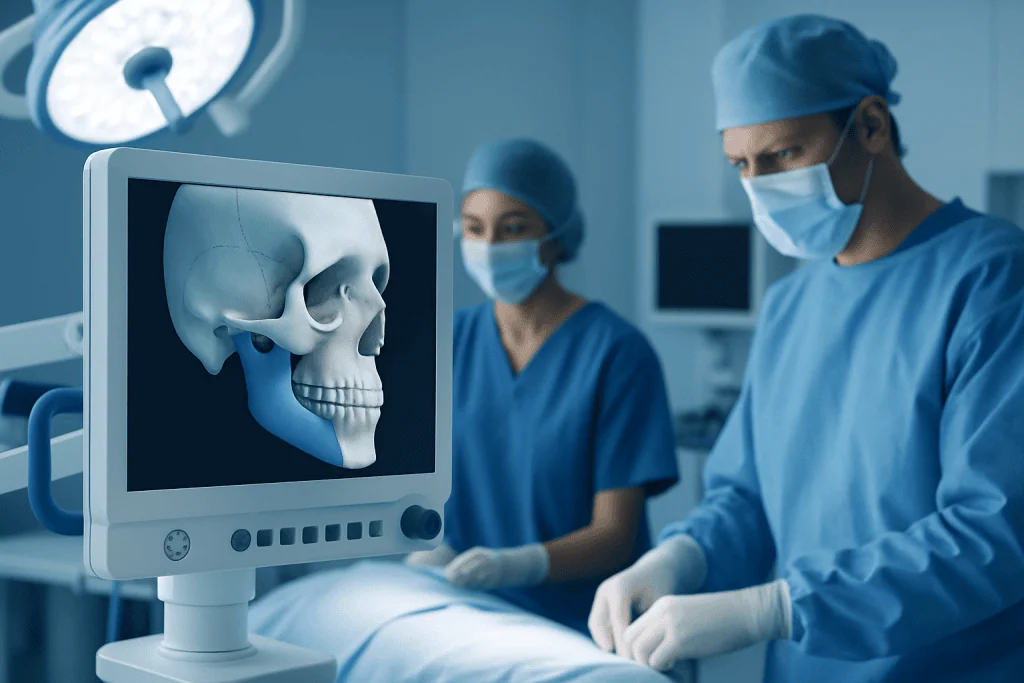
The surgeon first evaluates the relationship between the jaw, chin, cheeks, nose, teeth, and neck. Photographs and three-dimensional imaging may be used to assess bone structure and soft-tissue thickness. This planning helps identify whether a preformed implant is appropriate or whether a custom implant, designed from imaging data, may offer a more precise fit.
During surgery, the implant is placed directly on the surface of the jawbone, beneath the periosteum, a thin layer of tissue that covers bone. This position helps create a stable foundation and allows the implant to augment the natural jaw contour. The implant may be held by the snugness of its pocket, small fixation screws, or both, depending on the implant type and surgical plan.
Placement can often be performed through incisions inside the mouth, avoiding visible external scars. In selected cases, a small incision may be made in a naturally concealed skin crease. The best approach depends on the area being augmented, the implant design, previous surgery, dental health, and the surgeon’s assessment of safety and access.
Who May Be a Candidate for Jaw Implants?

A potential candidate is usually an adult whose facial growth is complete and who wishes to improve jaw definition or address a localized contour deficiency. Candidates should be in generally good health, understand the expected changes, and have realistic goals. The decision is based on facial proportions rather than a single ideal jaw shape, since a balanced result differs from person to person.
A surgeon will review medical conditions, medications, allergies, smoking or nicotine use, past facial procedures, dental health, and history of infections. Active dental or gum infection should be addressed before an incision inside the mouth is considered. Smoking and nicotine products can impair wound healing and increase complication risk, so clinicians commonly advise stopping them well before and after surgery.
Jaw implants may not be the right approach for people with untreated bite misalignment, unstable jaw-joint symptoms, active skin or oral infection, uncontrolled medical conditions, or expectations that surgery can resolve broader concerns about appearance or well-being. If the main issue is deficient bone position rather than soft-tissue contour, jaw-repositioning surgery may provide a more functional solution. A thorough examination is important because a prominent jaw implant cannot correct every type of lower-face imbalance.
Procedure Steps: From Planning to Placement
Before surgery, the care team reviews the treatment plan, anesthesia options, medical history, and recovery instructions. Patients may be asked to have preoperative tests depending on their age and health, avoid certain medicines or supplements that can raise bleeding risk when medically appropriate, and arrange for a responsible adult to take them home. Instructions should always be individualized; prescribed medicines should not be stopped without guidance from the clinician who manages them.
On the day of surgery, anesthesia is administered so the patient is comfortable. The surgeon makes the planned incision, carefully creates a pocket over the jawbone, and places the selected implant. Position and symmetry are checked before the implant is secured if fixation is used. The incision is then closed with sutures, many of which dissolve when an incision is inside the mouth.
Jaw implant surgery may be performed as a standalone procedure or combined with other facial operations when this is appropriate and safe. Combining procedures can change the length of anesthesia and recovery needs. After a period of monitoring, many patients return home the same day, though the planned setting depends on the extent of surgery, anesthesia, other procedures, and individual health factors.
Recovery Timeline and Aftercare
During the first several days, swelling, bruising, pressure, stiffness, and discomfort are expected. The jaw can feel tight, and temporary altered sensation around the lower lip, chin, or jawline may occur because tissues near sensory nerves are healing. Cold compresses, head elevation, prescribed or recommended pain relief, and careful adherence to the surgeon’s instructions can help support comfort.
For an incision inside the mouth, a soft-food diet and meticulous oral hygiene are often advised initially. Patients may be asked to use a mouth rinse, avoid vigorous chewing, and choose foods that do not place pressure on the jaw. They should not pull on the lip or cheek to inspect the incision, as this may disturb the healing tissues. Activity restrictions vary, but strenuous exercise, contact sports, and activities that could injure the jaw are usually postponed until the surgeon confirms it is safe.
Many people feel ready to resume light daily activities within about one to two weeks, although visible swelling can last longer. The jawline often appears more defined over several weeks as swelling improves. Subtle swelling and tissue settling may continue for a few months, so the final result should be assessed gradually rather than in the first days after surgery. Follow-up appointments allow the surgeon to monitor healing, incision care, sensation, and implant position.
Benefits, Risks, and Alternatives
For an appropriately selected patient, jaw implants may create a stronger lower-face contour, improve symmetry, and restore volume in a specific area. Because implants are structural, their effect is generally longer lasting than injectable contouring treatments. They can also be removed or replaced if medically necessary, although revision surgery has its own risks and should be carefully considered.
As with any operation, jaw implant surgery carries potential complications. These include bleeding, infection, delayed healing, fluid collection, unfavorable scarring, implant visibility or palpability, shifting of the implant, asymmetry, dissatisfaction with contour, and the need for revision or removal. Numbness or tingling from irritation or injury to nearby nerves is often temporary but can occasionally persist. Rarely, infection or implant exposure requires prompt treatment and removal of the implant.
Non-surgical alternatives, such as dermal filler or fat grafting, may be suitable for some people seeking modest or temporary contour changes. These options have different limitations and risks, and they do not provide the same rigid support as an implant. For changes caused by bite or jawbone alignment, orthodontic treatment and orthognathic surgery may be considered. A specialist can explain which option best matches the person’s anatomy, goals, and health needs.
When to Seek Medical Care
Before planning jaw implants, people should seek an in-person evaluation if they have chronic jaw pain, clicking with limited mouth opening, problems chewing, a changing bite, facial numbness, prior facial injury, or recurrent dental infections. These symptoms may point to dental, temporomandibular joint, nerve, or skeletal concerns that need diagnosis rather than cosmetic treatment alone.
After surgery, the operating team should be contacted promptly for worsening rather than improving pain, increasing redness or warmth, persistent fever, pus-like drainage, a sudden increase in swelling, wound separation, difficulty swallowing, or a noticeable change in implant position. Emergency medical care is needed for trouble breathing, severe allergic symptoms, uncontrolled bleeding, or rapidly progressive swelling.
A well-informed consultation should include discussion of implant type, incision location, anticipated recovery, possible alternatives, and the surgeon’s plan for managing complications if they occur. Acibadem International’s multidisciplinary specialists and JCI-accredited hospitals assess and treat facial contour concerns for international patients, with treatment plans based on individual clinical evaluation.
Frequently asked questions
Are jaw implants permanent?
Jaw implants are intended to provide a long-lasting structural change. However, they may be removed or replaced if complications develop, facial goals change, or a revision is needed. Natural aging and changes in body weight can still affect the surrounding facial soft tissues over time.
Is jaw implant surgery painful?
Surgery is performed with anesthesia, so pain is not expected during the procedure. Afterward, discomfort, pressure, and tightness are common and are usually managed with the aftercare plan provided by the surgical team. The intensity and duration of discomfort vary between individuals and according to the extent of surgery.
How long does swelling last after jaw implants?
The most noticeable swelling commonly occurs in the first several days and improves substantially over the following weeks. Mild residual swelling can remain for a few months, especially around the jaw angles. A surgeon can assess whether healing is progressing as expected at follow-up visits.
Can jaw implants correct an overbite or underbite?
No. Jaw implants add contour on the outside of the jawbone but do not reposition the jaw or change how the teeth meet. An overbite, underbite, or other bite concern may require assessment by an orthodontist and oral and maxillofacial surgeon.
Will jaw implants leave scars?
Many jaw implants are inserted through incisions inside the mouth, which do not leave visible skin scars. If an external incision is needed, surgeons generally place it in a discreet location when possible. Scar appearance varies with the surgical approach, healing process, skin type, and individual factors.
Can jaw implants be removed?
In many cases, implants can be surgically removed, but removal is still an operation and may involve risks such as scarring, infection, contour changes, or altered sensation. The outcome after removal depends on the implant, how long it has been in place, and the condition of the surrounding tissues. This possibility should be discussed before the initial procedure.
References
- American Society of Plastic Surgeons
- American Association of Oral and Maxillofacial Surgeons
- U.S. Food and Drug Administration
- Mayo Clinic
This article is for general information only and is not a substitute for professional medical advice. Please consult a qualified doctor about your individual situation.
Explore treatments in Turkey — costs, top hospitals & a free quote
JCI-accredited · board-certified surgeons · reply within 24h
Add us as a Preferred Source to see more of our trusted health content across Google Search, AI Overviews and Discover.

More from the Health Library



Related Specialists

Assoc. Prof. Dr. İsmail Ahmet Bilgin
General Surgery
Dr. Resül Altınayak
Clinical Laboratory
Dr. Bülent Yücel
Orthopedic Surgery & Traumatology
Asst. Prof. Dr. Ceren Meriç Özgündüz
Psychiatry