Blinatumomab: A Complete Medical Overview

Blinatumomab is an immune-based treatment for specific CD19-positive B-cell acute lymphoblastic leukemia. It is given as a continuous intravenous infusion in planned treatment cycles, with close medical monitoring.
Key Takeaways
- Blinatumomab is an immune-based treatment for specific CD19-positive B-cell acute lymphoblastic leukemia.
- It is given as a continuous intravenous infusion in planned treatment cycles, with close medical monitoring.
- Early side effects can include fever, infusion-related symptoms, cytokine release syndrome, and neurologic effects.
- Regular blood tests and clinical assessments help the care team monitor response, infections, and treatment safety.
- Promptly reporting fever, confusion, seizures, breathing problems, or new neurologic symptoms is important during treatment.
Blinatumomab is a targeted cancer immunotherapy mainly used to treat certain forms of B-cell <a href="https://acibademinternational.com/diseases/acute-lymphoblastic-leukemia/”>acute lymphoblastic leukemia (ALL). It works by bringing a patient’s immune T cells into close contact with leukemia cells so the immune system can attack them.
Overview: What Is Blinatumomab?
Blinatumomab is a prescription cancer medicine used for certain people with B-cell acute lymphoblastic leukemia (B-cell ALL), an aggressive cancer of immature white blood cells. It may be used when leukemia has returned after treatment, has not responded adequately to earlier therapy, or when very small amounts of leukemia remain after treatment. The exact reason for its use depends on the leukemia subtype, laboratory results, prior treatment, age, and overall health.
Unlike standard chemotherapy, blinatumomab is a type of immunotherapy. It is a bispecific T-cell engager, often called a BiTE therapy. This means that it binds to CD19, a protein commonly found on B-cell leukemia cells, and CD3, a protein on immune T cells. By connecting these two cells, blinatumomab helps T cells recognize and destroy leukemia cells.
Because this treatment changes how immune cells interact, it requires specialist supervision. Blinatumomab is not suitable for every person with ALL, and it is not used for all forms of leukemia. A hematology-oncology team reviews bone marrow findings, blood tests, chromosome or gene changes, and CD19 status before recommending a treatment plan.
Who May Receive Blinatumomab?
Blinatumomab is primarily used in CD19-positive precursor B-cell ALL. In adults and children, it may be considered for relapsed or refractory disease, meaning leukemia has come back or has not responded to prior treatment. It may also be used in selected patients with measurable residual disease, sometimes called MRD, when sensitive testing detects leukemia cells that remain after initial treatment even though routine examinations may show remission.
Measurable residual disease is important because it can provide information about the risk of relapse. Blinatumomab may help some patients achieve deeper remission before the next stage of care, which may include further chemotherapy or a stem cell transplant. However, the role of treatment differs from person to person and should be discussed with a leukemia specialist.
Before treatment, clinicians consider a person’s infection risk, liver and kidney function, nervous system history, current medicines, pregnancy status, and whether leukemia is affecting the brain or spinal fluid. People who have had prior neurologic events, such as seizures, may need particularly careful assessment and monitoring. Treatment decisions are individualized and made with a clear discussion of potential benefits, limitations, and risks.
How Blinatumomab Is Given

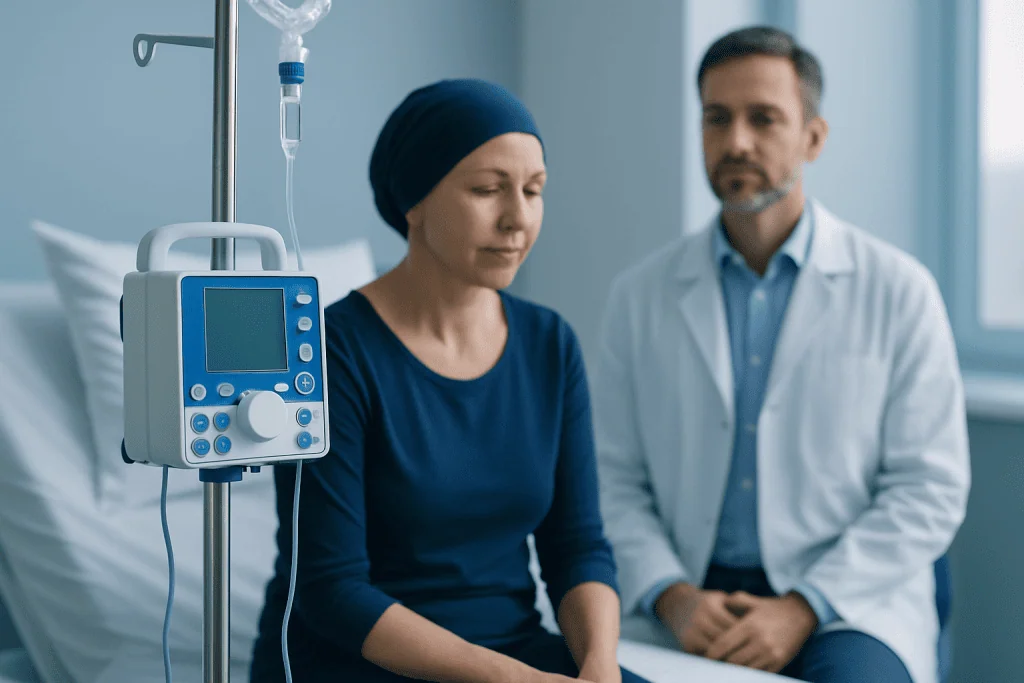
Blinatumomab is delivered into a vein through a continuous intravenous infusion rather than as a short injection or tablet. It is generally administered through a central venous catheter and an infusion pump over several weeks, followed by a treatment-free interval. This planned period of infusion and rest is called a cycle. The number of cycles depends on the treatment goal, response, tolerability, and the wider leukemia care plan.
Patients are commonly monitored in hospital at the beginning of the first cycle and when treatment is restarted after an interruption. This allows clinicians to watch for early reactions, which are more likely during the first days of therapy. Depending on local practice and a patient’s stability, some of the infusion may later be managed outside the hospital with careful training, pump support, scheduled visits, and emergency contact instructions.
Medicines such as corticosteroids may be given before treatment starts or when an infusion is restarted to reduce the chance or severity of immune-related reactions. The care team may also give preventive medicines or supportive care to lower infection risk, manage nausea, maintain hydration, or address low blood counts. Patients should not adjust their pump, disconnect the infusion, or stop treatment without instructions from their oncology team.
Benefits and Treatment Goals
The main aim of blinatumomab is to reduce or eliminate detectable leukemia cells. For some people with relapsed or refractory B-cell ALL, treatment may induce remission and create an opportunity for further potentially curative treatment, including stem cell transplantation when appropriate. For people with measurable residual disease, the goal may be to clear these remaining cells and reduce the likelihood of relapse.
Response is assessed through regular blood tests and, when needed, bone marrow examinations. Specialized tests may measure MRD at a very low level. Results are interpreted alongside symptoms, physical findings, imaging when indicated, and the patient’s overall clinical condition. A response to treatment is encouraging, but it does not automatically mean that further treatment is unnecessary.
Blinatumomab is usually one part of a broader leukemia strategy rather than a stand-alone decision. The treatment plan may also involve chemotherapy, targeted medicines, central nervous system-directed therapy, transplant assessment, infection prevention, transfusion support, and follow-up care. A patient’s care team can explain how blinatumomab fits into the current and longer-term goals of treatment.
Possible Side Effects and Safety Monitoring
Side effects vary in type and severity. Common effects can include fever, chills, headache, fatigue, nausea, diarrhea, rash, swelling, low blood counts, and changes in liver blood tests. Low blood counts may increase the risk of infection, tiredness, bruising, or bleeding. Some symptoms can be caused by the leukemia itself or by other treatments, so they should be assessed rather than assumed to be medication-related.
One important potential complication is cytokine release syndrome, or CRS. This occurs when immune activation leads to an inflammatory response in the body. Symptoms can include fever, low blood pressure, fast heartbeat, breathing difficulty, and marked weakness. CRS can range from mild to serious, and the treatment team monitors patients closely, especially early in a cycle, to recognize and manage it promptly.
Neurologic side effects are another key concern. These may include headache, dizziness, tremor, confusion, sleepiness, difficulty speaking, problems with balance, or seizures. People receiving blinatumomab should report any new changes in thinking, behavior, coordination, vision, or speech immediately. Depending on symptoms, clinicians may pause treatment, provide supportive medicines, perform tests, or decide whether it is safe to restart therapy.
During treatment, regular appointments usually include blood counts, chemistry tests, liver function tests, temperature checks, symptom reviews, and assessment of the infusion device. Patients should tell the care team about all prescription medicines, non-prescription products, vitamins, and supplements. Vaccinations, infection exposure, dental procedures, and planned travel should also be discussed in advance.
Living With Treatment: Practical Self-Care
Practical preparation can make continuous infusion treatment easier to manage. Patients and caregivers should learn how to protect the infusion pump and catheter, keep dressings clean and dry, and recognize warning signs such as leaking, redness, pain, swelling, or fever. They should keep the oncology team’s contact details readily available and attend all scheduled bag changes, laboratory tests, and clinic visits.
Infection prevention is especially important when blood counts are low. Helpful measures include frequent handwashing, avoiding close contact with people who are unwell, following food-safety guidance, and promptly reporting a fever or other possible infection symptoms. The oncology team may give specific advice about masks, public settings, work, school, travel, and contact with children depending on the patient’s immune status.
Rest, gentle activity as tolerated, regular fluids, and nutritious meals may support general wellbeing during treatment. However, there is no special diet or supplement proven to replace medical leukemia treatment. Patients should check with their clinicians before using herbal remedies or supplements because some products may affect treatment or increase risks. Emotional support from family, counseling services, and patient support organizations can also be valuable during intensive cancer care.
When to Seek Medical Care
Patients should contact their oncology team urgently for fever, chills, new cough, shortness of breath, chest pain, severe weakness, persistent vomiting, unusual bleeding, or signs of an infusion or catheter problem. They should also seek urgent advice for confusion, severe headache, new tremor, difficulty speaking, loss of balance, fainting, vision changes, or seizure-like activity. These symptoms do not always mean a serious complication, but they require timely assessment.
Emergency care is needed for severe breathing difficulty, loss of consciousness, a seizure, severe allergic symptoms such as swelling of the face or throat, or other rapidly worsening symptoms. Patients should follow the emergency plan provided by their cancer center and tell emergency clinicians that they are receiving blinatumomab through a continuous infusion.
Blinatumomab should be managed by clinicians experienced in acute leukemia and immune-based cancer therapies. Acibadem International’s multidisciplinary specialists and JCI-accredited hospitals diagnose and treat leukemia for international patients, coordinating hematology, oncology, transfusion support, infection care, and follow-up when appropriate.
Frequently asked questions
Is blinatumomab chemotherapy?
Blinatumomab is not conventional chemotherapy. It is an immunotherapy that helps a patient’s T cells attach to and attack CD19-positive B-cell leukemia cells. It may still be used alongside or as part of a wider treatment plan that includes chemotherapy or other therapies.
How long does blinatumomab treatment last?
Blinatumomab is usually delivered continuously over several weeks, followed by a treatment-free period; together, these form a treatment cycle. The total number of cycles varies according to the reason for treatment, the response, side effects, and the overall leukemia plan. The oncology team can explain the expected schedule for an individual patient.
Can blinatumomab cause neurologic side effects?
Yes. Possible neurologic effects include headache, dizziness, tremor, confusion, speech difficulties, poor coordination, and, less commonly, seizures. New or worsening neurologic symptoms should be reported immediately so the care team can assess them and determine whether treatment needs to be paused or adjusted.
What is cytokine release syndrome with blinatumomab?
Cytokine release syndrome is an inflammatory reaction caused by immune system activation. It may cause fever, low blood pressure, fast heartbeat, breathing symptoms, or profound fatigue. Monitoring at the start of treatment helps clinicians identify and manage this reaction early.
Can a person go home while receiving blinatumomab?
Some patients may continue treatment outside the hospital after the initial monitoring period, using a portable infusion pump and attending scheduled visits. This depends on clinical stability, access to trained support, the ability to manage the pump safely, and the treating center’s protocols. Others may need longer inpatient monitoring.
What should patients avoid during blinatumomab treatment?
Patients should not stop, disconnect, or alter the infusion pump without instructions from their treatment team. They should avoid exposure to people with contagious illnesses where possible and discuss vaccines, travel, supplements, and new medicines with clinicians first. Individual restrictions may differ based on blood counts and overall health.
References
- National Cancer Institute
- U.S. Food and Drug Administration
- American Cancer Society
- European Society for Medical Oncology
- Leukemia & Lymphoma Society
This article is for general information only and is not a substitute for professional medical advice. Please consult a qualified doctor about your individual situation.
Oncology care in Turkey — second opinion and treatment plan
JCI-accredited · board-certified surgeons · reply within 24h
Add us as a Preferred Source to see more of our trusted health content across Google Search, AI Overviews and Discover.